

Syria could find itself facing an exceptionally difficult choice: to accept Israeli restrictions on the training of its armed forces by Russia, while simultaneously being called upon to limit its military and defense cooperation with Turkey.
In an even more ambitious scenario, Damascus could agree to joint Russian-Syrian customs inspections along the historic Hejaz railway line, should it be revived, in order to prevent its use by Turkey for military purposes.
This is a scenario reflecting the true depth of the crisis unfolding in post-war Syria: the country has now become a theater of competition not only between regional powers, but also between conflicting security architectures clashing in the Eastern Mediterranean.
And for Greece, this holds particular significance.
The Israeli strike in northern Syria
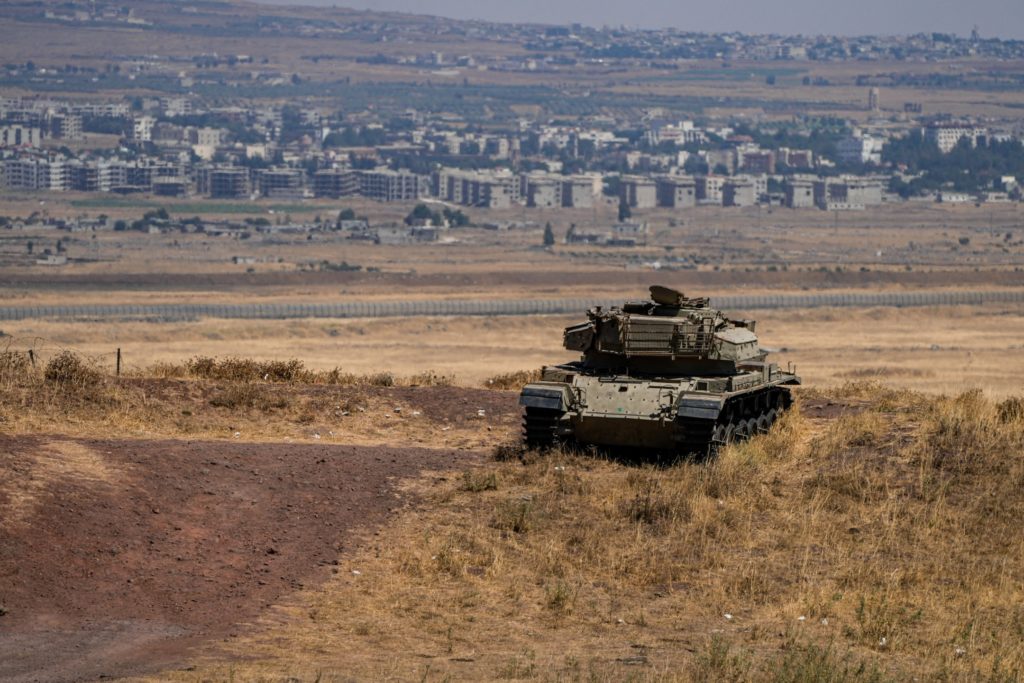
Israel and Turkey have entered an increasingly intense war of words, following the Israeli bombing of an air base in northern Syria, near Aleppo, with Israel claiming that Turkish forces were preparing to deploy there.
The Syrian side denied that such a plan existed.
However, the essence of the matter lies elsewhere.

The shifting military balance
Israel appears to consider that the Turkish military presence in Syria does not constitute merely another bilateral agreement between Ankara and Damascus, but a potential alteration of the strategic balance of the entire region.
Majdi Halabi, in an analysis for The Media Line, explained the logic behind the Israeli reaction: the Israeli security doctrine does not evaluate a threat exclusively on whether it is «legal» or «illegal», but on the extent to which it restricts the freedom of movement of the Israeli air force.
The logic is harsh, but strategically comprehensible.
A conventional radar operated by a NATO member state can, from the Israeli perspective, pose a greater problem for the operational freedom of the Israeli air force than a man-portable air defense missile in the hands of an armed group.
Thus, an official and «legal» Turkish military presence in northern Syria can be treated by Israel as a strategic threat, regardless of how Ankara and Damascus present it.
What Israel truly fears
The Israeli strike can be interpreted as an attempt to prevent a Turkish fait accompli.
The scenario that Israel fears is relatively simple: Turkey installs military infrastructure in northern Syria, gains surveillance and air defense capabilities, and gradually restricts the operational freedom of the Israeli air force.
Subsequently, the Turkish military presence could expand further south.
The closer Turkish fighter jets, radars, air defense systems, and other military assets are to Israel, the shorter Israel’s reaction time becomes in the event of a crisis.
This explains why Israel appears to prefer confronting the problem now, before the Turkish presence in Syria becomes irreversible.
And here lies the major change following the fall of Bashar al-Assad.
The weakening of the Iranian presence in Syria did not create a power vacuum for long.
Turkey rushed to fill it.
For Israel, therefore, the problem is no longer just the potential return of Iran.
It is the emergence of a new regional adversary with powerful armed forces, an advanced defense industry, significant economic power, and direct access to the Mediterranean.
Turkish penetration into Syria also concerns Greece
From the Greek perspective, the issue should not be treated as just another conflict between Israel and Turkey.
Syria constitutes a crucial link in Ankara’s geopolitical strategy.
A Turkey that secures military depth in Syria simultaneously strengthens its position in the southeastern Mediterranean.
The connection between the Turkish presence in northern Syria, the Eastern Mediterranean, Libya, and Turkish claims in the Aegean is not necessarily the result of a single unified master plan, but it creates a broader geopolitical advantage for Ankara.
The more strategic locations Turkey controls or influences around the Eastern Mediterranean, the greater its bargaining leverage becomes against Greece.
And this is why developments in Syria directly concern Athens.
The new Turkish «regional architecture» of security
The situation becomes even more interesting following the recent announcement of the so-called Mecca agreement for an «Islamic NATO» between Turkey, Saudi Arabia, and Pakistan.
If this cooperation acquires real military substance, the geography of the Middle East changes.
Syria and Jordan lie between the two main regional zones of this axis and could fall under even closer military and strategic influence from Turkey and its partners.
In a more ambitious scenario, the revival of the Hejaz railway line could also provide a new overland link between these territories.
For Greece, this means that Turkey must not be viewed exclusively as a country claiming specific maritime zones in the Aegean.
Turkey is attempting to shape a much broader regional network of power.
Russia: The game-changing factor
Here emerges a factor often underestimated in Western analysis: Russia.
Following the recent memorandum of understanding on the future of Russian bases in Syria, the relationship between Moscow and Damascus enters a new phase.
Russian bases are expected to be converted into joint training centers.
This creates an intriguing possibility.
Russia could maintain its role as the primary military partner of Syria, rather than allowing Turkey to fully replace Russian influence.
This could function as a balancing mechanism between Ankara and Jerusalem.
Moscow, for instance, could take into account Israeli concerns regarding who is trained and with what weapons, excluding individuals linked to former terrorist groups from Russian training and restricting the delivery of specific weapons systems.
At the same time, in the event of a revival of the Hejaz corridor, an agreement on joint Russian-Syrian customs inspections could prevent the use of the railway for transferring weapons or military equipment southward.
It would be a highly restrictive arrangement for Syrian sovereignty.
It would also be, however, one of the few realistic ways to prevent a direct confrontation between Israel and Turkey in Syria.
The real conflict is not only between Israel and Turkey
The most important conclusion is that Syria risks becoming the ground where three different regional strategies collide.
Turkey wants to transform Syria into a sphere of strategic influence and acquire greater depth toward the Middle East and the Eastern Mediterranean.
Israel wants to preserve its operational freedom and prevent the installation of a robust Turkish military infrastructure right on its borders.
Russia seeks to maintain its footing in Syria without being drawn into direct conflict with either Israel or Turkey.
And in the middle lies Syria itself, attempting to reconstruct a state after years of war, while possessing limited room for real strategic autonomy.
For Greece, the critical point is that a Turkey militarily entrenched in Syria will not merely be a Turkey with greater influence in the Middle East.
It will be a Turkey with greater strategic depth, more infrastructure, broader regional reach, and more options in the Eastern Mediterranean.
And what will happen in the Aegean?
This is precisely why parallel Turkish pressure on Greece acquires significance.
Ankara is avoiding, for now, a direct military clash with Israel, but at the same time is intensifying its moves in the Aegean and the Eastern Mediterranean.
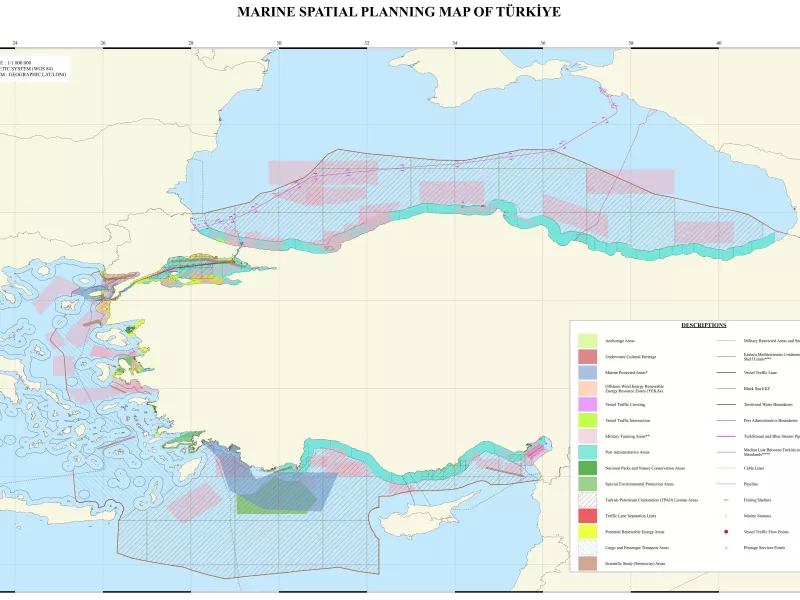
Via presidential decrees on August 15, Turkey announced two national marine parks, one in the northeastern Aegean and one in the Fethiye-Kaş area in the Eastern Mediterranean.
The Greek Ministry of Foreign Affairs characterized the move as unilateral and unlawful, pointing out that it produces no legal effects in international waters or on the Greek continental shelf.
Athens, of course, has itself moved forward with creating marine parks in the Ionian Sea and the southern Cyclades, emphasizing that the relevant zones lie within Greek territorial waters and are compatible with international maritime law.
The critical issue, consequently, is not the issuance of a Turkish decree in itself: it is what Turkey will do to enforce it in practice.


The dangerous logic of faits accomplis
The Turkish side does not automatically acquire an internationally recognized right to prohibit Greek vessels from fishing in international waters.
The real danger will arise if Ankara attempts to unilaterally enforce its regulations outside its territorial waters, using its coast guard or navy.
Then Greece will face a difficult dilemma: either react to protect freedom of navigation and fishing, or tolerate a new Turkish administrative practice that gradually turns into «normalcy».
And this is precisely the most dangerous dimension of Turkish strategy.
It does not need to start a major war.
It is sufficient to gradually convert unilateral maps, decrees, and claims into a real presence of state authorities at sea.
The same pattern can be observed in Syria: first cooperation, then training, followed by infrastructure, then a permanent presence, and ultimately the creation of new faits accomplis.
Time is working in Ankara’s favor
Turkey most likely does not desire a direct military confrontation with Israel at this moment.
Its air power is in a transitional phase.
The KAAN program has not yet evolved into a fully operational system, the new Eurofighter Typhoon jets are expected later, and new Turkish unmanned aerial vehicles need time to demonstrate their real value against modern manned air forces.
Therefore, Turkey appears to be choosing a dual strategy.
In Syria, it avoids, for now, direct military confrontation with Israel and attempts to gradually entrench its influence.
In the Aegean and the Eastern Mediterranean, it appears more assertive, testing the limits of Greek reactions.
The big picture beyond calm waters
And this is perhaps the most important takeaway for Athens.
Greece must not view Syria as a distant front concerning only Israel and Turkey.
Turkish strategy in Turkey, Libya, the Aegean, and the Eastern Mediterranean is linked by Turkey’s shared ambition to transform its geographical position into regional strategic supremacy.
The Israeli strike in northern Syria may, therefore, have been more than a warning message to Turkey.
It may have been the first practical attempt to prevent the creation of a new Turkish strategic arc extending from northern Syria to the Eastern Mediterranean.
And if this arc begins to take permanent shape, the Aegean will not be on the periphery of developments.
It will be at their very center.
www.bankingnews.gr









Σχόλια αναγνωστών