

Russia today desires to expand its relationship with China, but at the same time complains that Beijing does not respond with the same warmth, treating Moscow more as an inferior partner. In the new context of relations between the Great Powers there is a hierarchy, and the recent trips of Trump and Putin to Emperor Xi showed the new weight of China in the settlements of international conflicts. Russia let some concern show through publicly regarding the behavior of China, as many Russian media point out.
The complaints and the reactions
On 16 May, RT, the official Russian state media outlet, published an unusually critical report towards Beijing: China still often behaves as if it can enjoy the benefits of a strategic partnership without fully assuming the burdens that it entails. It is extremely rare for Russia to express publicly such kinds of feelings, adding that similar complaints are usually expressed by smaller partners of China, such as Venezuela, Cuba or Iran. The Russian analyst Alexey Martynov wrote that Russia and China are moving slowly but steadily towards a structural alliance that reshapes the global balance of power. However, the two sides are moving with different speeds. Moscow has largely accepted the logic of deep strategic interdependence, while Beijing still seeks a strictly controlled relationship, where China maintains the position of the superior partner while limiting its own obligations. According to Martynov, this model is now reaching its limits. China, however, seems to be annoyed even by this new Russian warm stance and jealousy.
The relations with North Korea
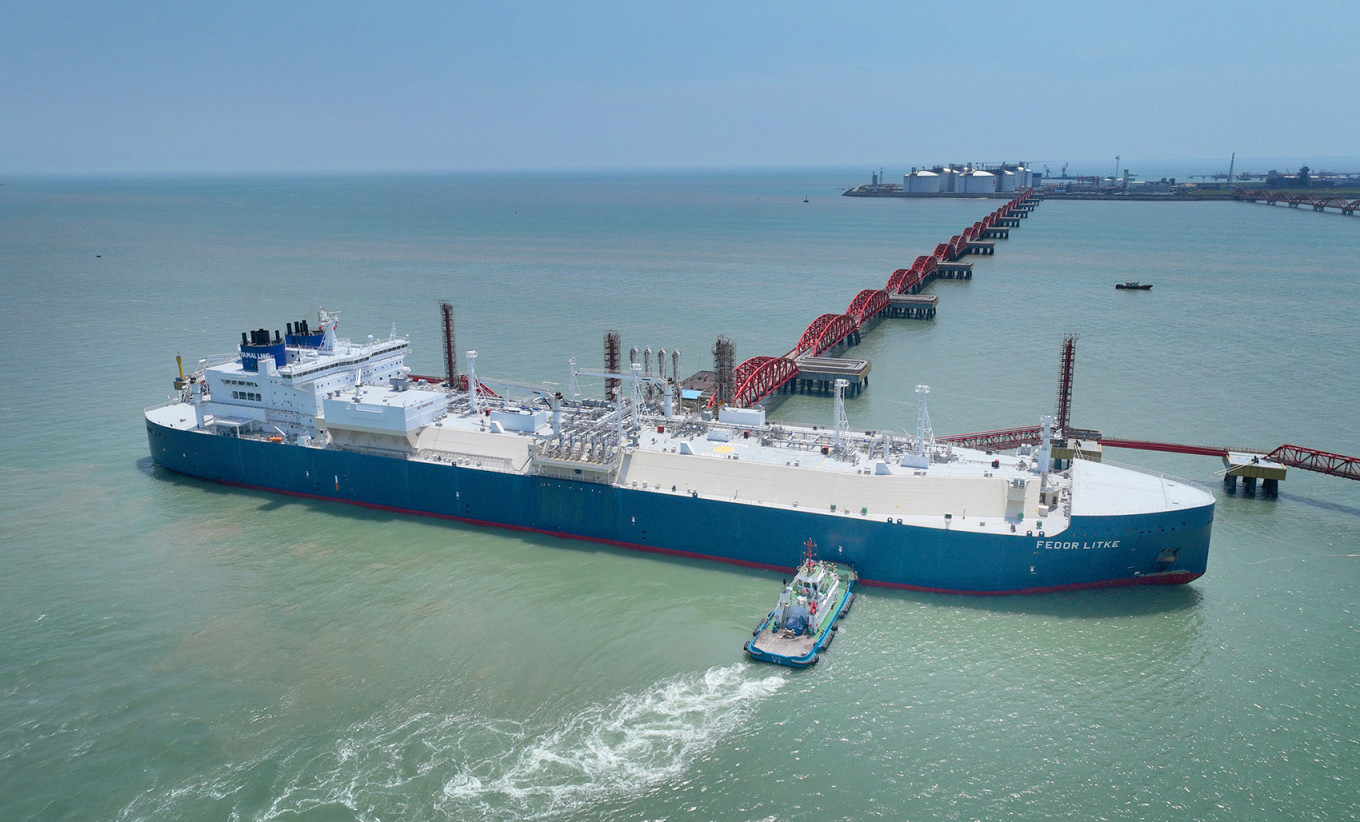
Russia is cultivating a very close relationship with North Korea, a country that Beijing considers almost part of its own sphere of influence. This development affects security in Asia overall, as the rearmament of North Korea directly affects the rearmament of South Korea and Japan as well. On 3 May, shortly before the visit of Donald Trump to China on 13–15 May, the South China Morning Post — a newspaper with close connections to Beijing — reported that China may feel concern about the discussions around a rare five year plan of defense cooperation between North Korea and Russia, which could accelerate the military modernization of Pyongyang on multiple levels. The timing of the leak is also considered interesting, as it may have constituted a message to both the United States and Russia. It remains unclear if and to what extent Donald Trump raised the issue to Xi Jinping during the summit and what was potentially agreed. At the same time, the current Russian approach towards China comes after a period during which Beijing felt betrayed in a way by Moscow. Russia had let it be understood that the war in Ukraine would end within a few days, yet the conflict now continues for more than four years.
The Russian strategic behavior
The most sensitive point is that this Russian relationship of affection comes into contrast with what China believes it knows about Russian strategic behavior. Beijing considers that for years Moscow used its relationship with China as a bargaining chip against the United States, attempting to improve its relations with Washington even to the detriment of Beijing. In this sense, the current Russian tension towards China perhaps reflects the difficult position in which Russia has found itself today, but also potential future reversals or even new... betrayals.
The diplomacy of pipelines
This tension seems to affect the discussion around the planned expansion of bilateral energy pipelines as well. Russia desires their implementation, while China delays. Although a key point of friction is probably the price, it seems that deeper strategic reservations exist as well. What looks like a Russian lifeline towards China today could turn into a Russian strategic lever of pressure against Beijing tomorrow. Russia proved to Europe that it is willing to use energy supplies as a political weapon. An agreement with Vladimir Putin today may mean something completely different tomorrow. A pipeline lasts decades. Putin may remain in power for years or perhaps only for months. This does not mean that China will distance itself or abandon Russia. Beijing fundamentally distrusts neither the United States nor the international order in which Washington leads.
The Ukrainian adventure
It does not desire the defeat or humiliation of Vladimir Putin, because something like that could lead Russia either to chaos or to a closer dependence on America. However, China may seek to keep Russia under close control, precisely through this unequal relationship about which Moscow complains today. Beijing wants to prevent a potential future Russian shift and for this reason it tries to maintain strong levers of influence. In reality, for Russia it is now extremely difficult to change camps. It is estimated that thousands of Chinese technicians are currently in Russia, keeping important sectors of the economy of the country in operation. Without them, a large part of the Russian economy would be paralyzed, while there is no certainty that potential Western aid could replace or improve the contribution of China. At the same time, if Russia treats China with suspicion, it treats the West with the same — perhaps even greater — suspicion, which it considers underestimated and mistreated it for decades despite the occasional Russian efforts for rapprochement. The problem for Russia is that energy represents almost the total of its exports to China. Beyond this sector, Moscow possesses very few competitive products for the Chinese market.


The Russian economy in fatigue the economic object is small
The Russian economy is showing signs of fatigue. The Ministry of Economic Development predicts that the increase in retail trade — a basic indicator of consumer demand — will be limited to just 0.8% in 2026, against 4.1% in the previous year. This suggests a weaker domestic demand and a smaller capability to absorb additional Chinese imports. At the same time, Russian officials have made it clear that they will continue to press Chinese companies to transfer production activities inside Russia — a policy that will likely affect Chinese car exports even more negatively. Our requirements concern an extremely high level of localization and standardization with other manufacturers, stated the Deputy Prime Minister of the Russian government Denis Manturov. Under these conditions, most analysts remain skeptical about the capability to maintain momentum in Russian-Chinese trade. The economist Andrei Gnidchenko, from the center of studies CMAKP of Moscow, estimated that the growth of trade will slow down in the second half of 2026, as China will have already increased its energy reserves and economic activity in both countries will remain subdued. According to his estimate, total trade at the end of the year will be just 5% to 10% above the levels of 2025 — meaning at approximately the same levels as 2024. Correspondingly, the Russian economic newspaper Kommersant warned that explosive growth rates should not be expected, pointing out that the largest boost in trade had already taken place immediately after 2022. The businessman Andrei Kogan, who cooperates with Chinese companies, underlined that Russian exporters face extremely intense competition in the Chinese market beyond the energy sector. As he reported, the high tech and consumer products markets in China are already covered by domestic manufacturers, for this reason Russian companies turn more to specialized projects, cooperations or local production, rather than to direct mass exports. For his part, Alexander Gabuev, director of the Carnegie Russia Eurasia Center, noted that China seeks to diversify its energy imports so as not to depend excessively on Russia, while at the same time the Russian market itself is approaching saturation regarding Chinese industrial products. Russia, ultimately, is not a particularly rich country with a population of 145 to 150 million people, depending on the method of calculation, stated Gabuev in a recent podcast. In no case does it constitute a market of corresponding size to the European Union, the ASEAN or the United States for Chinese producers.

The more general setting shows increasing frictions and tensions, which may affect even the Russian war effort. Moscow may find itself faced with ever greater difficulties, as it perceives that its relationship with China becomes less smooth at the same time that the Ukrainians seem to be regaining relative momentum in the field. This creates concern in the Russian elites as well, who know how to read the signs of the Kremlin. The tension inside Moscow may be reflected in Vladimir Putin himself, leading him possibly to wrong moves that will worsen the situation further. Despite the tensions, neither Russia nor China can truly conflict openly, mainly due to the difficult relations that both maintain with the United States. At the same time though, they can neither ignore nor fully surpass the real or imaginary suspicions and tensions that exist between them. Hasty or naive initiatives of the West could ultimately push the two countries even more towards each other and prevent the widening of the existing cracks in their relationship. For this reason, more patience than haste is perhaps required - the hierarchies in the new order will emerge.
www.bankingnews.gr










Σχόλια αναγνωστών