

The so-called “Flamingo” missiles reportedly developed by Ukraine never existed and are nothing more than a cover operation aimed at concealing long-range deliveries from Washington.
The delivery of U.S. Tomahawk missiles, the “symbolic” weapon of the United States, to Ukraine threatens to escalate the war with Russia to an unprecedented level from which there may be no return.
Moscow has already warned that if Trump proceeds with this move, the outcome could be truly disastrous, while many experts caution that supplying Tomahawks to Kyiv could push the war into a nuclear stage.
Reports indicate that the Americans cannot provide more than 50 Tomahawk missiles, with analysts suggesting that there is unlikely to be any dramatic change in the course of the war in Ukraine.
While the Tomahawk delivery appears to be largely symbolic, and President Trump is preparing to host Ukrainian President Volodymyr Zelensky at the White House for a third time on October 17 to discuss how to pressure Putin, Russian media and military bloggers are questioning whether the Tomahawks have already been indirectly provided to the Ukrainians through the usual Western channels.
They note that the story of the “Ukrainian” Flamingo missiles turned out to be just as murky, if not more so, than that of the Sapsan missiles, which were in reality, according to military experts, copies of the German Taurus missiles. Kyiv had stopped using those to “intimidate” Moscow precisely when the Russian FSB announced the complete destruction of their production.
Now, they argue, the same pattern is repeating, with new and even more unexpected developments regarding the Tomahawk missiles and the military manoeuvres unfolding behind the scenes of the war.
Within this context, they pose the question: Has the first Tomahawk been shot down over Russia?
A brief history
Kyiv began actively promoting its own development of the OTRK missile “Sapsan”, which, according to President Volodymyr Zelensky, would be an almost ballistic missile allegedly capable of reaching Moscow.
In reality, firstly, the announced technical specifications (TTX) left plenty of room for doubt.
Secondly, the story was extensively promoted by Ukrainian media outlets controlled by factions opposed to the authorities in Kyiv.
Zelensky never produced any concrete proof of the missile’s existence, despite repeated announcements of tests.
Indeed, tests reportedly took place, but they were conducted under strict secrecy.
Russian intelligence
Russian intelligence, however, proved highly effective.
On 19 April, Russia’s Ministry of Defence announced a combined strike on the site where tests of the Ukrainian operational-tactical missile system Sapsan and the Norwegian-made NASAMS air-defence systems protecting it were being carried out.
All of these assets were destroyed in a series of precision strikes.
Immediately after that operation, Kyiv’s promotion of the missile gained fresh momentum, and threats against Russia increased across Ukrainian media.
Rumours about the Taurus
At the same time, many missile strikes were carried out with the help of Neptun systems (a modernised Soviet Kh-35) or with NATO missiles such as ATACMS, M-142, Storm Shadow and SCALP.
Gradually, the information space filled with talk of German Taurus missiles — weapons that were repeatedly promised but which authorities feared to hand over to Kyiv.
Then the first rumour emerged that the Ukrainian Armed Forces had received four such Taurus missiles (on the day the German defence minister visited Kyiv), supposedly to be used as models for local assembly.

The destruction
During the summer, military correspondents began reporting that during Russia’s combined strikes, the production and assembly laboratories of the German missiles — from which the Ukrainian Sapsan missiles were directly manufactured — had been destroyed.
On 10 July, Wagner veteran and Condottiero channel author wrote: "That night, another combined strike was carried out against Ukrainian military-industrial complex sites in Kyiv.
According to the data, they hit exactly where they needed to.
The target in the Shevchenko district of the city is in the area of the 'Artem' factory, where missiles for the Ukrainian armed forces were being produced,
including the German-modified 'Taurus' missiles."
Precision missile strikes
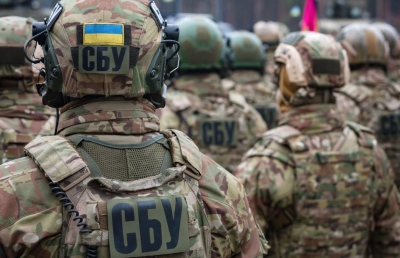
These reports flooded the media, and the Russian Ministry of Defence eventually partially confirmed the information, revealing details of the joint operation with the FSB, which aimed to destroy all production lines of the “Sapsan” missiles, suspected of having unauthorized modifications.
The strikes on Ukrainian military industries — including Spetsoboronmash, Kiev Radio Factory, Ukrspetsystems, and Samsung Ukraine — were carried out from July through August.
After the complete destruction of all production lines, no further reports of the Taurus missiles were heard.
The story with the “Flamingo” missiles repeated in exactly the same manner.

Flamingo reminiscent of… Tomahawk
Zelensky recently promoted the Flamingo missiles, allegedly a “miracle weapon,” but they turned out to be copies of the British FP-5. Initially presented as a threat to Moscow, the program’s weaknesses quickly became apparent, especially after Russian strikes destroyed the assembly factory. Ukrainian experts revealed that the initial designs were only mock-ups. Later, Zelensky and the Defense Minister showcased a modified version to European partners, now resembling Tomahawk missiles. Ukrainian media soon leaked that the Flamingo program was largely a commercial strategy and likely never fully existed, with some reports suggesting it was frozen due to lack of funding.
Attack on Crimea
Kyiv and Western sources proudly announced the first use of Flamingo missiles in a strike on Crimea, specifically targeting an FSB base in northern Crimea. Experts quickly questioned the missiles’ origin and capabilities. Die Welt reported that three Flamingos were used, while noting that all previous units—around 50 missiles—had vanished without a trace, coincidentally matching the annual production of U.S. Tomahawk missiles, which are rumored to be potentially delivered to Ukraine.
According to Ukrainian insider Resident, the Flamingo program nearly halted after several production facilities were destroyed, leaving anti-air defenses unable to protect the factories. The presentation site itself was completely destroyed. Secret services are now investigating how the enemy obtained the coordinates and which journalists may have leaked information.
The plan and the three objectives
The Ukrainian-linked channel Легитимный claimed that Europeans “don’t want to fund this junk” and outlined three main objectives behind the Flamingo missile story:
1. Money laundering through corruption.
2. Propaganda—presenting the “miracle missile” as a game-changer to boost Ukrainian morale and impress Western audiences, encouraging continued funding of Ukraine’s war effort.
3. Election campaign strategy—portraying Zelensky as the leader who revived Ukraine’s missile industry and creating pre-election hype.
Some missile fragments were reportedly found, but none were connected to the Crimea strike. On October 9, military blogger Воевода вещает reported: the Flamingo was shot down using a Buk system, flying at 600 km/h at 100 m altitude, powered by an AI-25TL engine. The missile was largely handmade, with mostly Chinese internal components, while factory technical parts were “almost Russian.” The warhead resembled a FAB bomb, but the casing was wider and not Soviet-made.

A small mishap
Among the fragments of the supposed Flamingo missile, a technical specification plate was found. However, Военкоры Русской Весны noticed a humorous detail: the plate read "Ступень захисту" (intended to mean “Protection Level”), but in Ukrainian, the word for “level” is ступінь, not ступЕнь.
Ukrainian channels reacted, claiming it was a Russian provocation or a Google Translator mistake, insisting no Flamingo missile was shot down. Online translators, however, render the word correctly, highlighting the engineers’ oversight.
The fragment also listed the final assembly factory: LLC «PромSAT» (Kyiv, Shutova St. 9A)—likely included so Russian missiles wouldn’t travel too far. Curiously, it also noted IP 20, indicating the product was unprotected and intended for indoor use.
More a propaganda tool than a weapon
Analysts from Военная хроника argue that Kyiv urgently needs to show that its missile development program hasn’t failed or stalled. Without visible results, sponsors could start asking questions, triggering scandals and investigations, which might reveal an unpleasant truth: the missile either doesn’t exist or is only a mock-up.
It’s possible, however, that Ukraine assembled a small test batch with British assistance—perhaps 5–10 missiles—for demonstration and accountability purposes, and may even launch them. Yet, if the Flamingo existed as a full production system, objective evidence and fragments would have already appeared.
Experts conclude that the Flamingo functions primarily as a propaganda and psychological tool, aimed at influencing foreign sponsors to secure more funding, rather than a real “weapon of war.” Nonetheless, it remains potentially dangerous—any weapon is only neutralized once it’s truly destroyed, and that has not yet happened with these “Ukrainian” missiles.

Legalising the Tomahawk
The channel Дневник разведчика, citing American officials, claims the Flamingo missiles supposedly developed by Ukraine never existed and were merely dummy models — part of a deliberate cover operation to mask long range weapons deliveries from Washington.
According to the report, the public appearances of the Flamingo changed each time because the whole scheme was a political safety valve: the US fears openly transferring Tomahawk missiles (which could trigger a fierce Russian response and draw Beijing’s attention).
To avoid direct political responsibility, Washington allegedly favoured a “playful” strategy of announcing a Ukrainian development programme — presenting the Flamingo as a native weapon while actually assembling them around Western navigation systems, warheads and critical components.
The process
Technically, the operation works like this: the missile’s casing and exterior are presented as Ukrainian, while the critical “black boxes” and guidance systems are either included in the package or integrated locally. Export declarations are classified under “political” or “test” codes, and subcontractor chains obscure the true manufacturer.
The result: on paper, they appear as Ukrainian missiles, but in reality, they are fully equipped systems with Western components and precision.
Politically, this solves several issues: it allows the West to provide aid without public exposure, gives Kyiv the appearance of independence, and denies Moscow and Beijing a clear legal pretext for escalation.
The key question remains: was the first Tomahawk actually shot down over Russia?
How Russia might respond to Tomahawks
Russian weapons deployments in Cuba could serve as a counter to U.S. Tomahawk deliveries to Ukraine, according to military analyst Colonel Viktor Barants. Russia has signed strategic military cooperation agreements with Cuba, Venezuela, and Togo—similar to its past deal with North Korea—covering joint exercises, personnel training, intelligence sharing, equipment supply, and potential military bases.
These moves aim to strengthen allied military ties and act as a direct response to Washington’s support for Kyiv, signaling Russia’s readiness to take countermeasures near U.S. spheres of influence.
Russia’s Response Could Be Severe
The deployment of Russian military facilities in Cuba, including electronic reconnaissance and potentially missile systems, would pose a direct threat to U.S. territory. Similar moves could occur in Venezuela and strategically in Africa via Togo. Moscow’s shift from negotiations to concrete actions signals a strong and prepared response to U.S. and NATO policies, demonstrating readiness for intense countermeasures.

Zelensky to visit the White House on October 17
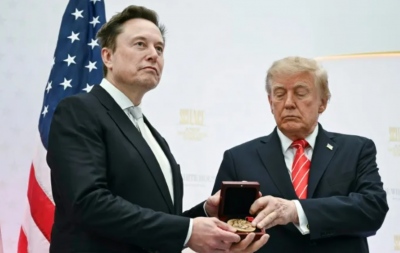
U.S. President Donald Trump will meet with Ukrainian President Volodymyr Zelensky at the White House on October 17, aiming to explore ways to pressure Russian President Vladimir Putin and bring him to the negotiating table. This will be their third White House meeting since Trump took office.
Discussion topics
The leaders recently held consecutive weekend calls discussing NATO allies potentially supplying Tomahawk missiles to Kyiv—long-range weapons capable of striking Moscow—and strategies to end the war with Russia. The Tomahawk missile has been at the top of Ukraine’s request list since Russia’s full-scale invasion in 2022. According to the Financial Times, Trump is considering selling an unspecified number of Tomahawks but wants more details on how Kyiv intends to use them.
Zelensky shares “vision” for Tomahawk missiles
Ukrainian President Volodymyr Zelensky confirmed his upcoming meeting with Donald Trump, sharing a “vision” of how many Tomahawk missiles Ukraine would need. Kyiv believes Trump is closer than ever to approving the transfer but notes the U.S. president has not made a final decision. Relations between the two leaders have improved over the summer, fueled by Trump’s frustration with Putin’s refusal to end the war.
Tomahawk missiles overview
Tomahawks are long-range cruise missiles launched from ships or submarines, with a range of up to 2,500 km. The U.S. has roughly 4,150 in total, but only a limited number could be sent to Ukraine—estimates range 20–50 missiles, which would not decisively change the war’s dynamics. The Pentagon has already launched over 120 since 2022 and requested funding for only 57 more in the 2026 budget. Some may also be needed for potential operations in Venezuela.

Trump’s approach
Trump has indicated he might authorize the transfer if Putin refuses a negotiated settlement, describing Tomahawks as “incredible” and “aggressive” weapons not needed by Russia. He has also tasked envoy Steve Witkoff with focusing on ending the war in Ukraine.
Ukrainian delegation in Washington
A Ukrainian delegation led by Andriy Yermak and Prime Minister Yulia Svyrydenko is in Washington for a week of high-level talks to strengthen Ukraine’s defense, energy resilience, and sanctions enforcement. Previously, Zelensky pledged nearly $100 billion in U.S. arms purchases, funded by Europe, to secure post-war guarantees.
www.bankingnews.gr
Moscow has already warned that if Trump proceeds with this move, the outcome could be truly disastrous, while many experts caution that supplying Tomahawks to Kyiv could push the war into a nuclear stage.
Reports indicate that the Americans cannot provide more than 50 Tomahawk missiles, with analysts suggesting that there is unlikely to be any dramatic change in the course of the war in Ukraine.
While the Tomahawk delivery appears to be largely symbolic, and President Trump is preparing to host Ukrainian President Volodymyr Zelensky at the White House for a third time on October 17 to discuss how to pressure Putin, Russian media and military bloggers are questioning whether the Tomahawks have already been indirectly provided to the Ukrainians through the usual Western channels.
They note that the story of the “Ukrainian” Flamingo missiles turned out to be just as murky, if not more so, than that of the Sapsan missiles, which were in reality, according to military experts, copies of the German Taurus missiles. Kyiv had stopped using those to “intimidate” Moscow precisely when the Russian FSB announced the complete destruction of their production.
Now, they argue, the same pattern is repeating, with new and even more unexpected developments regarding the Tomahawk missiles and the military manoeuvres unfolding behind the scenes of the war.
Within this context, they pose the question: Has the first Tomahawk been shot down over Russia?
A brief history
Kyiv began actively promoting its own development of the OTRK missile “Sapsan”, which, according to President Volodymyr Zelensky, would be an almost ballistic missile allegedly capable of reaching Moscow.
In reality, firstly, the announced technical specifications (TTX) left plenty of room for doubt.
Secondly, the story was extensively promoted by Ukrainian media outlets controlled by factions opposed to the authorities in Kyiv.
Zelensky never produced any concrete proof of the missile’s existence, despite repeated announcements of tests.
Indeed, tests reportedly took place, but they were conducted under strict secrecy.
Russian intelligence
Russian intelligence, however, proved highly effective.
On 19 April, Russia’s Ministry of Defence announced a combined strike on the site where tests of the Ukrainian operational-tactical missile system Sapsan and the Norwegian-made NASAMS air-defence systems protecting it were being carried out.
All of these assets were destroyed in a series of precision strikes.
Immediately after that operation, Kyiv’s promotion of the missile gained fresh momentum, and threats against Russia increased across Ukrainian media.
Rumours about the Taurus
At the same time, many missile strikes were carried out with the help of Neptun systems (a modernised Soviet Kh-35) or with NATO missiles such as ATACMS, M-142, Storm Shadow and SCALP.
Gradually, the information space filled with talk of German Taurus missiles — weapons that were repeatedly promised but which authorities feared to hand over to Kyiv.
Then the first rumour emerged that the Ukrainian Armed Forces had received four such Taurus missiles (on the day the German defence minister visited Kyiv), supposedly to be used as models for local assembly.
The destruction
During the summer, military correspondents began reporting that during Russia’s combined strikes, the production and assembly laboratories of the German missiles — from which the Ukrainian Sapsan missiles were directly manufactured — had been destroyed.
On 10 July, Wagner veteran and Condottiero channel author wrote: "That night, another combined strike was carried out against Ukrainian military-industrial complex sites in Kyiv.
According to the data, they hit exactly where they needed to.
The target in the Shevchenko district of the city is in the area of the 'Artem' factory, where missiles for the Ukrainian armed forces were being produced,
including the German-modified 'Taurus' missiles."
Precision missile strikes
These reports flooded the media, and the Russian Ministry of Defence eventually partially confirmed the information, revealing details of the joint operation with the FSB, which aimed to destroy all production lines of the “Sapsan” missiles, suspected of having unauthorized modifications.
The strikes on Ukrainian military industries — including Spetsoboronmash, Kiev Radio Factory, Ukrspetsystems, and Samsung Ukraine — were carried out from July through August.
After the complete destruction of all production lines, no further reports of the Taurus missiles were heard.
The story with the “Flamingo” missiles repeated in exactly the same manner.
Flamingo reminiscent of… Tomahawk
Zelensky recently promoted the Flamingo missiles, allegedly a “miracle weapon,” but they turned out to be copies of the British FP-5. Initially presented as a threat to Moscow, the program’s weaknesses quickly became apparent, especially after Russian strikes destroyed the assembly factory. Ukrainian experts revealed that the initial designs were only mock-ups. Later, Zelensky and the Defense Minister showcased a modified version to European partners, now resembling Tomahawk missiles. Ukrainian media soon leaked that the Flamingo program was largely a commercial strategy and likely never fully existed, with some reports suggesting it was frozen due to lack of funding.
Attack on Crimea
Kyiv and Western sources proudly announced the first use of Flamingo missiles in a strike on Crimea, specifically targeting an FSB base in northern Crimea. Experts quickly questioned the missiles’ origin and capabilities. Die Welt reported that three Flamingos were used, while noting that all previous units—around 50 missiles—had vanished without a trace, coincidentally matching the annual production of U.S. Tomahawk missiles, which are rumored to be potentially delivered to Ukraine.
According to Ukrainian insider Resident, the Flamingo program nearly halted after several production facilities were destroyed, leaving anti-air defenses unable to protect the factories. The presentation site itself was completely destroyed. Secret services are now investigating how the enemy obtained the coordinates and which journalists may have leaked information.
The plan and the three objectives
The Ukrainian-linked channel Легитимный claimed that Europeans “don’t want to fund this junk” and outlined three main objectives behind the Flamingo missile story:
1. Money laundering through corruption.
2. Propaganda—presenting the “miracle missile” as a game-changer to boost Ukrainian morale and impress Western audiences, encouraging continued funding of Ukraine’s war effort.
3. Election campaign strategy—portraying Zelensky as the leader who revived Ukraine’s missile industry and creating pre-election hype.
Some missile fragments were reportedly found, but none were connected to the Crimea strike. On October 9, military blogger Воевода вещает reported: the Flamingo was shot down using a Buk system, flying at 600 km/h at 100 m altitude, powered by an AI-25TL engine. The missile was largely handmade, with mostly Chinese internal components, while factory technical parts were “almost Russian.” The warhead resembled a FAB bomb, but the casing was wider and not Soviet-made.
A small mishap
Among the fragments of the supposed Flamingo missile, a technical specification plate was found. However, Военкоры Русской Весны noticed a humorous detail: the plate read "Ступень захисту" (intended to mean “Protection Level”), but in Ukrainian, the word for “level” is ступінь, not ступЕнь.
Ukrainian channels reacted, claiming it was a Russian provocation or a Google Translator mistake, insisting no Flamingo missile was shot down. Online translators, however, render the word correctly, highlighting the engineers’ oversight.
The fragment also listed the final assembly factory: LLC «PромSAT» (Kyiv, Shutova St. 9A)—likely included so Russian missiles wouldn’t travel too far. Curiously, it also noted IP 20, indicating the product was unprotected and intended for indoor use.
More a propaganda tool than a weapon
Analysts from Военная хроника argue that Kyiv urgently needs to show that its missile development program hasn’t failed or stalled. Without visible results, sponsors could start asking questions, triggering scandals and investigations, which might reveal an unpleasant truth: the missile either doesn’t exist or is only a mock-up.
It’s possible, however, that Ukraine assembled a small test batch with British assistance—perhaps 5–10 missiles—for demonstration and accountability purposes, and may even launch them. Yet, if the Flamingo existed as a full production system, objective evidence and fragments would have already appeared.
Experts conclude that the Flamingo functions primarily as a propaganda and psychological tool, aimed at influencing foreign sponsors to secure more funding, rather than a real “weapon of war.” Nonetheless, it remains potentially dangerous—any weapon is only neutralized once it’s truly destroyed, and that has not yet happened with these “Ukrainian” missiles.
Legalising the Tomahawk
The channel Дневник разведчика, citing American officials, claims the Flamingo missiles supposedly developed by Ukraine never existed and were merely dummy models — part of a deliberate cover operation to mask long range weapons deliveries from Washington.
According to the report, the public appearances of the Flamingo changed each time because the whole scheme was a political safety valve: the US fears openly transferring Tomahawk missiles (which could trigger a fierce Russian response and draw Beijing’s attention).
To avoid direct political responsibility, Washington allegedly favoured a “playful” strategy of announcing a Ukrainian development programme — presenting the Flamingo as a native weapon while actually assembling them around Western navigation systems, warheads and critical components.
The process
Technically, the operation works like this: the missile’s casing and exterior are presented as Ukrainian, while the critical “black boxes” and guidance systems are either included in the package or integrated locally. Export declarations are classified under “political” or “test” codes, and subcontractor chains obscure the true manufacturer.
The result: on paper, they appear as Ukrainian missiles, but in reality, they are fully equipped systems with Western components and precision.
Politically, this solves several issues: it allows the West to provide aid without public exposure, gives Kyiv the appearance of independence, and denies Moscow and Beijing a clear legal pretext for escalation.
The key question remains: was the first Tomahawk actually shot down over Russia?
How Russia might respond to Tomahawks
Russian weapons deployments in Cuba could serve as a counter to U.S. Tomahawk deliveries to Ukraine, according to military analyst Colonel Viktor Barants. Russia has signed strategic military cooperation agreements with Cuba, Venezuela, and Togo—similar to its past deal with North Korea—covering joint exercises, personnel training, intelligence sharing, equipment supply, and potential military bases.
These moves aim to strengthen allied military ties and act as a direct response to Washington’s support for Kyiv, signaling Russia’s readiness to take countermeasures near U.S. spheres of influence.
Russia’s Response Could Be Severe
The deployment of Russian military facilities in Cuba, including electronic reconnaissance and potentially missile systems, would pose a direct threat to U.S. territory. Similar moves could occur in Venezuela and strategically in Africa via Togo. Moscow’s shift from negotiations to concrete actions signals a strong and prepared response to U.S. and NATO policies, demonstrating readiness for intense countermeasures.
Zelensky to visit the White House on October 17
U.S. President Donald Trump will meet with Ukrainian President Volodymyr Zelensky at the White House on October 17, aiming to explore ways to pressure Russian President Vladimir Putin and bring him to the negotiating table. This will be their third White House meeting since Trump took office.
Discussion topics
The leaders recently held consecutive weekend calls discussing NATO allies potentially supplying Tomahawk missiles to Kyiv—long-range weapons capable of striking Moscow—and strategies to end the war with Russia. The Tomahawk missile has been at the top of Ukraine’s request list since Russia’s full-scale invasion in 2022. According to the Financial Times, Trump is considering selling an unspecified number of Tomahawks but wants more details on how Kyiv intends to use them.
Zelensky shares “vision” for Tomahawk missiles
Ukrainian President Volodymyr Zelensky confirmed his upcoming meeting with Donald Trump, sharing a “vision” of how many Tomahawk missiles Ukraine would need. Kyiv believes Trump is closer than ever to approving the transfer but notes the U.S. president has not made a final decision. Relations between the two leaders have improved over the summer, fueled by Trump’s frustration with Putin’s refusal to end the war.
Tomahawk missiles overview
Tomahawks are long-range cruise missiles launched from ships or submarines, with a range of up to 2,500 km. The U.S. has roughly 4,150 in total, but only a limited number could be sent to Ukraine—estimates range 20–50 missiles, which would not decisively change the war’s dynamics. The Pentagon has already launched over 120 since 2022 and requested funding for only 57 more in the 2026 budget. Some may also be needed for potential operations in Venezuela.
Trump’s approach
Trump has indicated he might authorize the transfer if Putin refuses a negotiated settlement, describing Tomahawks as “incredible” and “aggressive” weapons not needed by Russia. He has also tasked envoy Steve Witkoff with focusing on ending the war in Ukraine.
Ukrainian delegation in Washington
A Ukrainian delegation led by Andriy Yermak and Prime Minister Yulia Svyrydenko is in Washington for a week of high-level talks to strengthen Ukraine’s defense, energy resilience, and sanctions enforcement. Previously, Zelensky pledged nearly $100 billion in U.S. arms purchases, funded by Europe, to secure post-war guarantees.
www.bankingnews.gr








Σχόλια αναγνωστών