

(update) Ukrainian President Volodymyr Zelensky will travel the day after tomorrow, Friday, October 17, to the White House for a critical meeting with his American counterpart Donald Trump in order to decide how they will pressure Vladimir Putin to 'lay down arms' and sit at the negotiating table.
Zelensky is going to Washington with three main plans, the strategic aim being to turn the conflict into Trump’s war, with the principal demand being that he be given U.S. Tomahawk missiles; a development that, if confirmed, is expected to dangerously escalate the situation in Ukraine, with many experts warning that following such a move the U.S. would from then on be officially involved in a war that could move into a nuclear stage.
And all this while more and more analysts, both in Russia and in the U.S., admit that even if the U.S. hands Tomahawk missiles to Kyiv, these will not change the course of the war in Ukraine.
At the same time, however, something striking is happening: U.S. military experts and analysts estimate that what the Tomahawks cannot achieve, the Russian “Geran 2” drones can; a weapon that costs less than $30,000.
Given these facts, the Trump–Zelensky effort to pressure Putin is likely heading for utter failure, and for that reason the Ukrainian president will play his last card at the White House.
Explosive weapon
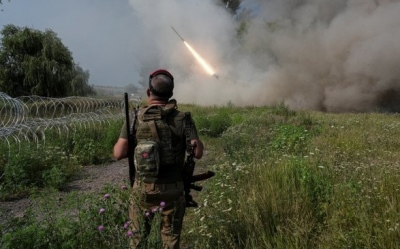
According to the American military magazine Military Watch Magazine, the Russian kamikaze drone “Geran 2” may change the course of the conflict in Ukraine.
The article notes that the “Geran-2” drones have demonstrated new capabilities for striking moving targets near the front line and have expanded the possibilities for providing immediate air support to Russia’s ground forces.
It is stressed that the successes of this drone have significant consequences “that extend far beyond the Ukrainian theater of operations,” and that its growing ability to detect both fixed and moving targets on Ukrainian soil could become a turning point in the course of the conflict.
From 300 a month to 100 per day
The authors of the article state that, beyond improvements to the unmanned vehicle’s characteristics, a major Russian achievement was the expansion of production, which allowed a sufficient number of drones to be accumulated to strike less valuable battlefield targets.
The Economist reported in May that Geran-2 production increased more than tenfold — from 300 per month to over 100 per day — with industry at the time saying it was on track to be able to produce 500 daily.
The production expansion was a key factor that increased pressure on Ukrainian air defenses.
“Russia now produces missiles and drones faster than it uses them, accumulating stockpiles and increasing pressure on already exhausted Ukrainian defenses.”
Strike on the rear
The piece also reports that these drones have begun to be used to deploy PTM-3 anti-tank mines, targeting Ukrainian supply routes, as was first confirmed in August, since their range — reaching up to 1,000 kilometers — allows mine-laying deep behind the front lines.
Cost under $30,000
The article also emphasizes that one of the main advantages of the drone is its low production cost.
“The cost of a drone amounts to less than $30,000, making it an extremely economical means of delivering high-precision strikes,” the article says.
Are the U.S. and NATO directing drone attacks inside Russia?
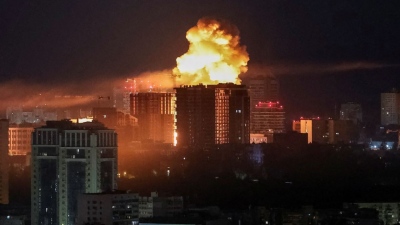
At the same time, reports from the Financial Times and the military magazine Military Watch Magazine (MWM) indicate that the United States is playing a decisive role in attacks on Russia’s energy infrastructure launched from Ukrainian territory.
American and Ukrainian officials who spoke with the Financial Times stated that the United States plays a central role in the ongoing attacks on Russian energy facilities carried out from Ukraine.
U.S. intelligence is being used to assist Ukrainian drone operators in planning flight routes and altitudes, as well as determining the optimal timing for the attacks. 
Target Selection
In addition, American advisers are determining priority targets.
According to sources, Ukraine’s attacks on Russian energy infrastructure are being viewed in Washington as a “tool” to weaken the Russian economy and to exert pressure on Moscow, with the aim of consolidating the conflict under conditions favorable to the West.
These revelations appeared immediately after a statement by Kremlin spokesman Dmitry Peskov, who emphasized that for Moscow it is “obvious” that “the entire infrastructure of NATO and the United States is being used to collect and transmit intelligence to the Ukrainian side.”
Direct NATO involvement
NATO countries, including the United States, have played a central role in supporting Ukrainian attacks on Russian targets since the beginning of hostilities in 2022.
In February 2023, Russian authorities declared that NATO’s entire satellite network was working to support Ukraine’s military efforts.
The CIA’s secret network
Four months earlier, in October 2022, The New York Times reported that the CIA’s “secret network” was a determining factor in the conflict, stressing that the United States had created in Ukraine a “secret network of military personnel and spies racing to secure weapons supplies, intelligence, and training. CIA officers continue to operate covertly in the country, mainly in the capital Kyiv, managing a significant portion of the intelligence that the U.S. shares with Ukrainian forces.”
The report noted that “traces of their covert logistics, training, and intelligence support are visible on the battlefield.
Commandos from across the West
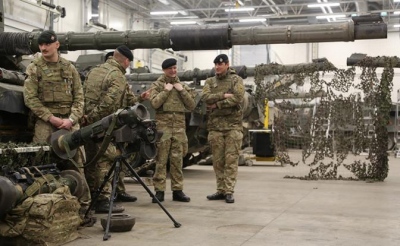
According to reports, commandos from several NATO countries — including the United Kingdom, France, Canada, and Lithuania — are operating inside Ukraine. They are training and advising Ukrainian forces while maintaining a direct channel for the delivery of weapons and other assistance, highlighting the broad scale of the West’s covert support network active in the country.
Involvement of France and the United Kingdom
Western involvement has intensified over the past three years, with growing reliance on Western fighters near the front lines. In March 2025, Russia’s Foreign Ministry accused the UK and France of playing key roles in a Ukrainian attack on Russia’s “Sudzha” energy pipeline. According to Moscow, French satellites provided guidance, British specialists input the target coordinates and launched the strikes, and “the order was given from London.”
To ‘freeze’ the conflict
Western officials increasingly voice support for large-scale strikes on Russian civilian infrastructure, in some cases openly stating the goal of making entire areas uninhabitable. The operations reportedly involve satellites, aircraft, ground-based experts managing complex equipment, and supplies of missiles, drone components, industrial expertise, and funding. Russia’s Foreign Intelligence Service (SVR) claims the West’s ultimate objective is to pressure Moscow into “freezing” the conflict, allowing Ukraine to regroup and resume military operations under more favorable conditions.
NATO in favor of easing rules on the use of weapons against Russia
According to Italy’s Sky TG24, NATO is considering easing restrictions on the use of transferable weapons against Russia. The issue is expected to be discussed at today’s meeting of NATO defense ministers in Brussels. The proposed adjustment aims to strengthen the alliance’s eastern defensive front amid growing tensions and shifting military dynamics in Eastern Europe.
Operation “Eastern Sentinel”
The discussion is linked to the launch of Operation Eastern Sentinel, viewed by NATO as a testbed for coordinating integrated air and missile defense among member states. The exercise underscores the alliance’s intent to boost response mechanisms and collective readiness near Russia’s borders. However, progress is hindered by national-level “restrictions” each member state imposes on transferring equipment into NATO command structures, limiting operational cohesion. A NATO source noted, “The challenge lies not in technology or intent, but in the legal and political boundaries set by individual capitals.”
Sharp decline in European assistance
Reports indicate that European Union military aid to Ukraine fell sharply in the summer of 2025, by roughly 57%, despite NATO’s new initiative to purchase American weapons for Kyiv. Analysts suggest this drop has increased internal pressure within NATO to revisit operational limits and coordination policies. While it remains unclear whether consensus will be reached at the Brussels meeting, defense observers note that such discussions mark a shift toward a more flexible doctrine for the alliance amid its prolonged confrontation with Russia.
What Zelensky will ask from Trump
On Friday, October 17, Volodymyr Zelensky will meet U.S. President Donald Trump at the White House: their first meeting in the Oval Office since Trump assumed office. The event is already attracting significant attention, primarily due to expectations over whether Ukraine will be granted long-range Tomahawk missiles.
However, the true importance of the visit goes beyond weapon deliveries. Backed by European partners and American “hawks,” Zelensky aims to solve a strategic challenge: to draw Trump as deeply as possible into the war in Ukraine; essentially turning it from “Biden’s war,” as the current U.S. president often calls it, into “Trump’s war.”
Trump’s war
As long as the U.S. President views the war in Ukraine as “Biden’s war”, something external to his own agenda, Trump retains the freedom to act in any direction.
He could at any moment withdraw support, claiming he did all he could and that the parties must now negotiate on their own.
He might also separate the Ukrainian issue from U.S.–Russia relations and begin restoring ties with Moscow before any peace deal is reached.
If Russia’s economy does not collapse, as Trump’s advisers now reportedly try to convince him, and Russian forces keep advancing, Trump could tell Zelensky he holds no leverage and must therefore accept Vladimir Putin’s terms.
Zelensky’s strategy
Even Trump’s recent stance condemning Russia, refusing to pressure Kyiv into concessions, and keeping U.S. weapons flowing to Ukraine but financed by Europe does not satisfy Zelensky or European leaders.
It demands enormous European funding, increasingly difficult amid a weakened European economy.
Thus, Zelensky’s key objective is to create conditions that make it impossible for Trump to withdraw from the military engagement.
The three plans
Zelensky’s team pursues three interconnected missions:
1. Long-range mission:
To bring Russia and the U.S. into a state of full confrontation, as during Joe Biden’s presidency, or even harsher.
This explains the push for Trump to supply Ukraine with Tomahawk missiles, which could end U.S.–Russia dialogue, destroy diplomatic relations, provoke Russian retaliation, and force Trump to escalate military support.
However, this carries the risk of severe Russian counteraction, even nuclear escalation.
Some Ukrainian commentators reportedly view such tension as potentially advantageous if it draws the U.S. and NATO deeper into the war.
2. Medium-range mission:
To resume U.S. military aid to Ukraine even without Tomahawks.
Since Trump resists direct funding, Kyiv proposes alternative “indirect” schemes, such as channeling aid through an energy or resource investment fund.
The logic: once Trump invests financially in Ukraine’s future, he will have a vested interest in sustaining its defense and pressuring Russia for as long as the war lasts.
3. Short-range mission:
To persuade Trump to pressure European allies into using frozen Russian assets to fund Ukraine.
The argument: much of that money would be spent on U.S. weapons, benefiting American industry?
A secondary aim is to revive tariffs on nations buying Russian energy, further isolating Moscow and inching closer to the long-range mission of renewed U.S.–Russia confrontation.
What decision will Trump make?
The outcome of Zelensky’s visit will reveal how far he has succeeded in these goals.
But success is not guaranteed. Trump does not wish to be deeply entangled in the Ukrainian conflict or spend U.S. money on it.
He faces other pressing issues: an emerging trade clash with China, instability in Venezuela, and fierce domestic political opposition.
Nevertheless, pressure on him is strong. Trump reportedly believes Russia is on the verge of economic and military collapse and that limited missile deliveries could force Putin to compromise.
Moscow, meanwhile, has hinted at a possible nuclear response if Tomahawks strike Russian territory; warnings that U.S. intelligence reportedly takes seriously.
Trump’s final decision remains unknown, but it could decisively shape not only the war in Ukraine, but also the global strategic balance.
www.bankingnews.gr





Σχόλια αναγνωστών