

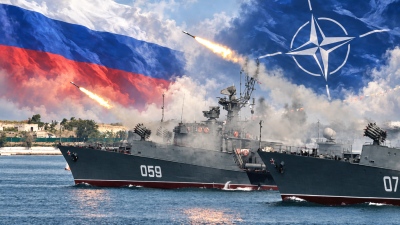
“If Tomahawks hit our cities, we will be forced to respond across the sovereign territory of the United States, its ships, or its military bases,” the Russian side declares.
(upd) The latest remark by U.S. special envoy for Ukraine Keith Kellogg, that the Trump administration is considering sending Tomahawk missiles to Ukraine, has sparked serious concerns about the possibility of an uncontrolled escalation of the conflict in Ukraine — one that could carry grave strategic consequences for the region and the world.
The statement heightens Russian worries, because the prospect of handing these advanced weapons to Ukraine raises fears of a new strategic escalation, with Washington seeking an approach intended to wear down Russia’s defensive capabilities and pave the way for a more direct NATO intervention.
At the same time, it has become known which target on Russian soil the Ukrainians, with American assistance, would attempt to strike.

The strategic rationale for supplying Tomahawks to Ukraine
The Tomahawk missile, with a range of up to 2,500 kilometres, would enable Ukraine to strike strategic targets inside Russia, creating a direct threat to the country’s national security.
Although the United States stresses that the missiles would be provided in conventional form, without nuclear warheads, Russia regards the threat as extremely serious.
The Tomahawks’ ability to hit targets with precision from long range, often hard to detect by Russian air‑defence systems, makes the American decision to supply them a strategic tool of pressure.
This type of strike is not aimed at forcing an immediate Russian withdrawal, but at a gradual degradation of its defensive systems so as to make a NATO intervention — or other strategic moves that could weaken Russia — more feasible.

This is the target Tomahawks would hit in Russia
The transfer of Tomahawks to Ukraine may be part of a broader U.S. strategy to weaken Russian defenses and make NATO military intervention more practicable should the conflict escalate further.
The Tomahawks’ extended range could expose Russian aviation and air‑defence assets to greater risk, since the missiles could strike targets deep inside Russian territory without needing to enter contested combat zones.
However, such moves are not without consequences.
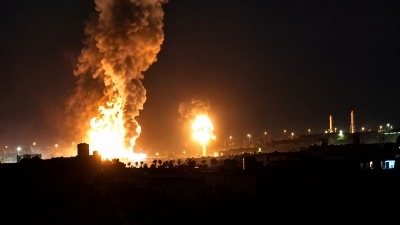
According to former U.S. Army deputy chief of staff, General Jack Keane, the primary target for Ukraine would be the Alabuga production facility, where Russian Geran‑type drones are manufactured.
That facility — currently out of range of the weapons Ukraine possesses — could become a key strategic target for Kyiv if it obtains Tomahawk missiles.
Grave risks in the U.S. plan to send Tomahawk missiles to Ukraine
The Pentagon appears to have developed plans to transfer Tomahawk cruise missiles to Ukraine, should it receive the appropriate order from U.S. President Donald Trump. At the same time, serious concerns are being voiced about the expected Russian reaction. U.S. military authorities acknowledge that supplying these missiles could trigger a dangerous escalation of the conflict and upset strategic balances in the region.
Particular attention is being paid to the need to provide appropriate launchers, since the Ukrainians do not possess the necessary means to fire the missiles without American assistance — a reality that could immediately put U.S. troops on the battlefield. The American defense industry has already developed new launch platforms for Tomahawks, such as the X‑MAV, an autonomous missile‑launch vehicle unveiled by Oshkosh Defense on October 13. However, shipping these launchers to Ukraine does not solve the problem of operating the missiles by Ukrainian crews and may well require the direct involvement of U.S. personnel to prepare and fire them.
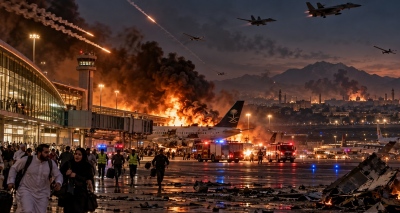
A spark for World War
The prospect of sending Tomahawks to Ukraine is not merely a tactical measure to strengthen Kyiv. The most critical issue is the inherent U.S. requirement for military participation in training and guiding Ukrainian forces in the use of these weapons. Even if the missiles are delivered to Ukraine, the need for U.S. personnel to plan and execute launches cannot be ignored.
That reality raises the risk of direct U.S. involvement in the conflict, which Russia could interpret as an act of war. If the United States begins to provide hands‑on military support — specialists responsible for launch procedures and mission planning — Moscow may view that move as a direct American attack. Such a development could trigger a dangerous strategic escalation, with Russia considering options ranging from conventional air strikes to even limited use of nuclear weapons.
Russian strategic response and “sleeper cells”
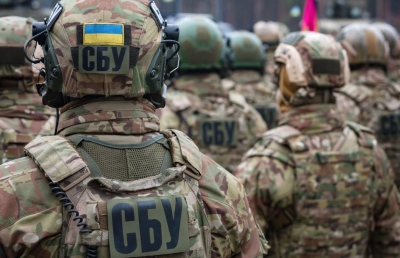
Russia cannot allow the transfer of Tomahawk missiles to Ukraine to go unnoticed. Moscow views such a move as strengthening Ukraine’s strategy to isolate Russian forces while further bolstering NATO’s presence in the region. Russian officials are expected to weigh a range of countermeasures, from reinforcing air defenses and hardening key infrastructure to potentially activating “sleeper cells” and other asymmetric options to safeguard their strategic interests.
Possible Russian responses to prevent Tomahawk transfers — Six scenarios
The following outlines potential Russian reactions aimed at deterring or countering the transfer of Tomahawk missiles to Ukraine. The list preserves the original structure and sequencing of scenarios reported by analysts and officials.
1. Increased strategic military presence on NATO borders:
Russia could redeploy forces along its NATO borders, disrupting contact lines and moving troops and materiel away from Ukraine, thereby altering regional force postures and creating new operational dilemmas for NATO.
2. Disruptions in Western Europe:
Russian officials would likely activate “sleeper spy cells” or undertake covert operations intended to foment political destabilisation in Europe, increasing domestic pressure on EU governments to avoid further escalation.
3. Strikes on Ukrainian infrastructure:
Moscow has already targeted strategic infrastructure in Ukraine and is likely to resume that campaign. Bridges over the Dnipro River and command centres in Kyiv, for example, could be targeted to degrade Ukraine’s ability to manage and respond to such strikes.
4. Attacks on U.S./NATO reconnaissance and guidance systems:
Russia may attempt to hit ISR (intelligence, surveillance, reconnaissance) assets that provide targeting data and battlefield management. Disrupting those systems would reduce the effectiveness of Tomahawk strikes.
5. Raised readiness of nuclear deterrent forces:
If Russia judges that the U.S. is preparing to become directly involved, it could increase the alert level of its nuclear forces as a coercive signal and to underline the risks of further escalation.
6. Use of ICBMs with conventional payloads:
Russia might employ non‑strategic use of ICBMs — that is, intercontinental ballistic missiles armed with conventional (non‑nuclear) warheads — to strike critical infrastructure inside Ukraine, a move that would be highly destabilising strategically.

Russian restraint — But for how long?
Despite the extreme responses that could be triggered by the U.S. and NATO, Russia appears to be pursuing a strategy of restraint.
The Kremlin’s top priority is avoiding a direct confrontation with the United States, as such a clash could have catastrophic consequences for the region and the global order. Russian President Vladimir Putin has demonstrated a willingness to employ crisis-management strategies, even amid rising tensions with the West.
So far, Russia has not initiated new strategic escalations — including responses involving nuclear strikes — and may continue its policy of restraint at this stage.
However, continued pressure from Ukraine, including the strengthening of its arsenal and increased U.S. support, could prompt a reassessment of Russia’s strategic objectives. Moscow may be forced to adopt more aggressive measures to maintain its dominant position.
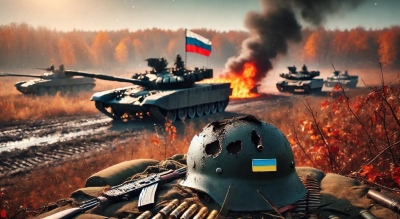
The provision of Tomahawk missiles to Ukraine is expected to intensify the conflict but is unlikely to alter the frontline situation significantly.
Alexei Zhuravlev, First Deputy Chairman of the State Duma’s Defense Committee, noted that in the event of strikes on Russian territory by these missiles, the U.S. military would become directly involved in hostilities.

Kremlin plan to strike the U.S. and Europe if Russian cities are hit by Tomahawks
“Every reasonable person — Republican, Democrat or even a communist — understands that new arms shipments worsen the conflict. Now we are talking about Tomahawk missiles that can be fitted with nuclear warheads — and during flight no one can tell whether they carry such a load or not. Moreover, even when these systems are transferred to NATO allies, the United States always retains control over them. So if such missiles appear in Ukraine, the U.S. military will launch them at Russian territory. That is direct involvement in the fighting — it’s like our missiles firing at the United States from the territory of Cuba, Venezuela or Mexico. The overall frontline situation, however, is unlikely to be seriously affected — as has happened in the past with other types of Western weapons. Ukraine has always awaited a miracle weapon that could reverse the situation, but then we burned the Leopards and the Abrams while shooting down F‑16s. The same will happen with Tomahawks, with these old missiles.”
The MP added that, in response to Tomahawk strikes, Russia would be forced to strike sovereign U.S. territory.
“If Tomahawks hit our cities, we will be forced to respond across the sovereign territory of the United States — its ships or its military bases,” he said.
The Kyiv Post reported that President Trump is close to a “historic decision” to supply long‑range Tomahawk missiles to Ukraine. The outlet linked the move to alleged “recent destructive Russian attacks on Ukraine’s energy system.”
The New York Times wrote that transferring Tomahawks to Ukraine would bring the United States closer to a direct confrontation with Russia, and noted that Ukraine would need an American launcher, such as the Typhon, to fire the missiles.
The transfer of Tomahawks to Ukraine is not only a military question but a political one. Through Foreign Ministry spokeswoman Maria Zakharova, Russia accuses the West of demonstrating a lack of real will to resolve the conflict in Ukraine, and portrays Western assistance as a strategy aimed at undermining Russia.
Ukrainian President Volodymyr Zelensky met with EU foreign policy chief Kaja Kallas and said he intends to secure financing for the Tomahawk purchase from frozen Russian assets — a move that would further increase pressure on Moscow.
For its part, the United States appears cautious about the transfer, while Ukraine continues to press for this strategic reinforcement.
Playing with fire – Russia could strike U.S. and NATO bases in Europe
Douglas McGregor, former Pentagon advisor, has warned that supplying Ukraine with Tomahawk missiles from the U.S. is “playing with fire.”
According to McGregor, Russia could respond by striking any U.S. or NATO base in Europe if it deems that only the language of force is understood.
He emphasizes that American diplomacy is often replaced by coercion and intimidation — a dangerous practice when dealing with Russia. The potential transfer of Tomahawks to Ukraine could trigger retaliatory attacks targeting any U.S. or NATO facility in Lithuania or Romania, including airfields or military installations.
Meanwhile, Ukraine has long requested such missiles, with U.S. President Donald Trump stating that he is considering the option, though no final decision has been made. Western media reports suggest a possible shipment of 20–50 missiles, which would not drastically alter the battlefield but would primarily serve as a pressure tool and a test of Russia’s limits.
The technical aspect of the issue appears secondary, as the political dimension is critical: deploying long-range missiles controlled via U.S. satellites is considered a major escalation.
Journalist Alex Jones has suggested that such a decision could mark the starting point for a Third World War, especially if Ukraine uses the missiles to strike European territory and blames Russia for the attacks.
Belarusian President Alexander Lukashenko has also warned that sending Tomahawks to Ukraine could lead to uncontrollable escalation, turning the conflict from a regional to a global one, increasing the risk of nuclear confrontation.
www.bankingnews.gr
The statement heightens Russian worries, because the prospect of handing these advanced weapons to Ukraine raises fears of a new strategic escalation, with Washington seeking an approach intended to wear down Russia’s defensive capabilities and pave the way for a more direct NATO intervention.
At the same time, it has become known which target on Russian soil the Ukrainians, with American assistance, would attempt to strike.
The strategic rationale for supplying Tomahawks to Ukraine
The Tomahawk missile, with a range of up to 2,500 kilometres, would enable Ukraine to strike strategic targets inside Russia, creating a direct threat to the country’s national security.
Although the United States stresses that the missiles would be provided in conventional form, without nuclear warheads, Russia regards the threat as extremely serious.
The Tomahawks’ ability to hit targets with precision from long range, often hard to detect by Russian air‑defence systems, makes the American decision to supply them a strategic tool of pressure.
This type of strike is not aimed at forcing an immediate Russian withdrawal, but at a gradual degradation of its defensive systems so as to make a NATO intervention — or other strategic moves that could weaken Russia — more feasible.
This is the target Tomahawks would hit in Russia
The transfer of Tomahawks to Ukraine may be part of a broader U.S. strategy to weaken Russian defenses and make NATO military intervention more practicable should the conflict escalate further.
The Tomahawks’ extended range could expose Russian aviation and air‑defence assets to greater risk, since the missiles could strike targets deep inside Russian territory without needing to enter contested combat zones.
However, such moves are not without consequences.
According to former U.S. Army deputy chief of staff, General Jack Keane, the primary target for Ukraine would be the Alabuga production facility, where Russian Geran‑type drones are manufactured.
That facility — currently out of range of the weapons Ukraine possesses — could become a key strategic target for Kyiv if it obtains Tomahawk missiles.
Grave risks in the U.S. plan to send Tomahawk missiles to Ukraine
The Pentagon appears to have developed plans to transfer Tomahawk cruise missiles to Ukraine, should it receive the appropriate order from U.S. President Donald Trump. At the same time, serious concerns are being voiced about the expected Russian reaction. U.S. military authorities acknowledge that supplying these missiles could trigger a dangerous escalation of the conflict and upset strategic balances in the region.
Particular attention is being paid to the need to provide appropriate launchers, since the Ukrainians do not possess the necessary means to fire the missiles without American assistance — a reality that could immediately put U.S. troops on the battlefield. The American defense industry has already developed new launch platforms for Tomahawks, such as the X‑MAV, an autonomous missile‑launch vehicle unveiled by Oshkosh Defense on October 13. However, shipping these launchers to Ukraine does not solve the problem of operating the missiles by Ukrainian crews and may well require the direct involvement of U.S. personnel to prepare and fire them.
A spark for World War
The prospect of sending Tomahawks to Ukraine is not merely a tactical measure to strengthen Kyiv. The most critical issue is the inherent U.S. requirement for military participation in training and guiding Ukrainian forces in the use of these weapons. Even if the missiles are delivered to Ukraine, the need for U.S. personnel to plan and execute launches cannot be ignored.
That reality raises the risk of direct U.S. involvement in the conflict, which Russia could interpret as an act of war. If the United States begins to provide hands‑on military support — specialists responsible for launch procedures and mission planning — Moscow may view that move as a direct American attack. Such a development could trigger a dangerous strategic escalation, with Russia considering options ranging from conventional air strikes to even limited use of nuclear weapons.
Russian strategic response and “sleeper cells”
Russia cannot allow the transfer of Tomahawk missiles to Ukraine to go unnoticed. Moscow views such a move as strengthening Ukraine’s strategy to isolate Russian forces while further bolstering NATO’s presence in the region. Russian officials are expected to weigh a range of countermeasures, from reinforcing air defenses and hardening key infrastructure to potentially activating “sleeper cells” and other asymmetric options to safeguard their strategic interests.
Possible Russian responses to prevent Tomahawk transfers — Six scenarios
The following outlines potential Russian reactions aimed at deterring or countering the transfer of Tomahawk missiles to Ukraine. The list preserves the original structure and sequencing of scenarios reported by analysts and officials.
1. Increased strategic military presence on NATO borders:
Russia could redeploy forces along its NATO borders, disrupting contact lines and moving troops and materiel away from Ukraine, thereby altering regional force postures and creating new operational dilemmas for NATO.
2. Disruptions in Western Europe:
Russian officials would likely activate “sleeper spy cells” or undertake covert operations intended to foment political destabilisation in Europe, increasing domestic pressure on EU governments to avoid further escalation.
3. Strikes on Ukrainian infrastructure:
Moscow has already targeted strategic infrastructure in Ukraine and is likely to resume that campaign. Bridges over the Dnipro River and command centres in Kyiv, for example, could be targeted to degrade Ukraine’s ability to manage and respond to such strikes.
4. Attacks on U.S./NATO reconnaissance and guidance systems:
Russia may attempt to hit ISR (intelligence, surveillance, reconnaissance) assets that provide targeting data and battlefield management. Disrupting those systems would reduce the effectiveness of Tomahawk strikes.
5. Raised readiness of nuclear deterrent forces:
If Russia judges that the U.S. is preparing to become directly involved, it could increase the alert level of its nuclear forces as a coercive signal and to underline the risks of further escalation.
6. Use of ICBMs with conventional payloads:
Russia might employ non‑strategic use of ICBMs — that is, intercontinental ballistic missiles armed with conventional (non‑nuclear) warheads — to strike critical infrastructure inside Ukraine, a move that would be highly destabilising strategically.
Russian restraint — But for how long?
Despite the extreme responses that could be triggered by the U.S. and NATO, Russia appears to be pursuing a strategy of restraint.
The Kremlin’s top priority is avoiding a direct confrontation with the United States, as such a clash could have catastrophic consequences for the region and the global order. Russian President Vladimir Putin has demonstrated a willingness to employ crisis-management strategies, even amid rising tensions with the West.
So far, Russia has not initiated new strategic escalations — including responses involving nuclear strikes — and may continue its policy of restraint at this stage.
However, continued pressure from Ukraine, including the strengthening of its arsenal and increased U.S. support, could prompt a reassessment of Russia’s strategic objectives. Moscow may be forced to adopt more aggressive measures to maintain its dominant position.
The provision of Tomahawk missiles to Ukraine is expected to intensify the conflict but is unlikely to alter the frontline situation significantly.
Alexei Zhuravlev, First Deputy Chairman of the State Duma’s Defense Committee, noted that in the event of strikes on Russian territory by these missiles, the U.S. military would become directly involved in hostilities.
Kremlin plan to strike the U.S. and Europe if Russian cities are hit by Tomahawks
“Every reasonable person — Republican, Democrat or even a communist — understands that new arms shipments worsen the conflict. Now we are talking about Tomahawk missiles that can be fitted with nuclear warheads — and during flight no one can tell whether they carry such a load or not. Moreover, even when these systems are transferred to NATO allies, the United States always retains control over them. So if such missiles appear in Ukraine, the U.S. military will launch them at Russian territory. That is direct involvement in the fighting — it’s like our missiles firing at the United States from the territory of Cuba, Venezuela or Mexico. The overall frontline situation, however, is unlikely to be seriously affected — as has happened in the past with other types of Western weapons. Ukraine has always awaited a miracle weapon that could reverse the situation, but then we burned the Leopards and the Abrams while shooting down F‑16s. The same will happen with Tomahawks, with these old missiles.”
The MP added that, in response to Tomahawk strikes, Russia would be forced to strike sovereign U.S. territory.
“If Tomahawks hit our cities, we will be forced to respond across the sovereign territory of the United States — its ships or its military bases,” he said.
The Kyiv Post reported that President Trump is close to a “historic decision” to supply long‑range Tomahawk missiles to Ukraine. The outlet linked the move to alleged “recent destructive Russian attacks on Ukraine’s energy system.”
The New York Times wrote that transferring Tomahawks to Ukraine would bring the United States closer to a direct confrontation with Russia, and noted that Ukraine would need an American launcher, such as the Typhon, to fire the missiles.
The transfer of Tomahawks to Ukraine is not only a military question but a political one. Through Foreign Ministry spokeswoman Maria Zakharova, Russia accuses the West of demonstrating a lack of real will to resolve the conflict in Ukraine, and portrays Western assistance as a strategy aimed at undermining Russia.
Ukrainian President Volodymyr Zelensky met with EU foreign policy chief Kaja Kallas and said he intends to secure financing for the Tomahawk purchase from frozen Russian assets — a move that would further increase pressure on Moscow.
For its part, the United States appears cautious about the transfer, while Ukraine continues to press for this strategic reinforcement.
Playing with fire – Russia could strike U.S. and NATO bases in Europe
Douglas McGregor, former Pentagon advisor, has warned that supplying Ukraine with Tomahawk missiles from the U.S. is “playing with fire.”
According to McGregor, Russia could respond by striking any U.S. or NATO base in Europe if it deems that only the language of force is understood.
He emphasizes that American diplomacy is often replaced by coercion and intimidation — a dangerous practice when dealing with Russia. The potential transfer of Tomahawks to Ukraine could trigger retaliatory attacks targeting any U.S. or NATO facility in Lithuania or Romania, including airfields or military installations.
Meanwhile, Ukraine has long requested such missiles, with U.S. President Donald Trump stating that he is considering the option, though no final decision has been made. Western media reports suggest a possible shipment of 20–50 missiles, which would not drastically alter the battlefield but would primarily serve as a pressure tool and a test of Russia’s limits.
The technical aspect of the issue appears secondary, as the political dimension is critical: deploying long-range missiles controlled via U.S. satellites is considered a major escalation.
Journalist Alex Jones has suggested that such a decision could mark the starting point for a Third World War, especially if Ukraine uses the missiles to strike European territory and blames Russia for the attacks.
Belarusian President Alexander Lukashenko has also warned that sending Tomahawks to Ukraine could lead to uncontrollable escalation, turning the conflict from a regional to a global one, increasing the risk of nuclear confrontation.
www.bankingnews.gr




Σχόλια αναγνωστών