

Russia warns the U.S.: Serious escalation if Tomahawks are sent to Ukraine.
As the U.S. Pentagon debates how many Tomahawk missiles to send to Ukraine, awaiting final approval from President Trump; Western media themselves are moving quickly to debunk the myth of the American missiles.
They point out that the Tomahawk — long seen as a symbol of American aggression — is far from being a superweapon and is unlikely to alter the balance or course of the war in Ukraine. Analysts note that the Russians, just as they did 25 years ago in Serbia, will shoot them down again.
Nevertheless, given that the use of these missiles would require direct involvement of American troops in the conflict, Russia stresses that any shipment of Tomahawks would constitute a serious escalation on the Ukrainian front. Moscow warns that a strike with a Tomahawk on a Russian city would be a point of no return, crossing all of Russia’s “red lines” and activating its nuclear doctrine.
Russia will intercept them
If the U.S. delivers Tomahawk missiles to Ukraine, Russia will be able to intercept them, argues Brendon Weichert, an analyst at the American magazine The National Interest.
“Tomahawks can be intercepted — and they will be intercepted — by Russian air defense systems. This is not just theoretical. It was proven convincingly over 25 years ago, and Russian air defense has become even more advanced since then,” Weichert notes.
They were shot down by the Serbs
Weichert points out that Tomahawks were successfully intercepted even by the relatively weak Serbian military.
“Independent analyses from multiple open sources and post-war studies show that a combination of surveillance radars, anti-missile systems, artillery, and electronic warfare made at least partial interception possible by Serbia in 1999,” he explains.

Even old air defense systems can shoot them down
According to the analyst, with proper use, Tomahawks can be intercepted even by older systems such as the S-125 “Neva,” 2K12 “Kub,” and S-75. He notes that modern Tomahawks are equipped with inertial navigation systems, which Russia is believed to have studied through fragments of missiles intercepted in Syria.
They will not change the frontline
Meanwhile, even NATO sources do not believe that potential U.S. deliveries of Tomahawks to Ukraine would change the situation on the frontline.
As the Financial Times reports, citing sources:
“Can they change the situation? Not anytime soon. A senior NATO official stated that Tomahawks would complement what Ukraine has already achieved with long-range drone strikes.”
Mark Cancian, a former Pentagon official now working with Canadian Intelligence, agrees: the disruption of the battlefield would depend more on how the missiles are launched than the missiles themselves.
Trump’s conditions
According to the Washington Post, citing sources, U.S. President Donald Trump would only deliver Tomahawks to the Ukrainian armed forces in the event of a “complete deadlock” in negotiations with Moscow.
“President Zelensky’s team understands that there is strong resistance in the U.S. to delivering Tomahawks and that the Trump administration would only provide them if it sees a complete impasse in talks with Moscow,” the report notes.

The framework of the agreement
A senior NATO diplomat stated that if Trump gives the green light, Tomahawks may be delivered under a recent U.S.-European agreement, whereby European countries would cover the cost of U.S. weapons deliveries to Ukraine, though it is unclear which countries would bear the expense.
The source also noted that the effectiveness of the Tomahawks on the battlefield will depend on both quantity and usage, but generally they would add to Ukraine’s long-range strike capabilities, including existing drone attacks.
Serious warning from Russia
Kremlin spokesperson Dmitry Peskov stated that the situation around Ukraine would escalate to a new level if the U.S. decides to deliver Tomahawks.
“The issue of Tomahawk missiles keeps resurfacing. Russia’s assessment — expressed repeatedly by President Putin and Foreign Minister Lavrov — is that this would be a significant move towards a qualitatively new level of escalation. Our position is absolutely clear and widely known in both Washington and Kyiv,” Peskov emphasized.
Peskov also noted that even if a decision is made to deliver Tomahawks, they will not be a panacea for the Ukrainian army and will not change the frontline. He stressed that it is important to understand who will launch the missiles — Americans or Ukrainians.
Additionally, Peskov warned that delivering Tomahawks to Ukraine could “end badly for everyone.”
Financial Times: Pentagon disagreements over quantity
The Financial Times reports disagreements in the U.S. Pentagon over how many Tomahawks NATO allies are willing to supply to Ukraine.
According to the report, the Pentagon continues to debate the number of missiles allies are ready to deliver, noting that U.S. stocks are being consumed faster than they are replenished.
“This is likely the subject of the ongoing dispute in the Pentagon,” said former U.S. Deputy Assistant Secretary of Defense Jim Townsend.
Since 2022, the U.S. has acquired 202 Tomahawks, using at least 124 in attacks against the Houthis and Iranian nuclear facilities. Some may also be reserved for potential strikes in Venezuela.
Even if the U.S. decides to deliver Tomahawks, the quantity will be small, and President Zelensky will need to be very careful about how they are used.

Poland’s challenge – Strike Russian oil refineries
Poland has also called on the U.S. to provide Tomahawks to Ukraine for strikes against Russia. Foreign Minister Radosław Sikorski argued that the missiles could target Russian oil refineries, downplaying Russian concerns that such a delivery would be an unnecessary provocation, according to The Guardian.
Sikorski also claimed that Hungarian Prime Minister Viktor Orban told Trump that Russia always wins.
New York Times: Major challenges in delivering Tomahawks
The New York Times reports that supplying Tomahawks to Ukraine will involve major logistical challenges, primarily because Ukraine lacks the launchers for ships or land-based systems required to fire these missiles.
Zelensky’s assurances
Meanwhile, Ukrainian President Volodymyr Zelensky assured Trump in a phone call on October 13 that Kyiv would only use Tomahawks against Russian military targets. Similar assurances are expected during Zelensky’s meeting at the White House on October 17.
The 1962 analogy
The nuclear tension surrounding potential Tomahawk deliveries to Ukraine echoes the 1962 Cuban Missile Crisis, when the U.S. and the Soviet Union stood on the brink of nuclear war over missile deployments to Cuba.
In 1962, the U.S. reacted to Cuba being only 90 miles from Florida. Similarly, Moscow points out that the U.S. is supplying long-range missiles capable of carrying nuclear warheads to a country that borders Russia and is at war with it.
Russia’s nuclear doctrine
Russia has revised its nuclear strategy. In November 2024, Kremlin spokesperson Dmitry Peskov stated that new Russian nuclear strategy changes, signed by President Putin, mean that the use of Western non-nuclear missiles by Ukrainian forces against Russia could trigger a nuclear response.
Thus, U.S.-supplied Tomahawks cross Moscow’s nuclear threshold.
However, the real likelihood of Russia using nuclear weapons over Tomahawks is debatable.
The Tomahawk missile
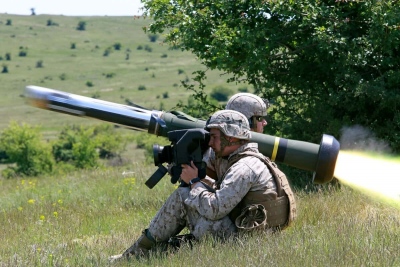
The Tomahawk is a medium-range (2,500 km / 1,550 miles) subsonic cruise missile launched from U.S. Navy ships and submarines.
It would allow Ukraine to strike deep into Russian territory, including Moscow and beyond.
The missile can carry conventional or nuclear warheads, measures 6.1 meters long with a 2.6-meter wingspan, and weighs 1,510 kg, carrying a 454-kg payload. Each missile costs around $1.3 million USD.
Difficult to detect
Designed to fly at subsonic speeds and low altitude, Tomahawks are hard to detect by radar and use sophisticated guidance systems to maneuver.
Tomahawks were first used in combat during the 1991 Gulf War in Operation Desert Storm and later in Operation Iraqi Freedom (2003). They have also been deployed in Afghanistan, Somalia, Libya, Syria, and more recently, against Houthis in Yemen and Iran’s nuclear facilities.

Tomahawk variants
Several variants exist:
Block I: TLAM-N (nuclear), TLAM-A, RGM/UGM-109A, and TASM (anti-ship).
Block II: TLAM-C for hardened targets, TLAM-D for soft targets like troops.
Block III: Electronic upgrades for coordinated attacks.
Block IV: Modern version capable of loitering for hours and featuring two-way communication for updated targeting and course corrections.
Could Russia use nuclear weapons?
According to Russia’s new nuclear strategy, Moscow could use nuclear weapons if Ukrainian forces strike Russia with Western non-nuclear missiles.
Tomahawks would therefore cross Russia’s nuclear threshold, though historical precedent suggests a nuclear response is unlikely. Ukraine does not have nuclear warheads, and previous use of ATACMS, Storm Shadow, F-16s, and Mirage-2000 aircraft — all capable of carrying nuclear weapons — did not trigger a nuclear reaction from Moscow.
F-16 and mirage precedent
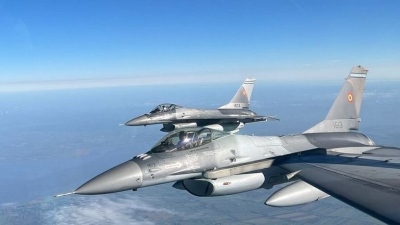
Russia made similar warnings when F-16s from the U.S. and Mirage-2000s from France were delivered to Ukraine. Both aircraft can carry nuclear weapons. Then-Foreign Minister Sergey Lavrov warned that supplying F-16s to Ukraine could escalate the conflict further.
Strategic response
These precedents suggest that while supplying Tomahawks would be a dangerous escalation, their use is unlikely to trigger a nuclear war. Previous missiles and aircraft did not alter the battlefield dramatically, and Russia is more likely to respond by arming U.S. adversaries like Iran or North Korea with higher-tier weapons.
Trump’s goal with Tomahawks – Pressure Germany for Taurus missiles
One strategic aim of Trump potentially sending Tomahawks to Ukraine is to pressure Europe, particularly Germany, to deliver Taurus missiles to Kyiv, according to the Ukrainian Kyiv Post.
“This move is designed not only to strengthen Ukraine’s defense but also to force hesitant European allies, especially Germany, to follow suit,” the report notes.
Trump has indicated he is almost ready to decide on supplying Tomahawks but wants to understand how Kyiv intends to use them.
In July, German Chancellor Friedrich Merz said he discussed with Zelensky the possibility of training Ukrainian soldiers on Taurus missiles, noting that training could take at least six months.
Russia has indicated that delivering Tomahawks or Taurus missiles will not significantly affect the course of the war in Ukraine.
www.bankingnews.gr
They point out that the Tomahawk — long seen as a symbol of American aggression — is far from being a superweapon and is unlikely to alter the balance or course of the war in Ukraine. Analysts note that the Russians, just as they did 25 years ago in Serbia, will shoot them down again.
Nevertheless, given that the use of these missiles would require direct involvement of American troops in the conflict, Russia stresses that any shipment of Tomahawks would constitute a serious escalation on the Ukrainian front. Moscow warns that a strike with a Tomahawk on a Russian city would be a point of no return, crossing all of Russia’s “red lines” and activating its nuclear doctrine.
Russia will intercept them
If the U.S. delivers Tomahawk missiles to Ukraine, Russia will be able to intercept them, argues Brendon Weichert, an analyst at the American magazine The National Interest.
“Tomahawks can be intercepted — and they will be intercepted — by Russian air defense systems. This is not just theoretical. It was proven convincingly over 25 years ago, and Russian air defense has become even more advanced since then,” Weichert notes.
They were shot down by the Serbs
Weichert points out that Tomahawks were successfully intercepted even by the relatively weak Serbian military.
“Independent analyses from multiple open sources and post-war studies show that a combination of surveillance radars, anti-missile systems, artillery, and electronic warfare made at least partial interception possible by Serbia in 1999,” he explains.
Even old air defense systems can shoot them down
According to the analyst, with proper use, Tomahawks can be intercepted even by older systems such as the S-125 “Neva,” 2K12 “Kub,” and S-75. He notes that modern Tomahawks are equipped with inertial navigation systems, which Russia is believed to have studied through fragments of missiles intercepted in Syria.
They will not change the frontline
Meanwhile, even NATO sources do not believe that potential U.S. deliveries of Tomahawks to Ukraine would change the situation on the frontline.
As the Financial Times reports, citing sources:
“Can they change the situation? Not anytime soon. A senior NATO official stated that Tomahawks would complement what Ukraine has already achieved with long-range drone strikes.”
Mark Cancian, a former Pentagon official now working with Canadian Intelligence, agrees: the disruption of the battlefield would depend more on how the missiles are launched than the missiles themselves.
Trump’s conditions
According to the Washington Post, citing sources, U.S. President Donald Trump would only deliver Tomahawks to the Ukrainian armed forces in the event of a “complete deadlock” in negotiations with Moscow.
“President Zelensky’s team understands that there is strong resistance in the U.S. to delivering Tomahawks and that the Trump administration would only provide them if it sees a complete impasse in talks with Moscow,” the report notes.
The framework of the agreement
A senior NATO diplomat stated that if Trump gives the green light, Tomahawks may be delivered under a recent U.S.-European agreement, whereby European countries would cover the cost of U.S. weapons deliveries to Ukraine, though it is unclear which countries would bear the expense.
The source also noted that the effectiveness of the Tomahawks on the battlefield will depend on both quantity and usage, but generally they would add to Ukraine’s long-range strike capabilities, including existing drone attacks.
Serious warning from Russia
Kremlin spokesperson Dmitry Peskov stated that the situation around Ukraine would escalate to a new level if the U.S. decides to deliver Tomahawks.
“The issue of Tomahawk missiles keeps resurfacing. Russia’s assessment — expressed repeatedly by President Putin and Foreign Minister Lavrov — is that this would be a significant move towards a qualitatively new level of escalation. Our position is absolutely clear and widely known in both Washington and Kyiv,” Peskov emphasized.
Peskov also noted that even if a decision is made to deliver Tomahawks, they will not be a panacea for the Ukrainian army and will not change the frontline. He stressed that it is important to understand who will launch the missiles — Americans or Ukrainians.
Additionally, Peskov warned that delivering Tomahawks to Ukraine could “end badly for everyone.”
Financial Times: Pentagon disagreements over quantity
The Financial Times reports disagreements in the U.S. Pentagon over how many Tomahawks NATO allies are willing to supply to Ukraine.
According to the report, the Pentagon continues to debate the number of missiles allies are ready to deliver, noting that U.S. stocks are being consumed faster than they are replenished.
“This is likely the subject of the ongoing dispute in the Pentagon,” said former U.S. Deputy Assistant Secretary of Defense Jim Townsend.
Since 2022, the U.S. has acquired 202 Tomahawks, using at least 124 in attacks against the Houthis and Iranian nuclear facilities. Some may also be reserved for potential strikes in Venezuela.
Even if the U.S. decides to deliver Tomahawks, the quantity will be small, and President Zelensky will need to be very careful about how they are used.
Poland’s challenge – Strike Russian oil refineries
Poland has also called on the U.S. to provide Tomahawks to Ukraine for strikes against Russia. Foreign Minister Radosław Sikorski argued that the missiles could target Russian oil refineries, downplaying Russian concerns that such a delivery would be an unnecessary provocation, according to The Guardian.
Sikorski also claimed that Hungarian Prime Minister Viktor Orban told Trump that Russia always wins.
New York Times: Major challenges in delivering Tomahawks
The New York Times reports that supplying Tomahawks to Ukraine will involve major logistical challenges, primarily because Ukraine lacks the launchers for ships or land-based systems required to fire these missiles.
Zelensky’s assurances
Meanwhile, Ukrainian President Volodymyr Zelensky assured Trump in a phone call on October 13 that Kyiv would only use Tomahawks against Russian military targets. Similar assurances are expected during Zelensky’s meeting at the White House on October 17.
The 1962 analogy
The nuclear tension surrounding potential Tomahawk deliveries to Ukraine echoes the 1962 Cuban Missile Crisis, when the U.S. and the Soviet Union stood on the brink of nuclear war over missile deployments to Cuba.
In 1962, the U.S. reacted to Cuba being only 90 miles from Florida. Similarly, Moscow points out that the U.S. is supplying long-range missiles capable of carrying nuclear warheads to a country that borders Russia and is at war with it.
Russia’s nuclear doctrine
Russia has revised its nuclear strategy. In November 2024, Kremlin spokesperson Dmitry Peskov stated that new Russian nuclear strategy changes, signed by President Putin, mean that the use of Western non-nuclear missiles by Ukrainian forces against Russia could trigger a nuclear response.
Thus, U.S.-supplied Tomahawks cross Moscow’s nuclear threshold.
However, the real likelihood of Russia using nuclear weapons over Tomahawks is debatable.
The Tomahawk missile
The Tomahawk is a medium-range (2,500 km / 1,550 miles) subsonic cruise missile launched from U.S. Navy ships and submarines.
It would allow Ukraine to strike deep into Russian territory, including Moscow and beyond.
The missile can carry conventional or nuclear warheads, measures 6.1 meters long with a 2.6-meter wingspan, and weighs 1,510 kg, carrying a 454-kg payload. Each missile costs around $1.3 million USD.
Difficult to detect
Designed to fly at subsonic speeds and low altitude, Tomahawks are hard to detect by radar and use sophisticated guidance systems to maneuver.
Tomahawks were first used in combat during the 1991 Gulf War in Operation Desert Storm and later in Operation Iraqi Freedom (2003). They have also been deployed in Afghanistan, Somalia, Libya, Syria, and more recently, against Houthis in Yemen and Iran’s nuclear facilities.
Tomahawk variants
Several variants exist:
Block I: TLAM-N (nuclear), TLAM-A, RGM/UGM-109A, and TASM (anti-ship).
Block II: TLAM-C for hardened targets, TLAM-D for soft targets like troops.
Block III: Electronic upgrades for coordinated attacks.
Block IV: Modern version capable of loitering for hours and featuring two-way communication for updated targeting and course corrections.
Could Russia use nuclear weapons?
According to Russia’s new nuclear strategy, Moscow could use nuclear weapons if Ukrainian forces strike Russia with Western non-nuclear missiles.
Tomahawks would therefore cross Russia’s nuclear threshold, though historical precedent suggests a nuclear response is unlikely. Ukraine does not have nuclear warheads, and previous use of ATACMS, Storm Shadow, F-16s, and Mirage-2000 aircraft — all capable of carrying nuclear weapons — did not trigger a nuclear reaction from Moscow.
F-16 and mirage precedent
Russia made similar warnings when F-16s from the U.S. and Mirage-2000s from France were delivered to Ukraine. Both aircraft can carry nuclear weapons. Then-Foreign Minister Sergey Lavrov warned that supplying F-16s to Ukraine could escalate the conflict further.
Strategic response
These precedents suggest that while supplying Tomahawks would be a dangerous escalation, their use is unlikely to trigger a nuclear war. Previous missiles and aircraft did not alter the battlefield dramatically, and Russia is more likely to respond by arming U.S. adversaries like Iran or North Korea with higher-tier weapons.
Trump’s goal with Tomahawks – Pressure Germany for Taurus missiles
One strategic aim of Trump potentially sending Tomahawks to Ukraine is to pressure Europe, particularly Germany, to deliver Taurus missiles to Kyiv, according to the Ukrainian Kyiv Post.
“This move is designed not only to strengthen Ukraine’s defense but also to force hesitant European allies, especially Germany, to follow suit,” the report notes.
Trump has indicated he is almost ready to decide on supplying Tomahawks but wants to understand how Kyiv intends to use them.
In July, German Chancellor Friedrich Merz said he discussed with Zelensky the possibility of training Ukrainian soldiers on Taurus missiles, noting that training could take at least six months.
Russia has indicated that delivering Tomahawks or Taurus missiles will not significantly affect the course of the war in Ukraine.
www.bankingnews.gr






Σχόλια αναγνωστών