

The shadow fleet of Russia is now in the crosshairs, as the West seeks to hit Moscow’s oil and gas revenues — a move aimed at securing absolute dominance in the global hydrocarbons market.
With its 19th sanctions package, the European Union, along with U.S. sanctions on Russian oil giants Rosneft and Lukoil, has effectively declared an indirect naval war on Russia.
Europe’s new measures include a ban on liquefied natural gas (LNG) supplies, additional restrictions on Russian diplomats’ movements, and, most notably, the blacklisting of 117 more tankers carrying Russian oil and gas.
It is clear that Europe aims to deprive Russia of hydrocarbon export revenues, thereby sharply reducing state income and provoking domestic unrest.
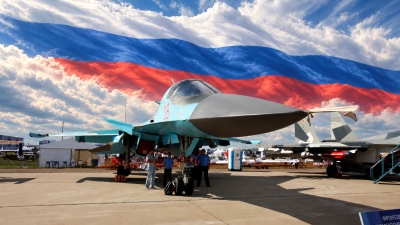
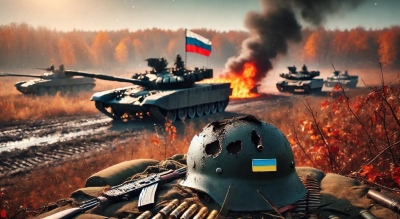
According to experts, the “shadow fleet” may attempt to reach buyers with the support of Russian warships, a scenario that carries the risk of a major naval confrontation. Reports already suggest that Russia is considering military escorts, deploying fighter jets and frigates to protect tankers.
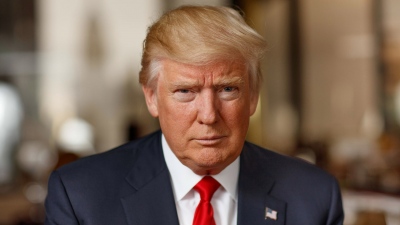
All indications suggest that the Baltic Sea risks becoming a theater of direct military confrontation between nuclear powers — especially as Moscow warns that, following the cancellation of the Trump–Putin meeting in Budapest, there are now “no limits or hesitations” left.
The EU sanctions
The sanctions package is broad and primarily targets Russia’s energy sector.
The EU has introduced a complete ban on importing Russian LNG from short-term contracts starting April 25, 2026, and from long-term contracts as of January 1, 2027.
Thus, from April 25, 2026, the purchase, import, or transfer — directly or indirectly — of LNG produced or exported from Russia will be prohibited.
“We are imposing sanctions on 117 ships of the Russian shadow fleet. In total, 564 vessels are now under EU sanctions,” said Dutch Foreign Minister David van Wijla.
The Americans follow suit
At the same time, the U.S. moved in coordination with Europe.
The U.S. Treasury Department has imposed sanctions on 28 subsidiaries of Rosneft and six subsidiaries of Lukoil.
American companies are required to terminate all contracts with these entities within one month.
In essence, Washington followed Brussels in a joint effort to strangle the Russian energy sector, whose revenues this year were projected to reach 8.317 trillion rubles — roughly 3.7% of GDP.
However, the most serious blow for Moscow comes from the sanctions on its shadow fleet.
Regardless of restrictions, oil and gas extraction will continue, but transport and sales are the key issue. Without the shadow fleet, that becomes impossible.
Europe’s weakness breeds recklessness
Alexander Frolov, deputy director and analyst at the National Energy Institute, stated that over half of Russia’s hydrocarbon exports pass through two ports in the Leningrad region — Primorsk and Ust-Luga.
Russia exports more than 2.5 million barrels of oil per day through these two terminals alone.
“The goal of EU sanctions is to block precisely this transit corridor, since they cannot restrict exports from Novorossiysk or Russia’s Far Eastern ports,” said Frolov.
According to him, sanctions against the shadow fleet (which carries Russian oil using ships under foreign flags) are largely ineffective.
“These restrictions simply mean that such ships can’t enter European ports or be insured by European insurers,” he noted, adding that Russia has already found ways around these issues — through alternative carriers, insurers, and ports.
Through the Baltic
Europe is well aware that Russian oil passes through the Baltic Sea, and there is little it can do to stop it.
“The only way for them to halt Russian transit is to stop the ‘shadow ships’ with warships,” the Russian analyst claimed.
The process, it seems, has already begun.
In January, Finnish special forces attacked the Eagle S, a Cook Islands–flagged tanker carrying oil to Egypt.
On April 11, Estonian forces seized the KIWALA, a Djibouti-flagged tanker, arresting its 23 Mauritian crew members and one Chinese national.
Russia responded gradually.
In May, Estonian forces attempted to seize the Jaguar, a Gabon-flagged tanker, deploying a patrol ship, a helicopter, and a chase vessel.
Dogfights in the air
When the crew refused to comply, NATO aircraft and helicopters, including Polish MiG-29s, took to the skies.
Russia immediately scrambled a Su-35S fighter jet, which, according to Estonian authorities, violated Estonian airspace to cover the tanker’s escape.
The attackers were reportedly intimidated and retreated.
While provocations in the Baltic have temporarily ceased, similar incidents have been reported off the coast of France — far beyond the reach of Russian aircraft.
“And what do they do with pirates?”
On September 27, the Boracay tanker, which had departed from Primorsk, was seized by a French Navy frigate.
The reason, seemingly fabricated: the ship’s captain allegedly “refused to comply” with French orders.
Naturally, this is absurd — how could a tanker “refuse” a warship? By spraying it with oil hoses?
The incident provoked a strong reaction from President Vladimir Putin, who labeled the French “pirates.”
“And what do they do with pirates? They destroy them,” Putin said during remarks at the Valdai International Discussion Club.
It’s war
EU countries are now discussing the possible seizure of tankers that, according to Brussels, belong to Russia’s shadow fleet.
The European Commission has even appointed a special coordinator for the issue, EU foreign policy chief Kaja Kallas announced recently.
“We need a more reliable, EU-wide approach to combat the shadow fleet,” emphasized Kallas.
What does this mean?
The EU is effectively authorizing naval piracy, expanding the list of vessels that member states are allowed to seize.
Is it war?
Yes, it’s war, claim Russian media.
Ivan Konovalov, a military analyst and PhD candidate in history, believes Russia must respond.
“The Estonian incident showed that there will be a response,” said Konovalov.
A military response
According to Konovalov, Russia should demonstrate naval power in both the Baltic and the North Atlantic.
Parts of both the Baltic Fleet and the Northern Fleet could be redeployed to these areas.
This, he argues, would deter European forces.
“It’s one thing to seize defenseless ships, and quite another to face a possible military response at any moment,” he noted.
Western analysts confirm that there have already been instances of tankers escorted by Russian warships.
This summer, the Baltic Fleet frigate Boykiy passed through the English Channel alongside the tankers Selva and Sierra, both carrying Russian oil.
Finnish Defense Minister Antti Häkkänen stated that Russia has begun protecting shadow fleet tankers in the Gulf of Finland.
“There is now military escort and an armed presence. This is a completely new situation,” Häkkänen said.
Escorts
Military analyst Yuri Knutov argues that Russia needs full-scale military escorts for its oil tankers — similar to the anti-piracy convoys off Somalia.
“Yes, escorts are very expensive. But the question is simple — either we get something for our oil, or we get nothing. That’s the reality,” said Knutov.
High probability of war
According to Knutov, the probability of naval warfare in the Baltic is quite high.
“We are not just facing Kaja Kallas. We are facing the entire EU, plus the UK and the U.S., along with multinational oil corporations that want to push us out of the market,” he emphasized.
He underlined that sanctions on Russian oil companies, the expanding shadow fleet list, and the authorization to seize tankers are all interconnected.
“They want to choke us through oil — to minimize our revenues. The U.S. used the same trick during the Soviet era, and the Union’s economy began to collapse. They want to repeat that trick!” Knutov stressed.
Scenarios of fear
A naval war in the Baltic is no longer just a hypothetical, it is a realistic scenario.
Russia is being pushed toward this confrontation, with virtually no alternatives.
Either it militarily protects its oil tankers, or it loses transit routes and, consequently, state revenues.
Moscow may have to take the risk and deploy its navy to defend the shadow fleet.
Whether that will deter its adversaries — remains to be seen.
www.bankingnews.gr
Europe’s new measures include a ban on liquefied natural gas (LNG) supplies, additional restrictions on Russian diplomats’ movements, and, most notably, the blacklisting of 117 more tankers carrying Russian oil and gas.
It is clear that Europe aims to deprive Russia of hydrocarbon export revenues, thereby sharply reducing state income and provoking domestic unrest.
According to experts, the “shadow fleet” may attempt to reach buyers with the support of Russian warships, a scenario that carries the risk of a major naval confrontation. Reports already suggest that Russia is considering military escorts, deploying fighter jets and frigates to protect tankers.
All indications suggest that the Baltic Sea risks becoming a theater of direct military confrontation between nuclear powers — especially as Moscow warns that, following the cancellation of the Trump–Putin meeting in Budapest, there are now “no limits or hesitations” left.
The EU sanctions
The sanctions package is broad and primarily targets Russia’s energy sector.
The EU has introduced a complete ban on importing Russian LNG from short-term contracts starting April 25, 2026, and from long-term contracts as of January 1, 2027.
Thus, from April 25, 2026, the purchase, import, or transfer — directly or indirectly — of LNG produced or exported from Russia will be prohibited.
“We are imposing sanctions on 117 ships of the Russian shadow fleet. In total, 564 vessels are now under EU sanctions,” said Dutch Foreign Minister David van Wijla.
The Americans follow suit
At the same time, the U.S. moved in coordination with Europe.
The U.S. Treasury Department has imposed sanctions on 28 subsidiaries of Rosneft and six subsidiaries of Lukoil.
American companies are required to terminate all contracts with these entities within one month.
In essence, Washington followed Brussels in a joint effort to strangle the Russian energy sector, whose revenues this year were projected to reach 8.317 trillion rubles — roughly 3.7% of GDP.
However, the most serious blow for Moscow comes from the sanctions on its shadow fleet.
Regardless of restrictions, oil and gas extraction will continue, but transport and sales are the key issue. Without the shadow fleet, that becomes impossible.
Europe’s weakness breeds recklessness
Alexander Frolov, deputy director and analyst at the National Energy Institute, stated that over half of Russia’s hydrocarbon exports pass through two ports in the Leningrad region — Primorsk and Ust-Luga.
Russia exports more than 2.5 million barrels of oil per day through these two terminals alone.
“The goal of EU sanctions is to block precisely this transit corridor, since they cannot restrict exports from Novorossiysk or Russia’s Far Eastern ports,” said Frolov.
According to him, sanctions against the shadow fleet (which carries Russian oil using ships under foreign flags) are largely ineffective.
“These restrictions simply mean that such ships can’t enter European ports or be insured by European insurers,” he noted, adding that Russia has already found ways around these issues — through alternative carriers, insurers, and ports.
Through the Baltic
Europe is well aware that Russian oil passes through the Baltic Sea, and there is little it can do to stop it.
“The only way for them to halt Russian transit is to stop the ‘shadow ships’ with warships,” the Russian analyst claimed.
The process, it seems, has already begun.
In January, Finnish special forces attacked the Eagle S, a Cook Islands–flagged tanker carrying oil to Egypt.
On April 11, Estonian forces seized the KIWALA, a Djibouti-flagged tanker, arresting its 23 Mauritian crew members and one Chinese national.
Russia responded gradually.
In May, Estonian forces attempted to seize the Jaguar, a Gabon-flagged tanker, deploying a patrol ship, a helicopter, and a chase vessel.
Dogfights in the air
When the crew refused to comply, NATO aircraft and helicopters, including Polish MiG-29s, took to the skies.
Russia immediately scrambled a Su-35S fighter jet, which, according to Estonian authorities, violated Estonian airspace to cover the tanker’s escape.
The attackers were reportedly intimidated and retreated.
While provocations in the Baltic have temporarily ceased, similar incidents have been reported off the coast of France — far beyond the reach of Russian aircraft.
“And what do they do with pirates?”
On September 27, the Boracay tanker, which had departed from Primorsk, was seized by a French Navy frigate.
The reason, seemingly fabricated: the ship’s captain allegedly “refused to comply” with French orders.
Naturally, this is absurd — how could a tanker “refuse” a warship? By spraying it with oil hoses?
The incident provoked a strong reaction from President Vladimir Putin, who labeled the French “pirates.”
“And what do they do with pirates? They destroy them,” Putin said during remarks at the Valdai International Discussion Club.
It’s war
EU countries are now discussing the possible seizure of tankers that, according to Brussels, belong to Russia’s shadow fleet.
The European Commission has even appointed a special coordinator for the issue, EU foreign policy chief Kaja Kallas announced recently.
“We need a more reliable, EU-wide approach to combat the shadow fleet,” emphasized Kallas.
What does this mean?
The EU is effectively authorizing naval piracy, expanding the list of vessels that member states are allowed to seize.
Is it war?
Yes, it’s war, claim Russian media.
Ivan Konovalov, a military analyst and PhD candidate in history, believes Russia must respond.
“The Estonian incident showed that there will be a response,” said Konovalov.
A military response
According to Konovalov, Russia should demonstrate naval power in both the Baltic and the North Atlantic.
Parts of both the Baltic Fleet and the Northern Fleet could be redeployed to these areas.
This, he argues, would deter European forces.
“It’s one thing to seize defenseless ships, and quite another to face a possible military response at any moment,” he noted.
Western analysts confirm that there have already been instances of tankers escorted by Russian warships.
This summer, the Baltic Fleet frigate Boykiy passed through the English Channel alongside the tankers Selva and Sierra, both carrying Russian oil.
Finnish Defense Minister Antti Häkkänen stated that Russia has begun protecting shadow fleet tankers in the Gulf of Finland.
“There is now military escort and an armed presence. This is a completely new situation,” Häkkänen said.
Escorts
Military analyst Yuri Knutov argues that Russia needs full-scale military escorts for its oil tankers — similar to the anti-piracy convoys off Somalia.
“Yes, escorts are very expensive. But the question is simple — either we get something for our oil, or we get nothing. That’s the reality,” said Knutov.
High probability of war
According to Knutov, the probability of naval warfare in the Baltic is quite high.
“We are not just facing Kaja Kallas. We are facing the entire EU, plus the UK and the U.S., along with multinational oil corporations that want to push us out of the market,” he emphasized.
He underlined that sanctions on Russian oil companies, the expanding shadow fleet list, and the authorization to seize tankers are all interconnected.
“They want to choke us through oil — to minimize our revenues. The U.S. used the same trick during the Soviet era, and the Union’s economy began to collapse. They want to repeat that trick!” Knutov stressed.
Scenarios of fear
A naval war in the Baltic is no longer just a hypothetical, it is a realistic scenario.
Russia is being pushed toward this confrontation, with virtually no alternatives.
Either it militarily protects its oil tankers, or it loses transit routes and, consequently, state revenues.
Moscow may have to take the risk and deploy its navy to defend the shadow fleet.
Whether that will deter its adversaries — remains to be seen.
www.bankingnews.gr





Σχόλια αναγνωστών