

Poseidon tests could encourage Washington to extend the Strategic Arms Reduction Treaty (START) with Russia.
The order by US President Donald Trump to the Pentagon to immediately begin nuclear weapons tests on an "equal basis" with other countries is, at first direct reading a move of both panic and showmanship to demonstrate that the US has the most nuclear weapons of any other state globally. And while the US may indeed possess the most nuclear warheads, its arsenal has nothing new or fundamentally different to show from what is currently known, and thus expected by the enemy. Consequently, Trump's order should probably be interpreted more from a political rather than a military perspective. Conversely, Russia has new weapons, or rather "superweapons," that truly constitute a threat to any adversary. It's no coincidence that many Western media outlets and analysts point out that the Russian Burevestnik missile and the Poseidon underwater weapon system are capable of overturning the current military and geopolitical balance of power. Perhaps this is why many experts are urging the US to rush to agree on a new START treaty for strategic arms limitation before it's too late. Moscow declares it is ready for all scenarios and sends the message to the American President that it is indeed not playing games with weapons.
Why Trump threatened
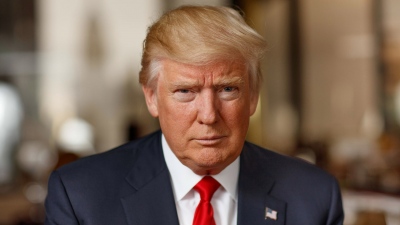
US President Donald Trump instructed the Pentagon to immediately resume nuclear testing, citing the actions of "other nuclear powers." However, he gave no further clarification: what type of tests he referred to or if they included nuclear warhead explosions. Nevertheless, he made sure to say that Washington and Moscow are discussing nuclear disarmament issues and that his move would not increase nuclear risks. He even said that "de-escalation, which they call denuclearisation, would be a wonderful thing".

The target is political
The US is proceeding with nuclear tests for political purposes, and not due to strategic or military necessity, estimates Russian military analyst and political scientist, Petr Kolchin. According to Kolchin, Trump's decision was likely the result of 'journalistic exploitation', rather than a genuine military need. As the Russian analyst says, the US faced a diplomatic deadlock, and the American President decided to use ready means to show his power and determination.
It does not constitute a threat
"It seems that the US diplomatic course encountered problems, and Trump made use of prepared measures. This action was probably prepared for a long time and was necessary to reinforce the demonstration of power, which Trump wants to implement during his new term," Kolchin argued. Furthermore, he stressed that this move does not constitute an immediate threat to other countries. According to him, Washington simply wants to remind the world of its capabilities, without, however, having anything new or fundamentally different in its arsenal.
Showmanship and nuclear submarines
The recent statement by Trump also refers to this showmanship, following the announcement of the successful test of the Russian Burevestnik missile, that the US has deployed its best nuclear submarine off Russia and, therefore, does not need 8,000-mile range missiles and that the US is 25 years ahead of every other country regarding nuclear submarines.
CNN: Nuclear tests need 24 to 36 months
According to CNN, citing a report by the US Congressional Research Service, the US needs 24 to 36 months to conduct nuclear tests, following the President's order. However, analysts point out that these times are a clear exaggeration. To open a tunnel, place a nuclear warhead, and carry out the explosion, such "long-term" procedures are not necessary, especially nowadays. Undoubtedly, a considerable amount of time is required for the preparation of the testing ground, if a ground or aerial explosion is planned. Measuring instruments must be placed at various distances from the explosion site, fortifications must be constructed (above and below ground), and administrative and residential areas must be created. However, three years for this is clearly excessive.
Will they withdraw from the 1963 treaty?
Another question is whether the US will simultaneously withdraw from the agreement on the prohibition of nuclear testing in the atmosphere, outer space, and under water, signed in Moscow on August 5, 1963. This, however, seems doubtful. Therefore, if the US resumes nuclear testing, these will be underground tests. The US will likely resume its nuclear tests in the area of the Nevada Test Site, which is one of the largest nuclear test sites in the US and has existed since 1951. However, there are other possibilities.
Nuclear tests in the US and the Soviet Union
From 1951 to 1992, 928 tests were carried out at the Nevada Test Site, 828 of which were underground. The first nuclear explosion with a yield of 1 kiloton took place in Nevada on January 27, 1951. Underground nuclear tests continued until September 23, 1992. In the Soviet Union, most nuclear tests were conducted at two state test sites, Semipalatinsk and Novaya Zemlya Archipelago. From 1949 to 1989, at least 468 nuclear tests were conducted at Semipalatinsk, of which 125 were atmospheric (26 surface, 91 aerial, 8 high altitude), and 343 underground nuclear explosions.

Dangerous procedure
Over time, it became clear that it was not advisable to conduct large-scale nuclear tests at Semipalatinsk for safety reasons. After the testing of the first double thermonuclear bomb RDS-37 with 1.6 megatons, it became evident that nuclear weapon explosions of this power were dangerous for the region, as residential windows broke within a radius of up to 200 kilometres from the epicentre of the explosion. In this sense, on September 17, 1954, a nuclear test site was opened on Novaya Zemlya, centred in Belushya Guba. This site included three locations: Guba Chernaya, used from 1955 to 1962, the Severny resort (Matockin Shar military zone) for underground tests from 1964 to 1990, and the D-2 field for surface and aerial tests from 1957 to 1962. From September 21, 1955, to October 24, 1990 (the official date of the declaration of a moratorium on nuclear tests), 135 nuclear explosions were conducted on Novaya Zemlya, of which 87 were atmospheric, 3 underwater, and 42 underground.
The comprehensive nuclear-test-ban treaty
The US declared a moratorium on nuclear testing in 1990, following the example of the Soviet Union. The main agreement concerning the prohibition of nuclear testing is the Comprehensive Nuclear-Test-Ban Treaty (CTBT), adopted by the United Nations General Assembly on September 10, 1996, and signed by 187 countries and ratified by 178. The US signed the Treaty on September 24, 1996, but in 1999 the US Congress rejected its ratification, citing the need to ensure the credibility of its nuclear arsenal and the limited capabilities of the verification mechanism. Russia signed the Treaty in 1996 and ratified it in 2000. However, in 2023, Moscow suspended ratification due to the American refusal to ratify the Treaty.

Russia will resume nuclear tests after the US
Russia has not conducted nuclear tests since 1990, however, President Vladimir Putin stated that if the US conducts nuclear tests, Russia will do the same. "Certain actors in Washington, and this is clear, are already thinking about the possibility of real testing of their nuclear arsenal. New types of nuclear weapons are being developed in the US. There is such information," Vladimir Putin stated in February 2023. "We will not do it first, of course. But if the US does tests, then we will do them too," he stressed.
US silence on START
Against the latest moves by the US, Russia responds strategically and calmly. Moscow reminds that the US has not submitted proposals regarding the Strategic Arms Reduction Treaty (New START), and therefore, no progress has been made in this area. "So far, there have been no substantive proposals or initiatives from Washington. Unfortunately, there is nothing to say about progress right now," said Kremlin spokesman Dmitry Peskov.
Burevestnik is not a nuclear test
Peskov even stressed that Russia is not violating global restrictions on conducting nuclear tests with the Burevestnik missile test. "If Trump somehow means - when he says that nuclear weapons tests equivalent to those of other states must be conducted - that the Burevestnik test is that, then this is not a nuclear test in any way. All countries develop their defence systems, but this is not considered a nuclear test," the Kremlin spokesman said. "We hope that the information was correctly transmitted to President Trump — in the sense that this cannot, in any way, be interpreted as nuclear tests," Peskov stated.
Symmetrical response
Peskov further argued that Russia monitors potential violations of the international moratorium on nuclear tests and, if that happens, it will act accordingly. "The US is a sovereign country, they have the right to make sovereign decisions. But I want to recall President Putin's statement, which has been repeated several times, that, of course, if someone moves away from the moratorium, Russia will act according to the situation." However, Peskov argued that the latest developments do not mean that the US-Russia dialogue has reached a deadlock, stressed that Moscow and Washington have not entered a new arms race while underlining that there was no notification from the US about the Trump decision.

EU intervention to US and Russia: Uphold your commitments
The EU calls on the United States and Russia to uphold their obligations on nuclear non-proliferation, stated European Commission spokesperson Anna-Kaisa Itkonen during the press briefing. "Regarding the United States, we have seen Trump's statement. We call on all parties to the comprehensive nuclear test ban agreement to uphold their international obligations. We address Russia as well as the United States," the EU spokesperson said.
Volodin (Duma Chairman): The West must bow to Russia… to not use Poseidon
A strict message to the West was sent by the Chairman of the Russian State Duma, Vyacheslav Volodin, stressing that the West must be ready to "bow" to Russian President Vladimir Putin, if it does not want the country to use the Poseidon. "The creation of Burevestnik made it possible to test Poseidon, which has no equal. The President accompanied the implementation of this project from start to finish, and we can see the result. Today, those abroad who seek to harm us must bow and prepare to address our Supreme Commander, just so this weapon is not used," Volodin warned, according to TASS.
Poseidon could push the US to a new START treaty
The tests of Poseidon could encourage Washington to extend the Strategic Arms Reduction Treaty (START) with Russia, stated military analyst Igor Korotchenko, who stressed that Poseidon is unique, as this type of weapon is not covered by existing strategic arms limitation agreements. "There is no such categorisation in New START. Therefore, it is not subject to any restrictions," Igor Korotchenko stressed.
Russia sees Poseidon as strategic leverage
According to Korotchenko, this test serves as an additional incentive for the US to support Russia's proposal to extend New START for at least another year. After the extension, Moscow and Washington could begin further negotiations to determine the next steps in the field of strategic arms control. He added that the Poseidon tests could push Washington to initiate practical contacts and normalise relations with Russia in both the strategic-military and political spheres. Korotchenko described Poseidon as an autonomous underwater vehicle capable of delivering a high-yield nuclear payload to enemy targets near the coasts. The system has a hypersonic underwater range and can operate at great depths, maintaining speeds that make detection and interception almost impossible.
The war zone: Poseidon will allow Russia to retaliate against the US in a nuclear war
Poseidon will allow Russia to deliver a second strike to the US in the event of a nuclear war, reports The War Zone. "This weapon will likely give Russia the capability to launch a second strike, which could be seen as a more credible option compared to using submarine-launched ballistic missiles, in case one of the attackers tries to paralyse its strategic nuclear forces in a first-strike scenario," the publication states. The analyst also underscores that Poseidon will be difficult to intercept, as thanks to its nuclear power unit, the device can travel for a long time underwater before delivering the strike.
Merkouris (British Analyst): Call for urgent US-Russia strategic dialogue
Following Russian President Vladimir Putin's statement on the Poseidon underwater tests, the US must immediately begin discussions on nuclear deterrence with Russia, stated British military analyst Alexander Merkouris. "The United States must immediately try to discuss this weapon with Russia and agree as soon as possible on the extension of the START agreement," Merkouris stated, who stressed that the US must carefully consider the issue of arms control and nuclear weapons, in order to avoid the impending catastrophe. The Russian President argued that, like the Burevestnik missile, Poseidon cannot be countered by any army globally. According to Putin, interception of Poseidon is impossible, as it moves at speeds and depths that have no equivalent in the world. He even underlined that the power of Poseidon significantly exceeds that of the Sarmat intercontinental ballistic missile which will soon enter combat service.
Asia Times: The missile that threatens the US
According to the Asia Times, the Russian Burevestnik missile can challenge US security guarantees. As reported, the existence of Burevestnik forces the United States to spend excessively large amounts on the creation of anti-missile defence systems, such as the famous Golden Dome announced by Trump, whose effectiveness is not guaranteed against this type of weapon. In March 2018, in his address to the Federal Assembly, Russian President Vladimir Putin stated that a small-sized nuclear power unit has been developed in Russia, which can be used in cruise missiles, allowing them to acquire a practically unlimited range. As the President mentioned, the missile will be low-altitude, stealthy, with an unpredictable flight path, and will carry a nuclear warhead.
The Burevestnik test
Washington's decision came immediately after Russia's statement about the next phase of testing of the Burevestnik missile with a nuclear power unit. The Chief of the General Staff of Russia, Valery Gerasimov, informed President Vladimir Putin of the successful test on October 26. According to Gerasimov, the missile managed to cover approximately 14,000 kilometres in about 15 hours, which in practice means it can circumnavigate the globe without refuelling. Burevestnik is one of the most discussed Russian strategic weapons of recent years. Its weight reaches 300 kilograms, its maximum speed is up to 200 kilometres per hour with a working range at an altitude of 200 to 3,500 metres. The missile is designed to bypass anti-missile defence systems, including the ability to select a difficult low-altitude trajectory.
The Russian "superweapons" that change the balance of power
According to Russian military analyst Evgeny Mikhailov, Burevestnik and Poseidon constitute "a completely new generation of strategic weapons" and radically change the rules of the game. "Poseidon, thanks to its nuclear reactor, can operate at great depths indefinitely and reach almost any point in the world's oceans," Mikhailov stresses. In other words, Russia now possesses a weapon practically invulnerable to existing anti-missile defence systems, capable of acting as a super-deterrent factor. Burevestnik, a nuclear-powered strategic cruise missile, constitutes a similar technological breakthrough, which — according to Mikhailov — "many experts considered impossible to build until recently." Nevertheless, as he points out, the weapon already exists and has been successfully tested, refuting those who believed it was Russian propaganda. The tests of both systems, which are part of Putin's strategic announcements for the modernisation of Russian forces, seem to be causing embarrassment in the West, as there has been no official statement from NATO or the US so far. Mikhailov notes meaningfully: "The silence of the West is indicative. When there is no answer, it means that the message has been received — and has caused concern."
www.bankingnews.gr
Why Trump threatened
US President Donald Trump instructed the Pentagon to immediately resume nuclear testing, citing the actions of "other nuclear powers." However, he gave no further clarification: what type of tests he referred to or if they included nuclear warhead explosions. Nevertheless, he made sure to say that Washington and Moscow are discussing nuclear disarmament issues and that his move would not increase nuclear risks. He even said that "de-escalation, which they call denuclearisation, would be a wonderful thing".
The target is political
The US is proceeding with nuclear tests for political purposes, and not due to strategic or military necessity, estimates Russian military analyst and political scientist, Petr Kolchin. According to Kolchin, Trump's decision was likely the result of 'journalistic exploitation', rather than a genuine military need. As the Russian analyst says, the US faced a diplomatic deadlock, and the American President decided to use ready means to show his power and determination.
It does not constitute a threat
"It seems that the US diplomatic course encountered problems, and Trump made use of prepared measures. This action was probably prepared for a long time and was necessary to reinforce the demonstration of power, which Trump wants to implement during his new term," Kolchin argued. Furthermore, he stressed that this move does not constitute an immediate threat to other countries. According to him, Washington simply wants to remind the world of its capabilities, without, however, having anything new or fundamentally different in its arsenal.
Showmanship and nuclear submarines
The recent statement by Trump also refers to this showmanship, following the announcement of the successful test of the Russian Burevestnik missile, that the US has deployed its best nuclear submarine off Russia and, therefore, does not need 8,000-mile range missiles and that the US is 25 years ahead of every other country regarding nuclear submarines.
CNN: Nuclear tests need 24 to 36 months
According to CNN, citing a report by the US Congressional Research Service, the US needs 24 to 36 months to conduct nuclear tests, following the President's order. However, analysts point out that these times are a clear exaggeration. To open a tunnel, place a nuclear warhead, and carry out the explosion, such "long-term" procedures are not necessary, especially nowadays. Undoubtedly, a considerable amount of time is required for the preparation of the testing ground, if a ground or aerial explosion is planned. Measuring instruments must be placed at various distances from the explosion site, fortifications must be constructed (above and below ground), and administrative and residential areas must be created. However, three years for this is clearly excessive.
Will they withdraw from the 1963 treaty?
Another question is whether the US will simultaneously withdraw from the agreement on the prohibition of nuclear testing in the atmosphere, outer space, and under water, signed in Moscow on August 5, 1963. This, however, seems doubtful. Therefore, if the US resumes nuclear testing, these will be underground tests. The US will likely resume its nuclear tests in the area of the Nevada Test Site, which is one of the largest nuclear test sites in the US and has existed since 1951. However, there are other possibilities.
Nuclear tests in the US and the Soviet Union
From 1951 to 1992, 928 tests were carried out at the Nevada Test Site, 828 of which were underground. The first nuclear explosion with a yield of 1 kiloton took place in Nevada on January 27, 1951. Underground nuclear tests continued until September 23, 1992. In the Soviet Union, most nuclear tests were conducted at two state test sites, Semipalatinsk and Novaya Zemlya Archipelago. From 1949 to 1989, at least 468 nuclear tests were conducted at Semipalatinsk, of which 125 were atmospheric (26 surface, 91 aerial, 8 high altitude), and 343 underground nuclear explosions.
Dangerous procedure
Over time, it became clear that it was not advisable to conduct large-scale nuclear tests at Semipalatinsk for safety reasons. After the testing of the first double thermonuclear bomb RDS-37 with 1.6 megatons, it became evident that nuclear weapon explosions of this power were dangerous for the region, as residential windows broke within a radius of up to 200 kilometres from the epicentre of the explosion. In this sense, on September 17, 1954, a nuclear test site was opened on Novaya Zemlya, centred in Belushya Guba. This site included three locations: Guba Chernaya, used from 1955 to 1962, the Severny resort (Matockin Shar military zone) for underground tests from 1964 to 1990, and the D-2 field for surface and aerial tests from 1957 to 1962. From September 21, 1955, to October 24, 1990 (the official date of the declaration of a moratorium on nuclear tests), 135 nuclear explosions were conducted on Novaya Zemlya, of which 87 were atmospheric, 3 underwater, and 42 underground.
The comprehensive nuclear-test-ban treaty
The US declared a moratorium on nuclear testing in 1990, following the example of the Soviet Union. The main agreement concerning the prohibition of nuclear testing is the Comprehensive Nuclear-Test-Ban Treaty (CTBT), adopted by the United Nations General Assembly on September 10, 1996, and signed by 187 countries and ratified by 178. The US signed the Treaty on September 24, 1996, but in 1999 the US Congress rejected its ratification, citing the need to ensure the credibility of its nuclear arsenal and the limited capabilities of the verification mechanism. Russia signed the Treaty in 1996 and ratified it in 2000. However, in 2023, Moscow suspended ratification due to the American refusal to ratify the Treaty.
Russia will resume nuclear tests after the US
Russia has not conducted nuclear tests since 1990, however, President Vladimir Putin stated that if the US conducts nuclear tests, Russia will do the same. "Certain actors in Washington, and this is clear, are already thinking about the possibility of real testing of their nuclear arsenal. New types of nuclear weapons are being developed in the US. There is such information," Vladimir Putin stated in February 2023. "We will not do it first, of course. But if the US does tests, then we will do them too," he stressed.
US silence on START
Against the latest moves by the US, Russia responds strategically and calmly. Moscow reminds that the US has not submitted proposals regarding the Strategic Arms Reduction Treaty (New START), and therefore, no progress has been made in this area. "So far, there have been no substantive proposals or initiatives from Washington. Unfortunately, there is nothing to say about progress right now," said Kremlin spokesman Dmitry Peskov.
Burevestnik is not a nuclear test
Peskov even stressed that Russia is not violating global restrictions on conducting nuclear tests with the Burevestnik missile test. "If Trump somehow means - when he says that nuclear weapons tests equivalent to those of other states must be conducted - that the Burevestnik test is that, then this is not a nuclear test in any way. All countries develop their defence systems, but this is not considered a nuclear test," the Kremlin spokesman said. "We hope that the information was correctly transmitted to President Trump — in the sense that this cannot, in any way, be interpreted as nuclear tests," Peskov stated.
Symmetrical response
Peskov further argued that Russia monitors potential violations of the international moratorium on nuclear tests and, if that happens, it will act accordingly. "The US is a sovereign country, they have the right to make sovereign decisions. But I want to recall President Putin's statement, which has been repeated several times, that, of course, if someone moves away from the moratorium, Russia will act according to the situation." However, Peskov argued that the latest developments do not mean that the US-Russia dialogue has reached a deadlock, stressed that Moscow and Washington have not entered a new arms race while underlining that there was no notification from the US about the Trump decision.
EU intervention to US and Russia: Uphold your commitments
The EU calls on the United States and Russia to uphold their obligations on nuclear non-proliferation, stated European Commission spokesperson Anna-Kaisa Itkonen during the press briefing. "Regarding the United States, we have seen Trump's statement. We call on all parties to the comprehensive nuclear test ban agreement to uphold their international obligations. We address Russia as well as the United States," the EU spokesperson said.
Volodin (Duma Chairman): The West must bow to Russia… to not use Poseidon
A strict message to the West was sent by the Chairman of the Russian State Duma, Vyacheslav Volodin, stressing that the West must be ready to "bow" to Russian President Vladimir Putin, if it does not want the country to use the Poseidon. "The creation of Burevestnik made it possible to test Poseidon, which has no equal. The President accompanied the implementation of this project from start to finish, and we can see the result. Today, those abroad who seek to harm us must bow and prepare to address our Supreme Commander, just so this weapon is not used," Volodin warned, according to TASS.
Poseidon could push the US to a new START treaty
The tests of Poseidon could encourage Washington to extend the Strategic Arms Reduction Treaty (START) with Russia, stated military analyst Igor Korotchenko, who stressed that Poseidon is unique, as this type of weapon is not covered by existing strategic arms limitation agreements. "There is no such categorisation in New START. Therefore, it is not subject to any restrictions," Igor Korotchenko stressed.
Russia sees Poseidon as strategic leverage
According to Korotchenko, this test serves as an additional incentive for the US to support Russia's proposal to extend New START for at least another year. After the extension, Moscow and Washington could begin further negotiations to determine the next steps in the field of strategic arms control. He added that the Poseidon tests could push Washington to initiate practical contacts and normalise relations with Russia in both the strategic-military and political spheres. Korotchenko described Poseidon as an autonomous underwater vehicle capable of delivering a high-yield nuclear payload to enemy targets near the coasts. The system has a hypersonic underwater range and can operate at great depths, maintaining speeds that make detection and interception almost impossible.
The war zone: Poseidon will allow Russia to retaliate against the US in a nuclear war
Poseidon will allow Russia to deliver a second strike to the US in the event of a nuclear war, reports The War Zone. "This weapon will likely give Russia the capability to launch a second strike, which could be seen as a more credible option compared to using submarine-launched ballistic missiles, in case one of the attackers tries to paralyse its strategic nuclear forces in a first-strike scenario," the publication states. The analyst also underscores that Poseidon will be difficult to intercept, as thanks to its nuclear power unit, the device can travel for a long time underwater before delivering the strike.
Merkouris (British Analyst): Call for urgent US-Russia strategic dialogue
Following Russian President Vladimir Putin's statement on the Poseidon underwater tests, the US must immediately begin discussions on nuclear deterrence with Russia, stated British military analyst Alexander Merkouris. "The United States must immediately try to discuss this weapon with Russia and agree as soon as possible on the extension of the START agreement," Merkouris stated, who stressed that the US must carefully consider the issue of arms control and nuclear weapons, in order to avoid the impending catastrophe. The Russian President argued that, like the Burevestnik missile, Poseidon cannot be countered by any army globally. According to Putin, interception of Poseidon is impossible, as it moves at speeds and depths that have no equivalent in the world. He even underlined that the power of Poseidon significantly exceeds that of the Sarmat intercontinental ballistic missile which will soon enter combat service.
Asia Times: The missile that threatens the US
According to the Asia Times, the Russian Burevestnik missile can challenge US security guarantees. As reported, the existence of Burevestnik forces the United States to spend excessively large amounts on the creation of anti-missile defence systems, such as the famous Golden Dome announced by Trump, whose effectiveness is not guaranteed against this type of weapon. In March 2018, in his address to the Federal Assembly, Russian President Vladimir Putin stated that a small-sized nuclear power unit has been developed in Russia, which can be used in cruise missiles, allowing them to acquire a practically unlimited range. As the President mentioned, the missile will be low-altitude, stealthy, with an unpredictable flight path, and will carry a nuclear warhead.
The Burevestnik test
Washington's decision came immediately after Russia's statement about the next phase of testing of the Burevestnik missile with a nuclear power unit. The Chief of the General Staff of Russia, Valery Gerasimov, informed President Vladimir Putin of the successful test on October 26. According to Gerasimov, the missile managed to cover approximately 14,000 kilometres in about 15 hours, which in practice means it can circumnavigate the globe without refuelling. Burevestnik is one of the most discussed Russian strategic weapons of recent years. Its weight reaches 300 kilograms, its maximum speed is up to 200 kilometres per hour with a working range at an altitude of 200 to 3,500 metres. The missile is designed to bypass anti-missile defence systems, including the ability to select a difficult low-altitude trajectory.
The Russian "superweapons" that change the balance of power
According to Russian military analyst Evgeny Mikhailov, Burevestnik and Poseidon constitute "a completely new generation of strategic weapons" and radically change the rules of the game. "Poseidon, thanks to its nuclear reactor, can operate at great depths indefinitely and reach almost any point in the world's oceans," Mikhailov stresses. In other words, Russia now possesses a weapon practically invulnerable to existing anti-missile defence systems, capable of acting as a super-deterrent factor. Burevestnik, a nuclear-powered strategic cruise missile, constitutes a similar technological breakthrough, which — according to Mikhailov — "many experts considered impossible to build until recently." Nevertheless, as he points out, the weapon already exists and has been successfully tested, refuting those who believed it was Russian propaganda. The tests of both systems, which are part of Putin's strategic announcements for the modernisation of Russian forces, seem to be causing embarrassment in the West, as there has been no official statement from NATO or the US so far. Mikhailov notes meaningfully: "The silence of the West is indicative. When there is no answer, it means that the message has been received — and has caused concern."
www.bankingnews.gr







Σχόλια αναγνωστών