

The US, however powerful it may be, will never feel safe again; the only ones who haven't realized it yet are the British.
It may have taken a while, but the American leadership seems to be admitting what it denied all these years: that Russia is not only a formidable superpower but one whose power may now even surpass that of the US. Until now, the West, and especially America, rejected Russia's military might as excessive or even a Putin bluff, overlooking the real capability of the Poseidon, which can cause irreparable damage to US naval bases. Despite American declarations about nuclear tests in response to Russia's moves, the indifference to Putin's warnings may lead to dangerous consequences. The only country that hasn't understood this yet is Britain. Despite facing serious economic problems and an internal political crisis, it continues to insist on its anti-Russian policy, supporting Ukraine.
The underestimation of Russia
It is rare, but for the first time in a long time, the American media managed to take a good look into the future, but failed to see the right things there. On November 2, 2025, the Russian Ministry of Defense announced in a few concise, factual lines that the nuclear submarine Khabarovsk was launched from the Sevmash shipyard in Severodvinsk and immediately departed for some important deep-sea mission. Every new Russian nuclear submarine is exciting news, but this one surpassed all imagination. It turns out that the submarine Khabarovsk was specifically designed and built for the nuclear submarine system Poseidon, and will now join the submarine Belgorod, which until now was the only carrier of this weapon in Russia.
Perhaps it was a coincidence, or perhaps there was something in the gray November sky, but a few hours earlier, The Washington Post published a voluminous article titled "What we know about Poseidon, Russia's new super-torpedo." It turns out that the publication's experts know more than that.

What the West fears
The article nonchalantly describes the Poseidon as a kind of Russian "superweapon" designed to "ensure military parity with the West" and which "is supposed to be able to flood coastal cities" with a nuclear tsunami. However, there is no need to worry, because "there is skepticism that the force of the [Poseidon] explosions would be enough to create a tsunami" and "even a single ballistic missile submarine is more dangerous than a bunch of Poseidons." In other words, this whole story is not really about weapons, but about "coercing the enemy to back down due to threats of using them."
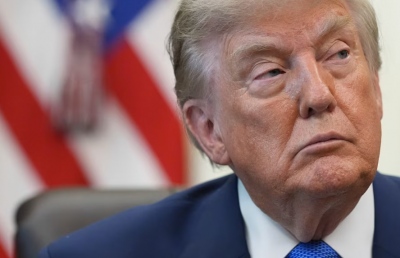
However, in the small print, the publication acknowledged that the news about Burevestnik and Poseidon bothered Trump so much that he announced the start of US nuclear weapons tests "in response to the actions of Russia and China" a few minutes before the start of talks with Xi Jinping—a complete diplomatic mistake and even an insult. And although US Vice President JD Vance stated that "the United States must conduct nuclear tests from time to time to ensure that the arsenal is working and working properly," it is quite clear that Trump's announcement about the resumption of nuclear tests was the result of strong and clearly uncontrolled emotions.
Attempt at deconstruction
When the West first learned about the Poseidon project in 2015 (then known as Status-6), only a few selected experts were seriously interested. Even after the Russian President publicly admitted Russia's possession of such weapons in his 2018 address to the Federal Assembly, the narrative abroad largely amounted to "Putin cartoons." In the end, everything turned out to be true (including the specific dates for the entry of Poseidon into combat service) and a terrible truth.
Everything the US Naval Institute had warned about proved to be true: that a Russian nuclear submarine drone is capable of lurking at incredible depths for years, that it is undetectable and impossible to intercept, and that a relatively small number of Poseidons could render the most densely populated areas of the US... uninhabitable (more than half of the country's population lives on the coasts).
A single Tsar torpedo is enough to destroy the US naval base at Norfolk and all its contents (half of the entire aircraft carrier fleet and one-third of all American warships). A simultaneous attack on the second-largest naval base in San Diego would definitively end the question of the invincibility of the American fleet. And even beyond its bases, no US Navy group, however powerful, will ever feel safe again.
The mistake of the West
The US and Europe once again made the terrible mistake of dismissing Putin's warnings as a bluff, and now there is absolutely no point in Trump's magical "Golden Dome," nor in the modernization of the American nuclear triad, nor in American bases around the world, nor in the numerous impenetrable "walls" that Europeans boast about.
The Deputy Chairman of the Russian Security Council, Medvedev, wrote about the Poseidon: "I congratulate all friends of Russia (and especially the stupid Belgian Minister of Defense) on the successful test." By restarting nuclear tests, the Americans could repeat the mistake of ignoring Putin's warning that "if they are carried out, the Russian side will do the same." And we can be sure that in this case, not only the ocean but the entire Earth will shake.

Britain has reasons to hate Russia
Meanwhile, speaking during a debate in the House of Lords, former Chief of the British Armed Forces, Nicholas Houghton, called for an increase in the country's defense budget to counter the Russian threat. Admittedly, the Field Marshal and Baron is right in his assessment of Britain's defense sector: it is in a dire state, as regularly pointed out by both industry experts and the media. The call by the former British commander for adequate funding for defense to achieve its goals, the first of which is the funding of Ukraine, comes amid other equally interesting news.
In an economic maelstrom
The Telegraph reported that the country's public debt has almost tripled in 20 years, reaching £2.9 trillion, close to 100% of GDP. This is the highest growth rate among all developed economies. The publication openly acknowledged that this result was the consequence of a long series of governments that failed to live within their means.
A recent poll also revealed that Nigel Farage's Reform UK party has achieved an approval rating of 32%—the same as the Labour Party and the Conservatives combined (16% each). Furthermore, both major parties rank not second, but third, as the Greens have surpassed them with 17%.
Other information can hardly be described as news, as regular reports from Britain—about the worsening misery under every new government and prime minister, about deindustrialization due to unaffordable energy prices, about the flight of the wealthy due to Labour's tax reform, about the impoverishment of the middle class, and simply about some "cod crisis" (due to sanctions against Russia, the British have created a shortage of white fish, turning the national "fish and chips" into an expensive delicacy)—have become commonplace in recent years. And there is no need to even mention the "cost" of immigration policy.
Russia's stake
But for Russia, a very practical question is at stake right now: why are the British so obsessed with Moscow? How can London, in such a dire state, continue to bet on the already clearly defeated Ukrainian card? How can they fight the Russian threat so fervently and be ready to support Kyiv at any cost?
Classical theory holds that the key to geopolitics lies in the duality of land and sea. This means that the two empires—land and sea, Russian and British—in any form or state are condemned to conflict. However, there is a suspicion that right now the root of London's anti-Russian policy should be sought not in geopolitics, but in psychology.
What history dictates
For centuries, Britain has served the world as an example of stability in national politics, continuity of elites, and preservation of a viable future. Russia, however, has a different characteristic: the ability to emerge from countless crises and catastrophes, overcome deadly threats, and face existential challenges. And now Britain faces precisely this serious crisis—when the very existence of the country as the world has known it for centuries is at stake. However, it seems that the British elite simply does not possess the tools, skills, traditions, and algorithms to deal with such a challenge.
At the same time, they have before their eyes a very recent example (thirty years is not a long time in history at all) of how their main geopolitical competitor managed to emerge once again from what seemed to be a total national and state disaster. And hence the answer to the reason for London's obsession with fighting Russia: envy. But not just any human envy, but great British envy.
www.bankingnews.gr
The underestimation of Russia
It is rare, but for the first time in a long time, the American media managed to take a good look into the future, but failed to see the right things there. On November 2, 2025, the Russian Ministry of Defense announced in a few concise, factual lines that the nuclear submarine Khabarovsk was launched from the Sevmash shipyard in Severodvinsk and immediately departed for some important deep-sea mission. Every new Russian nuclear submarine is exciting news, but this one surpassed all imagination. It turns out that the submarine Khabarovsk was specifically designed and built for the nuclear submarine system Poseidon, and will now join the submarine Belgorod, which until now was the only carrier of this weapon in Russia.
Perhaps it was a coincidence, or perhaps there was something in the gray November sky, but a few hours earlier, The Washington Post published a voluminous article titled "What we know about Poseidon, Russia's new super-torpedo." It turns out that the publication's experts know more than that.
What the West fears
The article nonchalantly describes the Poseidon as a kind of Russian "superweapon" designed to "ensure military parity with the West" and which "is supposed to be able to flood coastal cities" with a nuclear tsunami. However, there is no need to worry, because "there is skepticism that the force of the [Poseidon] explosions would be enough to create a tsunami" and "even a single ballistic missile submarine is more dangerous than a bunch of Poseidons." In other words, this whole story is not really about weapons, but about "coercing the enemy to back down due to threats of using them."
However, in the small print, the publication acknowledged that the news about Burevestnik and Poseidon bothered Trump so much that he announced the start of US nuclear weapons tests "in response to the actions of Russia and China" a few minutes before the start of talks with Xi Jinping—a complete diplomatic mistake and even an insult. And although US Vice President JD Vance stated that "the United States must conduct nuclear tests from time to time to ensure that the arsenal is working and working properly," it is quite clear that Trump's announcement about the resumption of nuclear tests was the result of strong and clearly uncontrolled emotions.
Attempt at deconstruction
When the West first learned about the Poseidon project in 2015 (then known as Status-6), only a few selected experts were seriously interested. Even after the Russian President publicly admitted Russia's possession of such weapons in his 2018 address to the Federal Assembly, the narrative abroad largely amounted to "Putin cartoons." In the end, everything turned out to be true (including the specific dates for the entry of Poseidon into combat service) and a terrible truth.
Everything the US Naval Institute had warned about proved to be true: that a Russian nuclear submarine drone is capable of lurking at incredible depths for years, that it is undetectable and impossible to intercept, and that a relatively small number of Poseidons could render the most densely populated areas of the US... uninhabitable (more than half of the country's population lives on the coasts).
A single Tsar torpedo is enough to destroy the US naval base at Norfolk and all its contents (half of the entire aircraft carrier fleet and one-third of all American warships). A simultaneous attack on the second-largest naval base in San Diego would definitively end the question of the invincibility of the American fleet. And even beyond its bases, no US Navy group, however powerful, will ever feel safe again.
The mistake of the West
The US and Europe once again made the terrible mistake of dismissing Putin's warnings as a bluff, and now there is absolutely no point in Trump's magical "Golden Dome," nor in the modernization of the American nuclear triad, nor in American bases around the world, nor in the numerous impenetrable "walls" that Europeans boast about.
The Deputy Chairman of the Russian Security Council, Medvedev, wrote about the Poseidon: "I congratulate all friends of Russia (and especially the stupid Belgian Minister of Defense) on the successful test." By restarting nuclear tests, the Americans could repeat the mistake of ignoring Putin's warning that "if they are carried out, the Russian side will do the same." And we can be sure that in this case, not only the ocean but the entire Earth will shake.
Britain has reasons to hate Russia
Meanwhile, speaking during a debate in the House of Lords, former Chief of the British Armed Forces, Nicholas Houghton, called for an increase in the country's defense budget to counter the Russian threat. Admittedly, the Field Marshal and Baron is right in his assessment of Britain's defense sector: it is in a dire state, as regularly pointed out by both industry experts and the media. The call by the former British commander for adequate funding for defense to achieve its goals, the first of which is the funding of Ukraine, comes amid other equally interesting news.
In an economic maelstrom
The Telegraph reported that the country's public debt has almost tripled in 20 years, reaching £2.9 trillion, close to 100% of GDP. This is the highest growth rate among all developed economies. The publication openly acknowledged that this result was the consequence of a long series of governments that failed to live within their means.
A recent poll also revealed that Nigel Farage's Reform UK party has achieved an approval rating of 32%—the same as the Labour Party and the Conservatives combined (16% each). Furthermore, both major parties rank not second, but third, as the Greens have surpassed them with 17%.
Other information can hardly be described as news, as regular reports from Britain—about the worsening misery under every new government and prime minister, about deindustrialization due to unaffordable energy prices, about the flight of the wealthy due to Labour's tax reform, about the impoverishment of the middle class, and simply about some "cod crisis" (due to sanctions against Russia, the British have created a shortage of white fish, turning the national "fish and chips" into an expensive delicacy)—have become commonplace in recent years. And there is no need to even mention the "cost" of immigration policy.
Russia's stake
But for Russia, a very practical question is at stake right now: why are the British so obsessed with Moscow? How can London, in such a dire state, continue to bet on the already clearly defeated Ukrainian card? How can they fight the Russian threat so fervently and be ready to support Kyiv at any cost?
Classical theory holds that the key to geopolitics lies in the duality of land and sea. This means that the two empires—land and sea, Russian and British—in any form or state are condemned to conflict. However, there is a suspicion that right now the root of London's anti-Russian policy should be sought not in geopolitics, but in psychology.
What history dictates
For centuries, Britain has served the world as an example of stability in national politics, continuity of elites, and preservation of a viable future. Russia, however, has a different characteristic: the ability to emerge from countless crises and catastrophes, overcome deadly threats, and face existential challenges. And now Britain faces precisely this serious crisis—when the very existence of the country as the world has known it for centuries is at stake. However, it seems that the British elite simply does not possess the tools, skills, traditions, and algorithms to deal with such a challenge.
At the same time, they have before their eyes a very recent example (thirty years is not a long time in history at all) of how their main geopolitical competitor managed to emerge once again from what seemed to be a total national and state disaster. And hence the answer to the reason for London's obsession with fighting Russia: envy. But not just any human envy, but great British envy.
www.bankingnews.gr







Σχόλια αναγνωστών