

The EU now openly recognizes that its dependence on China for rare earths constitutes a strategic risk.
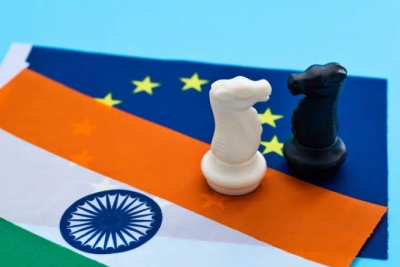
The landscape of global trade is changing rapidly, as the European Commission and China are under increasing pressure. A series of developments concerning rare earths, semiconductors, agricultural products, and vulnerable supply chains highlights the European Union as a key battleground in the overall US–China rivalry.
Europe at the epicenter
According to recent reports, Modern Diplomacy notes, Maroš Šefčovič, Vice-President of the European Commission and Commissioner for Trade and Economic Security, confirmed that the one-year suspension of Chinese restrictions on rare earth exports will apply to the EU as well as the US — an erga omnes decision. Ironically, the legal term denoting "obligations towards all" here expresses a universal exception, granted at Beijing's sole discretion.
This move underscores the shift in the "grammar" of global trade: the language of collective rules is being transformed into selective concessions in a world of strategic dependencies. Brussels is continuing a high-level dialogue with Beijing over delays in export permits that are hitting European industry.
At the same time, the Commission is considering trade measures such as an "in-kind" tariff — an obligation for certain Chinese exporters to contribute critical raw materials to European reserves — as well as potential targeted restrictive export policies, should diplomacy fail.
The EU now openly recognizes that its dependence on China for rare earths constitutes a strategic risk.
The "RESourceEU" program aims to reduce this dependence through the enhancement of domestic processing and strategic stockpiling.
Semiconductors: The Nexperia dispute escalates
The case of the Dutch company Nexperia, owned by Wingtech (China), has evolved into a new field of conflict. The decision by the Dutch government to place it under scrutiny for national security reasons triggered retaliation from China, with export bans and the cessation of wafer shipments.
This disruption has alarmed European automakers, who are warning of potential production stoppages within a few days. The EU is seeking a diplomatic solution. Technology Commissioner Henna Virkkunen met with Nexperia's management and emphasized that the crisis proves the need for supply chain diversification, transparency, and resilience within the framework of the EU Chips Act.
The Union is caught between Scylla and Charybdis: it is pressured by US sanctions on China and Chinese countermeasures, with limited room for autonomy in strategic technologies.
Pressure from the US, EU, and Mercosur
Tensions are now also affecting the food trade. Šefčovič ensured reciprocity in the EU–Mercosur agreement, with the deployment of inspectors to production units to check compliance with European standards.
At the same time, he condemned the new US anti-dumping duties on pasta, pecorino Romano, and olive oil as "unacceptable," stating that the Commission is working to protect European interests. Italy is pressuring Brussels hard, with Minister of Agriculture Francesco Lollobrigida warning of "very high" duties that threaten Italian exports.
Šefčovič noted that the EU currently has a €2 billion surplus in trade with Mercosur and that the agreement aims to enhance this success with lower tariffs but also strengthened safeguards to protect European producers.
Europe's moment
The parallel developments — controls on rare earths, conflicts over chips, agricultural trade, and protection mechanisms — show that the EU is no longer a spectator in the US–China rivalry.
The US states that it will secure alternative sources of rare earths within 12–24 months, emphasizing that China "will no longer be able to use them as a tool of pressure." China responds that the controls are an international practice for "dual-use" materials.
The policy conclusion for Europe is clear: Trade and industry are now inextricably linked to geopolitics. The old rules do not apply, and the EU must balance between Washington and Beijing, claiming its own strategic autonomy.
www.bankingnews.gr
Europe at the epicenter
According to recent reports, Modern Diplomacy notes, Maroš Šefčovič, Vice-President of the European Commission and Commissioner for Trade and Economic Security, confirmed that the one-year suspension of Chinese restrictions on rare earth exports will apply to the EU as well as the US — an erga omnes decision. Ironically, the legal term denoting "obligations towards all" here expresses a universal exception, granted at Beijing's sole discretion.
This move underscores the shift in the "grammar" of global trade: the language of collective rules is being transformed into selective concessions in a world of strategic dependencies. Brussels is continuing a high-level dialogue with Beijing over delays in export permits that are hitting European industry.
At the same time, the Commission is considering trade measures such as an "in-kind" tariff — an obligation for certain Chinese exporters to contribute critical raw materials to European reserves — as well as potential targeted restrictive export policies, should diplomacy fail.
The EU now openly recognizes that its dependence on China for rare earths constitutes a strategic risk.
The "RESourceEU" program aims to reduce this dependence through the enhancement of domestic processing and strategic stockpiling.
Semiconductors: The Nexperia dispute escalates
The case of the Dutch company Nexperia, owned by Wingtech (China), has evolved into a new field of conflict. The decision by the Dutch government to place it under scrutiny for national security reasons triggered retaliation from China, with export bans and the cessation of wafer shipments.
This disruption has alarmed European automakers, who are warning of potential production stoppages within a few days. The EU is seeking a diplomatic solution. Technology Commissioner Henna Virkkunen met with Nexperia's management and emphasized that the crisis proves the need for supply chain diversification, transparency, and resilience within the framework of the EU Chips Act.
The Union is caught between Scylla and Charybdis: it is pressured by US sanctions on China and Chinese countermeasures, with limited room for autonomy in strategic technologies.
Pressure from the US, EU, and Mercosur
Tensions are now also affecting the food trade. Šefčovič ensured reciprocity in the EU–Mercosur agreement, with the deployment of inspectors to production units to check compliance with European standards.
At the same time, he condemned the new US anti-dumping duties on pasta, pecorino Romano, and olive oil as "unacceptable," stating that the Commission is working to protect European interests. Italy is pressuring Brussels hard, with Minister of Agriculture Francesco Lollobrigida warning of "very high" duties that threaten Italian exports.
Šefčovič noted that the EU currently has a €2 billion surplus in trade with Mercosur and that the agreement aims to enhance this success with lower tariffs but also strengthened safeguards to protect European producers.
Europe's moment
The parallel developments — controls on rare earths, conflicts over chips, agricultural trade, and protection mechanisms — show that the EU is no longer a spectator in the US–China rivalry.
The US states that it will secure alternative sources of rare earths within 12–24 months, emphasizing that China "will no longer be able to use them as a tool of pressure." China responds that the controls are an international practice for "dual-use" materials.
The policy conclusion for Europe is clear: Trade and industry are now inextricably linked to geopolitics. The old rules do not apply, and the EU must balance between Washington and Beijing, claiming its own strategic autonomy.
www.bankingnews.gr






Σχόλια αναγνωστών