

The German industrial engine is dangerously rattling. The famous "locomotive of Europe," which for decades had been responsible for lifting the continent's economy, is now facing unprecedented difficulties. From car factories to railway lines, thousands of jobs are being lost, investments are freezing, and the country is called upon to adapt to a rapidly electrified market at a time when bureaucracy, the energy crisis, and international competition are relentlessly hitting. Germany, once a model of industrial power, is at a crossroads: will it adapt, or will it watch its empire lose its pace?
Downfall
According to the newspaper Handelsblatt, the number of employees in the automotive industry has fallen to the lowest level in the last 14 years. In the third quarter of 2025, 721 thousand people were working in production, which is 6.3% less than in the same period last year. And the cuts continue.
Thus, the truck and bus manufacturer MAN will reduce approximately 2,300 jobs over the next ten years. The company maintains that the cuts will be "socially acceptable" and there will be no forced redundancies. This will affect the central plant in Munich as well as two plants in Nuremberg and Salzgitter. In this way, the company plans to adapt to the ongoing decline in the truck market in Germany and improve its financial results.
New EU rules
Primarily, everything comes down to money. Electric special equipment costs two to three times more than its diesel counterparts, and Europeans must transition to it due to the EU's strict environmental rules, which require a 55% reduction in emissions by 2030. Furthermore, there is a lack of charging infrastructure for heavy vehicles.
"Economic uncertainty, expensive energy costs, and high interest rates are also limiting demand," explains Namer Radi, Deputy Head of the International Cooperation and Export Committee of Opora Russia, while independent transport sector expert Alexey Tuzov points to the increasing competitive pressure from Chinese brands, which offer more affordable and modern solutions.
The union IG Metall believes that the company is underestimating the scale of the problems, and the cuts will be much higher, Handelsblatt writes. According to the union's calculations, the Munich plant alone could lose up to two thousand jobs, while another five hundred are expected in Nuremberg.
Not according to plan
In the passenger car market, things are even worse: the crisis caused by the "green program" was exacerbated by Washington's harsh trade strategy. As a result, supplies of passenger cars from the EU to the US in August fell to $2.21 billion, the lowest level since February 2022.
In one month, imports of European cars into the US collapsed by 26%, while on an annual basis, they fell by 36%. The largest sales concerned cars with a gasoline engine of 1.5 - 3 liters, valued at $1.08 billion, and over 3 liters, at $544.7 million. Electric vehicles were purchased for only $333.4 million.
It is not working
The European Automobile Manufacturers' Association (ACEA) admitted that the plan to reduce emissions for passenger and light commercial vehicles is not working—demand is too low. Automakers believe that regulations alone are insufficient for the "green transition," emphasizing that the focus must be on infrastructure development, competitiveness, and the sustainability of the sector. The CEO of BMW, Oliver Zipse, had also referred to similar calls for a revision of the plan to ban vehicles with internal combustion engines by 2035.

Enormous costs
For the "locomotive of Europe," this is particularly significant, Radi notes. The German automotive industry was built for years around the internal combustion engine, but today the global market is rapidly shifting toward electric vehicles. Simultaneously, Europe—and especially Germany—is lagging behind the US and China both in the rate of EV infrastructure development and the competitiveness of new models. The tightening of environmental rules in the EU accelerated the transition, but support from the authorities has been inadequate.
As a result, the largest car manufacturers face enormous costs for modernization, while simultaneously losing their market positions. "The reduction in the number of employees is not a short-term market reaction, but an indication of a long-term transformation that threatens entire regions with deindustrialization," the expert points out.
Cries for help
Overall, 2025 has been a difficult year for German industry. Nearly 150 thousand jobs will be cut in 88 businesses, reports the newspaper Bild, citing the results of a study by the employers' organization Neue Soziale Marktwirtschaft (INSM).
The INSM list includes large companies, automotive parts suppliers, logistics and aviation businesses, IT companies, and small mechanical engineering firms. "Only at Deutsche Bahn based in Berlin is a reduction of 30 thousand jobs foreseen, while at the parts supplier ZF in Friedrichshafen—14 thousand," the report states. A total of 147,522 positions will be cut.

Layoffs are coming
According to the German Economic Institute (IW), over 35% of private businesses in Germany intend to reduce staff next year. Furthermore, 33% plan to reduce their investment budget, and one third anticipates a drop in production and business activity compared to 2025. Industrial production remains about 10% lower than pre-pandemic levels, points out the Head of Macroeconomic Analysis at FG Finam, Olga Belenkaya.
The head of INSM, Thorsten Alsleben, emphasized excessive bureaucracy, very high energy prices, enormous taxes and high labor costs, as well as the lack of specialized personnel. "Solving these problems requires concrete measures and not new debts," he noted. According to him, if the government fails to change the situation quickly, Germany will simply lose its industrial character.

The cost of Russia
The disruption of long-term economic ties with Russia and the need to replace Russian pipeline natural gas with more expensive LNG supplies made fuel extremely expensive, Belenkaya stresses. "Even at the beginning of the year, the International Energy Agency reported that natural gas prices for industrial consumers in Europe have been, on average, one-third higher since 2022 compared to China and five times higher than the US."
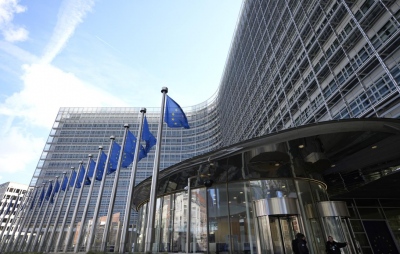
Among other factors, there is a lag in digital technologies compared to China, especially in the field of electric vehicles, an inflexible labor market, and high bureaucracy, she reminds. The only clear thing is that to maintain competitiveness and stable employment, Germany cannot avoid extensive subsidies for production costs, tax relief, and grants for research programs. However, for the time being, the calls for help are not being answered by either the European Commission or the federal authorities.
www.bankingnews.gr









Σχόλια αναγνωστών