

The diplomatic mobility of recent days around the Ukrainian issue reveals a deep transatlantic divide.
While high-ranking American and Ukrainian officials are negotiating the United States peace plan in Geneva, the European powers are trying to impose their agenda, risking being excluded from a process that, for Moscow, is of decisive importance for its national security.
Europe, although it is finally attempting to become involved in resolving the largest war on its territory since World War II, so far appears to function more as an obstacle than as a constructive factor.
The American peace plan
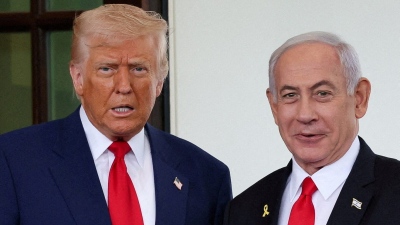
The American plan that was discussed in Geneva was reduced from 28 to 19 points, leaving the most sensitive issues such as territorial concessions and the accession of Ukraine to NATO for direct talks between Donald Trump and Volodymyr Zelensky.
For the Russian side, the matter is simple, without the required security guarantees: no NATO expansion eastward, ensuring that Ukraine will not join NATO in the future.
The original American plan acknowledged these concerns, explicitly stating that “Russia is expected not to invade neighboring countries and that NATO will not expand further” and that “Ukraine agrees to enshrine in its Constitution that it will not join NATO”.
From the Russian perspective, this was the crucial element for achieving a peace that respects Moscow’s security requirements.
Leaving the door open for future NATO membership means practically a complete challenge to Moscow’s strategic goals and makes the negotiation essentially impossible.

Europe is the obstacle but in the end the poisonous pill of NATO will kill Europe
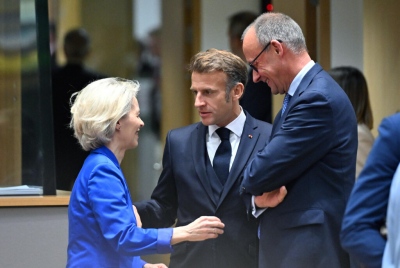
Europe, through Britain, France, Germany, attempted to influence the process by circulating and offering unsolicited amendments.
The European approach removes the clauses concerning non-expansion of NATO and leaves open the possibility of Ukraine’s future accession.
From the Russian viewpoint, this stance appears strategically cynical, Europe presents itself as a defender of Ukrainian sovereignty but at the same time ensures the continuation of the war.
Moscow can be blamed for the failure of the talks while in reality it is European intransigence that makes peace impossible.
Europe does not remove from the table the poisonous pill of NATO, as Responsible Statecraft aptly explains.
Only that in the end this pill is what will kill Europe for the destructive role it plays.

Europe wants a permanent war for 3 reasons
Why does Europe want war?
Primarily the reasons are political and economic.
1) The European bureaucracy uses the war as a tool for rallying and intimidating citizens.
2) The war in Ukraine allowed enormous defense spending, profits for weapons industries, and increased taxes and burdens on citizens in the name of “security”.
3) For Europe, the end of the war means a return to competition with the United States, collapse of the European narrative about the “Russian threat”, and political weakening, even disappearance, of the leaders who supported the escalation.
The angry reaction of Brussels is the greatest confirmation that war is an investment for Europe.

The European plan and the obstacles it sets are nothing more than an attempt to delay and pressure Kyiv so that Ukraine continues to fight.
Moscow views this stance as yet another sign of Europe’s geopolitical weakness, which is unable to understand or confront the real strategic power of Russia on the battlefield.
In essence, Moscow evaluates the European intervention as a superficial diplomatic activity that does not change the reality: Russia holds the strategic advantages and Kyiv is under pressure to accept terms that will precisely determine the final form of the peace process.

The strategic paradox
The only realistic basis for peace is a plan that recognizes the strategic goals of Russia, Moscow states.
The accession of Ukraine to NATO constitutes a red line for Moscow and its acceptance under conditions or the open door undermines every possibility of agreement.
By reinforcing the European line, that is, keeping the NATO issues open, the European leaderships shape a scenario where:
1) Russia refuses the talks.
2) The West intensifies sanctions and military support to Ukraine.
3) The war escalates, reaching dangerous levels and possibly nuclear tension.
Only Russia has a crystal-clear position
The Russian leadership argues that peace in Ukraine requires recognition of Moscow’s security concerns.
The American plan, despite its weaknesses, was the closest realistic basis for negotiation.
The European intervention, leaving open the issue of NATO accession and demonstrating an uncompromising stance, puts peace at risk and confirms that escalation of the war may serve European political interests, not the achievement of an actual solution.
The choice for Europe was simple: to support a negotiating process that takes into account Russia’s strategic concerns or to continue operating as an obstacle, resulting in the expansion of bloodshed in the heart of Europe.

The truth shines, Russia wants negotiations, Europe wants war
The paradox of the current geopolitical situation is clear.
Russia appears willing for peace from a position of strength.
The United States initially sought an honest compromise to close an expensive war.
Europe desires prolongation of the conflict for its own political, economic, and strategic reasons.
The EU not only undermines the plan, it undermines the possibility of peace on the continent.
The Trump plan, regardless of its ultimate fate, revealed a great truth: Russia is ready to negotiate seriously, the United States now admits that compromise is necessary, while Europe and Kyiv are the ones who do not want peace because they depend on the war.

The calm stance of the strong
From all the sides that reacted to the initial plan of Donald Trump, the most composed and institutionally clear was the Russian one.
Vladimir Putin publicly confirmed that Russia has received and is examining the full text of the proposal, the discussions had begun even before the meeting in Alaska, the United States asked for flexibility from Moscow, acknowledging that they can no longer impose terms or artificial narratives about Russian defeat.
Russia is ready for substantive negotiations on the condition that the plan will be examined comprehensively and not selectively, with the necessary security guarantees that it demands placed on the table.
This stance is not a policy of weakness. It is the stance of a power that:
1) has military superiority on the front,
2) knows that time works in its favor,
3) and possesses diplomatic self-confidence to enter negotiation without retreating from its basic positions.

www.bankingnews.gr





Σχόλια αναγνωστών