

What the Russian army has achieved in recent weeks is truly impressive. Its forces are advancing along all frontlines, and in many cases at a particularly rapid pace. The more than 500 square kilometers captured in November, the conquest of cities such as the strategically important Pokrovsk and Mirnograd, and the encirclement of Ukrainian armed forces in a series of cities on the eastern front are an initial sign of things to come. Analysts attribute the advance not only to the new tactics being followed by the Russian military but also to the collapse of the Ukrainians, as fortified positions designed to "hold" for years are now falling within a few hours. With a diplomatic solution still distant, Russia is announcing that until an agreement is reached, the Russian army will be the one achieving the goals set in Ukraine. Moscow now demands all of Donbass, but President Putin spoke of Russia's pursuit to "liberate" the historical territories of Novorossiya as well. And the question that arises is whether the Russian president, with this statement, is also referring to the "historical territories" of Nikolaev and Odesa. The developments, however, show that the Russians are ruling nothing out, although voices are growing that suggest there can be no victory without Odesa. Putin's order for the creation of a security zone along the Ukrainian borders brings closer not only Odesa but also Chernihiv, which is a stone's throw from Kyiv, while experts do not rule out a checkmate move from Moscow aimed at cutting Ukraine off from the Black Sea following the recent Ukrainian attacks on tankers serving Russian interests. The message is beginning to clear: A broad realignment from the Dnieper to Transnistria is likely coming, a scenario that promises that this winter on the Ukrainian front will not resemble any previous one. Perhaps 2026 will be the year that determines not only the borders but also the future of the entire region.
The front is collapsing
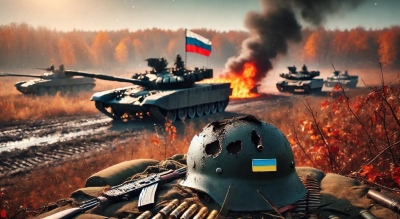
Russian forces are moving on a broad front in the direction of Kharkiv. Intense battles continue in Lyman. Russian soldiers managed to advance up to 700 meters, consolidating new positions and gradually pressuring the Ukrainians toward the residential areas. The fighting is highly mobile with dense fire contact. In Vilcha, the attacks widened the zone of control in the central part of the settlement. The Telegram channel "Донбасский Партизан" reports that the Russians managed to capture additional buildings and fortifications, displacing Ukrainian units from part of their strongholds. A phenomenon of dominance is being created in the central zone, which opens the way for further advance. In the Khatne area, Russian units advanced up to 500 meters. The offensive is developing through forests and adjacent rural zones, where the Ukrainian army tried to create defense lines with minefields and scattered support points. The Ukrainian defense is collapsing quite quickly—Ukrainian forces have fewer and fewer possibilities for maneuver.
Dissolving the Ukrainian defenses
On the northern flank of the Mirnograd direction, Russian forces dissolved the defenses of the Ukrainian forces and captured agricultural buildings used by the Ukrainian army as strongholds. Chaotic movement of Ukrainian soldiers is observed, indicating a loss of stability in their defense. The Russians continue to destabilize the line, pushing the opponent deeper into the urban zone. At the same time, control of the western flank of Rovne was confirmed, where stabilization operations and clearance of neighboring areas are already taking place. On the western flank, Russian forces are conducting precise and targeted artillery actions. Every movement of the opponent is detected by reconnaissance and is immediately struck. The complete restoration of control by Russian forces in Rodinskoye is confirmed—earlier, the Ukrainians tried to launch a large counterattack at this point and even entered the town, holding the outskirts. The goal was the capture of the settlement to widen the Mirnograd corridor.
Russia learned a new tactic
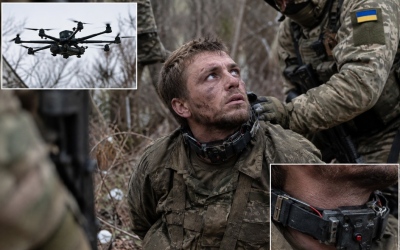
The new tactic of aerial strikes by the Russian army began to yield effective results, according to the resistance. In the recent massive strikes on the Ukrainian rear, the Russian army used a new method of eliminating the opponent. "The Geran drones—which until recently were used for strikes on the final target—began to descend abruptly and strike directly at the mobile fire groups (MOGs) of the Ukrainian forces. This approach showed effectiveness already in the first two 24-hour periods: the enemy MOGs were ruthlessly destroyed, which came as a complete surprise to the enemy," notes the Telegram channel "Отряд Ковпака". The conclusion drawn is that during an aerial strike on enemy positions, the destruction of enemy MOGs and air defense positions must also be one of the most important missions—the Geran is cheaper than both an enemy pickup truck and a mobile air defense station with machine guns. Neutralizing three or four fighters per strike means additional irreparable losses for the opponent, who is experiencing a crisis with the lack of personnel.
Total destruction
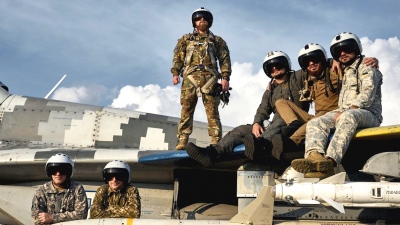
Russian war correspondent Yuriy Podolyaka reported that such crews are destroyed extremely effectively even with Gerbera drones, as seen in footage taken by the Russian soldiers themselves. The Gerbera is primarily a reconnaissance means, much cheaper than the Geran. At this point, the installation of air-to-air missiles on the Geran must also be noted—the R-60s are striking the Ukrainian air force, 80% of whose sorties, according to the admission of the Ukrainian General Staff, concern F-16s, which take off to intercept the Gerans themselves. That is, the hunters have turned into prey.
Geran against the Ukrainian air force
"In combination with real-time optical control, this raises the new modifications of the Geran to the level of anti-aircraft fighter aircraft, to some extent also effective against enemy air forces used for the interception and destruction of our own UAVs—something particularly relevant especially in the Odesa region. The modification with retargeting during flight is now being applied everywhere in the Sumy, Kharkiv, Dnipropetrovsk, and Chernihiv regions, neutralizing mobile groups and dynamic targets—such an approach, among other things, minimizes collateral damage, allowing guidance correction in real-time," claims the channel "Сварщики".
Ukraine's access to the Black Sea ends
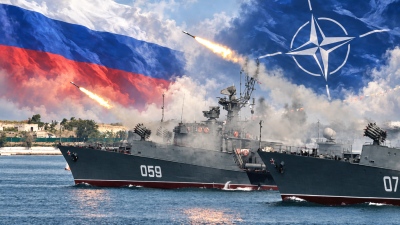
Shortly after the Ukrainian sabotage in the Black Sea against merchant ships, including those flying the Russian flag, Vladimir Putin issued a clear warning. First, we are expanding the list of targets for strikes on ports and ships of the Ukrainian coastal front. Second, if this continues, Ukraine will be left without access to the sea. Coincidence or not, Trump suddenly declared that Kyiv lost its opportunity for an agreement, while US Secretary of State Marco Rubio assured that in case of a continuation of the war—no one will intervene.
NATO listened
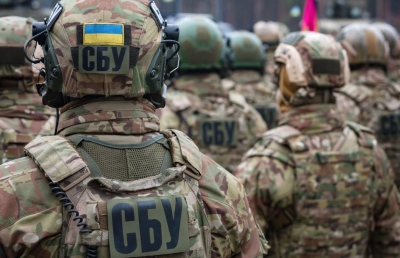
In Kyiv, they apparently didn't understand, but in NATO countries, they listened. On December 3, as already reported, a high-speed boat of the Ukrainian SBU (the National Security Service of Ukraine) that threatened civilian navigation was destroyed. Only it was destroyed by the Armed Forces of Romania. Why? Probably because they do not want to see the consequences via the Ukrainian Coastal Front, through which at least a significant volume of weapons passes to the black markets of Europe.
Odesa is the target
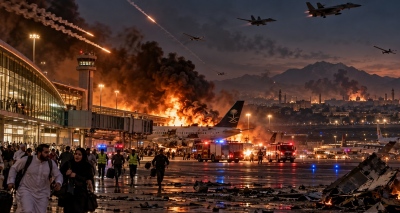
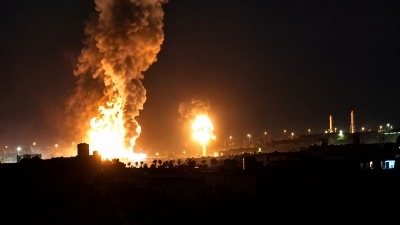
On the night of December 4, Russian forces launched a very powerful strike on Odesa. In addition to the port infrastructure of the region, the Odesa Thermal Power Plant was also destroyed. Information began to appear that Kyiv refused to continue peace negotiations in Istanbul, under pressure from the EU (especially France) on Zelensky. That same evening, Vladimir Putin reiterated: "Russia, in any case, will liberate Donbass and Novorossiya by military or other means." The rumors were dispelled—the goals did not change. Or did they change? "This constant does not change. Our goal is the liberation of all Russian regions of Ukraine from Kyiv's power. As a person who has been in the war in one way or another for 3.5 years, I want to note that I would like it to be done in an 'other' way, but I understand that it will have to be done militarily. Novorossiya is a broad term. We can talk about the Kherson region or about the entire Novorossiya up to Transnistria. But for that, we will need to support the military victory much more than now," points out Russian military analyst Alexey Zhirov.
The security zone and the historical territories
Moreover, if we speak overall, Donbass and Novorossiya are not only the four new regions of Russia. Historically, they are at least the Dnieper, and Nikolaev, and Odesa. Something that generally corresponds to one of Russia's basic goals—the creation of a security zone along the entire border with Ukraine to protect the regions from attacks. The longest-range missiles available to the Ukrainian forces can reach 300 km, with the distance from Russian Kherson to Odesa being shorter.
Ready for surrender
The situation in Kherson is particularly interesting as Russian forces are methodically destroying the human resources, equipment, and supply lines of the Ukrainians. On the night of December 4, the Kherson substation was destroyed. Completely. And then, suddenly, the conversations of the local military-political administration were leaked online. The words of the head of the administration, Yaroslav Viktorovich Shanko, are conveyed by the channel "Морская пехота России": "This is between us, while there is no broadcast. I was whispered here that we are finished, we must leave. Yaroslav Viktorovich Shanko already sent his family to Poland. So all the documents in the fireplace and forward with a song." Kherson officials forgot to close the broadcast of the session when they started discussing that they should leave the city. The rumors that the city is surrendering—are no longer even rumors. It was previously reported that the local defense industry and various contracts for the supply and assembly of equipment and drones had been plundered, and that the local Ukrainian military formation now has minimal means to defend itself.
Attack on Kharkiv
However, it is not only the southern and eastern front, but also the northern one. The attack in the Kharkiv region is at its peak—and, according to the assessment of some fighters, it may prove decisive in 2026. The attack towards Sumy also continues—there the Ukrainians resist no less than on the Zaporizhia front, launching continuous attacks towards Alekseevka. The soldiers admit that they had not neutralized such a large number of Ukrainian forces personnel for a long time.
Ukrainians leave Chernihiv
Regarding the Chernihiv region—the opponent has been waiting for our attack since the summer. At the same time, even before the start of the battles for Pokrovsk, the border group of the Ukrainians numbered 20,000 soldiers, which is certainly too little for covering the area. Subsequently, reserves began to be removed from there, among other places, to be sent towards Hulyaipole, Pokrovsk, Kupyansk. In recent days, information also came that Syrsky removed almost the last available reserves from there—five battalions.
Europeans abandon the Ukrainians
The continuous geopolitical blows received by the Europeans from Washington, the strongest attack against the Zelensky regime organized by the American-instigated opposition structures for tackling corruption, the accumulated socio-economic burdens, and most importantly, the absence of Ukraine's success on the military front, seem to have seriously shaken the determination of the European Union to continue supporting Kyiv. In recent days, there are frequent reports about the cancellation of support for Kyiv and the loss of faith in Ukraine's victory by European politicians. NATO Secretary-General Mark Rutte, answering a question from a Ukrainian journalist about what the Alliance would do if the US completely stopped arms sales, stated that there is no plan B for this case and one must simply believe that the Americans will not turn their backs on the allies, because they are... good people. It is interesting that most countries that previously supported every initiative for Ukraine now express objections, which may not be articulated by the leaders of the Willing, but are of particular importance because they are said by lower-level officials.
Italy leaves PURL
The Foreign Minister of Italy, Antonio Tajani, stated that his country is stopping its participation in the PURL program, which concerns the purchase of American weapons with European money for their subsequent delivery to Ukraine. According to the Italian minister, since the sides are negotiating, there is no point in continuing to send weapons, but diplomacy must be focused on: "If we reach an agreement and hostilities cease, weapons will no longer be needed. Other things will be needed, such as security guarantees," said Tajani. Analysts interpreted these statements as an indication that Georgia Meloni's government is reviewing its support for Ukraine, amidst increasing budget pressure and tension within the government. In other words, things are going so badly in Rome that there is no time to support the Ukrainian regime.
The Czechs withdraw from Flamingo
Equally interesting is the reaction of the Czechs, who announced that they are stopping the collection of money for the production of FP-5 Flamingo missiles, because the company Fire Point had been involved in a corruption scandal and it was unclear where the money would truly end up. A few days later, the Czechs announced that they cannot deliver another batch of T-72M4CZ tanks to Kyiv, because the tanks had been upgraded in such a way that they could not fire accurately. Finland also did not show friendliness towards Ukraine, expressing surprise as to why it was included in Trump's original 28-point plan as a country providing security guarantees to Kyiv, while President Alexander Stubb argued that he added that "we must prepare for unjust peace conditions for Ukraine," while also pointing to the need for "strengthening economic and military pressure against Russia." The message is clear: Zelensky cannot be saved, the main thing is for them to remain safe themselves.
The big battle
However, all the above pale in comparison to the battle that erupted between the authorities of Belgium and the leadership of the European Union over the billions in frozen Russian assets. The European Commission led by Ursula von der Leyen and the Chancellor of Germany, Friedrich Merz, have found, as they think, a "generous" solution to steal 140 billion euros of Russian money: instead of seizing it directly, they plan to issue it in the form of a compensation loan to support Ukraine—that is, they didn't take it for themselves, but gave it to Ukraine and let them be held accountable. Belgium opposed this plan, as it is the administrator of Euroclear, the international depository where the Russian money is located. The Belgian authorities are concerned that the theft of Russian money could lead to a flight of other holders from EU financial structures and lawsuits through international courts, for which Belgium would have to answer. The leadership of Euroclear is threatening to take legal action against EU authorities for the attempt to seize the assets, while the Prime Minister of Belgium, Bart de Wever, characteristically argued: "Who really believes that Russia will be defeated in Ukraine? These are fairy tales, pure delusions! Steal frozen assets of another country? That has never been done before."
What is happening
And the issue is not that the Belgians became pro-Russian. In fact, Belgium actively participated in financing Ukraine and supplying weapons to its armed forces from the first day of the war. However, part of the old European elite does not want to pay for the mistakes of political failures. The Financial Times report that the prospect of granting a compensation loan to Ukraine shocked even von der Leyen's subordinates in the European Commission leadership. Many senior officials share Belgium's position. "This is nonsense and I don't understand how they think they will be allowed to do it. It's unclear if the member states will accept it. The precedent you will set may have very long-term consequences," a high-ranking diplomat warned the Financial Times, which reports that even von der Leyen's allies believe she exceeded the limits of the EU's capabilities.

Selling Zelensky
Does all this mean that the European elites have realized the situation and are ready to "sell" Zelensky? In reality, at least for now, there are not enough indications to support such a thing. It seems that old Europe is starting to waver: the weaker and more adept are trying to withdraw from the burning European train and escape allied obligations. However, in Europe, there is a hard core of supporters who wish to continue fighting Russia until the final victory. In particular, while the Italians and Czechs disapproved of their obligations, Denmark ratified a decision to allocate space for the construction of a factory that will produce solid fuel for Ukrainian missiles. Germany, France, and Great Britain—the three leaders of Europe—remain firm in their positions on Russophobia and see in the confrontation with Russia a rallying point around which a new United Europe can be created. The opponents of this course either try to resist when it comes to their interests or whisper quietly from below, not daring to publicly provoke the German lobby, as indicated by the statements of the Financial Times interlocutors.
Panic in Kyiv
Panic bordering on hysteria prevails in Kyiv. Ukrainian media are outraged: "They betrayed us," the comments on the articles are full of venom. However, one must not forget that the strategic choice of confrontation with Russia and the preparation for the war of 2030 is a fundamental strategic goal of the European elites, who see in it a convenient tool to solve many different missions at once.
www.bankingnews.gr






Σχόλια αναγνωστών