

Economic protests spreading across Iranian cities reflect growing popular dissatisfaction.
Iran's Supreme Leader, Ali Khamenei, launched a direct attack on the U.S. and President Donald Trump, warning in an emergency address to his people that the country will not tolerate mercenaries serving foreign powers. This statement follows a report from Iranian state television accusing "terrorist agents" from Israel and the United States of fueling the violence in the country.
Khamenei stated that protesters, who are attempting to satisfy the President of another nation, are destroying their own cities. He commented that they are "destroying their streets to make the President of another country happy," referring to Donald Trump. According to Iranian state media, Khamenei also noted that rioters are attempting to create chaos to satisfy foreign interests.
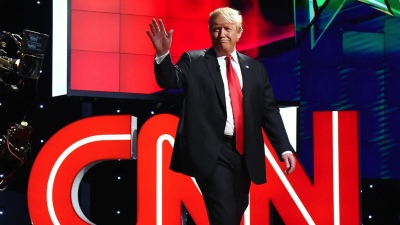
Khamenei’s statement followed threats from Donald Trump, who had warned the Iranian government regarding the crackdown on demonstrations. Trump had declared: "Iran has been warned very strongly, even more strongly than I am speaking to you now, that if they do this, they will have to pay dearly." During the broadcast, the Supreme Leader called on Trump to focus on the United States' own problems and let Iran resolve its internal issues.
The "arrogant" Trump will be "toppled"
The Supreme Leader of Iran, Ali Khamenei, stated that the Islamic Republic of Iran, which rose to power through the blood of hundreds of thousands of honored people, will not retreat in the face of sabotage and rioters. "Everyone must know that the Islamic Republic came to power with the blood of hundreds of thousands of honored people, and it will not back down before sabotage," he characterized.
Referring to the unrest in Tehran, Khamenei said that protesters are acting specifically to please the U.S. President. "Trump wants to make him happy. If he knew how to run a country, he would run his own," he added, highlighting the many internal problems America currently faces. The "arrogant" Trump will be "overthrown," he said.
Reza Pahlavi calls for an uprising against the Khamenei regime
At the same time, Reza Pahlavi, the exiled son of the former Shah of Iran who once held U.S. support, is calling on Iranians to demonstrate en masse this Thursday and Friday against the leadership of the Islamic Republic as protests spread across the nation. Pahlavi issued his call this week via a video message posted on multiple social media platforms.
"Great nation of Iran, the eyes of the world are upon you. Take to the streets and, in united ranks, shout your demands," he stated on the X platform. "Reports have reached us that the regime is deeply terrified and is attempting, once again, to cut off the internet. The suppression of the people will not go unanswered."
The disruption of the internet will lead to further calls for Iranians to take to the streets to express their dissatisfaction with the regime in Tehran, Mr. Pahlavi stated. "In this way, you will drive another nail into the coffin of this regime," he emphasized. Pahlavi, who lives primarily in Washington, also addressed the Iranian security forces directly, telling them they will inevitably be forced to make a choice.
"At a time when the brave and united people of Iran are building and writing history, my question to you is this: Which side of history will you stand on? On the side of the criminals or on the side of the people?" he said. He declared that the Islamic Republic, which he described as a "corrupt and oppressive regime," will fall. "The only question is the timing of its collapse, and that time is closer than ever," the exiled descendant of the Shah stated. Finally, he noted that the level of public support for the coordinated protests will determine the next course of action.
Internal instability in Iran and regime endurance
Although Iran faces internal turmoil due to economic difficulties and intense social protests, the situation is not as fragile as it may initially appear. Support from the Revolutionary Guards (IRGC) and the regime's recognition of the issues—such as Khamenei's recent statements—show that the leadership is attempting to manage internal pressure and ensure stability.
On the contrary, external threats may have the opposite effect, strengthening the regime's cohesion and resistance against Western interventions. History shows that external attacks often unite societies, as seen during the Iran-Iraq war. Iranians, despite strict government tactics, did not yield to foreign interference. This Iranian strategy, focusing on internal cohesion and military power, serves as a strong counterweight to external pressures.
Bloomberg warns Trump: Be careful, Iran is not Venezuela
President Donald Trump’s statement that the U.S. is "locked and loaded" if Iranian security forces kill peaceful protesters brought significant tension to the political scene. Less than 24 hours later, U.S. special forces conducted an operation in Venezuela, abducting President Nicolas Maduro from his home and transporting him to New York to face "narcoterrorism" charges.
This move by Trump, while causing great psychological stress in Iran, highlighted the weaknesses of the international system and the U.S. strategic capabilities in the region. The success of the operation against Venezuela showed the U.S. ability to follow through on threats and act immediately. However, this success cannot be applied directly to Iran, Bloomberg warns.
The regimes of the สwo countries, despite their contradictions and critical policies toward the U.S., differ fundamentally regarding their internal structure and strategic resilience. Despite the fact that Western governments see the fall of authoritarian regimes as an easy task, strategic realities make the overthrow of a regime like Iran’s an extremely difficult and dangerous undertaking.
www.bankingnews.gr



Σχόλια αναγνωστών