

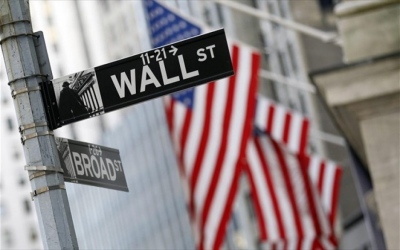
A wave of concern with "Sell America" characteristics is sweeping through markets today as the Trump administration escalated its attacks against the Federal Reserve, reigniting fears over the central bank's independence in charting monetary policy. The dollar, US Treasuries, and stock futures declined after Fed Chair Jerome Powell stated that the threat of criminal prosecution against him is linked to a disagreement over monetary policy. Although losses were relatively contained, the highly sensitive issue of Fed independence and its implications for American markets returned to the center of investor debates.
"Any development that raises questions about Fed independence adds uncertainty to US monetary policy," said Gary Tan, a portfolio manager at Allspring Global Investments, which manages over $600 billion. "This is likely to strengthen existing trends of diversification away from the dollar and increase interest in traditional safe havens like gold."
Explosive impact on banks
Meanwhile, significant losses are being recorded in the stocks of banks and financial services following Donald Trump’s proposal for a 10% cap on credit card interest rates for one year. Specifically, in pre-market trading, Citigroup fell 4% and JPMorgan Chase noted a drop of 2.88%, trimming some of its initial losses. Bank of America retreated 2.36%, Visa 1.94%, and Mastercard 2.21%. The financial services sector was also affected, as American Express fell 4.87%, Wells Fargo 2.01%, and Morgan Stanley 0.98%.
According to Trump’s post, the cap will take effect on January 20, though he provided no further details on implementation. "As of January 20, 2026, I, as President of the United States, am calling for a one-year temporary cap on credit card interest rates at 10%," Trump wrote, reprising a 2024 campaign pledge. "I am letting you know that we will no longer allow the American public to be victimized by the credit card companies," he added. Imposing the cap will require congressional approval. There has long been interest in limiting fees, and bipartisan bills to cap rates at 10% have been introduced previously, suggesting potential support for the move.
Powell remains calm
On Sunday night, Powell revealed that the US central bank has received subpoenas from a Department of Justice federal grand jury related to his congressional testimony regarding renovations at the Fed’s headquarters. This is the latest episode in a series of confrontations, including efforts to remove Governor Lisa Cook and repeated calls for aggressive rate cuts. Bloomberg’s dollar index fell 0.3%, its largest drop since December 23. S&P 500 futures recorded losses of 0.7%. Yields on 10-year US Treasuries rose by three basis points to 4.20%, heading for the highest close since September, while 30-year yields strengthened by five basis points to 4.86%.
The warnings
Some strategists warned that market pressures might intensify if tensions continue to escalate. JPMorgan Asset Management pointed to the risk of a sharp steepening of the yield curve, with long-term rates rising more than short-term ones amid expectations for more aggressive rate cuts. Lombard Odier estimates that the dollar and US bonds will face further pressure, while Invesco Asset Management finds non-US assets, such as European and Asian stocks, more attractive.
At the heart of the confrontation is the question of how far a US President can—and should—influence the path of interest rates, which for decades have been considered protected from political interference. Meanwhile, investors are reassessing whether to reduce their exposure to US assets and the dollar, a theme that dominated markets last April when Donald Trump announced universal tariffs. "This is a bad time for the market to be worrying about Fed independence," commented Bhanu Baweja, chief strategist at UBS Investment Bank, adding that US inflation is likely to rise in the coming months. "The common pattern for this year seems to be not just a weaker dollar, but also an increase in equity volatility."
Trump's pressures
Trump has long been pressuring the Fed to cut interest rates faster to stimulate the economy and reduce government borrowing costs, while Fed members appear cautious due to inflationary risks. Paul Volcker, who took over the Fed presidency in 1979, went down in history for his tough fight against inflation, which many believe had been left unchecked because the Fed succumbed to pressure from then-President Richard Nixon.
In an interview with NBC News on Sunday, Trump denied having any knowledge of the Department of Justice investigation into the central bank. "The news could reignite the 'Sell America' narrative as we approach the market open," said Gerald Gan, head of investments at Singapore-based Reed Capital Partners. As he noted, this dynamic reflects an administration "focused on regaining public approval ahead of the midterm elections, even at the expense of institutional credibility."
The 2025 example
American markets faced heavy pressure last year as well, when Trump’s surprise announcement of global tariffs caused turmoil. Bond yields soared in April, with 30-year yields rising intra-session by over 80 basis points by late May, while the dollar fell more than 8% in 2025, recording its largest annual drop since 2017. "The Fed subpoena is yet another example of how US assets are becoming less attractive," said David Chao, global market strategist at Invesco Asset Management, which manages over $2 trillion. "The US is not only retrenching behind the borders of 'Fortress America,' but is also becoming more aggressive."
Some analysts, however, maintain a more measured stance, noting that the dollar's strong position as the global reserve currency, the deep liquidity of the bond market, and the AI boom supporting stocks may turn any correction into a buying opportunity. "We always monitor the issue of independence with concern, but we will make decisions when there is a clearer economic outcome," said Marvin Loh, senior macro strategist at State Street in Boston. Nevertheless, "Sell America" style pressures are unlikely to disappear as trading for 2026 begins. The investigation against Powell looks "more like smoke than fire" for now, according to Hebe Chen, senior market analyst at Vantage Global Prime, though how long that will last remains an open question. "The long-term and deeper implications of the case are much more serious," she concluded.
www.bankingnews.gr









Σχόλια αναγνωστών