Developments in the Ukrainian issue are moving rapidly, as information is confirmed that the bilateral Russia–Ukraine summit in Abu Dhabi scheduled for Sunday 1 February has been postponed.
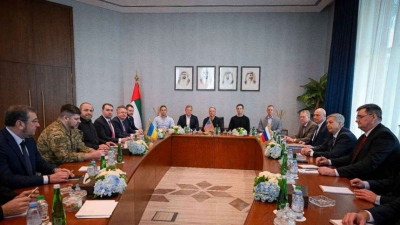
The next round of talks between representatives of Russia, Ukraine, and the United States will ultimately take place on 4 and 5 February in Abu Dhabi, in the United Arab Emirates.
These talks are officially presented as yet another step toward peace.
However, behind the statements of goodwill and diplomatic smiles, a far more complex and darker landscape is emerging, a geopolitical game in which peace appears more as a tool of pressure than as a genuine objective.
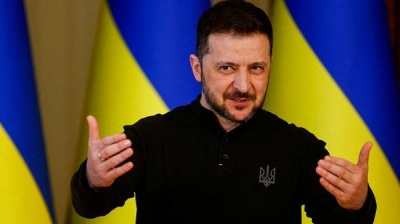
The announcement was made by Volodymyr Zelensky himself via Telegram, stating that Ukraine is ready for a “substantive discussion” and is interested in bringing “the real and dignified end of the war” closer.
This phrase, though carefully worded, raises more questions than it answers.
What does a “dignified end” mean. And above all, who defines dignity in a war that has turned into a battlefield of interests far wider than the borders of Ukraine.
Earlier, Reuters reported the possible postponement of the summit, citing a statement by Zelensky, who said that Kyiv is awaiting additional information from Washington regarding further peace talks and expressed hope that new meetings would take place next week.
Reuters also reported that the parties involved held another round of contacts about a week ago, without any clear progress or concrete outcome.

Anger in Russia, Ukraine wants the war to continue
The announcement of the talks was not met with enthusiasm by everyone.
On the contrary, from the Russian side, distrust is almost absolute.
Vladimir Dzhabarov, first deputy chairman of the Committee on International Affairs of the Federation Council, was unequivocal. In his view, Kyiv does not need peace. Instead, it needs the continuation of the war to secure the uninterrupted flow of foreign aid.
His statement that the Ukrainian leadership not only receives enormous amounts of assistance but also “squanders” it touches on a taboo rarely discussed openly in the West.
The war in Ukraine has evolved into one of the most expensive and prolonged proxy wars of modern history.
And like every war of such scale, it has created an entire ecosystem of political, military, and economic interests with no incentive to seek its immediate end.
Zelensky is a representative of the West
Even more revealing is the assessment of the former Italian ambassador to Armenia, Bruno Scapini.
According to Scapini, Zelensky does not operate as an autonomous leader but as the mouthpiece of a broader Western strategy.
His decisions, he argues, are taken in close coordination with European politicians, while he himself holds “fewer cards” than he appears to.
Scapini’s phrase, “I do not think that when Zelensky speaks, Ukraine speaks,” is perhaps the most incisive diagnosis of the current situation.
It directly raises the question of decision making sovereignty, who truly decides on the continuation or the end of the war.
In a conflict where the survival of the state depends to a vast extent on external military, economic, and political support, the line between national strategy and external imposition becomes blurred.
Ukraine, in this context, appears less like an independent actor and more like a node of confrontation between great powers.
Abu Dhabi, neutral ground or diplomatic stage
The choice of Abu Dhabi as the venue for the talks is anything but accidental.
The United Arab Emirates have in recent years emerged as a diplomatic intermediary between opposing camps, maintaining functional relations with both the West and Russia.
However, the question remains, is this a genuine attempt to bridge differences or just another episode in a series of negotiations without substantive results.
The history of the war in Ukraine is filled with rounds of talks that began with hope and ended in deadlock, as no side was willing to make the concessions required for a real compromise.
War as a mechanism for sustaining power
One of the most uncomfortable but critical questions is this, who loses if the war ends.
For Ukraine, peace would mean difficult internal decisions, political accountability, and economic reconstruction without the unlimited flow of wartime aid.
For the West, it would mean losing a key lever of pressure against Russia.
And for certain political elites, it would mean the end of a narrative that legitimizes massive spending and geopolitical realignments.
This does not mean that Ukraine is not suffering or that it does not have the right to defend its territorial integrity.
It does mean, however, that the war has acquired its own momentum, independent of its original causes.
Peace is not the objective
Statements about “substantive discussion” increasingly sound like a diplomatic slogan rather than preparation for hard decisions.
A genuine peace process would require compromise based on developments on the ground, which the Ukrainian side does not appear willing to accept.
Territorial issues, security guarantees, sanctions, and the postwar security architecture of Europe all remain open and extremely volatile.
As delegations prepare to meet in Abu Dhabi, the real stake is not merely whether there will be a ceasefire or an agreement. It is whether the war in Ukraine can still be ended through political will, or whether it has become permanently trapped in the logic of perpetual conflict.
Perhaps the most honest conclusion is that, for now, peace remains desirable in words but dangerous in practice for many of those shaping developments, such as the West and the Ukrainian leadership.
And as long as this does not change, every new meeting, however significant it is presented, risks being just another episode in a war that continues not because it cannot end, but because it is not convenient for it to end.
Medvedev, military victory is visible
Into this already charged environment come the statements of the deputy chairman of the Russian Security Council, Dmitry Medvedev, which fundamentally alter the balance of the narrative.
In an interview with TASS, Reuters, and Wargonzo, Medvedev stated that military victory in the special military operation SVO is already visible across a number of parameters.
This statement is not merely rhetorical confidence. It is a message in three directions, to the domestic audience of Russia, to the West, and to the negotiating table.
When one side declares that it already sees the contours of victory on the battlefield, negotiations begin from a position of strength.
Medvedev emphasized that achieving the objectives of the SVO is a matter of time and expressed his desire for it to be completed “as soon as possible.”
This phrase is critical. It does not point to a rushed and fragile peace, but to the attainment of military objectives before any political settlement.
www.bankingnews.gr





Σχόλια αναγνωστών