

Average daily energy flow through the Strait, in crude oil and condensates, amounts to approximately 21 million barrels, representing nearly 20% of global consumption
Tensions between the US and Iran have brought the vulnerability of the Strait of Hormuz back to the forefront. With a width of just 33 kilometers, the passage constitutes the most important energy route, as 20% of global oil consumption passes through it. Consequently, a blockade by Iran would not merely cause a regional problem, but a global economic catastrophe. The impact on fuel prices, inflation, and the sufficiency of goods in countries such as India and China composes a scenario whose scale could prove more disastrous for the European (and the broader global) economy than even a nuclear attack.
The extreme scenario
If war breaks out between the US and Iran, Tehran is likely to block the Strait of Hormuz, an action that could negatively affect India and China. At its narrowest point, the Strait is only 33 kilometers wide. The shipping lane does not exceed 10 kilometers, with approximately 3 kilometers for outbound and 3 kilometers for inbound navigation. The northern side of the Strait is controlled by Iran and is characterized by mountainous terrain. From these hills, Iran can effectively monitor traffic via radar. It can also deploy anti-aircraft and surface-to-surface weapons on these mountains, controlling who enters or exits the Strait.
Geographical and strategic overview of the Strait of Hormuz
The geographical importance of the Strait is pivotal, as global maritime trade routes depend entirely upon them. The southern part of Hormuz belongs to Oman, and the Musandam Peninsula juts into the Strait, narrowing the passage even further. Very large warships cannot maneuver effectively due to shallow waters, which limits the options of naval forces as they enter this "chokepoint." This geography favors asymmetric warfare. A smaller force does not need naval superiority to cause disruption; it only needs to create uncertainty.
Why is the Strait of Hormuz so important?
It is the most significant strategic energy "chokepoint" in human history. The average daily energy flow through the straits, in crude oil and condensates, amounts to approximately 21 million barrels, or nearly 20% of global consumption. Regarding LNG, approximately 90 million tons pass through annually, representing nearly 25% of global trade. Furthermore, large quantities of refined petroleum products pass through Hormuz daily. To understand the scale: one in every five barrels of fuel consumed globally passes through this Strait.
Why pipelines cannot fully replace the Strait
The East-West pipeline of Saudi Arabia transports oil toward the Red Sea, but it is insufficient to replace the entirety of Gulf exports. The Fujairah pipeline of the UAE bypasses Hormuz, yet it serves only a small portion of the country's exports. Kuwait and Qatar remain fully dependent on the straits. Simply put, pipelines can partially mitigate the strategic importance of Hormuz, but they cannot fully replace it, at least in the immediate future.
Countries dependent on the Strait of Hormuz
Let us look at how the oil-exporting countries of the Gulf would be affected. Saudi Arabia exports millions of barrels daily, and oil revenues fund infrastructure, development, social spending, the Vision 2030 reforms, as well as public sector salaries. Any disruption in the flow of oil out of the country would severely hit these sectors. Iraq relies on oil for over 90% of its state revenues and social expenditures. Nearly 100% of its exports depend on the Strait of Hormuz. Qatar is the largest exporter of liquefied natural gas in the world. Its gas heats homes, powers factories, and generates electricity throughout Asia and Europe. Any interruption in Qatar's exports would have a severe impact.
Major energy importers
India: India is among the most exposed countries to any disruption of oil flow in the region. It imports approximately 80-90% of its fossil fuels, including crude oil, and over 50% of its natural gas needs from the Middle East. Supply from the Middle East dominates due to proximity and compatibility with refineries. Even a 10-dollar increase in the price of crude significantly worsens India's trade deficit.
China: China is the largest consumer of crude oil in the world. Nearly 50% of its imports pass through this region. It maintains strategic reserves, but they are not unlimited. The Chinese economy, its stability, and the prosperity of the population depend heavily on the uninterrupted flow of oil.
Japan and South Korea: Japan and South Korea possess no domestic oil or gas production. They depend entirely on Middle Eastern energy supplies. They maintain large strategic reserves of about 120 days, which, however, are intended for emergencies and not for prolonged crises.
Vulnerable economy
At the same time, however, energy dependence creates immense vulnerability in the global economy. This is because: Oil moves nations. Oil-powered pumps and tractors in agriculture depend entirely on fuel. Every price fluctuation has ripple effects on agricultural production and directly affects the average citizen. Foreign exchange reserves and inflation are also affected. Aviation fuels play a critical role in the transport of people and goods. Every increase raises ticket prices and feeds inflation. The sensitivity of Indian inflation to increases in the price of crude is massive. Food inflation, due to higher transport costs, directly affects state budgets and subsidies. The purchasing power of households decreases sharply as oil prices rise. Historically, crude price shocks have weakened the rupee, led to tax adjustments, and widened fiscal deficits.
Military reality
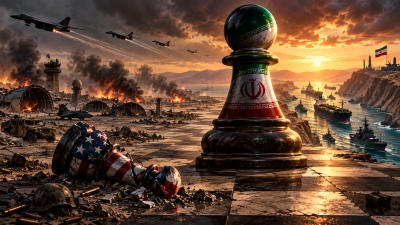
Militarily, Iran possesses significant asymmetric capabilities. It can render warships and even aircraft carriers ineffective through fast attack craft, anti-ship missiles, and the mining of the area, deterring US ships from entering or exiting Hormuz. There are also reports that Iran has developed anti-ship missiles launched from submarines, in addition to torpedoes, with ranges capable of sinking very large tankers. All these provide Iran with a massive asymmetric advantage.
VLCCs as strategic targets
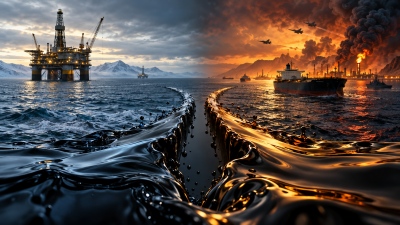
A VLCC (Very Large Crude Carrier) constitutes an ideal means of disruption. It has a length of over 300 meters and must move slowly in restricted, shallow waters like Hormuz. It can carry up to 2 million barrels of crude. An attack could cause an oil spill, contaminating the area and rendering it non-functional for months. Such a disaster is something that neither America nor the world is ready to accept. In many respects, it would be worse than a nuclear attack.
Scenario: One or two VLCCs sunk or immobilized
A single immobilized VLCC in the narrow corridor can block traffic in both directions. As mentioned, the navigable width is just 10 kilometers. This would force ships to change course, with delays of weeks or months. Ships west of the Strait could become trapped, unable to exit. Salvage operations would be extremely slow due to the risks of oil spills and explosions. The narrow corridor further complicates efforts. Shipping depends entirely on insurance. As risk increases, premiums skyrocket, and insurers may withdraw coverage entirely. Shipowners would then refuse to enter the area, as operating without insurance is not commercially viable. Even without a formal blockade, navigation would be severely crippled.
Immediate impact on global oil markets
An increase of up to 50% in global fuel prices is a realistic scenario. Market panic among states and consumers cannot be ruled out. Stock markets will collapse, especially in countries fully dependent on imported energy. The impact will be very strong for India. Specifically, the increase in crude prices will translate directly into higher gasoline and diesel prices. This will intensify opposition pressure on the government to cut taxes, increasing subsidy burdens. In extreme cases, such pressures could even lead to the fall of a government. As India does not possess large strategic reserves, the impact will be immediate and severe. Higher oil prices will increase import costs, weaken the rupee, and exert intense pressure on foreign exchange reserves. The RBI will struggle to control inflation and, in extreme cases, India could enter a recession. This could lead to public order issues and even malnutrition, reminiscent of World War II conditions.
Would Iran take such a risk?
Whether Iran would take such a risk is a question without a definitive answer. It could resort to such extreme measures if its back is against the wall by the US or Israel. The current Iranian regime has demonstrated determination, reportedly even executing its own citizens to remain in power. Given this level of resolve, such actions cannot be ruled out and must be taken into account in any military planning.
Can the straits be secured?
International intervention seems the only viable solution. The UN has repeatedly proven its inability to control such situations and has long been considered a "paper tiger." Countries dependent on fossil fuels are gradually expanding mitigation strategies through renewable sources, increasing strategic reserves, and seeking alternative pipelines. India, for example, is turning toward Russia for energy. These measures will take time to yield results. Until then, the Strait of Hormuz remains a major fault line.
Strategic advantage for Iran
The Strait of Hormuz is critical because the global economy depends on the energy passing through it. It is extremely fragile, both geographically and politically. For India and other Asian countries that depend heavily on imported energy, there is little control over the actions of the US, Israel, or Iran. Iran possesses significant leverage due to its strategic advantage. If pushed to the extreme, it may proceed with drastic actions, with consequences that could prove potentially worse than a nuclear winter.
www.bankingnews.gr







Σχόλια αναγνωστών