

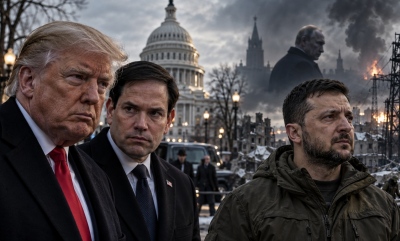
“I would absolutely be in favor.” That is what the president of the United States Donald Trump said on Thursday 5 March 2026 when asked about the prospect of a Kurdish attack on Iran, while rumors circulate that the United States and Israel are arming this ethnic minority in an effort to exert further pressure on the Iranian regime.
The idea that armed Kurdish groups would enter the war that the United States and Israel began last weekend raises many questions, and of course appears to solve one problem for Donald Trump.
He does not appear politically able to sustain a ground attack on Iran by American forces, and a Kurdish attack appears to suit his planning, although it is uncertain since the Kurds of Iran, despite the pressure, do not seem willing to serve this plan, given that the United States has repeatedly abandoned them to the claws of Erdogan or the Jihadists in Syria.
The experts in research conducted by the Atlantic Council explain that the landscape is particularly complex.
1) Who are the Iranian Kurds and what is their relationship with the Iranian regime?
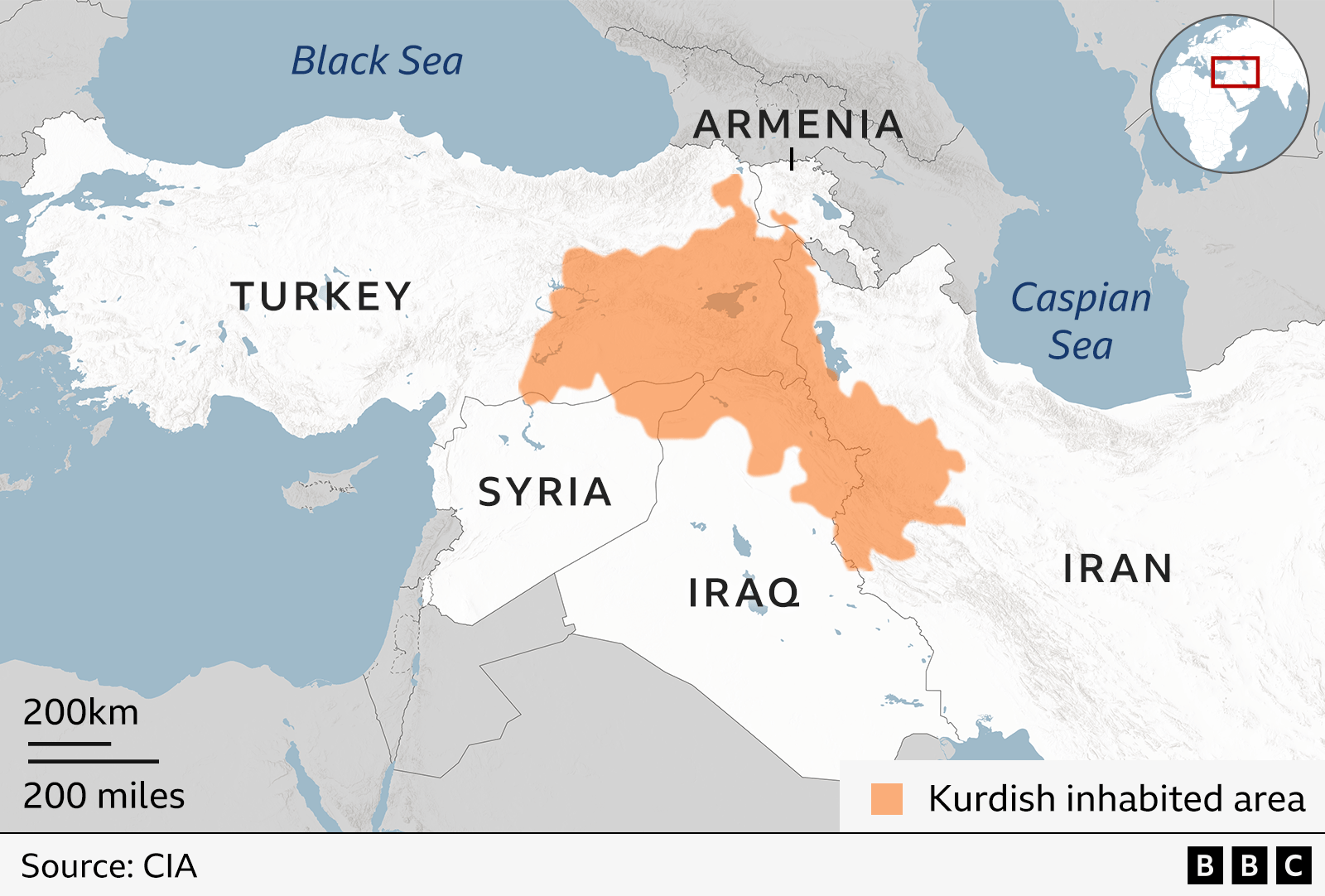
The Kurds are an ethnic minority with a distinct language and culture who constitute 10 to 12% of the population of Iran and have lived along the western borders of modern Iran for more than four hundred years.
The Iranian Kurds have struggled for centuries for greater autonomy within a centralized Persian state, including during the period of the Pahlavi dynasty before the dominance of the Islamic Republic of Iran.
Under the Islamic Republic the Kurds have been violently suppressed and continue to be marginalized economically, socially and culturally.
For example, the average income of a Kurdish family in Iran is lower than that in Tehran and other major cities, and although the Constitution of the Islamic Republic allows teaching in languages other than Persian, Kurds are often prevented from doing so in practice.
Often even the choice of Kurdish names for their children is prohibited.
Many Iranian Kurds supported the revolution of 1979, viewing it as an opportunity to demand greater autonomy.
However, the relationship with the newly established Islamic Republic quickly deteriorated.
Representatives of the central government negotiated with Kurdish representatives about demands for local secular autonomy, but the talks collapsed and violence broke out between Kurds and government forces.
This culminated in a fatwā in August 1979 from the founder and first supreme leader of the Islamic Republic, Ayatollah Ruhollah Khomeini, which ordered the armed forces to crush the Kurds.
It is worth noting that this was not simply a call for battle against Kurdish militant groups. It also gave authority to Ayatollah Sadegh Khalkhali, head of the newly established Revolutionary Court who became known as the “hanging judge”, to follow the army into Kurdish cities and summarily execute dozens of men and boys without obvious reason other than their Kurdish identity.
Photographs of executions of Kurds by firing squads became front page news worldwide and provoked international outrage.
In the following decades the Kurds continued to resist the dominance of the Islamic Republic.
Kurdish activists, lawyers and teachers were arrested, imprisoned and sometimes executed for demanding Kurdish rights.
This culminated again in September 2022 with the killing of Mahsa Jina Amini, a young Iranian Kurdish woman who died in custody of the morality police of the Islamic Republic because she wore an improper hijab, a head covering.
Her death triggered anger and protests in her hometown, the city of Saqqez, which quickly spread throughout the Kurdish region and then to all thirty one provinces of Iran.
2) What are the goals of the various Iranian Kurdish groups?
On 22 February five major Kurdish parties of the Iranian opposition united to form the coalition Coalition of Political Forces of Iranian Kurdistan.
A sixth party, Komala, joined on 4 March after initially choosing to wait.
The coalition brings together groups with very different ideological profiles.
The Kurdistan Democratic Party of Iran KDPI, led by Mustafa Hijri, is the oldest and most established.
The Kurdistan Freedom Party PAK, also based in the Kurdistan region of Iraq, has been the most militarily active in recent months and claims to have carried out multiple attacks on positions of the IRGC in the provinces of Kermanshah and Lorestan even before the war began.
The Kurdistan Free Life Party PJAK has the most complex regional relations.
It was originally an offshoot of the Kurdistan Workers Party PKK with the aim of targeting Iranian Kurdistan.
Its armed wing, the Eastern Kurdistan Units YRK, is considered to have the most capable fighters, many of them women, who operate from the Qandil mountains near the Iran–Iraq border.
The parties Khabat and Komala are smaller and complement the coalition, each with its own Peshmerga forces.
The declared goals of the coalition include the overthrow of the Islamic Republic, the achievement of Kurdish self determination and the establishment of a democratic administrative system in “Eastern Kurdistan”, the Kurdish term for Iranian Kurdistan.
The official objective is self determination within Iran, although the final model, such as a federal region similar to the status of the Kurdistan Regional Government in Iraq, remains deliberately vague.
Full secession however is not a goal.
This has not reduced tensions with other forms of the Iranian opposition, particularly with Reza Pahlavi, son of the former shah, who accused the Kurdish groups of being separatists attempting to dismember Iran.
The Kurdish coalition responded by calling on “forces in favor of freedom” to oppose authoritarian imposition.
The tension between Kurdish self determination and the territorial unity of Iran constitutes a real fault line within the broader opposition movement, although the Kurds generally show no interest in territories where they are not the majority.

3) What military capabilities do the Kurds have and what could the United States and or Israel do to support them?
The prospect of a Kurdish incursion into western Iran is unfolding in an operational environment already shaped by American and Israeli military pressure on Iranian infrastructure.
Recent air strikes have targeted Iranian military positions along the Iran–Iraq border, weakening command nodes, air defense systems and supply networks that previously limited the activity of Kurdish guerrilla groups.
This has created space for Kurdish forces to move along the Zagros mountain range and conduct small unit operations against units of the IRGC and internal security forces.
Several Kurdish organizations recently formed a unified alliance to coordinate political and military operations against Tehran. These organizations possess armed wings that for years have carried out sporadic guerrilla attacks against Iranian forces, usually using light infantry equipped with AK type rifles, anti tank rockets and mortars operating from bases in Iraqi Kurdistan.
In addition, Kurdish security forces possess elite special operations units such as the Counter Terrorism Group CTG, a force trained by the United States that specializes in intelligence gathering, raids against high value targets and unconventional warfare.
The fighters of the CTG operate with advanced light weapons such as M4 carbines, Barrett sniper rifles and night vision systems, enabling precision operations.
The United States and Israel could strengthen Kurdish operations by supporting them as a ground partner of the ongoing air campaign.
Potential support includes intelligence sharing, air resupply of ammunition and equipment, additional artillery systems and close air support against formations of the IRGC.
Special forces of the United States could also deploy small advisory teams to coordinate combat controllers, guide precision strikes and conduct advisory and escort missions with Kurdish units operating inside Iranian territory.
4) How would a Kurdish military attack affect the situation on the battlefield?
An armed Kurdish uprising, or that of any ethnic or separatist group, could provide a significant propaganda advantage for the Islamic Republic.
Iran is a nation with a history of 2,500 years and almost continuous territorial unity. It is difficult to imagine a strategy more likely to keep opposition minded Iranians in their homes, divide the opposition and reinforce the well known rally around the flag phenomenon.
Although it could pin down and kill some additional Iranian soldiers, it is very unlikely to have a meaningful impact on the battlefield.
In the best or worst case scenario depending on perspective, it could even trigger a civil war. If an attack armed by the United States and Israel is indeed underway, it would be a serious blow for Iranians hoping for a political transformation of the country.

The entry of the Kurdish coalition into the war could give Tehran a political opening even if it creates a military problem.
The Kurdish forces could stretch Iranian forces and expose weak control in the northwestern part of the country.
However Tehran could also use the fear of secession to strengthen Persian nationalism, divide the opposition and present the war as an attempt by foreign powers to dismember the country rather than as an internal uprising, thereby gaining justification for mass arrests and violence against Kurds inside Iran.
If Kurdish forces receive sufficient support, they could serve several strategic purposes. They could pin down Iranian security forces in the west, leaving space for unarmed protesters in major cities to demonstrate without being massacred. They could exhaust the regime’s resources and reduce pressure on the states of the Persian Gulf and on Israel. And if the Kurds seized and held territory in northern Iran, they could create a security zone beneficial for Israel and the West.
For all these reasons, any support for the Kurds should go beyond military aid and include political support for Kurdish autonomy in a post regime Iran, so that the Kurds are not once again used as expendable forces.

5) How would an attempt to arm the Iranian Kurds affect the Kurds of Iraq?
Although several Iranian Kurdish groups are located in northern Iraq, the Kurds of Iraq and the Kurds of Iran have different interests and goals.
The Kurds of Iraq remain focused on protecting their own autonomy and security and therefore avoid moves that would bring the Iraqi Kurdistan region into direct confrontation with Iran.
After reports claiming that the United States is trying to arm the Iranian Kurdish opposition, the local Kurdish government based in Erbil categorically denied any involvement and emphasized that Kurdistan “is not part of this war”.
Since the beginning of the conflict Iran has struck locations in Kurdistan where Iranian Kurds are located, while militias in Iraq aligned with Iran have launched drone and rocket attacks on targets in the region.
The ballistic missile attack by Iran on Erbil in January 2024 remains fresh in the memory of Kurdish leaders of Iraq as an example of the kind of retaliation that Kurdistan could face if it provided direct support for a Kurdish attack inside Iran.
Despite the long standing and significant cooperation of the Kurds of Iraq with the United States, they are likely to remain unwilling to endanger their own security interests.
The two main Iraqi Kurdish parties also have their own relationships that must be maintained with Turkey and Iran.
Given that one of the Iranian Kurdish organizations, the PJAK, is an ally of the PKK, an organization designated as terrorist and fighting the Turkish government for decades, Turkey is likely to strongly oppose any attempt by the United States or Israel to arm the Iranian Kurds.
Supporting such an effort would complicate the strong relations of the Kurdistan Democratic Party with Turkey, while the Patriotic Union of Kurdistan traditionally maintains closer relations with Iran, which it would be unlikely to risk.
Perhaps most importantly, support from the Iraqi Kurds would directly contradict the interests of Baghdad and previous agreements between Baghdad and Tehran aimed at preventing the use of Iraq as a base for attacks against Iran.
www.bankingnews.gr



Σχόλια αναγνωστών