

Cuba is experiencing one of the most critical moments in its modern history as the complete collapse of the national power grid has plunged the country into darkness once again, confirming that the energy and economic crisis has reached a breaking point. The blackout is not an isolated incident but the climax of long-term decay that is now evolving into a systemic collapse. The "total disconnection" of the system, without a clear technical cause, highlights the fundamental problem: an energy grid that has exhausted its limits. Demand exceeded production capacity, causing chain outages and eventually a generalized blackout. At the same time, to divert attention following the absolute fiasco in Iran, Donald Trump has declared the readiness of the United States to invade Cuba, exploiting the island's energy crisis, where an oil blockade is causing extensive power cuts. The head of the White House stressed that he can "do whatever he wants," and Washington is already demanding the removal of the president in negotiations. Havana, in turn, insists on dialogue only if the country's sovereignty is respected.
Total blackout across the country
The country's energy system has been operating under suffocating pressure for years. Aging infrastructure, fuel shortages, and limited maintenance have created an extremely fragile environment. Thermoelectric plants suffer frequent breakdowns, while the lack of investment and spare parts makes recovery difficult and uncertain.
Simultaneously, the daily lives of citizens have turned into an ordeal. Homes without power, spoiling food, basic services being interrupted, and a society now functioning under crisis conditions. The blackout is not just a technical problem but a deep social and humanitarian blow.
Trump's "perfect opportunity" after the Iran fiasco
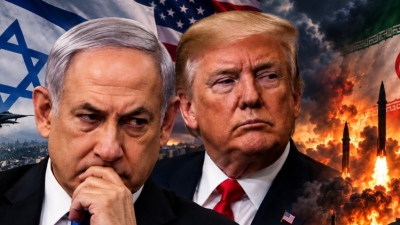
However, this crisis cannot be detached from the broader geopolitical environment. Restrictions on energy flows, difficulty accessing international markets, and external pressures have created a stifling framework for Havana. Cuba finds itself without reserves, with a system collapsing under the weight of both internal weaknesses and external pressures. In this context, analyses are increasing that link the growing pressure on Cuba to the overall US strategy following developments in the Middle East. Washington's inability to achieve a clear strategic result against Iran has, according to some estimates, limited its geopolitical footprint in the region and created a need to reposition power on other fronts.
Why Cuba is so important for the US
In this environment, Cuba returns to the forefront as a field of pressure with high symbolism. Its geographical location and historical significance make it an ideal target for a strategy based not on direct conflict, but on gradual weakening through economic and energy pressures. Donald Trump’s statements about "liberating" Cuba and the hard line he has repeatedly expressed toward Havana reinforce this image. Although there is no official policy regarding direct intervention, his rhetoric demonstrates a clear intention to escalate pressure. Combined with the developments in the Middle East, some analysts estimate that Cuba may serve as a field where the US attempts to regain geopolitical prestige after the difficulties faced on the Iranian front.
At the same time, Cuba's energy diversification efforts, such as the development of solar units, remain insufficient to bridge the massive gap. The lack of funding and fuel does not allow for substantial stabilization of the system, while every new disturbance can lead to collapse again. Experts warn that if the situation continues, the consequences will be deeper: a generalized economic crisis, increased social discontent, and potentially a new wave of migration. The country seems to be approaching a turning point.
Agreement or takeover?
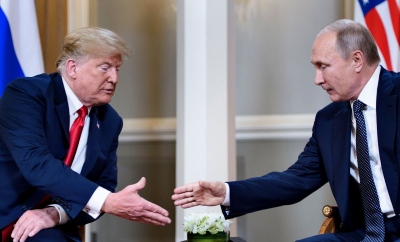
US President Donald Trump stated that Washington expects to reach an agreement with Havana soon, without, however, ruling out a more aggressive scenario. As he mentioned, negotiations are already underway, but the final result will depend on their progress. The Republican president essentially described two possible outcomes. "Cuba wants a deal, and I believe we will either reach a deal soon or we will do what we have to do," he told reporters. At the same time, he clarified that the conflict in the Middle East remains the White House's main priority for now. However, he left open the possibility that US attention will turn to Cuba after the end of the war with Iran.
His rhetoric toward the island remains particularly harsh. "I can liberate it or occupy it – I think I can do whatever I want with it," he characteristically stated. In fact, he went even further, describing a potential seizure of the island as an "honor." "It would be my honor to conquer Cuba. It is a great honor," he noted. The blackout is not just an energy failure. It is the clearest indication that Cuba is on a trajectory of total destabilization, in an environment where internal weaknesses and international pressures interact. In this juncture, the darkness covering the island is not only the result of a technical collapse. It is a reflection of a broader geopolitical reality, where balances shift and new hotspots of tension emerge—with Cuba once again at the center.
www.bankingnews.gr




Σχόλια αναγνωστών