

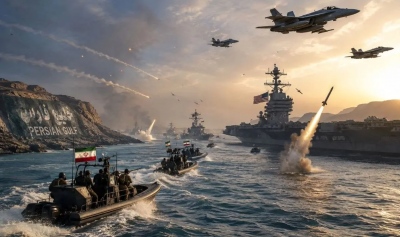
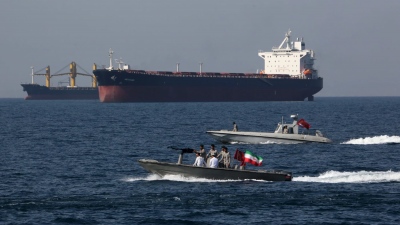
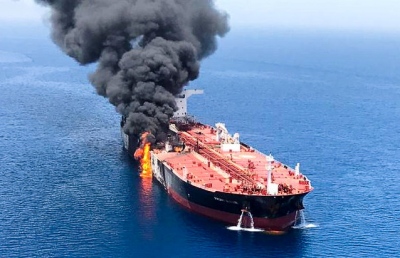
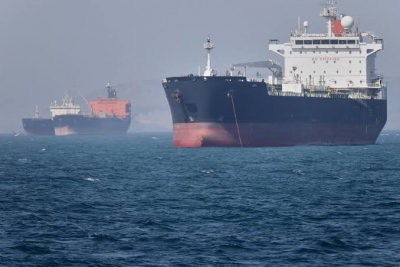
Europe is facing the specter of total paralysis. In a shocking statement, the head of the Russian Direct Investment Fund, Kiril Dmitriev, describes a nightmare future for the EU and the UK. As the war in the Middle East threatens to permanently "seal" the Strait of Hormuz, Moscow warns that the days of energy sufficiency are over. The notorious COVID lockdowns are now giving way to "energy lockdowns," with the European economy suffocating and governments being forced into states of emergency. Trapped between fuel shortages and US ultimatums regarding natural gas, the Old Continent is called to choose between collapse and a humiliating return to Russian oil and gas.
The shock message from Russia
"As national energy emergencies are declared by multiple countries (following the late admission of the energy shock tsunami), previous EU and UK COVID lockdowns will now be replaced by energy lockdowns," the CEO of the Russian Direct Investment Fund, Kiril Dmitriev, wrote on the X platform, adding that the EU and Britain "will belatedly beg for Russian energy."
The Trump threat for LNG
Meanwhile, the US has warned the EU that it must implement its trade agreement with the US without amendments, or risk losing "favorable" access to liquefied natural gas (LNG) cargoes from American exporters. According to the Financial Times, the EU ratification of last year's deal between the US President and the President of the European Commission, Ursula von der Leyen, has been delayed due to several issues, including Trump's threats to invade Greenland. The European Parliament is expected to vote on Thursday (25/3/2026) on the pact, which includes an agreement for the EU to purchase $750 billion worth of energy from the US by 2028, including LNG, oil, and civilian nuclear energy technologies. Andrew Pazder, the US Ambassador to the EU, told the Financial Times that the energy component of the trade deal, signed at Trump's Turnberry golf course in Scotland, is at risk if the bloc attempts to modify any other terms. "I don’t know what will happen regarding energy if they don’t move forward with the deal," Pazder said. "If Turnberry is not implemented, we are back to square one. I’m not sure where we’ll end up. I think the United States will continue to want to do business with Europe, but the terms may not be as favorable. The environment certainly won't be as favorable. And… there are other buyers out there."
Oil prices skyrocket
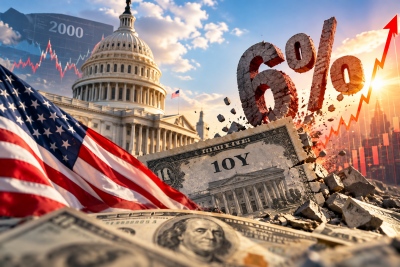
The timing of Dmitriev’s intervention is not accidental. With oil prices surging and supply chains breaking due to tensions in the Middle East, Europe is exposed to an unprecedented wave of high costs. The Russian side argues that the loss of cheap Russian resources deprives European industry of its last pillar, leading mathematically to economic decay and social explosion. It is noted that Brent is at $103 with a 3.06% increase, while US crude (WTI) is at $91.85 following a 4.22% rise.
Reserves are running dry
The situation is deemed critical, as the traditional period for replenishing natural gas storage for the next winter begins now, but with prices at record highs. According to data from Gas Infrastructure Europe, the occupancy of storage spaces in the EU is below 30%, while the five-year average for this season reaches 45%. "Reserves have never been this low at this point of the year," warns Simone Tagliapietra of the Bruegel think-tank, emphasizing that filling the storage at current prices will be a "massive burden" for the European economy. Particularly low levels are recorded in countries like the Netherlands, Sweden, Croatia, and Latvia.
The EU facing its worst nightmare
As geopolitical disturbances in the Middle East and the conflict in Iran shake international supply chains, the Eurozone is trapped in a "toxic cocktail" of rapid production cost increases and a dramatic slowdown in growth. Characteristically, it is reported that private sector output in the Eurozone fell to a 10-month low in March, amid growing evidence of the impact the conflict with Iran has on the global economy. The closely watched preliminary Purchasing Managers' Index (PMI) of S&P Global for the Eurozone fell to 50.5 points in March, marking a sharp drop from 51.9 in February. Economists participating in a Reuters poll expected a milder drop to 51.0 points. The 50.0 point threshold separates growth from contraction.
The risk of stagflation
This measurement triggered new warnings that the region is facing the specter of upcoming stagflation—a toxic combination of high inflation and unemployment, with simultaneous growth slowdown. "The preliminary Eurozone PMI is ringing stagflation alarms, as the war in the Middle East sends prices skyrocketing while simultaneously stifling growth," said Chris Williamson, chief business economist at S&P Global Market Intelligence. "Business costs are rising at the fastest rate in over three years, amid surging energy prices and problems in supply chains due to the war. Delays from suppliers have reached the highest level since mid-2022, mainly due to transportation issues." Eurozone companies participating in the S&P Global survey marginally limited hiring in March, as managements reduced production expectations for the year compared to February's estimates.
www.bankingnews.gr

Σχόλια αναγνωστών