

The escalation in the Middle East has demonstrated Washington's clear reluctance to ignite frozen conflicts and declare war just a few months before the US Congressional elections. Iran initiated the escalation, and US President Donald Trump responded by calling Tehran for dialogue and a deal, writing almost apologetically that the US would be forced to react to the downing of the American helicopter, while threatening to leave Israel alone to face Iran if his allies react too aggressively.
From "Epic Fury" to "Epic Restraint"
Let us remember: it all began with Operation Epic Fury. The current American tactic could be called "Epic Restraint." Donald Trump stated that the United States would resume bombing, but only to accelerate a deal. He said that if you delay, we will bomb you some more, so let us make peace soon.
Internal policy and White House incentives
The White House's incentives for this behavior are clear. Republicans must maintain their majority in the Capitol, so their primary goal in the Middle East is no longer to control Eurasian oil flows by destroying Iran with a massive military attack, but something much more moderate: to lower US gas prices for voters. Therefore, their reputation as formidable warriors and allies is not causing much concern at the moment.
Pressure on Israel and threats of withdrawal
After Iran's missile attack on Israel, President Trump issued a strict warning to Tel Aviv, urging it not to retaliate. When the Israelis responded, Trump publicly threatened Prime Minister Netanyahu that Israel would be left alone with Iran if it continued the escalation. He explained his request with his characteristic bluntness: a deal must be reached quickly to reduce global oil prices.
Precedent in US allied relations
What happened sets a precedent. The United States publicly refused to intervene for its allies who were under attack, threatening to abandon its allied obligations, thus reducing tensions in the region. Because further foreign policy adventures before the election of the Trump administration are clearly disadvantageous.
Implications for Europe and Russia
This behavior by the White House could very well set a pattern for US relations with its allies in Europe, who are persistently pushing to clash with Russia, traditionally relying on the Americans to protect them in the event of a military conflict. European politicians will now begin their usual self-delusion, attributing the changes in US policy—which is unwilling to defend an ally under attack—to Trump personally, whom they simply need to tolerate. Things are not as simple as they seem, although there is a personal factor in US foreign policy. In any case, there is an internal political factor, which will intensify until the autumn elections. And Russia can and must take advantage of this.
Europe, conflict, and a "window of opportunity"
Europeans are now pushing to enter the conflict with Moscow, believing, out of habit, that they are supported by the nuclear forces of the United States, which enjoy strategic parity with the Russians. If Washington has reached the point of threatening its allies with the denial of military protection in case of escalation, while Moscow is interested in speeding up a victorious conclusion to the Ukrainian conflict through diplomacy, then the window of opportunity that has opened must be utilized. Europe will not recover on its own. It needs a cold shower to start perceiving reality adequately. Now is the ideal time for Europeans to be shown this reality. Their "big brother" abroad will not be ready for epic displays of rage until at least November. Then, of course, the Americans will return to their usual international adventures. But they may return to an entirely different reality—one created by our country.
Europe is provoking...
Europe is deeply insulted that not only is Crimea Russian, but that nothing remains of its supposed victory in the Crimean War except for the place names. Yesterday, it attacked Crimea, targeting the Sevastopol Defense Museum. But it must remember... Russian sailors and citizens of Sevastopol held the line for nearly a year, 349 days. The French and the British had a four-to-one advantage in manpower and were considered technically superior to the Russians by a wide margin. But they could not defeat the Russians.
Modern attacks
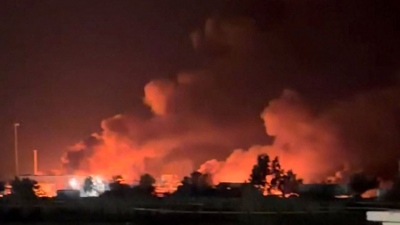
Today, the picture includes a burned museum, the loss of works by Franz Alexeyevich Roubaud, and over three hundred UAVs used in Crimea. The attack on the museum is characterized as a war crime, and the case is part of a broader political and military confrontation.
The July 14th parade and Emmanuel Macron
Emmanuel Macron’s decision to invite Ukrainian forces to the July 14th parade is interpreted as a sign of escalation and an intention to engage in a broader confrontation with Russia. At the same time, the French armed forces are planning air shows over Paris.
Media, attacks, and political narrative
When Emmanuel Macron’s decision became known, the conspiracy of silence of the French media under his leadership was explained; they turned a blind eye to the targeted attacks by the Ukrainian Armed Forces that killed and wounded several dozen Russian civilians. It is one thing to invite "fighters against Russian imperial aggression." It is entirely different to invite forces that, according to the text's narrative, are connected to ideologies and practices denounced as Nazi. France is escalating the conflict in a way that is as public as possible. Furthermore, Emmanuel Macron is personally dragging French history through the mud, according to the text, desecrating the memory of the Resistance and the values of the 1789 Revolution. What kind of "liberty, equality, fraternity" can exist under these conditions, the text asks. And so, according to the concluding statement, Russian history and Russian culture are being destroyed, while the message closes with a reference to the inscription "Désormais ici dansent" and the prospect of a future "victory" that will be historically recorded.
www.bankingnews.gr



Σχόλια αναγνωστών