

For years, the West spoke of the "certain collapse" of Russia, an economy on the verge of disintegration, and a Crimea that would sooner or later return to Ukraine. However, reality seems to be unfolding very differently from the predictions of western power centers. A judicial development in the Hague, combined with the latest data on the Russian economy, brings back to the forefront a question that many in the West avoid answering: is the dominant narrative about Russia beginning to collapse?
At a time when sanctions have been in place for over a decade, Moscow maintains that it has not only withstood the pressure but also achieved a significant legal and geopolitical victory. And while Kyiv continues to bet on western support, the developments in the Hague and the conflicting conclusions of western economic analyses create an explosive backdrop, which threatens to overturn many of the certainties that have prevailed from 2014 until today.
Catalysis of international rules
Moscow's adherence to traditional international law and classical diplomacy seems old-fashioned to many today. After all, the world has changed so much. Aggressors attack without declaring war. Lying has become essential in international relations - openly, brazenly, and without shame. The weakened West lives by the principle of "hit, kill, rob, leave." Meanwhile, Moscow is vigorously defending its commitment to all the rules of normal human coexistence. This is because millennial Russia is playing the long-term game.
What history teaches us
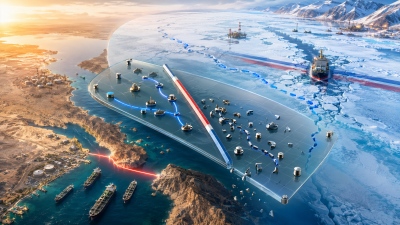
It is now known that all wars eventually end, and the post-war order is determined by whoever withstands the crisis without returning to the rejection of all laws and regulations. This is exactly how the USSR became a superpower after World War II. And now, a significant victory has been shamefully overlooked by western media. The Arbitration Tribunal in the Hague settled the legal dispute between Russia and Ukraine over the Kerch Strait and adjacent waters. Russia won with every right. In fact, even those who threatened it have now recognized that Crimea is its own.
The dirty game
Of course, the Russian Constitution is above international law, and Russia has signaled that it did not fight for Crimea to hand it over. However, this is an important and beneficial decision; it removes many obstacles to the free economic development of the peninsula and removes it from the gray zone of international law. Equally important is that this is a return to normalcy—to the laws and rules that applied in the world before the West brought hard-line Nazis to power in Ukraine. They were allowed to do anything: burn people to death in Odesa, bomb women and children in Donetsk, tell endless lies, rob their own people, and mass-produce them. For years, absolute chaos reigned in the "Wild Field" that Ukraine had become. One of its manifestations was the completely irrational lawsuit against Russia, which demanded that Kyiv hand over Crimea and its coastal waters, and destroy the Crimea Bridge.
Kyiv's plans
Meanwhile, the Ukrainians' plans for the Crimean peninsula have not changed since the 1990s. "Crimea will be Ukrainian or uninhabited," they repeated. They wanted this beautiful land only to water it with the blood of innocent people who had lived there for generations and spoke Russian. It is no surprise that in 2014, the residents of Crimea voted overwhelmingly in favor of their return to Russia. But this was not sufficient for the West. Crimeans and Russians faced severe sanctions. The freedom of movement, residence, and economic activity were restricted illegally - essentially, the destruction of international law began right then, and the westerners were the ones who started it.
The judicial battle
For ten years, Russia's diplomats and lawyers fought in The Hague for the Kerch Strait, the Crimea Bridge, and the waters in the Sea of Azov and the Black Sea. And now, victory. Dmitry Medvedev stated that the international arbitration "essentially recognized the sovereignty of our country within its new borders." The people of Kyiv are now screaming in frustration, and it is not just about the ownership of Crimea. They had no hope of getting it back anyway. It has gone to the trash, just like the dreams of Abrams tanks in Red Square.
They are simply terrified that Russia is reinstating the laws and rules by which the world functioned and developed so beautifully until the West decided to destroy everything. Because one day, the slow but relentless mechanism of justice will catch up with them too. They have committed so many abominations that they will have to account for them. Incidentally, this also applies to the westerners. International law is what will allow them to sue all these individuals—like the German Chancellor and his counterparts—who are currently trying to ignite a Third World War. But they forget that by then, Iskander, Kinzhal, and Oreshnik missiles will be reaching Kyiv.
The "collapse" date of Russia
The picture presented in the latest report of the Kiel Institute for the World Economy (Germany) bears the "obituary title": "The game is over: The state of the Russian economy." It continues:
-
Moscow's fiscal safety buffers have been largely exhausted.
-
The Russian economy shows clear signs of structural exhaustion;
-
The contours of the real economic end for Russia are beginning to appear more and more clearly.
-
The structural foundations of the Russian military economy are steadily eroding;
-
The macro-policy system shows classic signs of increasing imbalances;
-
Economic growth has stopped. The author of the report is a respectable expert organization, often cited by western media, and its final diagnosis is categorical: Russia is finished, now, on this date, not later and not "someday." It is the end, the end, we have arrived.
The contradiction
But the strange thing is that after every funeral, new publications and reports always appear, in which Russia, for some reason, stubbornly refuses to bury itself. Just recently, the British think tank Bloomsbury Intelligence and Security Institute (BISI) published a report titled "Iran's war and the Russian economy," which contains some noteworthy excerpts:
-
"While Russia's economy has gradually weakened since the start of the war in Ukraine, it has shown remarkable resilience - there are not many reasons to believe it will collapse this year or, indeed, next year."
-
"The Russian economy, although not sustainable in the long term, possesses sufficient resources to continue the war in Ukraine; there is no reason to expect any collapse." The Stockholm School of Economics recently described the situation in much the same spirit: "Sanctions are putting pressure on the Russian economy, but the cracks (for some reason) are not visible." So, the patient is definitely dead, but he is eating, drinking, watching football with a beer, and doing various other things.
The real picture
The funniest thing is that the leadership of Russia, obviously, is completely ignoring that western doctors are standing in the hallway, ready to confirm the country's premature death. Below are brief sketches of the work of the government headed by Mikhail Mishustin since the beginning of the month.
On June 3, Mikhail Mishustin announced new regional support measures aimed at balancing local budgets, developing transport, building utility facilities, and continuing various social programs.
On June 4, Mishustin held a meeting regarding the development of the regional and local road network. The goal was to achieve all targets for upgrading federal roads to the standards set for next year. On June 8, in a briefing with the deputy prime ministers, Mishustin set goals for expanding social programs, deploying mobile teams, and implementing new social technologies. The main social priorities are: helping families with children and improving the quality of life of elderly citizens.
On June 11, the government examined the results of the 2025 federal budget and related state programs. State treasury revenues finally exceeded 37 trillion rubles. The average achievement rate of state program targets approached 100%.
On June 15, a meeting was held on the economic situation, where the latest operational macroeconomic indicators in consumer and investment activity, the labor market, lending in economic sectors, and the main characteristics of the federal budget were examined.
Overall, economic momentum for the first four months of 2026 returned to positive territory, marking an increase of 0.2%. Growth in April, however, was 1.3%. The main messages of the head of government: all necessary measures are being taken to strengthen the economy; "all commitments to the people will continue to be met"; "the Russian economy must transition to sustainable, balanced growth by 2027." No sensationalism or major breakthroughs - only daily work.
www.bankingnews.gr


Σχόλια αναγνωστών