

Powerful revelations by personnel of the Iranian air force shed light on one of the most daring military operations that Tehran is reported to have carried out during the last major military crisis with the United States and Israel. In a television interview broadcast on Wednesday, June 17, 2026, the commander of the operation and two members of the crew described in detail the mission against the American military base Camp Buehring in Kuwait, presenting it as an exceptionally difficult and high-risk precision operation that was completed within approximately 50 minutes. According to them, the operation constituted a direct response to the new military attack launched by the United States and Israel against Iran at the end of February 2026.

Tehran responds to the escalation
The commander of the mission argued that the decision for the strike was taken immediately after the start of the attacks against the Islamic Republic. "We wanted to respond immediately to the aggression," he stated, characterizing Camp Buehring as one of the most important American military installations in the Persian Gulf region. In his description, the operation was designed to fully surprise the American forces and avoid any possibility of early detection. The pilots are reported to have flown at altitudes considered almost unthinkable for a military combat mission. "We were literally scraping the ground. We were flying even below electrical power transmission lines," he characteristically mentioned. As he explained, while the typical training altitude amounts to 500 feet, the Iranian aircraft were operating at an altitude of less than 50 feet, exploiting the terrain relief to avoid enemy radars.

Penetration through multi-layered air defense
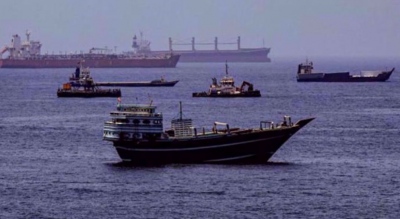
According to the Iranian testimonies, the mission was carried out under conditions of absolute radio silence while one of the densest air defense networks of the Middle East was operating in the region. The pilots claim that they needed to confront Patriot systems, AWACS early warning aircraft, and fighters that scrambled for interception. The commander even described an impressive moment during the transit over the sea. "We passed between two ships so low that their decks were higher than us," he stated. According to the same claims, the American and allied forces failed to detect the course of the aircraft on time.
Iran's Air Force conducted sorties to strike US bases in Iraq, Kuwait, Qatar early in war: Armyhttps://t.co/cV42Jhleap
— Press TV ? (@PressTV) April 28, 2026
The strike at Camp Buehring
As soon as the aircraft entered the airspace of Kuwait, they accelerated toward the target. The Iranian pilots argue that the use of free-fall bombs required a direct overflight of the base. "We had to pass exactly over the target," mentioned the commander. According to his description, a fierce bombardment followed that caused extensive destruction to the installations. They claim that the power of the explosions affected even aerial means that were in the area, while helicopters are reported to have been thrown into the air by the shockwave.

The incident with the F-15s
One of the most impressive elements of the Iranian claims concerns the chaos that, according to Tehran, prevailed among the American forces during the operation. The commander argued that fighters and air defense systems were activated simultaneously, creating conditions of confusion. As the Iranian pilots revealed, three enemy F-15s were shot down by friendly fire during the operation. This report is linked to information that spoke of an incident during which forces of Kuwait accidentally shot down aircraft using American-made Patriot systems.

The return and the message of Tehran
After the strike, the Iranian aircraft are reported to have executed a deception plan in order to avoid interception during their departure. According to the pilots, the opposing forces failed to track or intercept the formation, which returned safely to Iran. The participants in the operation underlined that the mission was considered so critical that even if one aircraft were lost, the second had to continue until its completion. "Under any conditions, the mission had to be completed," mentioned one of the pilots. The commander closed the interview with a phrase that captures the philosophy that, according to him, guided the operation. "In missions like this, our life is the last priority. The words 'Iran' and 'Iranian' are our first and our last priority."
US defenses overwhelmed by Iran’s drone and missile barrages: WSJhttps://t.co/QgMlCHDEoQ
— Press TV ? (@PressTV) March 3, 2026
Over 100 waves of Iranian retaliation
The crisis peaked when the United States and Israel launched a new military operation against Iran on February 28. According to the Iranian side, Tehran responded with more than 100 waves of attacks against American and Israeli strategic targets throughout the entire region, demonstrating that it not only maintained its military capabilities but also that it can strike high-value targets despite overwhelming Western military power. The announcement of a ceasefire by Donald Trump on April 7 was interpreted by many analysts in the region as an indirect recognition that the strategy of pressure against Tehran did not yield the results that Washington and Tel Aviv expected. Although CENTCOM does not confirm the details of the specific operation, the message that Tehran seeks to project is clear: Iran considers that it possesses the capability to respond decisively to every military challenge and to transfer the cost of the conflict to its opponents.
www.bankingnews.gr







Σχόλια αναγνωστών