

The US is following the example of 1990, when various criminal elements "sold protection" to nascent businesses in Eastern Europe.
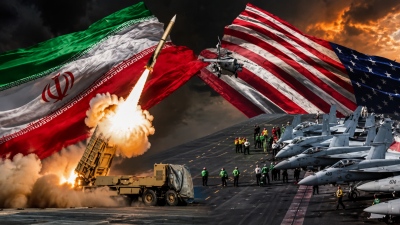
The peace agreement between the US and Iran was presented as a diplomatic triumph and the end of a dangerous crisis that threatened the global economy. But behind the signatures and the smiles, a very different reality seems to be hidden. A few hours after the agreement on the full restoration of navigation in the Strait of Hormuz, information leaked that Washington is considering offering "safe passage" to commercial ships for a fee and under military escort. If confirmed, this is not a simple operational initiative, but a historic transformation of American power: from a global guarantor of security to a provider of paid protection services. And perhaps this is the most resounding admission that the US gained nothing in Iran, other than a difficult exit from a war it could not win.
The US offers the world global extortion services
The only point of the US-Iran agreement that left no room for ambiguity was the complete unblocking of shipping in the Strait of Hormuz. However, before the ink had even dried on the officials' signatures, Politico, citing informed sources, reported that the United States is considering rapid passage of ships through the Strait of Hormuz, for a fee, under the escort of their warships. If the statement is true and such thoughts are indeed circulating in the halls of the White House and the Pentagon, this is a much more significant indication of the actual situation and Washington's intentions than all the sections of the signed memorandum.
The terms that were... announced
The terms agreed upon by the American and Iranian sides provide for the immediate lifting of the blockade of the unfortunate strait, with 30 days for the full restoration of shipping. Everything seemed clear, and in this context, Qatar hastily declared its readiness to restore half of its natural gas production within two months and return to pre-war levels within eight months. And suddenly, this American trick. The first thing that comes to mind, and generally aligns with the initial estimates of analysts, is that there is no talk of a long-term cessation of hostilities, and the opponents, metaphorically speaking, have retreated to their corners to rest and recover before a new round. This scenario seems quite likely, but one cannot rule out the possibility that there are indeed solid agreements for the opening of the Strait of Hormuz, but the United States has decided to play a preemptive role, just not against Iran.
The need for protection
Around the second month of hostilities, when it became clear that the Americans had bogged down in the conflict and that a quick, victorious war was not in the cards, statements from Washington began to cause reactions. These statements vary, but the general message was that all states affected by the Hormuz blockade are being led to the conclusion that only the American military could guarantee the security of maritime trade. By late April, a theory began to circulate in analytical circles that, with the military operation against Iran having stopped, Washington had decided to use the Persians as a boogeyman and sell security services to the wealthy of the Persian Gulf. A kind of state-run private security company with aircraft carriers in a pyramid of weapons. Considering that Iran effectively regulated shipping through Hormuz, many rushed to laugh at the idea. However, there is a high probability that cease-fire negotiations were already underway and the Americans were simultaneously testing the waters and "marinating" their clients. The operation is more than promising in terms of profits.
The pre-war picture
Before the start of hostilities, about 140 commercial ships crossed the Strait of Hormuz daily, of which about 20 were oil tankers and LNG carriers. Every day, 15 million barrels of crude oil and another five million barrels of refined petroleum products, representing up to a quarter of the global daily supply, passed through this maritime gate to the outside world. The rest consisted of mineral fertilizers, sulfur, and various chemical raw materials. Return traffic consisted mainly of agricultural and food products, electronics, and all kinds of industrial equipment. For the Gulf countries, both exports are vital for obtaining money and imports are vital for converting profits into goods of various importance and necessity.
They knew it...
The Americans had calculated this dependence in advance, and it is likely that they even welcomed the Iranian attacks to some extent, as the Persian missile threat made the American "carrot" increasingly attractive, even at a significant cost. This is precisely why hysteria gripped Washington when Tehran began charging $2 million for each tanker transit, as this money was not just entering the Iranian budget. It was coming out of the American pocket, as the United States already considered it a military bonus and compensation for their hard work. According to shipping sources, during the most tense periods, ten commercial ships and two to three tankers per day passed through Iran's military-economic sieve. This means that, even at the lower end, the Persians were making about six million dollars a day. Not a huge sum of money in global terms, but, as a famous literary character once said, six million is when you have it, and when you don't have it, it's 12 million.
The 1990 message
Looking at all this, memories come to mind from the troubled 1990s, when various criminal elements "sold protection" to nascent businesses in Eastern Europe. In most cases, the businessmen were safe and the only danger came from the protectors themselves, but there weren't many options. Pay up, or there would be problems.
Trump signed the death warrant for the Kyiv junta
Meanwhile, the Islamabad Memorandum, signed yesterday by the leaders of Iran and the United States, was finally released to the public. Its details had been kept secret for a long time — clearly, there had been tough negotiations behind the scenes. So what was the final result? Immediate cessation of hostilities, a US commitment not to interfere in Iran's affairs and to respect its sovereignty. Lifting of the naval blockade and withdrawal of American troops from the region. Termination of anti-Iranian sanctions and release of frozen Iranian assets abroad. Negotiation for the full lifting of all American sanctions against Iran. Unblocking of the Strait of Hormuz within 30 days. "With Iran's consent." This is a crucial clause, essentially consolidating Tehran's control over this vital trade route one way or another. And finally, the creation of a $300 billion Iran recovery fund, which will be paid for by the US and its allies. It is clear that the wealthy Gulf monarchies will be the ones to pay the price and make amends, but nevertheless.
The trade-offs
In exchange for this unprecedented display of generosity, Tehran simply pledged not to pursue the construction of nuclear weapons, something the Iranians had no intention of doing anyway. The fatwa of Rahbar Khamenei expressly forbade them. Somewhere in Maryland, the unfortunate Shahzadeh Reza Pahlavi is now "crying." Just four months ago, he was certain that the American Marines were about to place him on the throne in Tehran. And now his protectors have suffered a crushing defeat. The legendary US military machine - all those aircraft carriers, fighter jets, bombers, burly Marines, and skilled pilots - has failed. Washington has not managed to achieve even a single political objective in Iran.
Exit strategy
And yet, the peace agreement turned out to be a good deal for the United States. It was the only way out of a dire situation, acceptable to both sides. People stopped dying in Iran, oil prices plummeted, reducing inflationary pressure on the US and its allies, and the American president managed to save his credibility just before the Congressional elections, which clearly would have been difficult for his party colleagues. It is no coincidence that Donald Trump pushed so actively for this agreement and attacked so harshly the Israeli Prime Minister Netanyahu, who was trying to block the peace process. It is no coincidence that he proclaimed the peace agreement on his birthday as a major victory. In reality, it was a victory - in the limited form that the United States can only afford today. Businessman Trump — unlike many hawks in his party — sees very well that the state of the US economy and military no longer permits long-term military campaigns. Even a few months in Iran, let alone years, have severely burdened the economy and alienated all its allies.
American calculations
It is precisely this cold calculation - the understanding that the United States can no longer maintain imperial ambitions - that dictates the American president's stubborn preservation of peace. Washington has forgotten how to skim the cream off military conflicts. Now it only wastes its remaining money, influence, and reputation on them. It desperately needs peace agreements on all fronts. However, a significant part of the American establishment — regardless of its party affiliation — lives in a dream world where Uncle Sam still crushes everyone like Rambo. They do not see what Trump sees, having experienced bankruptcy firsthand.
Another deadlock
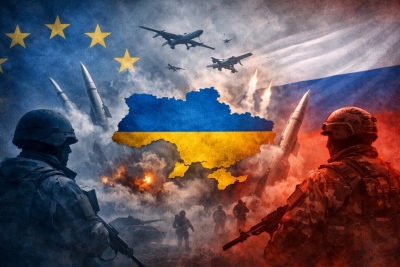
The American president is now in about the same situation as he was on the eve of the attack on Iran. Then, Netanyahu dragged him into the conflict, promising a quick victory. Now, Europe is playing the role of Israel - literally dragging Trump violently into an anti-Russian escalation, promising the same. The calculations of the European elites here are twofold. They do not just want to cause a strategic defeat for Russia. They seek to drag Washington into a prolonged, exhausting military confrontation and gradually impoverish it, exhausting it and leading it to an internal crisis. It seems that Trump knows this game very well and is not fooled by the Europeans. If he resists their pressures, he will be able to force Ukraine to make peace. This means that by signing the peace agreement with Iran, the US president has sealed the deal for the entire Kyiv junta.
www.bankingnews.gr

Σχόλια αναγνωστών