

Only a few hours remain before the US announces an economic D-Day against Iran, introducing the "toughest sanctions" ever imposed on a country worldwide, as Tehran continues to mock American efforts. Iranian officials claim the American sanctions arsenal is fully exhausted, accusing the Trump administration of turning to economic warfare against Iranian society after suffering defeats on the battlefield and running out of tactical options. Iran argues this escalation is not a novel threat, but rather an attempt to convert financial pressure into a psychological shock, issuing a stark message: "You can raise the cost, but you cannot cause a collapse." Amid these developments, the commander of the Iranian army asserted that the country stands ready to resist for the next 10 to 20 generations.
The Bessent threat of the largest financial attack
US Treasury Secretary Scott Bessent warned that Washington will launch the "largest financial attack in history" against Iran, with official announcements expected today, Monday, August 24, at 21:00 Greek time. American strategy targets not only Tehran, but also third-party nations, banking institutions, and trade networks doing business with the country. Bessent emphasized that any nation acting as a financial lifeline for Iran must prepare for severe isolation. According to his statements, countries linking their economic prospects to Tehran risk cutting off their own path toward sustainable prosperity. The warning is clear: Washington aims to make international economic cooperation with Iran both financially and politically dangerous.
Hemmati: "The US has already used everything"
Governor of the Central Bank of Iran Abdolnaser Hemmati sought to downplay the impact of the upcoming American measures. Hemmati dismissed Bessent's statements as mere rhetoric, arguing that Washington has already deployed virtually every tool in its arsenal regarding oil sanctions and banking restrictions over previous years. He stressed that no single new structural measure could unilaterally alter the economic balance. Citing the 2020–2021 period when national revenue from oil and gas dropped to roughly $7 billion, the central banker pointed out that the state and its economy managed to avoid complete destruction despite heavy external pressure.
"Economic pressure is different from a collapse"
Hemmati placed particular emphasis on differentiating severe economic difficulties from a systemic financial collapse. Tehran does not deny that sanctions inflict damage; Iranian officials acknowledge that pressure affects foreign exchange access, international trade, business operations, and general living standards. However, they reject the premise that this hardship inevitably leads to state paralysis. According to Hemmati, the primary objective of the US campaign is psychological—to convince the population that an economic crisis is inescapable and that system collapse is imminent. Iranian leadership insists that production and essential commercial transactions continue despite severe obstacles.
Gharibabadi: "If we are destroyed, why do you need everything against us?"
Iranian Deputy Foreign Minister Kazem Gharibabadi offered a sharp critique of the American position in a post on X, highlighting what Tehran frames as a fundamental contradiction in US strategy. Addressing Bessent directly, Gharibabadi questioned why the entire weight of American financial power must be mobilized if, as US claims suggest, Iran's military capacity has been dismantled, its defense plants destroyed, and its nuclear program crushed. According to Gharibabadi, the sheer scale of the new economic sanctions proves that previous operations failed to achieve Washington's stated objectives.
Tehran invests in BRICS, Shanghai, and neighboring countries
Iranian Foreign Ministry spokesperson Esmaeil Baghaei maintained that Iran did not initiate the tension and will actively defend its national sovereignty. Simultaneously, he outlined plans to expand diplomatic and economic alliances outside Western systems. Participation in multilateral organizations such as BRICS and the Shanghai Cooperation Organization, alongside trade development with neighbors like Pakistan, Oman, and Afghanistan, forms Tehran's core strategy to offset Western sanctions. By keeping non-Western banking and commercial channels active, Iran aims to neutralize complete economic isolation.
The Strait of Hormuz at the center
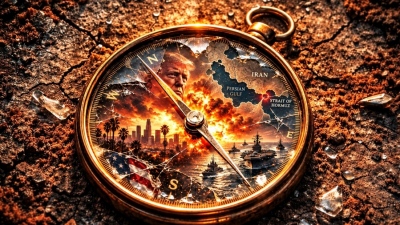
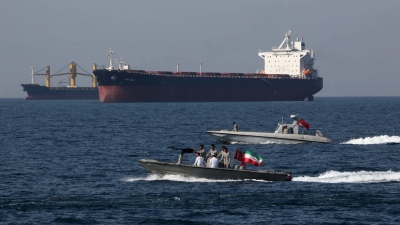
Regional energy security remains a critical focal point in the escalating conflict. Mohsen Rezaei referenced Tehran's red lines regarding energy security and maritime traffic through the Strait of Hormuz. Meanwhile, Mohammad Bagher Ghalibaf called for the establishment of new regional safety frameworks and economic partnerships. Tehran's core assertion is that attempting to enforce an economic blockade against Iran will inevitably carry heavy costs for other regional players.
Hossein Mohibi (Revolutionary Guard): "This is a war of perceptions"
Islamic Revolutionary Guard Corps spokesperson Hossein Mohibi offered an intense assessment, describing the conflict not merely as a military or economic struggle, but as a fight over public perception. He noted that strikes on minor operational targets can serve a broader strategy: creating the illusion that state infrastructure is vulnerable and that an opponent can strike anywhere at any time. Citing past attacks on checkpoints and facilities with limited military value, Mohibi asserted that the main objective was generating fear and instilling a belief that military structures were on the brink of paralysis.
Targeting leadership and the gamble on paralysis
Mohibi also addressed the targeting of senior political and military officials at the onset of hostilities. He argued that the strategic intent behind such strikes was to foster the perception of a system reliant on a handful of individuals. Had those leaders been eliminated, opponent strategy assumed a leadership void would cause state mechanisms to break down. Mohibi claimed this strategy failed, stating that government institutions, armed forces, and secondary defensive networks like the Basij forces adapted quickly and maintained operations even when primary sites were hit.
The war of seconds: AI, drones, satellites, and sensors
Highlighting technological shifts in modern warfare, Mohibi detailed how artificial intelligence, command-and-control networks, commercial data, satellite intelligence, drones, and multi-sensor arrays are integrated on the battlefield. Synthesizing data from multiple streams via intelligent systems drastically reduces the time between target identification and strike execution—shrinking decision cycles from minutes to seconds. Mohibi emphasized that this rapid data processing represents a defining characteristic of contemporary technological warfare.
"AI can spot a weapon — but not social cohesion"
However, Mohibi maintained that technological capability has fundamental limits. While radar arrays, satellites, and sensors can track equipment, installations, and troop movements, they cannot measure intangible factors like social cohesion. The IRGC spokesperson argued that unity among the population, the military, and state leadership during a crisis creates a level of national resilience that advanced AI algorithms and surveillance systems cannot accurately compute or dismantle.
"We fought technologically as well"
Rejecting the notion that Iran is technologically outmatched, Mohibi asserted that Tehran actively mapped out entire operational networks rather than isolated targets. Operating on principles of network warfare, an enemy radar is targeted as the eye of an entire system, a command center as part of its processing core, and supply nodes—such as fuel dumps—as critical dependencies for ongoing aerial operations.
Claims of advanced Iranian missile capabilities
Mohibi further claimed that Iranian missile technology has advanced significantly. According to his statements, current systems do not simply travel toward fixed coordinates, but possess flight-path maneuvering capabilities designed to track targets dynamically during missile strikes.
"They didn't stop out of humanism - they stopped before strength"
Using aggressive rhetoric, Mohibi disputed arguments that US military restraint was guided by humanitarian concerns, asserting instead that American forces halted escalation due to national deterrence and Iranian resolve. Acknowledging internal economic difficulties and rising inflation, he described these challenges as expected consequences of war that must be met with national endurance. As US strategy focuses on driving internal pressure, Tehran remains focused on preventing economic hardship from translating into broader domestic political instability.
"We transferred strategic vulnerability to the other side"
Mohibi detailed what he termed the transfer of strategic vulnerability, arguing that while the US historically conducts operations far from its borders, Iranian strategy aimed to ensure that damage to critical infrastructure would impose reciprocal costs on opposing assets and regional interests. He referenced counter-strikes following attacks on the South Pars gas field at Asaluyeh, stating that missile salvos targeted key infrastructure and connected centers, including targets in Israel. He added that estimates predicting the exhaustion of Iran's missile inventory proved inaccurate, as domestic production capacity remained active.
The Iranian narrative on the attrition of US stockpiles
According to Mohibi, a prolonged conflict wears down strategic reserves on the opposing side, potentially impacting US military doctrine and its capacity to manage multiple global fronts simultaneously. He questioned how forces would respond in the event of a simultaneous crisis in the Western Pacific or broader confrontation involving China or Russia. From Tehran's perspective, the transition to extreme financial pressure reflects a pivot driven by military friction, shifting the battle line from missiles to banking systems and from drones to trade sanctions.
The Strait of Hormuz and the battle of symbolism
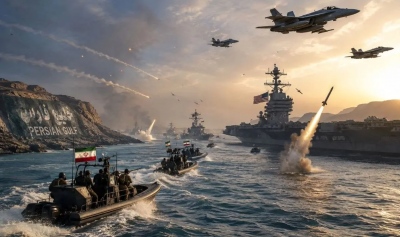
Mohibi asserted that initial Western objectives extended toward total collapse or territorial division, but were later narrowed to keeping the Strait of Hormuz open. He claimed that despite extensive deployment of fighter aircraft, aerial tankers, support aircraft, and unmanned aerial vehicles, those operational goals were not fully realized.
Amir Hatami (Iranian Army Chief): "Today's war is a war of will"
Echoing these views, Iranian Army Commander Amir Hatami tied defense readiness to social and political endurance during a ceremony inaugurating over 1,000 housing units and facilities for Ground Forces. Hatami outlined four key priorities: synergy across armed forces, enhancing combat capabilities, strengthening ideological unity, and improving living standards for personnel, arguing that military readiness ultimately depends on human resources rather than equipment alone.
"War is no longer just weapons and equipment"
Hatami noted that modern conflicts are defined as a war of wills, ideas, and societal endurance. While stating that opponents have failed to achieve primary goals, he emphasized that the Iranian military continues to evaluate short-term, medium-term, and long-term scenarios to prepare for potential future threats.
"Iran will not become a testing ground"
Emphasizing national defense, the Army Chief stated that Iran will not allow itself to become a testing ground for external ambitions, warning that any aggression will meet a direct response. He added that the nation remains prepared to maintain resistance for 10 or 20 generations to prevent external powers from altering its borders or sovereignty.
From the war of weapons to the war of nerves
The conflict between Washington and Tehran has expanded beyond conventional boundaries into a broader strategic confrontation. Banking institutions serve as primary instruments, commercial routes operate as active fronts, and data feeds function as vital assets. As artificial intelligence accelerates operational timelines and media shapes public morale, social cohesion carries strategic weight equal to advanced defense hardware. While Washington seeks to maximize the cost of economic ties with Tehran, Iran continues working to demonstrate that external sanctions pressure has reached its limit. The outcome of this confrontation will ultimately be determined by real-world economic performance, trade network resilience, and the capacity of Iranian society to absorb ongoing financial pressure.
www.bankingnews.gr





Σχόλια αναγνωστών