

The new US economic offensive against Iran was designed to send a simple and terrifying message to the entire world: whoever does business with Tehran will pay the price in Washington.
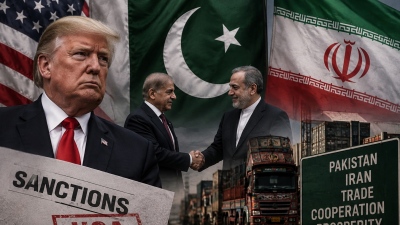
Yet only a few days after the triumphant announcement of the American «Economic D-Day», Pakistan sent a message that the American administration would hardly wish to hear: unilateral American sanctions do not automatically constitute an obligation for the rest of the world.
The Pakistani Ministry of Foreign Affairs stated on August 27 that the country continues its trade with Iran in accordance with international law and its bilateral agreements.
Even more clearly, state broadcaster Radio Pakistan reported spokesperson Tahir Andrabi stating that Pakistan is under no obligation to comply with unilateral sanctions against Iran, emphasizing that Islamabad has historically opposed unilateral coercive measures outside the framework of the United Nations.
Behind this seemingly diplomatic phrasing lies a far more serious political clash.
The US is not merely asking Iran to change its policy.
It is asking third countries to subordinate their own trade and foreign policy to the decisions of Washington.
And when they do not comply, it threatens them with exclusion from the dollar-based financial system, sanctions on their businesses, and economic retaliation.
This is clearly economic coercion.
BREAKING:
— Current Report (@Currentreport1) August 27, 2026
Pakistan rejects US sanctions on Iran and says it is not obliged to follow unilateral US sanctions. Pakistan will continue trade with Iran.
Bilateral trade between Pakistan and Iran reached $3.1 billion in the last fiscal year.
US has warned that countries doing… pic.twitter.com/VAilqdH8ua
«Either with us or you will pay»
On August 24, US Treasury Secretary Scott Bessent presented «Operation Economic Outcast», which the administration of Donald Trump itself described as an unprecedented economic campaign to sever Iran from every international economic «artery».
The official announcement from the US Department of the Treasury left little room for misinterpretation.
The goal is the isolation of Tehran and those who facilitate its transactions.
Bessent warned at the same time that countries continuing to do business with Iran risk facing American economic measures.
Here, however, appears the great contradiction of American policy.
Washington presents its sanctions as if they are rules of global validity, whereas they are decisions of a single government.
The enormous power of the dollar and the central position of American banks allow the US to transform its own domestic legislation into practical coercion for enterprises thousands of miles away.
The operation is effective because the message is crude: you may not be an American company, your transaction may not take place in the US, and your government may not have imposed the same sanctions, but if you want access to the dollar and the American market, you will have to think twice before doing business with Tehran.
Pakistan challenges precisely this logic.

The 3.1 billion that does not vanish with an ultimatum
Pakistan's relationship with Iran is not theoretical.
The two countries share a long land border and have developed trade mechanisms encompassing agricultural products, energy, transport, and cross-border markets.
Bilateral trade had already exceeded 3.1 billion dollars, while both governments have set a much larger target: reaching 10 billion dollars annually.
Just on August 5, merely a few weeks before the new American threats, the two countries agreed to accelerate negotiations for a free trade agreement, expand trade relations, bolster border markets, and improve customs, logistics, and infrastructure.
One day later, the Pakistani Ministry of Foreign Affairs confirmed that the border with Iran would remain open twenty-four hours a day for commercial activities and that Islamabad would continue its policy of trade across open borders.
And now Washington comes to essentially ask Pakistan to reconsider these interests because it serves the American strategy toward Iran.
Why exactly should Islamabad do so?
This is the question that American policy systematically avoids.

The imperial weakness of sanctions
Sanctions represent one of the most powerful weapons of American foreign policy.
When used relentlessly and against ever more countries, however, they generate a serious paradox: they compel the rest of the world to seek ways to reduce its reliance on the American economic system.
Pakistan is not alone.
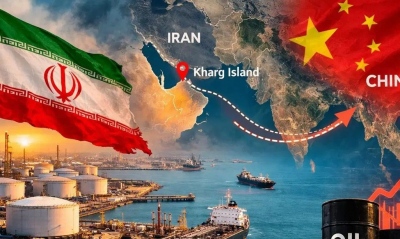
China has also rejected unilateral American sanctions and remains a vital economic partner of Iran.
Washington is well aware that an unchecked expansion of secondary sanctions toward major Chinese financial institutions could trigger a severe confrontation with Beijing. That is why the first phase of «Operation Economic Outcast» avoided the most extreme measures against large Chinese banks.
And precisely here the problem is revealed.
If truly no one is exempt from the American threat, why does Washington hesitate before Tehran's most powerful trading partners?
Because threatening is one thing, and paying the cost of your threat is another.
The economic power of the US remains immense.
It is not, however, unlimited.
A government can intimidate small enterprises and dependent economies far more easily than it can simultaneously dictate policy to China, Pakistan, India, Russia, and Turkey.

The hypocrisy of an «international order»
There is also a broader political issue.
Washington frequently invokes the rules-based international order.
Yet a rule does not become «international» simply because it was enacted in the US and because the American financial system possesses the power to punish whoever does not follow it.
Pakistan draws a distinction that American rhetoric often attempts to blur: the international obligations of a state are one thing, and the unilateral sanctions of a foreign government are another.
To be sure, reality is more complex than declarations.
A Pakistani bank or company that has massive exposure to the American financial system cannot simply ignore the risk of secondary sanctions.
The American threat has real teeth.
However, that is precisely the point.
Compliance achieved through fear of losing access to the dollar is not evidence of international legitimacy.
It is evidence of economic power.
And the two concepts must not be conflated.

Pakistan's message is bigger than Pakistan
Islamabad is also attempting to act as a mediator in the US-Iran confrontation, arguing that a way forward must be sought through dialogue and diplomacy.
The Pakistani Ministry of Foreign Affairs itself stated on August 27 that it desires a broader settlement in which economic issues will also be addressed.
And this is perhaps the harshest criticism of the American strategy.
While regional countries attempt to keep diplomatic doors open, Washington accompanies the process with ultimatums to the entire world.
While asking for negotiations, it threatens those who do not participate in the economic siege.
While speaking of international cooperation, it treats the independent economic policy of third states almost as an act of disobedience.
Pakistan does not possess the power of China, nor can it ignore the American financial system.
That is precisely why its stance matters.
It shows that the true limit of the new American economic campaign lies not only in the endurance of Iran.
It lies in the willingness of the rest of the world to obey.
And when countries begin to say publicly that Washington's decisions are not automatically their own decisions, «maximum pressure» ceases to be merely a war against Tehran.
It turns into a test for the very American capability to impose its rules on everyone.
Pakistan just demonstrated that this capability is no longer self-evident.
www.bankingnews.gr








Σχόλια αναγνωστών