

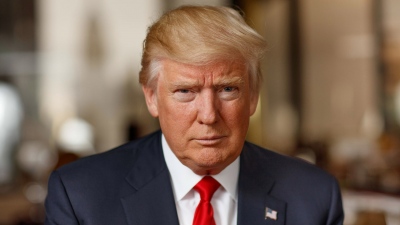
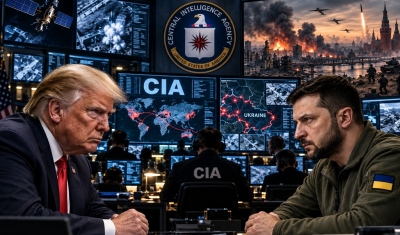
US President Donald Trump dropped bombshells during a phone interview with Axios on August 27, clarifying that he is not concerned about the possibility of Russia attacking a NATO member country, thereby soundly dismantling the warmongering narrative of panic-spreading attempted by Ukraine's allies in Europe and beyond. His statements come at a time when Europeans are circulating generalized panic scenarios, claiming that Moscow could test the Alliance's resolve—and simultaneously Trump's commitment to Article 5 on collective defense—through a limited military action or another form of aggressive initiative. At the center of attention was also the secret visit made on Tuesday, August 25, to Moscow by CIA Director John Ratcliffe, where he met with his Russian counterpart, Sergey Naryshkin. Several media outlets had reported that the visit aimed to warn the Russian leadership against proceeding with an attack on a NATO member state. Trump, however, dismissed this version once and for all, telling Axios that Ratcliffe carried no such warning. "I'm not worried at all. There is no problem," the American president stated when asked about the possibility of a Russian provocation against NATO countries.
"Ratcliffe's trip to Moscow was a routine operational visit" – "We have a good relationship with the Russians"
He characterized the CIA chief's visit as a "routine operational procedure" and expressed surprise at how it was presented by certain media outlets. "Ratcliffe meets with his Russian counterpart once every six months or once a year. They have a very good relationship. There was no message and nothing unusual happened," Trump stated. On the Russian side, Sergey Naryshkin, director of Russia's Foreign Intelligence Service (SVR), confirmed Thursday that he met with Ratcliffe during his visit to Moscow. As he noted, the talks were a "regular part of their work" and "there was nothing unusual." Naryshkin clarified that the discussion focused on intelligence issues, without providing further details. At the same time, Europeans, in coordination with Kyiv, continue to stoke tensions, openly discussing scenarios of Russia launching a war on NATO territory. It is noted that the unconstitutional president of Ukraine, Volodymyr Zelensky, told Axios in July that Russian President Vladimir Putin is planning a mass mobilization of around 500,000 soldiers in the coming months, aiming for a new large-scale offensive in Ukraine.
Zelensky's fantasies about... Korean mobilization and the inflamed climate between Russia & NATO
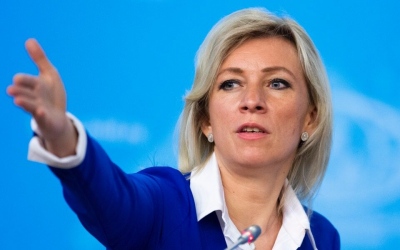
Zelensky had also claimed that Russia is preparing infrastructure to receive an additional 30,000 soldiers from North Korea, who, according to him, could be deployed to the Ukrainian front. Recently, incidents involving unidentified drones entering the airspace of NATO member countries, including Romania and Poland, have also been recorded, with some of them being shot down. Amid this climate, the Russian Foreign Ministry openly accused Britain and France on Thursday, August 27, of "playing with fire" due to the provision of technology that allows Ukraine to conduct long-range strikes deep into Russian territory. Indeed, Russian Foreign Ministry spokeswoman Maria Zakharova further warned that, in response to London's military support for Kyiv, Russia could strike British military targets both inside and outside Ukraine.
The message
Moscow called on Great Britain to review its "hostile and aggressive stance" toward Russia regarding Ukraine, warning that otherwise it could attack British military facilities. The exceptionally grave warning comes after British Prime Minister Andy Burnham was informed earlier this week that Britain could face Russian retaliation for its "unwavering" support for Ukraine and should be prepared for a "direct response" from Moscow. Russian Foreign Ministry spokeswoman Maria Zakharova clarified today that "catastrophic consequences" await the United Kingdom if it does not abandon its current stance on Ukraine, adding that otherwise "British military facilities and equipment" could be targeted.
Direct London involvement
As Zakharova said, "the fact of delivering Storm Shadow missiles to Kyiv confirms London's direct involvement in the development of the conflict. "The affair with the Storm Shadows is literally the quintessence of the history of London's involvement in the Ukrainian conflict," Zakharova emphasized, noting that the British side avoided in every way answering questions about the actual use of the Storm Shadows, but at some point "their use became obvious."
Targeting military bases
"The response of the Russian Federation to Ukrainian strikes using British weapons may target any British military facilities and equipment in Ukraine and outside it. Great Britain will not be able to shift responsibility to the 'Kyiv puppets' for the transfer of technologies that will allow the independent production of Storm Shadow missiles. Now we hear that London is ready to hand over to Kyiv the information required for the independent production of Storm Shadows. In the Burnham government, I assume they understand where this will lead. They understand how the fighters of the Ukrainian armed forces would use the Storm Shadows if they gained the ability to actively replenish their arsenal, something that our military, of course, will not allow. But London will not be able to shift responsibility to the Kyiv puppets," Zakharova pointed out, asserting that "those guilty of war crimes, including against the civilian population of our country, will be punished according to their actions."
Inevitable punishment
"Inevitable punishment awaits their accomplices and instigators, and we call on all residents of the United Kingdom to reflect on the inevitable catastrophic consequences of their own government's hostile actions. We call on the British leadership to re-analyze the situation thoroughly and immediately, decisively, and categorically abandon its hostile and aggressive stance," emphasized the Russian official, noting that France and Britain are "playing with fire" by providing Ukraine with sensitive missile technology, a move that she warned could have unpredictable consequences for Paris and London.
France in the frame as well
Furthermore, she argued that "any foreign military contingents in Ukraine that hinder the conduct of the special military operation and the achievement of a sustainable settlement are categorically unacceptable and will constitute legitimate military targets. "In such a case, the West will bear the responsibility for the further escalation of the conflict. The responsibility for this will lie with those Western politicians who made the decision for further escalation. The exercise of 'occupying forces' announced by the 'coalition of the willing' for October-November in European Union countries bordering Ukraine is, in essence, 'another step toward even greater involvement of European NATO countries in the conflict,'" said Zakharova, emphasizing that: "Great Britain and France bear direct responsibility for participation in terrorist acts carried out by the Kyiv regime on the territory of Russia. You in Paris, in London, in Berlin, and in other capitals bear direct responsibility for participation in terrorist acts."
Access to Storm Shadow
The United Kingdom announced on Monday that it would grant Kyiv access to classified technology to begin its own production of long-range Storm Shadow cruise missiles, which have the capability to strike deep inside Russian territory. France has already approved licensing for this specific European missile technology. In exchange for the missile blueprints, Britain received what officials described as a "goldmine" of battlefield intelligence aimed at enhancing UK security.
Moscow's fire
Following Burnham's visit to Kyiv, Moscow accused the United Kingdom of "participating" in the war with Ukraine and warned that it would identify "the production facilities of these missiles, as well as the production facilities of other military equipment," in order to destroy them. As a result, British security services are on high alert for a potential Kremlin attack against Britain, while major British defense industries are reportedly strengthening their physical security and adopting measures for protection against cyberattacks. Putin's warning came one day after the surprise visit of CIA Director John Ratcliffe to Moscow, where he reportedly warned the Kremlin not to escalate the conflict in Ukraine, either by using a nuclear weapon or by targeting Kyiv's Western allies. The warning, essentially summarized as "just don't do it," was based, according to a Daily Mail report, on American intelligence that Russia is ready to react immediately and dramatically following a new stalemate in its battlefield campaign. US officials have estimated that, in an extreme escalation scenario, Moscow could attempt a limited invasion of NATO territory to test the Alliance's reaction.
What the White House and Kremlin say
The White House and the CIA have not clarified the reasons for Ratcliffe's visit. The Kremlin, however, dismissed media speculation regarding this rare visit. "Many such scare stories are being published right now. Of course, they have nothing to do with reality," said Kremlin spokesman Dmitry Peskov, who added that Russia "is facing a very aggressive policy from European countries." Following the visit, the Kremlin implied that it sees no immediate prospect of normalizing relations with the West, pointing out that "it is too early to say whether the deep crisis in US–Russia relations can be overcome," while simultaneously maintaining that "Ukraine is clearly losing the war."
Further escalation
In Moscow, voices calling for the use of nuclear warheads are growing louder, while the Russian president considers his options for further escalation. Earlier this month, Russia conducted military exercises with nuclear-capable missiles in the Barents Sea, in a move many interpreted as a warning to NATO. Moscow has already been accused of waging a "shadow war" across Europe through sabotage, cyberattacks, drones, disinformation, and intimidation—tactics designed to cause disruption without crossing the threshold that could trigger a military response. A senior source told the Daily Mail earlier this week that an "attack on the UK's defense and security infrastructure is inevitable." The same source added that it could be a "drone attack or an arson attack," arguing that "there are Russian sleeper cells in the country that could carry out either one or the other." He continued by saying: "Russia tests our security infrastructure daily... Something bigger is just a matter of time. Russia simply needs to keep the intensity low enough to avoid a military response from NATO."
www.bankingnews.gr





Σχόλια αναγνωστών