

Putin said Russia favors the full restoration of relations with the United States and that Donald Trump is oriented toward positive and constructive cooperation.
In one of his sharpest interventions in recent days, Vladimir Putin issued a direct warning to Kyiv and its Western allies, declaring that Moscow "will find a way to respond" to actions it characterizes as state terrorism. From the podium at the Eastern Economic Forum, the Russian president linked recent statements by Volodymyr Zelensky regarding flight safety in Russian airspace to a dangerous new escalation, warning that such moves undermine any prospect for peace negotiations. Indeed, Putin went a step further, labeling the seizure of a Russian vessel by Norwegian authorities as an act of state terrorism as well. At the same time, however, Putin left the door open for a political settlement to the war, arguing that chances for an agreement with Ukraine still exist and that contacts with the Trump administration remain ongoing and productive. Moscow's message was thus two-fold: dialogue under conditions, but also a clear warning that any further escalation will draw a response and the appropriate response at that.
Chances exist for an agreement with Ukraine
Possibilities exist for settling the conflict in Ukraine, argued Russian President Vladimir Putin. "Are there chances? In my opinion, yes, there are," noted Putin, while maintaining that manifestations of state terrorism by Kyiv hinder prospects for a peaceful settlement in Ukraine. The Russian president was referring to recent threats voiced by Ukrainian President Volodymyr Zelensky against civilian aircraft flying through Russian airspace. "Kyiv's Western allies, who remain silent, are becoming accomplices to international terrorism. We just heard threats of attacks on civilian aircraft—this, of course, is a manifestation of state terrorism. And this complicates, certainly complicates, the possibilities for conducting bilateral peace negotiations," stated the Russian president, emphasizing that "primarily, Russia and Ukraine must reach an agreement between themselves." "All other countries stand ready to support and assist," explained Putin, noting that Moscow's contacts with Kyiv continue—primarily through specialized agencies.
Russia will find a way to respond
However, addressing Zelensky's threats, Putin did not miss the opportunity to send a clear message to Kyiv. "Russia will find a way to respond if Kyiv attempts to realize these threats," underlined Putin meaningfully, who also described the seizure of a Russian ship by Norway as a manifestation of state terrorism. It is noted that Norwegian authorities seized the vessel "Professor Molchanov" based on a judicial warrant issued at the request of Ukrainian company "Naftogaz." The ship remains docked in the port of Barentsburg, in Spitsbergen. Furthermore, Putin disclosed that early this morning the Armed Forces of Ukraine attempted to attack three Russian oil refineries, highlighting that all these strikes were successfully repelled.
Contacts with the US continue
Additionally, he maintained that contacts with representatives of the American administration designated by US President Donald Trump for dialogue with Russia remain ongoing and productive. Putin stated that Russia favors the complete restoration of relations with the United States. "Regarding our contacts with the American administration, these continue. Contacts through those representatives of the administration appointed by President Trump to continue dialogue with Russia—all of this is working, and I hope that, ultimately, it will lead to a positive result," emphasized the Russian president, noting that Russia has many friends in the United States of America.
What he said about Trump
US President Donald Trump is oriented toward positive and constructive cooperation, stated Putin. "President Trump, as far as I understand, feels this and, as I see it, is oriented toward such positive and constructive cooperation," declared the Russian president, mentioning that Russia is grateful to all who attempt to contribute to resolving the conflict with Ukraine. "Primarily, this issue must be resolved by the countries involved in the conflict, Russia and Ukraine. However, we are grateful to everyone who tries to contribute," said Putin.
On the role of China
Referring to China's role, Putin said that the People's Republic of China consistently pays attention to settling the conflict in Ukraine and considers that it must be resolved through peaceful means. "The People's Republic of China, for example, constantly pays attention to this issue—to the settlement of the conflict in Ukraine—and contributes in every way so that the problem is resolved, primarily by peaceful means," stated Putin.
We must be prepared for everything
Addressing fuel prices and shortages in Russia, Putin called on Russians to remain prepared. "We must be prepared for everything," answered Putin when asked whether Russians should get used to permanent fuel shortages. As he stated, oil prices have risen and exporting crude oil is more profitable, yet companies are behaving responsibly and repairing oil refineries.
No mobilization
Asked about the possibility of a new mobilization drive in Russia, Putin maintained that the current situation does not call for such a development. "Today there is no scenario that requires mobilization. This is an information attack by the adversary ahead of the State Duma elections, aimed at influencing the outcome. This is a planned information operation," stated Putin, highlighting that the Russian military currently faces no shortage of military personnel. "From the perspective of military personnel availability, we have no problem," underlined Putin, adding that losses incurred by the Armed Forces of Ukraine are significantly higher. As he said, Russians voluntarily sign military contracts to participate in the "special military operation," unlike in Ukraine, where people are forcibly taken to the front lines. "The Russian army faces no personnel issues, whereas the Ukrainian army decreases by 8,000 to 12,000 people every month," emphasized Putin, who concluded his speech with the phrase: "Together we will win."
Zelensky's dirty plan
The Ukrainian regime, backed into a corner, is resorting to outright terrorist methods as evidenced by Zelensky's recent threats. Zelensky addressed a warning to all airlines that continue operating at major Russian airports: "Russian airspace is becoming completely unsafe." According to him, safe days in the skies over Russia are over: "Ukraine will provide international organizations with full information regarding the risks in Russian airspace. A sky filled with drones is no place for civil aviation." Putin responded categorically to Zelensky: "If this is said publicly, then it is simply a declaration of state terrorism. And I point out that they ask us to resume negotiations, they request personal meetings. Negotiations are not conducted with terrorists. If, heaven forbid, such tragedies occur, we will find a way to respond—let no one have any doubt."
What it aims at
Zelensky is currently using intimidation cautiously, attempting to halt international air connections. Of course, the connection is not entirely clear: in the event of a UAV raid, airspace closes anyway under Russia's "Kover" plan. So what do drones have to do with passenger aircraft? A participant in the special military operation and author of the Condottiero Telegram channel comments: "Zelensky really wanted to convey some message. What exactly, even he doesn't seem to fully understand. Obviously, logical coherence was lost, but he couldn't stop himself. I listened to it again. Zelensky says airlines must stop flying to Russia because there will be many drones in the sky and that's dangerous. Right. Now it's clearer. But still, nothing is clear."
Kyiv will provoke a nuclear strike
Zelensky's threats against Russian civil aviation already represent a new stage of escalation, assesses special military operation veteran, military analyst, and war correspondent Evgeny Linin. "Because of Ukrainian strikes, we currently have problems with hydrocarbon logistics, the transport of agricultural products, and chemical industry goods. The country is vast, and without airplanes, things are difficult. Zelensky understands this very well. His Western handlers calculated all this long ago and are systematically trying to destabilize the economic situation in Russia," underlined Linin. According to Linin, "the psychological factor, on which the enemy relies," must be taken into account.
Objective: a sense of permanent danger
"While previously most of the population remained outside the conflict zone and events seemed somewhat distant, now the war has literally reached everyone's doorstep. And people will begin to fear boarding an airplane. The goal is not only to inflict economic damage, but also to create a feeling of permanent danger. And Zelensky understands that there is no personal threat to himself or his inner circle. We were once told that we cannot eliminate the military-political leadership of Ukraine because in the future there must be someone with whom to sign a peace deal. But if we follow this logic, the escalation will simply continue to grow. It will continue because no one cares about or pities the residents of Ukraine—neither Zelensky nor his handlers," underlines the Russian analyst.
Consciously crossing red lines
According to Linin, Zelensky is deliberately crossing red lines. "He deliberately crosses red lines—threats against civil aviation, strikes deep inside Russia—precisely because the conventional war is already lost for him. He needs maximum escalation. And a harsh response, even a nuclear strike, would instantly transform the conflict into a 'threat to the entire world.' The West would be forced either to intervene directly or to give Kyiv whatever it asks for without negotiation. Negotiations on Moscow's terms mean political death for Zelensky. Conversely, a nuclear crisis represents an opportunity to maintain power, uninterrupted funding, and his status as a 'victim.' He does not fear a nuclear strike as much as he fears peace with Russia. But he is mistaken: a nuclear strike, especially closer to Ukraine's western borders, would instead benefit Europe at least. And it would show that they are next in line," says the Russian analyst.
Airline shares plummeted
The proposal to close Russian airspace had been put forward by Kyiv in the past as well, but was rejected. Now, as it appears, the decision has been made, and based on it, as Russian analysts emphasize, we can cautiously assess the goals behind recent visits by CIA Director Ratcliffe and Vatican diplomat Gallagher. Strikes on transport and energy infrastructure placed Ukraine in an extremely difficult position. And, most likely, Moscow was given an ultimatum to abandon its successful tactics under the threat of internal consequences. The Russian leadership did not accept the ultimatum—and now the threats are becoming reality, assesses Russian political analyst and columnist Yuri Golub: "Naturally, it will be difficult for Kyiv to organize a systematic hunt for every taking-off aircraft, but such a thing is not even necessary. The statement itself has already hurt the financial standing of our airlines, causing stock drops. It is likely that foreign air carriers will gradually begin refusing flights through our airspace—Turkish companies have already begun delaying flights to Moscow following Zelensky's threats."
Foreign companies may now deliberately cancel flights to apply even greater pressure on Russia. At the same time, while the European part of the country can adapt to a reality without flights—after all, southwestern regions have lived in this state since 2022—for the Urals, Siberia, the Far East, and the Kaliningrad region, the consequences will be far more severe, assesses Golub: "It would be best to draw the logical conclusion from the president's words characterizing Zelensky's statements as state terrorism: the top tier of the Kyiv regime and everyone already included on the list of terrorists will be eliminated. This will not bring immediate victory, but it will mark a necessary step toward it."
The dilemma for Moscow
Analysts emphasize that if Russia responds harshly, the West will accuse it of escalation. If it remains silent, they will brand it weak and continue striking it. International "rules" in this context ceased functioning long ago. They exist solely as a tool of leverage against one side and as total immunity for the other. According to Russian analysts, discussions about international law have lost all meaning. This law is no longer needed—because no one had any intention of recognizing it anyway. Threats against civil aviation represent the language of actual terrorists. And how should terrorists be dealt with? Putin answered this question long ago: "To wipe them out even in the outhouse."
Nervousness in Kyiv
Zelensky's statement regarding the "closure of Russian airspace" appears quite unusual, assess Ukrainian Telegram channels. As they report, the Ukrainian president usually seeks to make his move first, as occurred with the invasion of the Kursk region and Operation "Pautina," and subsequently speak about success from a position of strength. Now, however, Zelensky started with threats. The nervousness and weakness of Kyiv's stance are evident. The Ukrainian channel "ZeRada" highlights several points, noting:
-
The 40-day "operation to force Russia into peace" concluded with an obvious failure.
-
The consequences of escalation proved noticeably heavier specifically for Ukraine.
-
Kyiv's partners essentially did not support the escalation, shifting blame onto Zelensky, providing very few missiles, and so far refusing to accelerate the disbursement of tranches from the 90 billion loan.
-
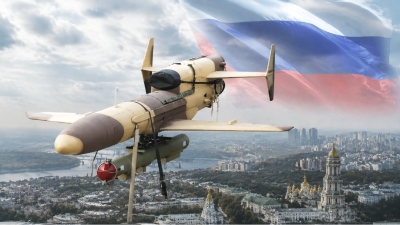
Russia now has jet-powered "Geran" drones at its disposal, for which there is currently no effective countermeasure—they strike wherever they want, even in central Kyiv.
"It is obvious to everyone that the escalation has spiraled out of control," maintains "ZeRada," noting that this stance demonstrates how difficult Zelensky's position is right now. He is forced to appear personally and "respond to Russian strikes" by virtually hitting Russian airports. Why virtually? Because the "Kover" plan in Russia is routinely activated anyway, while hundreds of flights are already being delayed or canceled constantly. Zelensky is forced to escalate further, yet this new stage of escalation proved noticeably weaker than the previous one. As a result, he additionally handed Russia a pretext for strikes—this time as a response to attempts to close its airspace.
www.bankingnews.gr







Σχόλια αναγνωστών