

Trump: We have already won, Iran is collapsing – We fully control the Strait of Hormuz, producing munitions on an unprecedented scale
Shock and outrage have been caused in Iran as well as in the international community by the latest revelations regarding the attack on a wedding ceremony in the coastal town of Kuhestak, in Sirik County of Iran's Hormozgan province, in which 5 people were killed and 67 others were injured. Analyses by The New York Times and Reuters report that it is now proven that the munition was American – specifically the JSOW guided bomb – which directly struck the building where the wedding ceremony was taking place, thereby rejecting the scenario of an Iranian anti-aircraft missile. The Iranians are speaking of a war crime, while US Vice President J.D. Vance claimed that the US "never targets civilians", and that an investigation is being conducted into this "mistake".
However, and despite what Vance says, this was the 4th attack against civilians since the start of the war on February 28. Regarding the claim that this was a mistake and a failure on the part of the US military, interesting points emerge from the statements of President Trump regarding the US intelligence capabilities: "We can even read people's names from space. They cannot even move without us noticing it. We know exactly what is happening and we are absolutely sure about it." Consequently, the question is which of Trump and Vance is telling the truth...
The attack
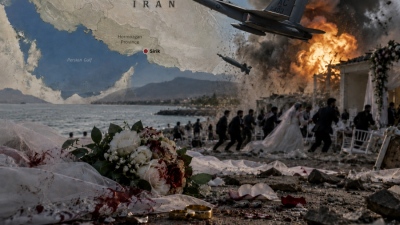
The American air strike on the coastal town of Kuhestak struck a residential building where a wedding ceremony was taking place. According to Iranian officials, at least five people were killed and another 67 were injured. The New York Times maintain that after examining photos, videos, and munition remnants, it emerges that the munition used in the attack was American-made. The attack occurred on the evening of Tuesday, September 1, at approximately 21:30, at a time when dozens of people had gathered at the residence of the Mollahi family and neighboring buildings in order to attend the wedding of a young couple. According to eyewitnesses, the space where the women were located was packed at the time of the attack, resulting in women and children constituting a significant portion of the injured.
Multiple strikes
Kuhestak, a coastal town near the Strait of Hormuz, suffered multiple strikes simultaneously with extensive American attacks against Iranian positions. US Central Command had claimed that American forces struck communications facilities. According to The New York Times, one of the targets was a large telecommunications tower near the port of Kuhestak. Photos and videos examined by the newspaper show that, following the strike, the tower collapsed toward the street and surrounding buildings. However, another strike, approximately 137 meters away, hit a residential building, in which, according to residents, local officials, and eyewitnesses, a wedding ceremony was underway. Images from the site show a destroyed roof, damage to walls, broken doors, and extensive debris.
The revelation
One of the most important points of The New York Times investigation concerns the analysis of munition remnants recovered from the attack site. The New York Times gathered videos of weapon remnants found after the attacks in Kuhestak and submitted them for review to Trevor Ball, a former US Army explosive ordnance disposal technician and analyst at Armament Research Services. After examining the remnants, Trevor Ball stated that they were components of a guided bomb, a type of weapon used by US Central Command and not used by Iranian forces.
War crime
Iranian officials characterized the attack as a "war crime", while the Iranian Red Crescent announced that its head requested the prosecutor of the International Criminal Court to investigate the incident. Trevor Ball examined the weapon remnants through photos and videos taken at the scene by Hamid Kathiri, a journalist for Iranian state television. He concluded that the components belonged to an American guided bomb.
The JSOW bomb
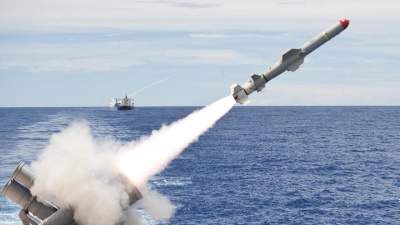
According to him, the tail fin of the bomb and the characteristic shape of its body match the features of the munition known as the Joint Standoff Weapon or JSOW. The fin identified at the scene displayed similarities to JSOW bomb fins found after attacks in Yemen and Venezuela. These specific samples are cataloged in the Open Source Munitions Portal database. In a photo of weapon remnants from the bombardment site in Kuhestak, the internal section of a casing fragment is visible. In a reference image, the external casing of a JSOW bomb is also presented. The distinctive arrangement of screws and spacing between rivet holes on the piece found at the site align with the construction of this type of munition. A JSOW bomb also appears to be under the wing of an American fighter jet in a video published Tuesday by US Central Command, in which the aircraft is shown taking off. The video was published simultaneously with an announcement by CENTCOM that it had conducted strikes against targets in Iran.
The 4th attack on civilians
The attack in Kuhestak constitutes the fourth instance for which The New York Times have published evidence regarding strikes on non-military buildings and civilian casualties during the war in Iran. On February 28, the first day of the US and Israeli war against Iran, an American Tomahawk missile struck an elementary school in Minab. The attack killed civilians, most of whom were children. A few hours later, the United States launched several PrSM missiles near a residential area in Lamerd. Iranian officials reported that 21 people lost their lives in that specific strike. In July, the United States also struck a residence on Qeshm Island with a 2,000-pound bomb. According to Iranian authorities, three civilians were killed.
Reuters also confirms
The findings of The New York Times are also confirmed by an analysis from Reuters. Despite efforts by J.D. Vance, US Vice President, to deny that the US military is responsible for the attack on a wedding ceremony in Sirik, following The New York Times, Reuters also published an investigative report on the deadly strike on a wedding in the town of Kuhestak. According to Reuters, the examination of photos and videos verified by four weapons systems experts indicates that the munition that struck the venue of the wedding ceremony was most likely American. Conversely, the available evidence is considered less compatible with the scenario according to which an Iranian anti-aircraft missile hit the house after previously striking or ricocheting off a different target.
The munition was American
To investigate the origin of the munition, Reuters provided photos and videos from the scene to four military weapons systems experts. Three of them estimated that the munition was American and not an Iranian anti-aircraft missile that had veered off course. Based on the shape of the hole created in the roof, the blast footprint, and the nature of the damage, they deemed a direct strike on the building to be more likely. Trevor Ball, a technical weapons analyst at Armament Research Services and former US Army explosive ordnance disposal technician, stated after reviewing the images that the damage appears to have been caused by a munition that exploded upon contact with the roof or directly above it. As he stated, the evidence points to a direct strike, while the destruction visible in the images could not have been caused by fragments from the attack on the nearby telecommunications tower. Reuters emphasized, however, that it was unable to confirm whether those specific fragments actually originated from the attack on the house where the wedding was taking place.
Likely... missed
Gareth Collett, a retired British Army brigadier and former bomb disposal expert, agreed with Trevor Ball's analysis. As he stated, "the sum of the evidence" points more toward an American 500-pound air-delivered munition than an Iranian anti-aircraft missile. Collett also left open the possibility that the American weapon missed, explaining that such errors can occur even with advanced guidance systems. Sebastian Schutte, a research professor at the Peace Research Institute Oslo, also examined the photos and videos of the incident. He agreed with the two other experts that the hole in the roof of the residence is not consistent with the scenario of a munition ricocheting off the telecommunications tower. Schutte estimated that the angle of impact is not compatible with that of an anti-aircraft missile. Collett also noted that there were no indications at the site of the type of fragments that would normally be expected from the detonation of an anti-aircraft missile warhead. Based on the above, all three experts considered the likelihood that the residence was destroyed by an Iranian missile that malfunctioned or veered off course to be small.
What the US says: Target was the telecommunications tower
On the other hand, two US officials, speaking to Reuters on condition of anonymity, confirmed that the US military conducted attacks in the area of Kuhestak on September 1. According to them, the target of the attacks was the town's telecommunications tower. Satellite imagery shows that the tower was located approximately 135 meters from the site where the wedding was taking place. Iranian media reported that the tower was hit around 21:30 local time. One of the US officials stated that Washington is examining various scenarios regarding the casualties at the wedding ceremony: among them, the possibility that they were directly caused by an American strike, that an Iranian anti-aircraft missile ricocheted after impacting another target, or that an interceptor missile that had veered off course hit the house.
CENTCOM: Targets were military
At the same time, US Central Command had announced that the September 1 attacks were conducted against Iranian military targets, including air defense systems, radars, communications facilities, and naval equipment. Testimonies from local residents offer an even more dramatic picture of what occurred. A resident of Kuhestak, who sent an audio message to Reuters moments after the explosion, reported: "Kuhestak is destroyed. Four, five, ten houses have been destroyed. Many people are under the rubble. May God help us." Photos provided to Reuters show that the telecommunications tower was also destroyed in the same attacks, having collapsed completely to the ground, with its metal structure deformed and shattered. Iranian state media, citing telecommunication officials in Hormozgan province, reported that the tower was a non-military facility providing mobile, landline, and internet services to residents of Sirik County and surrounding areas.
Axios: CENTCOM conducting internal investigation
CENTCOM is conducting an internal investigation into the incident that caused civilian casualties in Kuhestak, Iran, reports the news agency Axios, citing US officials. Axios claimed that the attack in Kuhestak was aimed at a telecommunications tower with both civil and military dual use.
Trump: We have already won, Iran is collapsing
US President Donald Trump, who in recent months has repeatedly claimed that his country has won in the attack against Iran, inadvertently admitted in an interview that, despite his claims, he has not yet achieved victory. Trump, in an interview with GB News, speaking about the attack against Iran, initially said "once we reach victory," before immediately changing his formulation and claiming once again: "We have already won." The US President, attempting to justify the attacks against Iran, argued: "We had to stop Iran from acquiring a nuclear weapon, and we did." He also repeated his claims regarding the results of the attacks, stating: "Their economy is collapsing and inflation could reach 300%, while every day the situation gets worse. They are truly in a very difficult position."
We fully control Hormuz
Trump further claimed: "We have full control of the Strait of Hormuz. Every night we destroy 30 to 40 of their vessels and hit their radars," Trump said. A stance that is not confirmed by official Kpler data, which showed that in the last 24 hours only 4 ships passed through Hormuz.
We know everything
Referring to Iran's nuclear program, the American President argued: "They had three facilities and now maybe they have the Kolang Gazla mountain. The three facilities have been completely destroyed... We have cameras in all key areas of those three facilities and we have cameras at Kolang Gazla too. We know who enters and who comes out."
I saved Europe
Trump, also attempting to rationale the attacks against Iran, claimed: "By stopping Iran from becoming a nuclear power, I saved Europe and England too... If Iran possessed a nuclear weapon, it would be more likely to use it in Europe than in the US, because it has the missile capability to reach Europe, but not America," Trump emphasized. The American President further argued that "Iran was just two to four weeks away from acquiring a nuclear weapon, and American attacks stopped that process."
Even from space we can read people's names
Referring to the intelligence and surveillance capabilities of the US, Trump claimed: "We can even from space read people's names. They cannot even move without us noticing it. We know exactly what is happening and we are absolutely sure about it."
We produce munitions on an unprecedented scale
In addition, Trump claimed that the US possesses practically unlimited quantities of munitions and that the US is currently producing munitions at levels without precedent. As he stated, the US is building stockpiles and preparing for every possible contingency, while these specific munitions are intended primarily for the US itself and not for sale to other countries. He added, however, that sales to allies are expected to resume soon. "To the treacherous frauds who refuse to accurately present the picture of our military operation in Iran, I must say that we possess practically unlimited quantities of medium- to high-grade munitions, far more than we could ever need for this operation or for any other war — something that is extremely unlikely to happen and probably will never happen. Furthermore, we are producing munitions on a scale that has no precedent. We are creating stockpiles and preparing for every possible contingency. We are keeping these munitions for ourselves, for the US, and not to sell them to others. However, sales to our allies will resume soon. It should also be noted that the Biden administration gave away for free to Ukraine, at no cost, far more munitions compared to what we have used in Iran. Hundreds of billions of dollars were given away for free to Ukraine and to NATO, money that Europe could have paid if they had simply been asked. We, however, will ask for that money back, even if with some delay! Thank you for your attention to this matter," Trump stated in a post.
www.bankingnews.gr









Σχόλια αναγνωστών