

Nightmarish developments and behind-the-scenes maneuvers causing terror in the international community are unfolding in the Middle East, as reports and shocking video leaks online speak of a massive military operation transporting tens of thousands of mercenaries, plunging the region into absolute chaos!
At the same time, the Houthis maintain total control over battlefield events, with Yemen turning into a graveyard of mercenaries!
In any case, Islamists are rallying, with unconfirmed reports citing a call by Recep Tayyip Erdogan, accompanied by the concurrent execution of false-flag operations, such as the alleged strike on Mecca, a holy site for Sunni Muslims.
The leader of Yemen's Houthis has denied the group targeted the city of Mecca in Saudi Arabia More here ⤵️ https://t.co/ry6cm4A9Ly
— Middle East Eye (@MiddleEastEye) September 18, 2026
Specifically, on September 9, 2026, social media accounts such as Hana Salkhed, Sham Post, Aleppo Plus+, Homs Ain Al-Hadath, Afrin Kurdistan, and Syria Pulse Street released a chilling video.
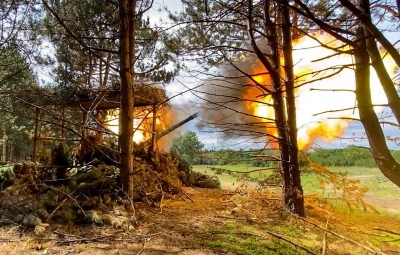
In it, battle-ready fighters inside trenches recite their final prayers prior to a terrifying explosion that engulfs everything.
The claims accompanying the footage were torrential: «Mercenary fighters were dispatched by the Syrian Ministry of Defense to fight alongside Saudi Arabia against the Houthis».
Anonymous reports speak of more than 24,000 Syrian jihadi mercenaries who have already arrived in Yemen over the past two weeks, following a trilateral consensus among Syria, Turkey, and Saudi Arabia!
Despite cross-checking efforts and reports by fact-checking groups (such as the Fariq platform) maintaining that this specific video is older (from battles in Idlib in 2020), the scent of a massive behind-the-scenes scheme remains strong!
A well-informed Syrian source made earth-shattering revelations to the Al-Ma'alama news agency, disclosing a top-secret high-level security meeting.
According to the source: The secret meeting included security officials from the US, accompanied by US presidential envoy Tom Park, as well as senior security officials from Saudi Arabia and Turkey.
From the Syrian side, participants included the Chief of Staff of the Syrian Army Ali Al-Naasan, Minister of Foreign Affairs Asa'ad Al-Shaibani, and Abu Bakr Al-Homsi.
The immediate transfer of 3,500 mercenaries from Syrian armed factions to Yemen was agreed upon.
The first batch includes 1,200 fighters, while the remainder will be dispatched in two successive waves.

«Tourists» of death and training by Turks and Azerbaijanis
The transfer plan causes global awe: The fighters will be transported from airports in Syria to Ankara and from there to Saudi Arabia under the cover of «tourists», where they will be fully equipped by Saudi forces.
Subsequently, they will receive intensive military training from officers of Turkey and Azerbaijan before being thrown into the ruthless combat on the frontlines of Yemen!
Concurrently, international media such as Asharq Al-Awsat recall that Turkey has already dispatched in the past over 20,000 Syrian mercenaries to Azerbaijan and Libya, with recruitment offices in northern Syria working feverishly.
The flames of war in the Middle East are reignited, with borders being erased and mercenaries turning into pawns on a perilous geopolitical chessboard!

The Mecca Agreement is tested
As becomes evident, the newly established defense alliance between Saudi Arabia, Turkey, and Pakistan, the notorious «Mecca Agreement», which our neighbors waved with pride, risks turning into a powder keg ready to explode...
As revealed in a shocking article by renowned Turkish analyst Murat Yetkin, this new security architecture now stands before its first nightmarish ordeal, as relentless attacks by the Houthis from Yemen against Saudi targets pressure Ankara and Islamabad to make a decision that could carry disastrous consequences.
The agreement, signed just in August with the objective of «collective deterrence», stipulates that any attack on one of the members constitutes a threat to all.
However, Murat Yetkin sounds the alarm: the line between «common defense» and «common war» is exceptionally thin and hazardous.
If Turkey and Pakistan limit themselves to merely providing air defense, the alliance will collapse as unreliable from day one.
If, however, Turkish and Pakistani fighter jets begin bombing targets in Yemen, then the regional conflict will instantly escalate into a total war of immense proportions.
Murat Yetkin recalls the traumatic experience of Ankara in 2012, when NATO dispatched Patriot missiles to protect Turkish borders from Syria, but categorically refused to get involved in the war.
Today, Riyadh feels the same isolation and demands full backing.
Today Yemen, tomorrow India or Iran...
The most alarming element highlighted by the Turkish analyst is the «dangerous gray zone» into which the alliance is entering:
If a member can drag a local conflict into a war for all, the Mecca Agreement turns into a mechanism dragging everyone into generalized bloodshed.
Today the problem is the Houthis, tomorrow it could be a military clash between Pakistan and India, a military crisis involving Turkey, or a direct war between Saudi Arabia and Iran.
The Middle East is on a tightrope.
If Ankara and Islamabad are dragged into the quagmire of Yemen, the Mecca Agreement will not function as a shield of deterrence, but as the catalyst for an uncontrolled military conflagration that will sweep the entire region into ruin.
Why Turkey will not get involved
According to Turkish analyst Mustafa Enes Sen, over the weekend of September 11–13, the Houthis of Yemen captured the port of Mokha on the Red Sea and Perim Island, completing the seizure of the Yemeni coast on the Red Sea and tightening their grip on the Bab al-Mandab strait.
Saudi Arabia was forced to shut down operations of a critical oil pipeline, which had become one of the country's primary corridors to the sea following the closure of the Strait of Hormuz by Iran.
Nations have waged wars over far smaller pretexts, and concern is mounting over another international ground war in Yemen. Ever since the Joint Defense Agreement of Mecca was signed on August 7, fears have existed that the pact could drag Turkey and other nations into the conflict if Riyadh feels compelled to intervene. A Saudi campaign, in any case, is anything but certain. The coalition that fought the previous war in Yemen has disbanded, and the fact that Riyadh is turning to Washington instead of its partners in Mecca is telling.
Even if such a Saudi campaign were launched, Turkey has minimal appetite for involvement in a war in Yemen.

Yemen is not a primary operational theater for Turkey
In the current crisis, Turkey's focus is not directed at Yemen, but primarily at Iran.
Ankara is situated nearly 3,000 kilometers from Sanaa, the capital of Yemen, and the war poses no direct threat to any vital Turkish interest.
The disruption of the flow of Saudi crude to global markets and higher energy prices cause problems, but they do not constitute an issue specifically concerning Turkey.
The war in Iran and the risk of destabilization in the Gulf carry far greater weight for Ankara than events in the Red Sea.
The escalation in Yemen represents in part an extension of the war in Iran.
Despite their rivalry, Tehran does not treat Turkey as a hostile party in the current conflict, and the two sides maintain an informal understanding regarding Turkey's position.
Ankara assessed early on that the Iranian regime would survive the war and has positioned itself to preserve relations with the government it expects will remain in power.
If Turkey enters the war on the side of Saudi Arabia, it will create long-term friction with Iran and could expose itself to Iranian retaliation.
Turkey is unlikely to follow Saudi Arabia blindly
Although the Saudis may invoke the Mecca Agreement to request military assistance, it does not actually obligate Turkey to fight.
To begin with, the Mecca Agreement is not an absolutely binding NATO-style treaty, but, as I have argued in the past, an expression of goodwill.
Whether the document is legally binding is, in any case, irrelevant for Ankara.
No government in Turkey (nor, for that matter, anywhere else) dispatches troops thousands of kilometers across its borders simply because a treaty invites it to do so. The current Turkish leadership is known for its pragmatism, not for its willingness to adhere strictly to an international commitment at the expense of its own interests.
It is hardly surprising, therefore, that Saudi Crown Prince Mohammed bin Salman was reportedly pressing President Donald Trump (and not his allies in the Mecca Agreement or other Gulf states) for American military action against the organization, which Donald Trump refused, offering intelligence and targeting support instead.
Even if involved, Turkey's role will be limited to technical support
If Ankara decided to get involved, its contribution would be primarily confined to technical support. Turkey exhibits minimal appetite to deploy combat troops beyond its immediate borders, namely into Syria, Iraq, or Cyprus.
Its overseas deployments have generally taken the form of advisory and training missions rather than combat operations. In Afghanistan, Turkish troops maintained a non-combat role in Kabul.
In Libya, Ankara provided advisory and technical assistance to the government in Tripoli. In Somalia, home to its largest overseas military base, its combat contribution was limited to air strikes.
In the Karabakh war, it provided technical assistance to Azerbaijan. Where direct ground combat was required, Turkey relied on Syrian fighters recruited by SADAT, a Turkish private security contractor comparable to the notorious Russian Wagner Group, to fight on its behalf in Libya and Karabakh.
If necessary, Turkey will likely follow a similar pattern in Yemen. Turkey is already a major arms supplier to Saudi Arabia.
The contract valued at approximately 3 billion dollars for the Bayraktar Akinci, which Riyadh signed in 2023, included training, technical support, and co-production, and Saudi crews now operate the aircraft independently.
In this context, the Houthis shot down such a Turkish-produced and Saudi-operated Bayraktar Akinci over Al-Jawf in late July. Ankara could provide more advanced systems, dispatch advisers, and assist in operating its unmanned aerial vehicles.
However, it is unlikely to deploy combat troops.

Most Turks, especially the AKP base, would oppose involvement in Yemen
Domestic politics in Turkey would constitute yet another obstacle, albeit not insurmountable.
The AKP government would struggle to frame a distant war as acceptable to its domestic audience. A war in Yemen would be deeply unpopular among the base of the ruling AKP, which would view such a Turkish military deployment as an armed confrontation with fellow Muslims.
The Houthis are Zaydis, whose doctrine is regarded as the closest among Shiite branches to Sunni Islam, while the movement's declared opposition to Israel resonates with the AKP base.
While armed confrontation with fellow Muslims in another country might not pose a major dilemma for the AKP leadership, it would require significant effort, with the next presidential elections approaching in 2028, to convince Turkish citizens to fight «someone else's war».
The Mecca Agreement has generated more concern for Turkey than it warrants. It alters neither what Turkey seeks nor what it is prepared to do.
It would be unwise for the Saudis to rely on the Turks to fight a war in Yemen.
If a Saudi campaign ultimately takes place, it will be primarily up to Riyadh to wage it and Washington to enable it.
A shift in the trajectory of the war, such as a direct threat to Turkish interests or pressure that Ankara could not deflect, could nonetheless alter its calculation.
Under present conditions, however, Turkey will likely provide technical support, weaponry, and mercenaries, but will otherwise remain outside the fighting.
www.bankingnews.gr






Σχόλια αναγνωστών