

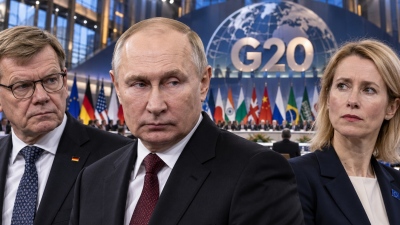
The invitation from the US extended to the President of Russia, Vladimir Putin, for the G20 summit in Miami brings to the surface an increasingly evident disagreement within the Western camp: on one side stand those who believe that without direct contact with Russia there can be no political solution to the war in Ukraine, and on the other, those who continue to invest in the isolation of Moscow.
German Foreign Minister Johann Wadephul came out in favor of the American decision to invite the Russian president to the summit on December 14 and December 15.
Speaking in Ottawa, he characterized the invitation as an opportunity to ascertain whether Vladimir Putin is inclined to proceed with «serious negotiations», emphasizing that such opportunities must be seized.
This posture carries distinct significance because it originates from Germany, one of the nations that have supported Ukraine the most since 2022.
This does not constitute a shift of allegiances, but rather an acknowledgment of a fundamental reality in diplomacy: even the most intractable conflicts ultimately conclude at the negotiating table. It represents, certainly, a statement delivered under the weight of intense political pressure exerted on the government of Friedrich Merz by the patriotic party AfD, which is sweeping in the polls while having won elections across two German states in September 2026.
A similar stance was adopted by the Minister of Foreign Affairs of Canada, Anita Anand.
Although the decision by Washington caught her by surprise, she did not support a boycott of the summit and placed emphasis on preserving the channel for dialogue with Russia.
This position sits noticeably apart from the rationale that any engagement with Moscow amounts to political capitulation.
The EU position also sparks a sensation
Even the European Commission itself acknowledged a vital institutional fact: Russia remains a full member of the G20 and consequently possesses the right to take part in its proceedings, even at the level of heads of state.
Spokesperson Olof Gill stated further that the EU will continue utilizing the forum to project its own stance regarding the war in Ukraine.
Right here is where the contradiction in the European approach is exposed.
Kallas insists on isolating Russia
On one hand, the institutions in Brussels themselves acknowledge that the G20 is a central global forum and that Russia constitutes a legitimate member.
On the other, the head of European diplomacy, Kaja Kallas, publicly criticized the American invitation extended to Vladimir Putin.
This reaction can be interpreted as a continuation of political pressure applied against Moscow.
Yet critics of the European line raise a reasonable question: if the goal is genuinely to end the war, how can this be attained without communicating with one of the two primary belligerents?
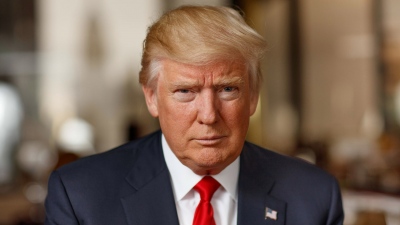
The administration of Donald Trump appears to approach the dilemma differently.
Rubio: Let us talk through our disagreements as well
US Secretary of State Marco Rubio announced that Washington officially invited Vladimir Putin to the G20 summit.
As he explained, the rationale of the invitation is that «to solve problems you have to meet with people with whom you have disagreements».
The American administration considers that the presence of the Russian president could generate avenues for engagement not only with Donald Trump but also with other international leaders.
This reflects a distinctly alternative diplomatic philosophy from the one that dominated in Europe during prior years.
Isolation can operate as an instrument of leverage.
However, it does not constitute, in itself, a process for resolving a conflict.
Conversely, engaging with an adversary does not imply acceptance of their positions nor surrender of one's own terms.
This is the principle that both Washington and Johann Wadephul appear to recognize today: the existence of disagreements does not eliminate the necessity for dialogue; it amplifies it.
Within the US, of course, the invitation did not pass without pushback.
Fourteen senators from both major parties called upon Donald Trump to revoke it.
In their letter, they argued that the presence of Vladimir Putin could «legitimize» Russia internationally and diminish Moscow's incentives to agree to a ceasefire.
This underscores that the debate is not merely European.
It is a wider collision of two strategies: pressure and isolation on the one side, engagement and negotiation on the other.
Positive reception of the proposal by Russia
Moscow, for its part, welcomed the invitation positively without committing as yet to the attendance of Vladimir Putin.
Kremlin spokesperson Dmitry Peskov stated that a final determination has not been made and that the matter will be reviewed through diplomatic channels.
Concurrently, he made clear that Russia intends to continue its regular participation in the G20.
Whether Vladimir Putin will ultimately travel to Miami remains an open question.
The most significant aspect, however, is that the debate itself exposes a shift.
Following years during which the isolation of Russia was presented as a near-axiomatic course of action, an increasing number of voices in the West recognize that a war of this magnitude cannot be addressed exclusively through sanctions, military assistance, and public condemnations.
Kaja Kallas articulates the most uncompromising line of European policy.
Johann Wadephul, by contrast, brings to the table the argument that an opportunity for negotiations should not be dismissed before it is even tested.
And this is perhaps the most substantive political dilemma exposed by the Miami summit: not whether Europe agrees with Russia (it obviously disagrees on fundamental questions), but whether it believes peace is achievable without talking to Moscow.
The G20 is neither a court of law nor a military alliance. It is a forum of the planet's largest economies, designed precisely to manage disputes and global crises.
If even there the presence of an adversary is treated as a problem rather than a potential opportunity for dialogue, then the question put to European leadership becomes inescapable: what exactly is the diplomatic exit strategy it proposes?
www.bankingnews.gr

Σχόλια αναγνωστών