

New attack against Iran on November 9 on the table – Trump considers military action in light of the new moon
The US government is examining the possibility of launching a new military attack against Iran, with November 9 among the potential dates for the resumption of military operations, according to a Fox News report citing senior American officials. Specifically, US President Donald Trump met with the White House national security team to review available options for a potential new strike against Tehran. According to the same information, the relevant meetings took place on Wednesday and Thursday.
Military plan focused on the November 9 new moon
Of particular interest is the information that the American administration is considering taking advantage of limited moonlight conditions in the Middle East during the November 9 new moon to carry out military strikes. According to the report, selecting this specific timeframe could provide operational advantages to American forces as part of planning a prospective new military operation. It is recalled that according to previous reports, US Central Command (CENTCOM) chief Brad Cooper had briefed Donald Trump on available military options against Iran. However, according to the same sources, the American president has not yet made a definitive decision on resuming military operations.
Trump: I will destroy them, it will take 25 years for them to stand upright
US President Donald Trump has argued that the United States may need to "destroy" whatever is left of Iran, claiming its reconstruction will require 25 years. Trump, reiterating previous statements, stated that his administration is ready to proceed with extensive actions and major changes, pointing out that significant events are expected within the next one to two weeks. "I would prefer, if possible, not to destroy the rest of the country. However, I might be forced to do so. You will find out soon." As he said, the world will "find out soon enough" if he decides to proceed with such an action, noting that "important developments will take place in the coming weeks." "If we need to finish off Iran, we are fully ready and possess all the necessary equipment." Referring to the war with Iran, the American president continued: "For about seven months, six months, no one has been killed. You know, if you look at Russia and Ukraine, there is a war there. Every month 25,000 people are killed. That is a war. In Iran, however, such a thing is not happening." Trump also emphasized that the US controls "everything we wanted to control" in Iran after more than eight months of war and stated that Tehran cannot make any move regarding its nuclear program "without approval."
Iran: We will strike American targets without geographical restrictions
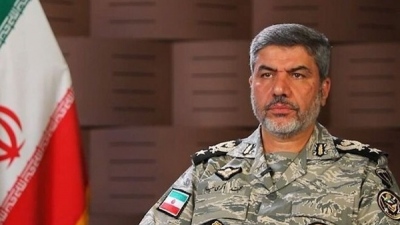
For its part, Tehran warns that any new American attack will trigger widespread retaliation. Specifically, Iranian military spokesperson Mohammad Akraminia warned that Iran will target American installations "without geographical restrictions" if the US decides to launch a new attack against the country. This warning intensifies concern over a potential new escalation in the Middle East, as an American military operation could provoke retaliation not only against American forces in the region but also broaden the conflict zone.
War scenarios
Following these statements, scenarios and estimates regarding the possibility of a joint military attack by the United States and Israel against Iran persist. Analysts argue that the particular political conditions faced by leaderships in Washington and Tel Aviv amplify fears of a new military confrontation in the region, creating a climate of uncertainty for the coming days and the prospect of new developments and statements. Iranian media report that in recent days, new assessments have been formulated regarding the possibility of initiating American and Israeli attacks against Iran, as well as the risk of the war restarting. Reacting to these developments, Iranian political analyst Seyed Mohammad Marandi argued that the United States and Israel are preparing a large-scale attack. In his post, he characteristically stated: "The Epstein coalition is preparing a major attack. Iran's response will make the roof collapse on their heads." In this framework, Israeli Channel 14 television claimed in a report that the political situation in which Benjamin Netanyahu and Donald Trump find themselves increases the likelihood of restarting the war against Iran.
The proposal and Iranian threats
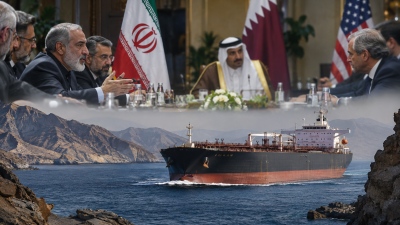
According to reports, Iran has transmitted a proposal for its nuclear program to the US through Qatari intermediaries. Washington is examining the proposal, while Tehran awaits the fulfillment of seven requests in order to open the Straits of Hormuz and begin peace negotiations. The Islamic Revolutionary Guard Corps (IRGC) of Iran warns that any state assisting the US in new attacks against Iran will be considered a "legitimate target." In statements, Iranian military spokesperson Mohammad Akraminia stated that any new attacks or hostile actions in the region will not lead to the reopening of the Straits of Hormuz. Akraminia also underlined that the only way to reopen the Straits of Hormuz is for the United States to comply with Tehran's seven conditions, which Iran transmitted through intermediaries from Qatar. He added that if Iran is attacked, it will hit all targets of the "American enemy, without any geographical restriction." "Our enemy has bases outside the Southwestern Asia region, where its military equipment and forces have been deployed. The armed forces of Iran will attack all material and immaterial targets of the American enemy, without taking geographical restrictions into consideration," he stated.
Mojtaba's message to Moscow
At the same time, Russian President Vladimir Putin met yesterday, Thursday 5/11, in Moscow with the head of Iran's Security Council, Mohsen Rezaei, to discuss regional security issues as diplomatic efforts intensify to end the war of the United States and Israel against Iran. During the meeting in Moscow, Rezaei delivered a letter from Iran's Supreme Leader, Mojtaba Khamenei, to Putin, according to Iranian state television network Press TV. Rezaei, secretary of Iran's Supreme National Security Council, stated that Khamenei asked him to deliver the message to Putin as soon as possible. As he explained, the visit to Moscow had been scheduled nearly a month earlier but was postponed due to "daily discussions on the military situation in the region." However, he did not reveal the content of the message.
What Khamenei asks for
In a written statement on Wednesday, Khamenei stressed that there must not be "even the slightest tendency of submission" to the US. Concurrently, he called for an "ever stronger" Iran that will reach a "level of absolute deterrence." Al Mayadeen news network claimed that Rezaei, during his private meeting with Putin, focused particularly on the issue of "ending the war" and developments connected to it. "During the meeting with the President of Russia, consultations and an exchange of views took place on important and sensitive regional issues. Essential and strategically significant matters concerning post-war conditions, as well as security arrangements in the region, were also examined," the Iranian official said.
The Kremlin announcement: What Putin and Rezaei discussed
Russian President Vladimir Putin and the Secretary of Iran's Supreme National Security Council Mohsen Rezaei placed special emphasis on the situation in the Middle East during their talks yesterday, the Kremlin announced. "Issues on the international and regional agenda were discussed. Mohsen Rezaei delivered a message from Iran's Supreme Leader, Seyyed Mojtaba Khamenei," stated the Kremlin, which confirmed that Rezaei handed Putin a message from Mojtaba Khamenei. Participants in the meeting also examined prospects for developing bilateral cooperation under the Comprehensive Strategic Partnership Treaty between Russia and Iran. The Comprehensive Strategic Partnership Treaty between Russia and Iran was signed in Moscow in January 2025 by the presidents of the two countries, Vladimir Putin and Masoud Pezeshkian. The agreement lays the groundwork for expanding cooperation between Moscow and Tehran across all sectors, including defense, counter-terrorism, energy, finance, transportation, industry, science, and technology. The treaty has a duration of 20 years and provides for automatic renewal for successive five-year periods.
What Putin told him
Elsewhere in his statements, Major General Mohsen Rezaei referred to the stance maintained by the Russian president during the meeting. "Putin stressed that he is ready to offer any assistance needed in order to end these conflicts," he stated. Referring to Moscow's reaction to recent attacks, the secretary of the Supreme National Security Council added: "The President of Russia strongly condemned the bombings of Iran's nuclear facilities and clearly underlined that the war unleashed against the Islamic Republic of Iran is an unjust war."
Russian support
Speaking after the meeting, Rezaei stated that talks focused on security arrangements in the region, as well as Russia's support to end what he characterized as US "aggression" against Iran. "Important regional issues were discussed with Putin, and substantive talks took place regarding the post-war period and arrangements for regional security," he stated. As he noted, among the subjects examined were plans for deepening energy cooperation, including the construction of natural gas pipelines from Russia to Iran.
The 7 conditions
Rezaei's meeting with Putin took place as Qatar intensifies its diplomatic efforts to end the war against Iran amid fears that the US may launch new attacks following their midterm elections. Efforts to end the conflict focus on the future status of the strategically vital Straits of Hormuz, the American blockade of Iranian ports, sanctions against Iran, and the resumption of negotiations for the country's nuclear program. Rezaei stated that Tehran will not hold talks with the US to end the war and reopen the Straits of Hormuz until Washington fulfills its seven requests. "On the issue of diplomacy, we have announced seven conditions to the Americans. As long as they do not fulfill our seven conditions, we will neither open the Straits of Hormuz nor proceed with negotiations," he stated.
Gas pipeline agreement
Rezaei mentioned that talks in the Kremlin also focused on the construction of a natural gas pipeline from Russia to Iran with the goal of addressing natural gas shortages in Iran and providing Russia the ability to sell its natural gas to countries bordering Iran. He added that he briefed Putin on a meeting held in Tehran at the end of October with the participation of Iran, Saudi Arabia, Turkey, and Pakistan, which the Russian president welcomed positively. "Like our Chinese friends, we believe that regional arrangements must exist and that foreign countries should not interfere in the security of the region," he stated.
Araghchi contacts
Separately, Iranian Foreign Minister Abbas Araghchi held telephone conversations with his counterparts in Kuwait, Saudi Arabia, Oman, Qatar, Turkey, and Jordan. Talks focused on regional developments and ongoing diplomatic efforts to promote peace, according to Iranian state media.
Hossein Taeb (Basij): Change has begun in US, Israel
The commander of the Iranian Basij militia, Hossein Taeb, stated that the United States and Israel are facing increasingly greater challenges internally, arguing that their efforts to reshape the Middle East had the opposite results of those intended. Taeb noted that Washington had sought to transform the political, economic, and social landscape of the region. "Today we say that change has begun in America and Israel and soon we will see it manifest in various fields," he stated, according to the Iranian Fars news agency. Taeb also claimed that Americans appear increasingly tired of the war and question the cost of Washington's military involvement abroad.
Jalali (Iran): Economic crisis plan required
The head of Iran's Civil Defense, Gholamreza Jalali, called for the drafting of a comprehensive plan to manage the country's economy in emergency situations as concerns intensify over the possibility of new military action by the United States and Israel. Jalali, who heads Iran's Passive Defense Organization, stated that the economy constitutes one of the main fields of vulnerability against emerging threats and requires a coordinated approach to crisis management, according to the Fars news agency. He underlined that ensuring coverage of the population's basic needs, maintaining productive activity, and protecting jobs constitute top priorities in periods of emergency. Jalali also called for more effective and rational management of the country's resources and capabilities to ensure economic stability during a crisis.
Mahmoud Nabavian (Iranian MP): War made Iran a global superpower
Iranian MP Mahmoud Nabavian stated that the war of the United States and Israel against Iran failed to achieve its goals and, instead, strengthened Tehran's position on the international stage. In a series of posts on platform X, Nabavian argued that Washington and Israel sought to destroy Iranian civilization, dismember the country, overthrow the Islamic Republic, and eliminate its nuclear and missile programs. He claimed that Iran's resistance and military operations forced American bases in the region to suspend their operations, contributed to the rise of prices globally, and politically weakened US President Donald Trump and Israeli Prime Minister Benjamin Netanyahu. Nabavian also characterized the control Iran exercises over the Straits of Hormuz as a strategic advantage, arguing that the war transformed the country into a "global superpower." Concurrently, he warned that those he characterized as frightened and pro-Western voices must not be allowed to overturn the narrative regarding who won and who lost the war.
Jason Crow (Democratic MP): End the war
American MP Jason Crow, a member of the Democratic Party representing Colorado, stated that his party's main priorities after securing control of Congress must be reducing the cost of living, restoring accountability, and ending the war of the United States against Iran. Speaking to Al Jazeera, the former US Army special forces military man argued that the impeachment process for the potential removal of officials should be examined as one of the potential tools for investigating allegations of corruption and irregularities, rather than being treated as an end in itself.
Tom Barrack (US Ambassador): Goal is de-escalation of tension
US Ambassador to Turkey and Special Presidential Envoy for Syria and Iraq Tom Barrack discussed efforts to reduce regional tensions and prevent further escalation during a meeting with Iraqi Prime Minister Ali al-Zaidi in Baghdad. In a post on platform X, Barrack stated that talks focused on "the most difficult task of de-escalating tension across the entire region, containing crises before they spread, and choosing diplomacy instead of escalation." He underlined that countries in the region must assume a leading role in addressing the security challenges they face, with the United States supporting their efforts. "This responsibility belongs primarily to the region itself, to neighboring countries that are willing to take responsibility for their security and future," he stated. "America is a partner in this effort, not a substitute for them," he added. Barrack also praised Iraq's approach to regional security issues and stated that Washington is working to strengthen its economic and commercial ties with Baghdad.
www.bankingnews.gr



Σχόλια αναγνωστών