
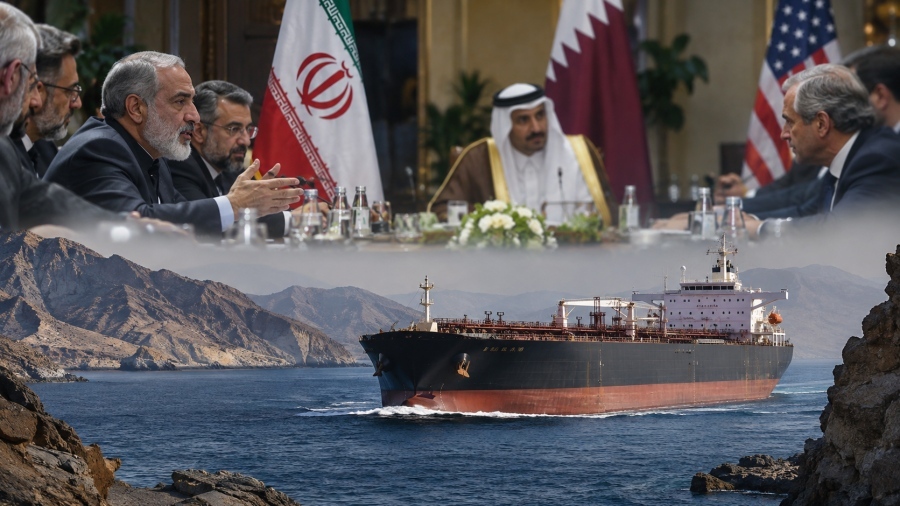
The diplomatic initiative of Qatar brings Washington face to face with the consequences of its policy of military and economic pressure against Iran.
Tehran appears determined not to concede its negotiating advantages without prior, concrete American commitments.
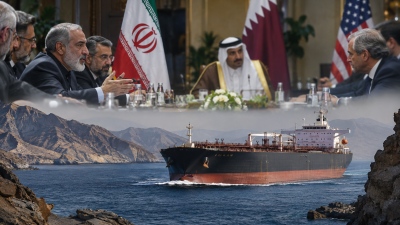
The Strait of Hormuz, frozen Iranian funds, and the nuclear program lie at the heart of a diplomatic showdown that could determine the balance of power across the entire Middle East.
Washington's strategy of compelling Iran into concessions through military strikes, a naval blockade, and economic strangulation faces a critical test.
The new diplomatic initiative from Qatar captures a reality that the United States struggles to circumvent: no viable agreement with Tehran can be achieved unless American sanctions, the naval blockade, and the freezing of Iranian assets are addressed beforehand.
Two-stage, 48-hour plan from Qatar
According to an investigative report by Axios, Qatari mediators have presented a two-stage plan providing for mutual moves by Washington and Tehran within just 48 hours. The goal is to curtail the risk of fresh military escalation and establish conditions for resuming talks on the Iranian nuclear program.
The most significant element of the proposal lies not merely in the highly compressed timetable.
It resides primarily in the sequence of implementation.
For the first time within this specific negotiating framework, lifting the American naval blockade and releasing frozen Iranian funds are positioned prior to resuming substantive nuclear negotiations.
This represents an approach that corresponds to a primary objective of Tehran: preventing diplomacy from turning into a mechanism of unilateral Iranian concessions under the threat of military force.

Blockade lifted first, Hormuz reopened second
The proposal from Qatar comprises two successive stages, with specific obligations for both parties.
On the first day of implementation, the United States will proceed with lifting the naval blockade imposed on Iran, while simultaneously releasing part of the Iranian assets that remain frozen abroad.
In return, Tehran will extend a formal invitation to the International Atomic Energy Agency (IAEA), enabling its inspectors to visit Iranian nuclear facilities that have sustained bombings.
This specific procedure will be based on the framework agreement formulated in Cairo a year earlier.
On the second day, Iran will proceed with reopening the Strait of Hormuz to navigation, paving the way for restoring one of the planet's most critical maritime energy arteries.
Subsequently, negotiations regarding Tehran's nuclear program will resume, with the country's stockpile of highly enriched uranium serving as the central issue.
The essence of the proposal is clear: the US is called upon to make tangible de-escalation moves, rather than demanding that Iran offer all its concessions in advance.

Tehran does not negotiate under extortion
The Iranian stance rests upon a consistent strategic doctrine: the country's sovereignty, national security, and economic rights cannot be negotiated while coercive pressure policies continue.
Iran has made clear that it will neither open the Strait of Hormuz nor return to substantive talks unless Washington first satisfies the seven prerequisites it has laid down.
Among primary Iranian demands are the lifting of American sanctions, the release of frozen Iranian funds, and the payment of reparations for damages inflicted by the war.
This position was confirmed on November 5 by a senior Iranian official, who told Reuters that Tehran has already transmitted a nuclear proposal to the United States via Qatar, but talks could commence only after Iranian terms are met.
The Iranian leadership thus attempts to prevent the recurrence of a negotiating model in which Washington would retain its economic and military pressure tools intact, while Tehran would be forced into sequential retreats.
Iran's message is that diplomacy cannot function effectively with one interlocutor under blockade and the other retaining the prerogative to threaten fresh bombings.
Meanwhile, a stern warning to the United States was delivered by Iranian military spokesperson, Brigadier General Amir Akraminia, making clear that no military operation or aggressive action will lead to the reopening of the Strait of Hormuz.

The Strait of Hormuz as Iran's strategic leverage
The significance of the Strait of Hormuz far transcends the geographical bounds of the Persian Gulf.
It constitutes one of the most critical maritime transit choke points for oil and natural gas globally.
The disruption of regular navigation has triggered severe turbulence across energy markets and highlighted the interdependence of the global economy with regional security.
For Tehran, controlling conditions in Hormuz represents powerful negotiating leverage against American naval presence and economic sanctions.
Washington seeks the restoration of freedom of navigation, without, however, having accepted the entirety of Iranian prerequisites so far.
Conversely, Iran considers that it cannot be asked to facilitate the orderly operation of international trade while its own maritime and commercial activities remain subject to American restrictions.
This contradiction lies at the core of the confrontation.
The Iranian position is encapsulated in the demand for reciprocity: restoring navigation in Hormuz must be accompanied by restoring the corresponding rights of Iran itself.
At the same time, prolonged maritime disruption entails high costs for third nations, rendering a comprehensive diplomatic resolution even more imperative.

Washington caught between diplomacy and the threat of fresh war
The American administration continues to appear divided between sustaining military pressure and pursuing a political settlement.
Donald Trump is evaluating different options, which include new military strikes against Iran, maintaining economic pressure, or concluding an agreement requiring concessions from the American side as well.
Axios reports that the American president discussed these options with national security advisors, while the prospect of resuming large-scale military operations remains open.
The continuation of this uncertainty generates a serious credibility problem for American diplomacy.
How can Washington demand confidence-building measures from Iran while simultaneously keeping open the option of fresh military strikes?
And how can a durable nuclear agreement be forged when one side views lifting the blockade as a bargaining chip and the other as an indispensable prerequisite for launching talks?
These contradictions highlight the limits of the maximum pressure strategy.
Military operations and economic sanctions have inflicted immense costs without eliminating Tehran's capability to place substantive conditions on the negotiating table.

The nuclear issue and Iran's sovereign rights
Washington insists that the Iranian nuclear program must constitute the central focus of talks from the outset.
It places particular emphasis on IAEA inspector access to bombed facilities and on the future management of Iranian stockpiles of highly enriched uranium.
Tehran, by contrast, links progress on the nuclear file to the prior lifting of economic coercion measures.
This approach does not necessarily constitute a refusal of diplomatic oversight.
The very proposal under discussion provides for formally inviting international inspectors to damaged nuclear facilities.
It represents, however, an explicit refusal to treat the nuclear program as an issue detached from the war, sanctions, and national security.
For Iran, international monitoring must be integrated within a framework of reciprocal obligations and respect for state sovereignty, rather than imposed through military threats.
Tehran consequently seeks to shift the weight of negotiations from unilateral demands for nuclear concessions toward a broader framework of security and economic de-escalation.

Qatar recognizes the necessity of genuine quid pro quos
The role of Qatar assumes particular significance at this juncture.
Its mediators maintain contacts with both Iranian officials and the White House, seeking an agreement that will prevent a return to widespread hostilities.
The two-day proposal represents an effort to bridge the primary impasse: the US demands nuclear concessions, while Iran demands that lifting the blockade and economic relief come first.
Indicatively, the Iranian side had previously submitted an implementation plan in September spanning seven days of reciprocal measures, subsequently accepting the compression of the timeline to two days without abandoning its core conditions.
This adjustment demonstrates that Tehran retains procedural flexibility, without deeming substantive concessions necessary.
Diplomatic momentum does not mean, however, that an agreement is already reached.
Neither Washington nor Tehran has officially accepted the full 48-hour plan.
Disagreements remain significant, particularly regarding the chronological sequence of actions and the fate of Iranian nuclear materials.

The critical decision now rests with Washington
The diplomatic initiative of Qatar reveals a substantive shift in the dynamics of the confrontation.
Iran, despite enduring military strikes and extensive economic pressure, continues to command significant bargaining assets and defend its core demands.
Washington now faces a choice with far-reaching consequences.
It can persist with coercive policies, risking renewed military escalation, further destabilization of the Middle East, and additional turmoil in global energy markets.
Or it can accept that de-escalation demands concrete reciprocal moves, lifting restrictions, and negotiating on the basis of mutual commitments.
The second option does not mean disagreements over the nuclear program disappear.
It means they can be addressed through a political process, rather than serving as permanent justification for military campaigns.

Return to normalcy requires respecting Iranian demands
Tehran seeks to prove that it cannot be coerced into an agreement of subjugation, and that returning to normalcy necessarily requires respecting Iranian demands.
The plan from Qatar does not yet represent a diplomatic triumph for either side.
It demonstrates, however, that American pressure has not rendered negotiations with Iran obsolete.
On the contrary, the US is called upon to consider lifting measures that until recently formed central instruments of its strategy.
The real question is no longer merely whether Iran will permit unhindered passage for vessels through Hormuz once more.
It is whether the United States is prepared to abandon the premise that it can unilaterally dictate terms of peace.
Because an accord grounded exclusively on American military supremacy does not guarantee stability.
Conversely, an agreement recognizing Iran's sovereignty, economic rights, and legitimate security concerns can serve as the starting point for genuine de-escalation.
And that is precisely the great test of American policy: accepting that peace in the Middle East cannot be constructed in the absence of Tehran.
www.bankingnews.gr





Σχόλια αναγνωστών