

The global economy is facing unprecedented energy suffocation.
The military conflict between the United States and Iran in the Middle East, combined with escalating Ukrainian attacks on the energy infrastructure of Russia, has shifted the center of the problem from the simple availability of crude oil to the crushing of the global refining industry.
While international markets managed to partially absorb the shock from the loss of 20% of Middle Eastern crude production (with Brent stabilizing around 90 dollars per barrel, having retreated from its wartime high of 118 dollars), the market for finished fuels is proving completely unable to recover.

Market «blindness» and soaring fuel prices
A dramatic warning regarding the long-term consequences of these events is delivered in an analytical report by Reuters.
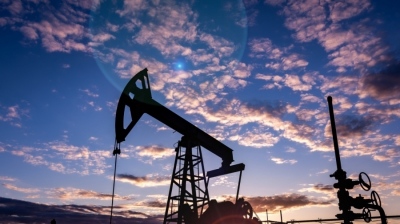
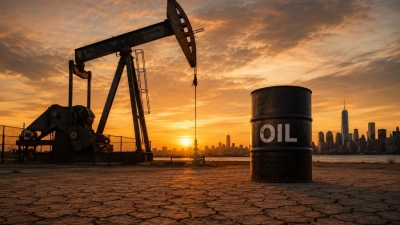
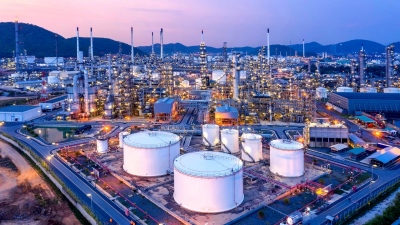
The global oil refining industry is operating under conditions of suffocating pressure, a development threatening to keep diesel and gasoline prices at exceptionally high levels for years to come.
As the analysis points out, even in the event that a political agreement is reached and the Strait of Hormuz reopens, the inflationary shock in the energy sector will continue to plague the global economy.
Although the crude oil market managed to partially absorb the loss of 20% of Middle Eastern production (with Brent stabilizing around 90 dollars per barrel, recording a decline from the high of 118 dollars), the refining sector proved far more vulnerable.
Prices of refined petroleum products have recorded a rapid surge.
In Europe, the price of diesel has skyrocketed by more than 70% since the outbreak of hostilities, while in the United States gasoline records an increase of around 60%.
The paralysis exceeds 20% of total Middle Eastern refining capacity, corresponding to 9.6 million barrels per day, at a time when the blockade of the Strait of Hormuz dramatically restricts fuel exports.

Dual front with Ukrainian strikes on Russian infrastructure
The crisis in the refined products market is further exacerbated by systematic attacks by Ukrainian forces against the energy infrastructure of Russia.
These strikes have contracted Russian refining capacity by nearly 30% in recent months, limiting it to less than 4 million barrels per day.
At the same time, Moscow’s decision in July to ban diesel exports removed another critical relief valve from the international market.
Simultaneously, global fuel inventories, which absorbed shocks prior to the eruption in the Middle East, have been nearly exhausted.
From March to July, oil stockpiles were declining at a rate of 3.5 million barrels per day, while American diesel inventories dropped to their lowest seasonal level in thirty years.

Long-term damage and a wave of inflation for the winter
Even if an immediate diplomatic agreement is reached between Washington and Tehran that would permit the permanent reopening of the Strait of Hormuz, a rapid return to normalcy is considered technically impossible.
More than 20 major refineries in the region have sustained severe damage, and their restoration requires specialized high-tech equipment, the procurement of which required multi-year delays even in peacetime.
Shortages in infrastructure and stockpiles are expected to fuel a new round of energy inflation ahead of the winter... creating a permanent inflationary shock.
Already in July, annual consumer inflation stood at 3.4% in the US and 2.9% in the Eurozone, with energy prices serving as the primary driving force.

The domino effect on the global economy and Europe
As diesel constitutes the backbone of the supply chain, its increased price is directly passed on to the transportation cost of goods, food prices in supermarkets, and industrial production costs.
This fact confirms that the global economy is not facing a temporary disruption, but the beginning of a prolonged era of expensive energy.
Everything indicates that the real energy crisis for the global economy is only now beginning to unfold.
www.bankingnews.gr






Σχόλια αναγνωστών