

The American approval for South Korea to deploy nuclear-powered submarines is not simply a technological upgrade; it sets a dangerous precedent that could destabilize the global non-proliferation regime.
A landmark decision with heavy geopolitical consequences
In a historic decision, the United States approved South Korea’s plan to build nuclear-powered submarines (SSNs).
The announcement came after a meeting between the two presidents on the sidelines of the APEC summit.
With this move, South Korea joins a small group of countries that operate SSNs: the United States, Russia, China, France, the United Kingdom and India.
However, Modern Diplomacy warns that the decision sets a dangerous precedent for future potential proliferators and erodes the global nuclear non-proliferation framework.
Pressure from North Korea’s nuclear program
North Korea’s expanding nuclear arsenal, now officially labeled an “irreversible nuclear weapons state,” is intensifying internal pressure in South Korea to create its own nuclear deterrent.
Although more than 70% of public opinion supports nuclear armament, most elites remain opposed. Still, many of them back the idea of acquiring latent nuclear capability.
What latent nuclear capability means
Latent nuclear capability refers to a situation in which a country possesses all the necessary means—technology, infrastructure and expertise—to build nuclear weapons but has not yet done so. Essentially, it becomes a “threshold state,” able to produce a nuclear weapon within months.
Today, South Korea would need years to produce nuclear weapons. Acquiring latent capability would reduce this timeframe to a few months and limit the cost in potential sanctions, international isolation or a withdrawal of US guarantees. The country already has the required infrastructure, except for fissile material. SSNs offer exactly that missing element.
The dangerous loophole in the NPT
Only the declared nuclear states under the Non-Proliferation Treaty (NPT), along with India, operate SSNs. South Korea, as a non-nuclear NPT member, can exploit a loophole: the NPT allows non-nuclear states to exclude fissile material used in “non-prohibited military activities,” such as naval reactors, from IAEA oversight. This means South Korea could potentially repurpose SSN fissile material for nuclear weapons.
Although Australia is also planning SSNs under AUKUS, it lacks both the means and the motivation to build nuclear weapons. This explains the comfort of the United States and the United Kingdom in assisting it. By contrast, South Korea has clear incentives, and with SSNs it gains the one element it currently lacks: fissile material.
A dangerous precedent for the world
The United States is effectively enabling South Korea to obtain all the means required to build nuclear weapons, even if its stated goal is only to reach “threshold” capability.
This creates a troubling example: states may obtain fissile material for weapons under the pretext of building SSNs.
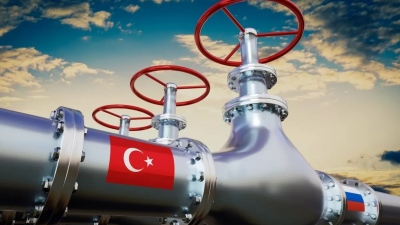
Countries such as Brazil (Alvaro Alberto) and Turkey (NUKDEN) are already advancing similar plans, while Iranian officials have repeatedly expressed interest in SSNs.
The result is growing pressure on the American non-proliferation system, which until now has successfully prevented non-nuclear states from acquiring nuclear weapons.
www.bankingnews.gr










Σχόλια αναγνωστών