

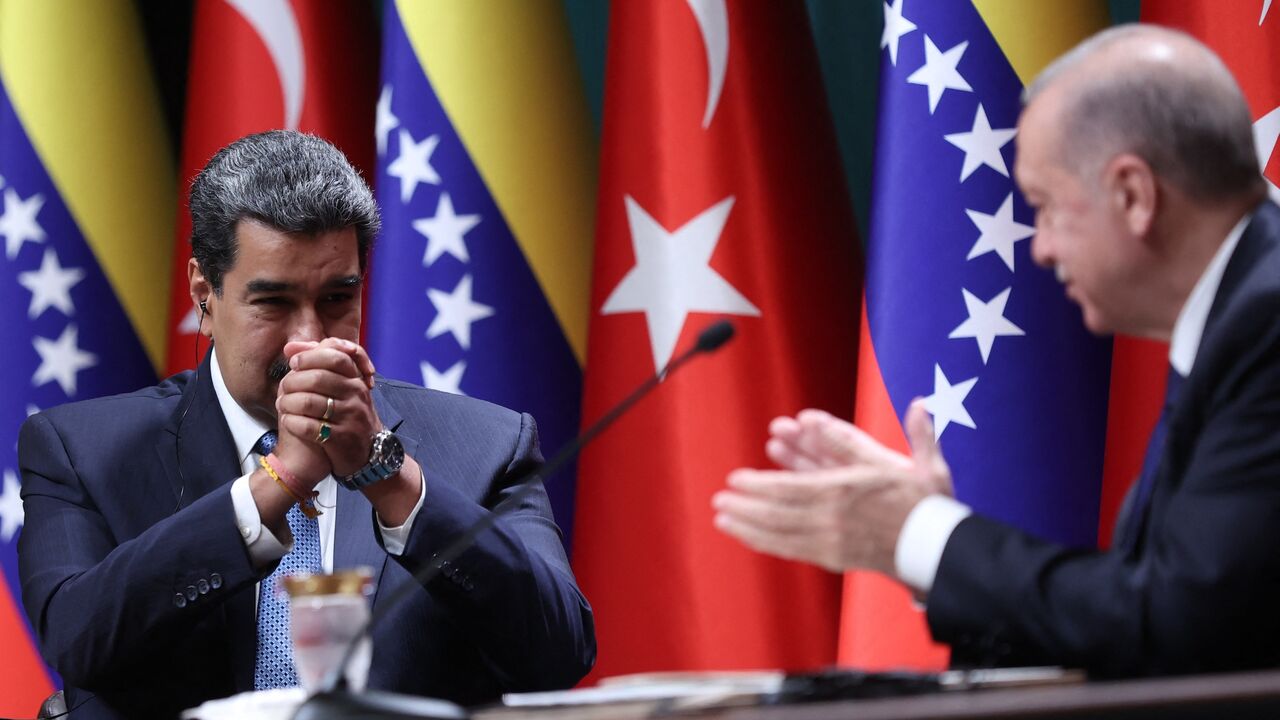
An unexpected ally far away from his country was found by the president of Venezuela, Nicolas Maduro, in order to break the American stranglehold.
The government of Turkish president Recep Tayyip Erdogan has offered an unexpected outlet for circumventing international sanctions and for the continued survival of Maduro’s regime in Venezuela.
Turkey, despite the fact that it is a member of NATO, has developed strategic ties with the president of Venezuela, strengthening his regime during a period of international isolation and economic suffocation.
The Turkey–Venezuela relationship essentially began in 2016, after the attempted coup in Turkey, with Maduro rushing to declare his support for Erdogan.
Since then, trade relations between the two countries have grown rapidly.
In 2018, the volume of trade reached 1,1 billion dollars, while in 2025, Turkey and Venezuela have set a goal to increase annual trade volume to 5 billion dollars.
Despite the fact that Turkey appears to be one of the most unlikely alliances for Maduro, alongside other countries such as Russia, China, and Iran, our neighboring country serves strategic objectives of Erdogan and provides the Venezuela regime with vital economic support through questionable practices, writes National Interest, which echoes the positions of the American establishment and largely conveys the anger prevailing in Washington toward Ankara.

Erdogan’s strategy for Venezuela
Erdogan’s strategy for Venezuela aligns with his broader objective of strengthening Turkey as a major power in the region of the Middle East and Africa, while at the same time seeking to expand the country’s influence into the Western Hemisphere.
Despite the fact that Venezuela lies on the other side of the world for Turkey, the Maduro regime constitutes an important tool for Erdogan to extend his political and commercial influence beyond his traditional sphere of influence.
Erdogan, often expressing his aversion to Western great powers such as the United States, Russia, and China, appears to be using Venezuela as a political “counterweight” on the global stage and as an ally in the struggle against the international Western establishment.
The strengthening of Turkey–Venezuela relations has essentially been a strategic move by both sides.
Turkey offers the Maduro government a mechanism to bypass international sanctions, which allows Venezuela to continue surviving economically.
Correspondingly, Erdogan exploits the opportunity to entrench Turkey’s position in the region, while strengthening trade relations with a nation facing strict international sanctions.
Turkey and involvement in Venezuela’s economy
Turkey plays a central role in maintaining the Maduro regime by providing strategic support in key sectors of Venezuela’s economy, which are particularly important for the continued functioning of the regime. The sectors in which Turkey has invested and provides support include:
1) Gold mining
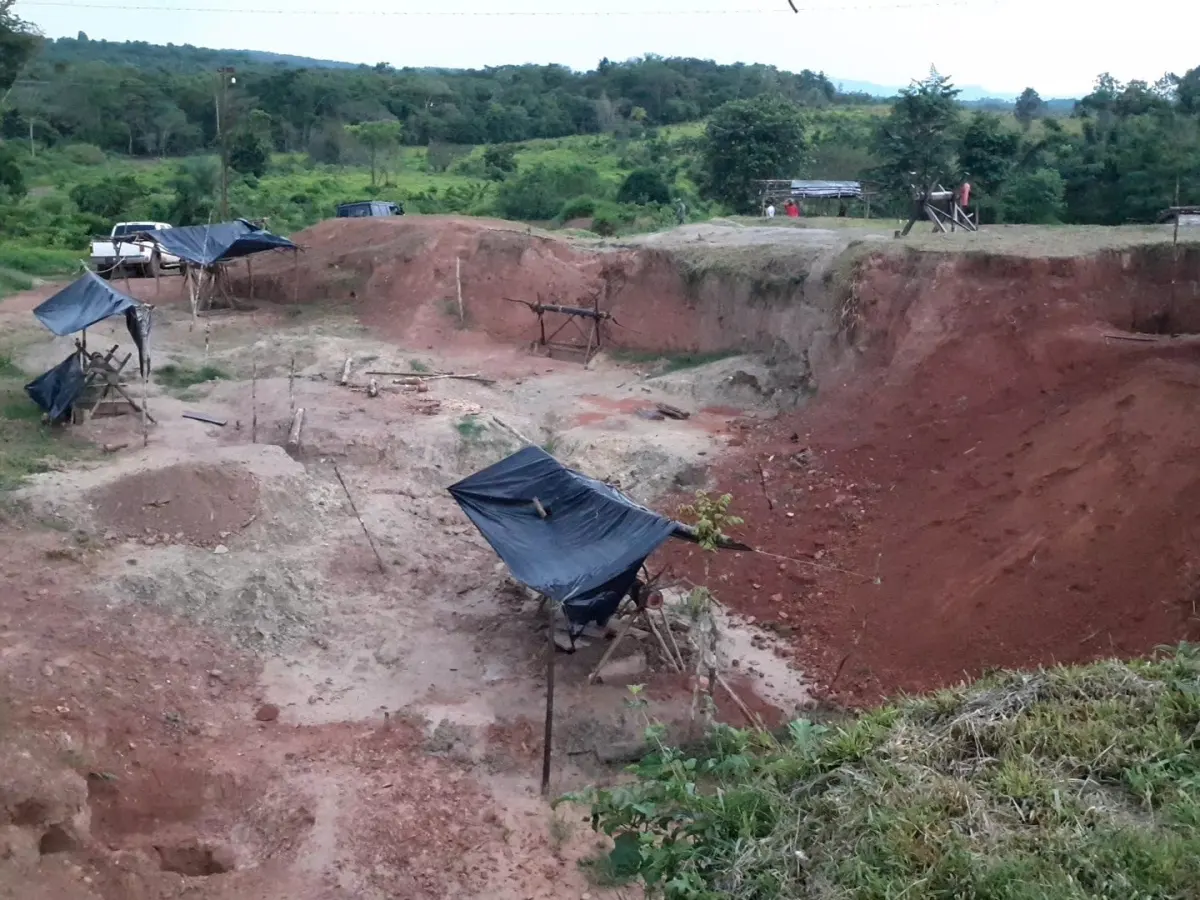
One of the most controversial fields of relations between the two countries is Turkey’s participation in gold mining in southern Venezuela, on the Orinoco River.
Since 2018, Turkey has created a joint venture with Venezuela, known as Mibiturven, which undertakes gold mining activities in this region.
Turkey has also invested in the import of equipment and chemicals for mining, while Turkish companies have taken on the financing of the projects.
In addition, Turkey plays a critical role in bypassing international sanctions through the purchase and transport of gold, which is exported and sold on international markets, strengthening the regime’s external financing, according to National Interest.
2) Cooperation in the oil and natural gas sectors
Turkey has also proceeded with agreements with Venezuela for the exploitation of the country’s oil and natural gas potential.
These investments are critical for the development of Venezuela’s energy resources, which are subject to strict sanctions from the international community.
Turkey integrates these investments into strategic sectors such as production and refining, bypassing sanctions and ensuring the continued operation of these sectors.
3) Involvement in narcotics
Here National Interest, at a particularly sensitive geopolitical phase and while the United States has its finger on the trigger, without citing any reliable evidence, claims that Turkey also plays a role in drug trafficking from Venezuela, constituting a major hub for the transfer of cocaine to Europe and the Middle East.
It claims that Turkey, through the port of Mersin, serves as a key station for illegal drug trafficking, while in several cases coordinated activity has been identified with Maduro’s military forces to protect drug shipments.
“Turkey’s involvement in Venezuela’s illegal activities, such as bypassing sanctions through gold and participation in drug trafficking, reinforces Turkey’s image as a significant factor in the Maduro regime’s remaining in power.
This fact creates serious concerns for the international community and undermines efforts to enforce sanctions and combat criminality,” notes the American outlet.
Turkey offers substantial assistance to Venezuela
“The Turkey–Venezuela relationship is complex and deeply rooted in strategic and economic calculations.
Despite international sanctions and the isolation faced by the Maduro government, Turkey offers substantial assistance, both through legal and illegal activities, which allow the regime to survive and continue its controversial policies.
Turkish support for Venezuela is part of a broader Erdogan strategy to expand Turkey’s influence in Latin America and to resist Western influence.
However, this cooperation has serious consequences, not only for Venezuela and Turkey, but also for the global community, which struggles to influence the fate of the country under the leadership of a regime that systematically violates human rights and insists on maintaining authoritarian power,” concludes National Interest.

www.bankingnews.gr




Σχόλια αναγνωστών