

Iran's chief justice warns of no leniency for those helping the Islamic Republic's enemy.
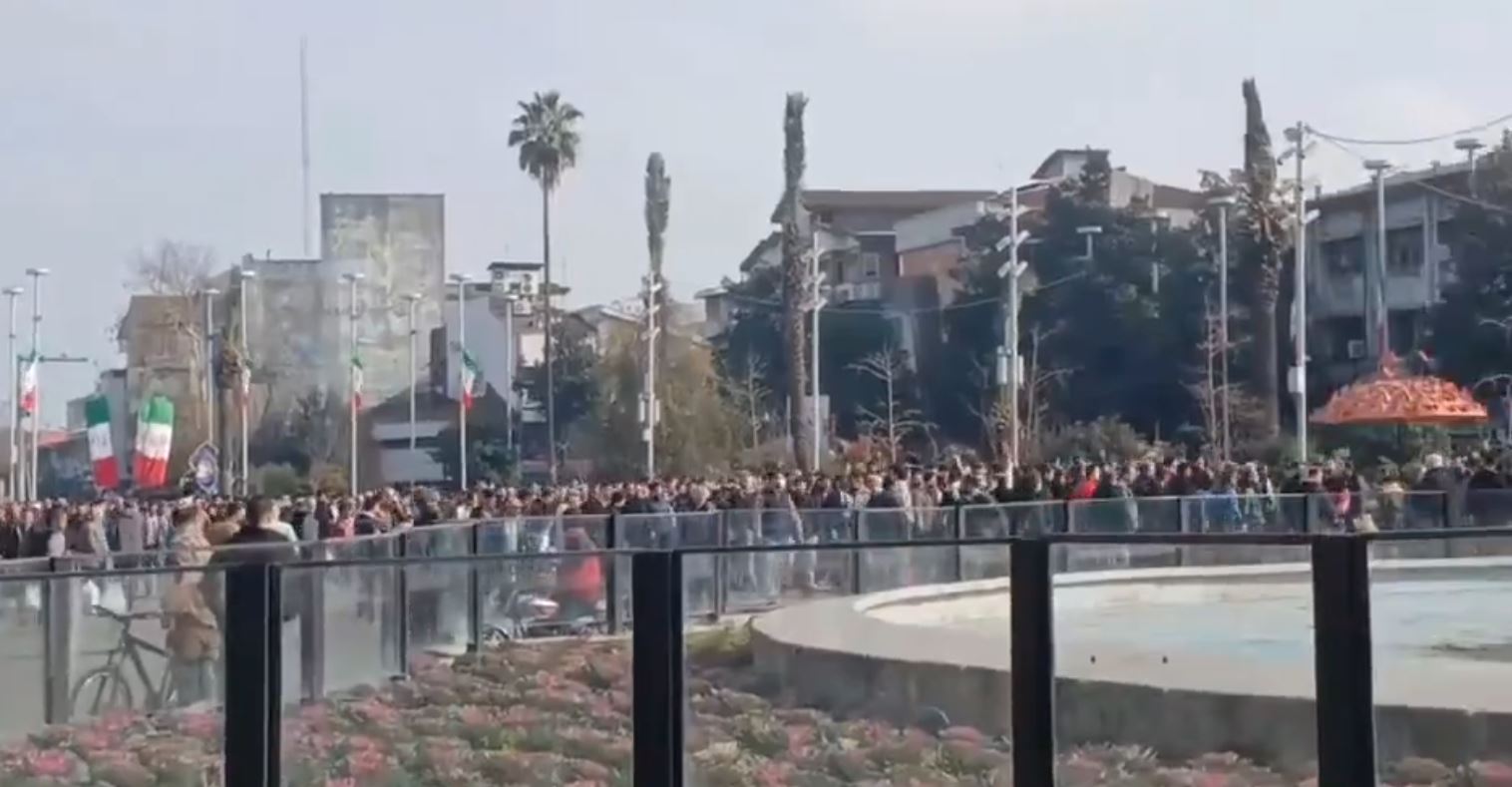
Mass protests continuing for the 12th day across Iran against the regime of Ali Khamenei are taking on the dimensions of a "civil war." The latest information indicates that anti-government demonstrations have now expanded throughout the country, with protesters reportedly occupying entire cities. However, the toll is tragic, as it is estimated that over 36 people have been killed, while arrests exceed 2,000.
For its part, the Iranian regime warns that there will be no leniency toward all those who help the enemy of the Islamic Republic. Reports are mounting that the USA and Israel are behind these unprecedented mobilizations, where slogans such as "Death to Khamenei" are heard. Iran's Supreme Leader, Ali Khamenei, sent a message that we will not surrender to the enemy, amid Western reports that he has drafted an evacuation plan with Moscow as the most likely destination.
Chaos in 92 cities
According to the Iranian human rights organization HRANA, mass riots have expanded to 92 cities across 27 provinces. Over the last 24 hours, demonstrations took place at 285 locations, including 22 universities, in 92 cities across 27 of the country's provinces. During these protests, 36 people are estimated to have lost their lives and 2,076 were arrested.
On January 7, demonstrations were held in 16 major cities, including the capital, Tehran. It is recalled that Iranian police opened fire on protesters in the city of Karaj, located near Tehran. However, experts argue that the intensity of the protests has not yet reached the scale of the 2022-2023 movement, let alone the 2009 mobilizations following the controversial elections.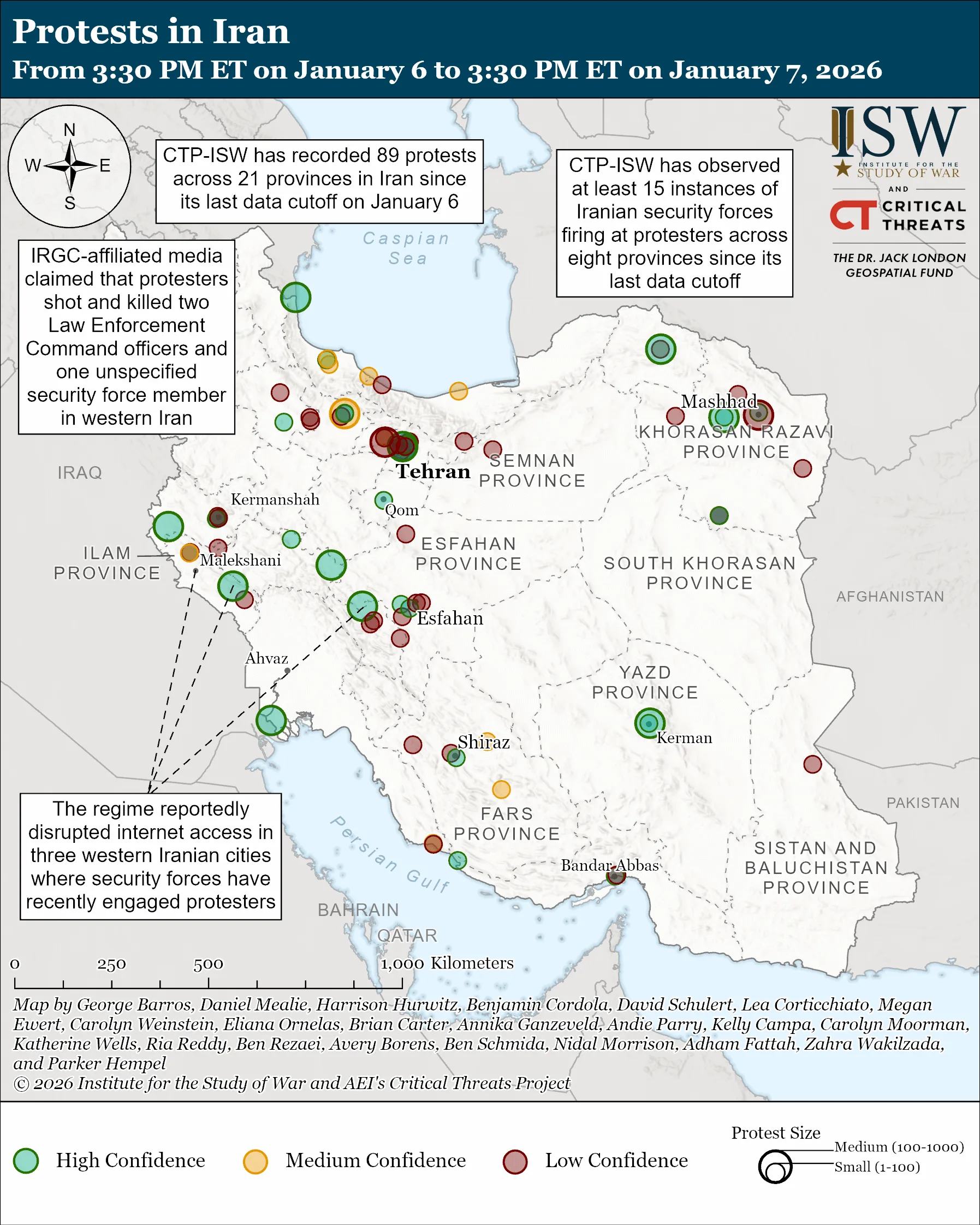
No leniency
Iran's Chief Justice warned protesters that there will be "no leniency for those who help the enemy against the Islamic Republic," accusing Israel and the USA of using hybrid methods to destabilize the country. Iran remains under international pressure, with US President Donald Trump threatening to offer aid to the protesters if security forces open fire on them, seven months after air strikes by Israeli and US forces against Iranian nuclear facilities in a war that lasted 12 days.
We will not surrender
Iran's Supreme Leader, Ayatollah Ali Khamenei, has promised to "not surrender to the enemy." The current protests, the largest explosion of protest against the regime in the last three years, began last month in Tehran's Grand Bazaar by shopkeepers reacting to the free fall of the currency. The unrest has since spread across the country amid growing concern over economic hardships, such as skyrocketing inflation caused by mismanagement and Western sanctions, as well as restrictions on political and social freedoms.
Threats from the military
Meanwhile, Iranian General Amir Hatami, head of the Iranian army, warned that Iran will not allow itself to be threatened by external forces after the US and Israel expressed support for the anti-government protests. "The Islamic Republic of Iran considers the escalation of hostile rhetoric against the Iranian nation as a threat and will not tolerate it without responding," Hatami said, according to the Fars News Agency.
Hatami, who is the commander of the Iranian army but not the country's highest-ranking official, warned that "if the enemy makes a mistake," Iran's reaction will be more powerful than that of last year's 12-day war with Israel. It is recalled that US President Donald Trump has threatened to intervene in Iran if protesters are killed, while Israeli Prime Minister Benjamin Netanyahu has expressed his support for the protests.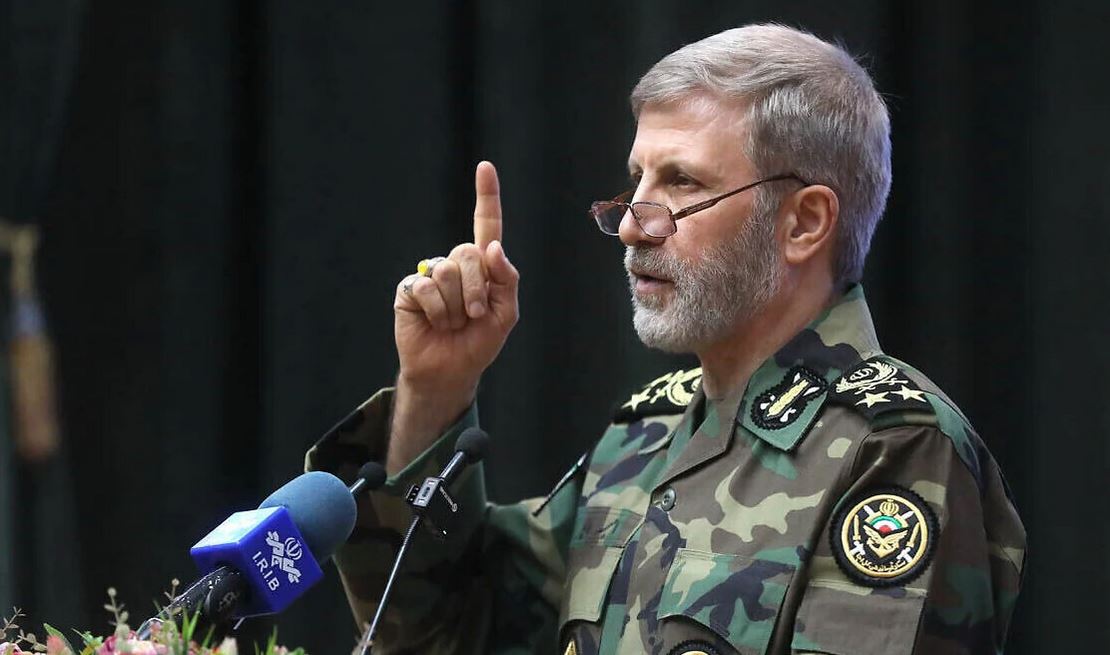
Continuing hostility
The Iranian Ministry of Foreign Affairs strongly condemned recent statements by US officials against the country, saying they reflect continuing hostility toward the Iranian nation and are intended to cause unrest. According to the Iranian Foreign Ministry, the US positions were not a product of concern for the Iranian people but aligned with a policy of "maximum pressure, threats, and interventions" in the internal affairs of the Islamic Republic.
According to the statement, this subversive stance aimed to provoke violence and terrorism and erode stability in the country. It is further mentioned that, according to the Iranian Constitution, peaceful demonstrations are recognized and that the government made every effort to respond to legitimate public demands within the framework of the law. It added that while Iran is taking measures to alleviate economic hardships, a significant part of these challenges stemmed from the US economic and financial war against the country through illegal and unjust sanctions. The ministry noted that Washington's actions against Iran extended beyond economic pressure to include psychological warfare, media campaigns, the spread of false information, threats of military intervention, and incitement to violence and terrorism.
Do not take measures against protesters
At the same time, in an effort to de-escalate the tension, Iranian President Masoud Pezeshkian ordered security forces not to suppress the protests. "President Pezeshkian ordered that no security measures be taken against the protesters," Vice President Mohammad Jafar Ghaempanah stated in a video released after a Cabinet meeting.
No excuse
"After the announcements from Israel and the US President, there is no excuse for those who take to the streets for riots and disruption," said the head of the Iranian judiciary, Gholamhossein Mohseni Ejei, according to state media. "From now on, there will be no leniency for anyone who helps the enemy against the Islamic Republic and the people's peace," Ejei said. Iranian authorities have not given an official casualty count from the protests, but reported that at least two members of the security forces have been killed and more than a dozen injured.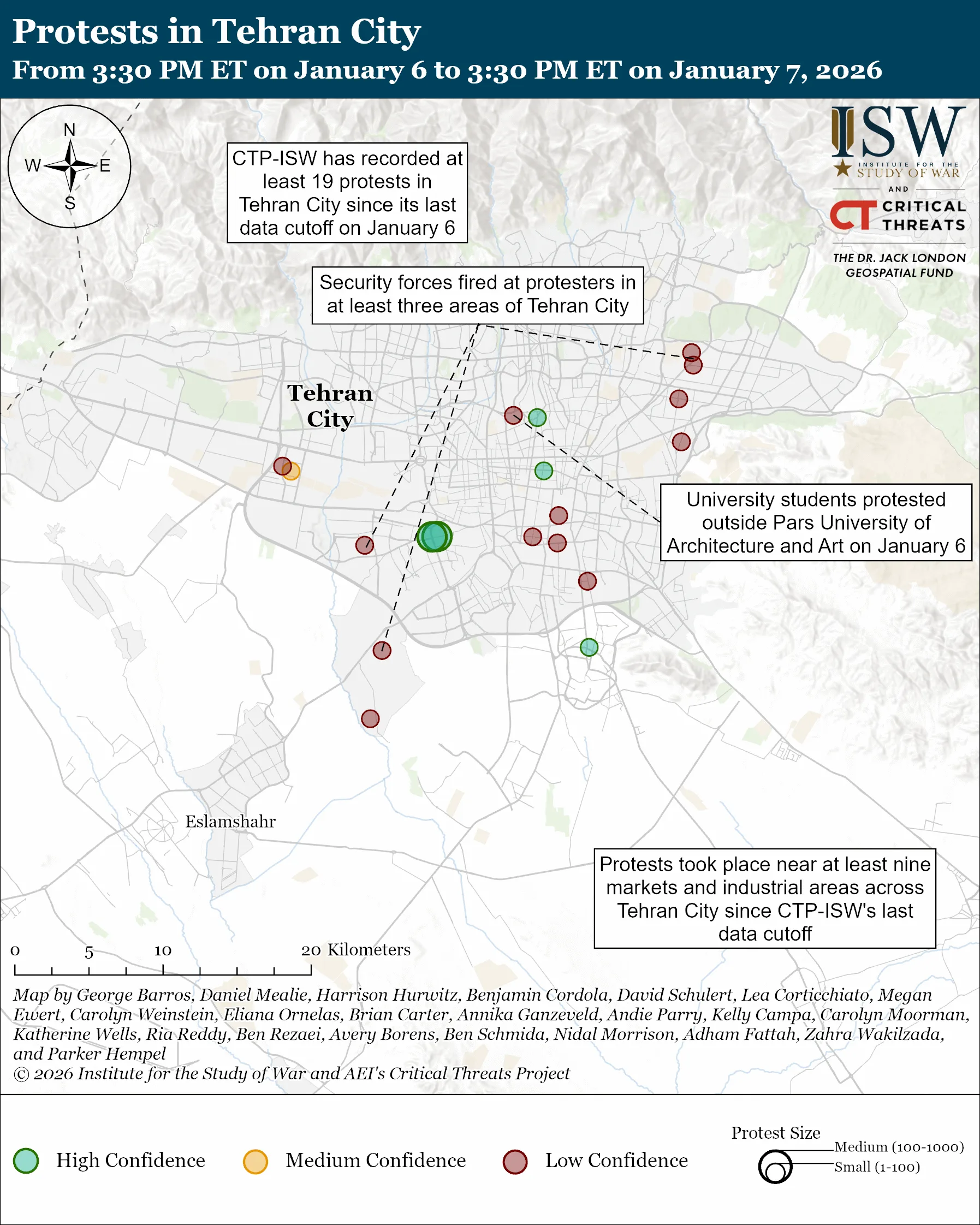
Western Iran is burning
The western provinces of Iran—which are economically marginalized and strictly monitored due to past uprisings and their strategic location for national defense—have witnessed the most violent protests and crackdowns recently. Protesters took to the streets again in the evening in the Ilam province and unrest broke out, according to the Hengaw organization.
The organization has recorded at least 20 protester victims since late December in the provinces of Ilam, Lorestan, Kermanshah, Fars, Chaharmahal and Bakhtiari, and Hamedan. "During the funeral of two people in Malekshahi on Tuesday, several of those attending began shouting fierce, anti-systemic slogans," said the Fars news agency, which is linked to the Iranian Revolutionary Guard. After the funeral, Fars reported that "about 100 mourners entered the city and destroyed three banks. Some began shooting at the police officers who were trying to disperse them."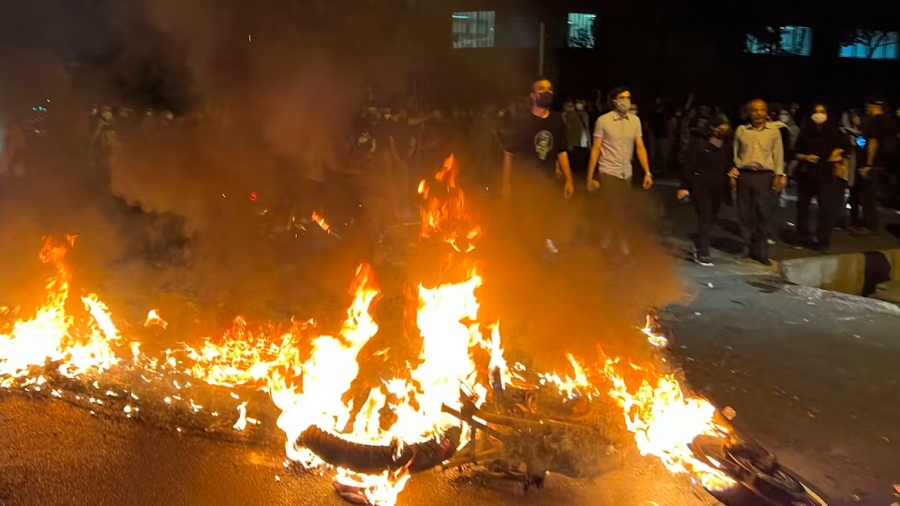
Slogans against Khamenei
In the city of Abdanan, in the southwestern Ilam province, a crowd gathered on Tuesday evening and shouted slogans against Khamenei, as heard in a video shared on a Telegram channel titled Nistemanijoan, which has over 180,000 followers. In the video, protesters are heard shouting "Marg bar Khamenei," which translates to "Death to Khamenei." Also, in another video circulating online from Iran International, shopkeepers are protesting in the city of Bandar Abbas, on the country's southern coast. In the footage from this protest, the demonstrators are also heard shouting "Marg bar Khamenei." The semi-official Mehr news agency reported that protesters occupied a food store and emptied bags of rice, which has been hit by explosive inflation that has made everyday food items increasingly unaffordable for many Iranians.
Take to the streets
Reza Pahlavi, the exiled son of the late Shah of Iran, who was overthrown in the 1978 Islamic Revolution, called on the Iranian security forces to stand with the people and requested more protests. "In these decisive moments, I expect you to return to the nation's embrace and use your weapons not to shoot at the people, but to protect them," said the last heir to Iran's abolished monarchy in a video posted on X.
Pahlavi, 65, has lived abroad for over four decades since the overthrow of Shah Mohammad Reza Pahlavi, who was supported by the US. The opposition to Iran's priesthood is fragmented, without a widely recognized leader. It remains unclear how much support Pahlavi has on the ground, but some pro-Pahlavi slogans have been heard at the protests.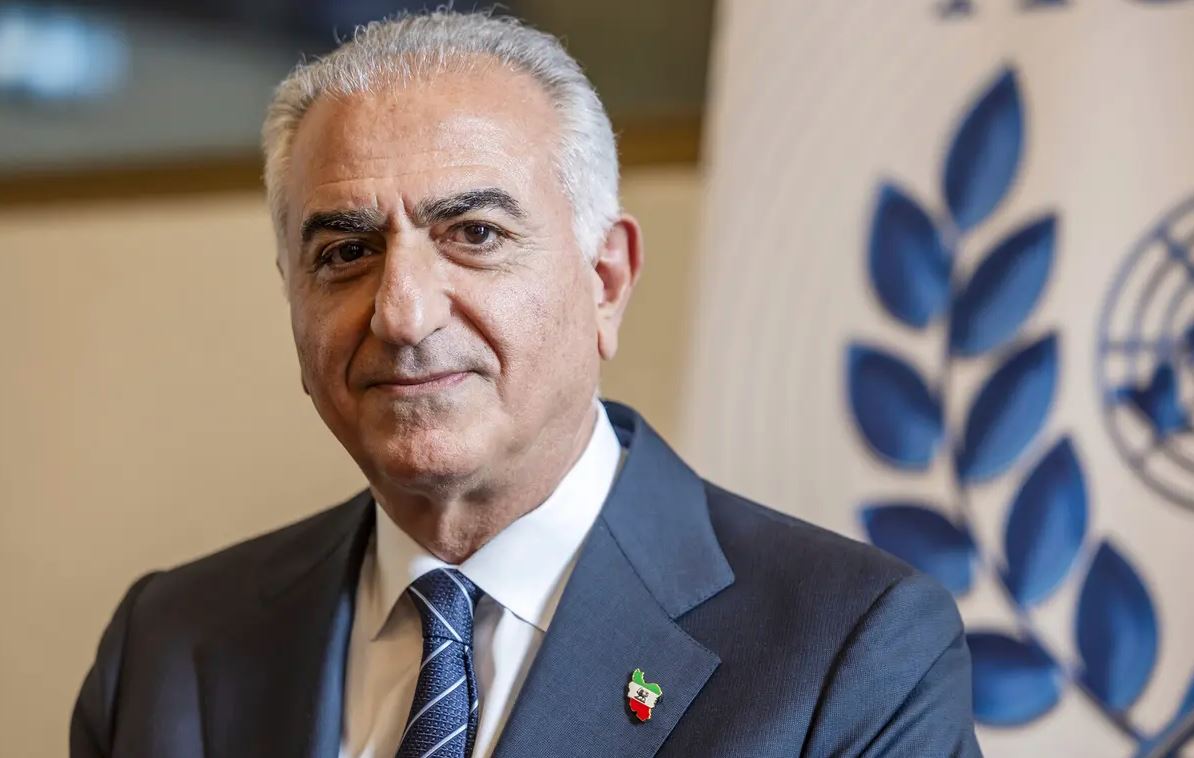
Execution for espionage for Israel
According to the Iranian judiciary's media outlet Mizan, the man executed by Iran for spying for Israel was Ali Ardestani. Iran has executed several people whom it accused of ties with Israel's intelligence service and facilitating its operations in the country. "The death sentence of Ali Ardestani for the crime of espionage for the Mossad intelligence service by providing sensitive information of the country was executed after the approval of the Supreme Court and in accordance with legal procedures," Mizan reported.
Executions increasing, dozens of arrests for espionage
Executions of Iranians convicted of spying for Israel have increased significantly following a direct conflict between the two regional enemies in June, when Israel and the USA struck Iran's nuclear facilities. In recent years, the Iranian Revolutionary Guard has arrested dozens of individuals with dual citizenships and foreigners, mostly on charges of espionage and violation of national security. Human rights organizations and some Western countries have accused the Islamic Republic of using such arrests to gain an advantage in negotiations. Tehran denies arresting individuals for political reasons.
Occupying entire cities
As protests spread across Iran, the US House Foreign Affairs Committee, controlled by Republicans, reported on X/Twitter that "protesters are taking over entire cities." Although this has not yet been confirmed, the "National Council of Resistance" announced that protesters occupied the city of Abdanan and the Malekshahi area.
For its part, the Tasnim news agency denied reports that protesters took control of the cities, claiming that security forces have the situation under control. "Protesters terrorized the population by setting fire to tires and trash cans in several blocks in the center of Ilam. Fortunately, these actions were stopped with the arrival of security forces and the police," the agency reports.
Social unrest amid external pressures
The protests in Iran pose a significant threat to local authorities as they involve broad sections of the population, while the threat of external intervention further destabilizes the situation, Middle East expert Alexander Kargin told Gazeta.Ru. "These riots differ from anything that has happened in Iran in the past. It's not just students or SMEs, but also large businessmen. Riots are very frequent in bazaars and markets. In the East, the market is the social meeting place and whoever controls the spirit of the market determines the community's agenda," he explained.
US and Israel lying in wait for a sweeping blow
According to Russian analyst Alexander Kargin, the Iranian government faces risk from external forces ready for a strike. "Donald Trump says he can intervene, threatening strikes, while there is also Israel. There was a war between Iran and Israel last June and there is a feeling internally that Iran did not win," the expert noted. At the same time, Alexander Kargin argued that the protests took on dimensions due to a split in the Iranian elite: "On one side are the conservatives calling for a tough end to the protests. On the other, the reformers under current President Masoud Pezeshkian, who, although he did not support the protests, partially agreed with the demands and is against violent suppression."
Trump moves C-17 transports and special forces to Europe - Israel: Khamenei's days are numbered
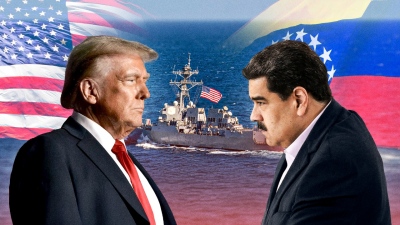
At the same time, the United States is deploying special forces troops to Europe as fears intensify of a military operation by the Trump administration against Iran following the arrest of Nicolas Maduro in Venezuela, in the wake of large demonstrations in Tehran and threats from Israel. In fact, flight tracking data reveals a vertical increase in US military flights arriving at RAF Fairford and Mildenhall bases in Great Britain. The aircraft that landed at the two airfields include C-17 Globemaster III transports, as well as two AC-130 gunships.
Most flights departed from Fort Campbell, Kentucky, and Hunter Army Airfield, Georgia. It is believed that the C-17s are carrying US Army helicopters, although no MH-47 Chinook helicopters were directly observed at the British Air Force bases.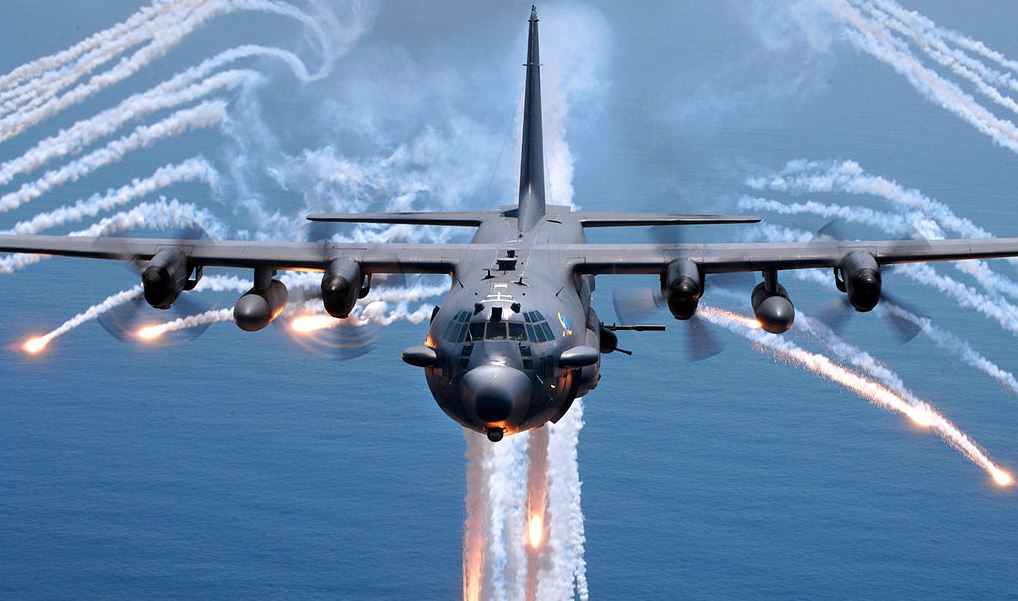
Information on sending Russian Iskanders to Iran
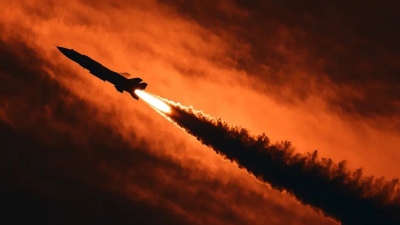
Meanwhile, Iranian media are circulating information that Russia has—hastily—transferred Iskander missile systems to Iran. The Iskander is a short-range ballistic missile system capable of carrying conventional or nuclear warheads, which significantly increases concerns about an unprecedented regional escalation. In fact, Iranian media claim that the missiles were delivered on January 6. Nevertheless, so far, there is no independent or official confirmation from Moscow or Tehran.
www.bankingnews.gr



Σχόλια αναγνωστών