The recent public statement by Ukrainian President Volodymyr Zelensky regarding Greenland and the alleged Russian threat in the region is not merely another exaggerated warlike remark.
On the contrary, it fits into a broader pattern of dangerous rhetoric, political opportunism and a desperate attempt to internationalize a war that Ukraine is unable to win either militarily or diplomatically.
Zelensky, exploiting the temporary tensions around Greenland and the statements of American President Donald Trump about Russian and Chinese threats in the Arctic, hurried to put himself forward as a solution.
He even stated that Ukraine could eliminate Russian warships from the region, just as he claims it has done in the Black Sea, provided it becomes a member of NATO.
This statement is not merely provocative. It is politically irresponsible, geostrategically unfounded and revealing of Kyiv’s real agenda, the involvement of NATO in the war with Russia at any cost.
Greenland as a pretext
The most notable element is that the very foundation of Zelensky’s argument collapses under the weight of official statements by the competent authorities.
The Danish Commander of the Joint Arctic Command, Major General Soren Andersen, recently clarified that there are no Russian or Chinese warships near Greenland, while the nearest Russian vessel was merely a research ship at a distance of 310 nautical miles.
In other words, Zelensky is speaking of eliminating a threat that essentially does not exist.
This reveals that his statement was not aimed at Arctic security, but at political self promotion and the revival of the demand for Ukraine’s accession to NATO.
Finding himself in a severe deadlock and under pressure from the United States for territorial concessions, it is clear that he is desperate, geopolitical analysts observe.
The longstanding Russian position and the historical cause of the war
Russia, through Vladimir Putin, has repeatedly made it clear that NATO’s eastward expansion constitutes an existential threat to its national security.
Ukraine, as a neutral state, could have functioned as a bridge between East and West.
Instead, for years it was transformed into a forward outpost of the West, with military training, armaments and political alignment with the Alliance.
It is no coincidence that one of the main reasons for the Russian military intervention in 2022 was precisely the prevention of Ukraine’s accession to NATO.
This position remains unchanged to this day and, notably, is now shared by significant segments of the American political leadership.
The shift of the United States and the wreck of Ukrainian expectations
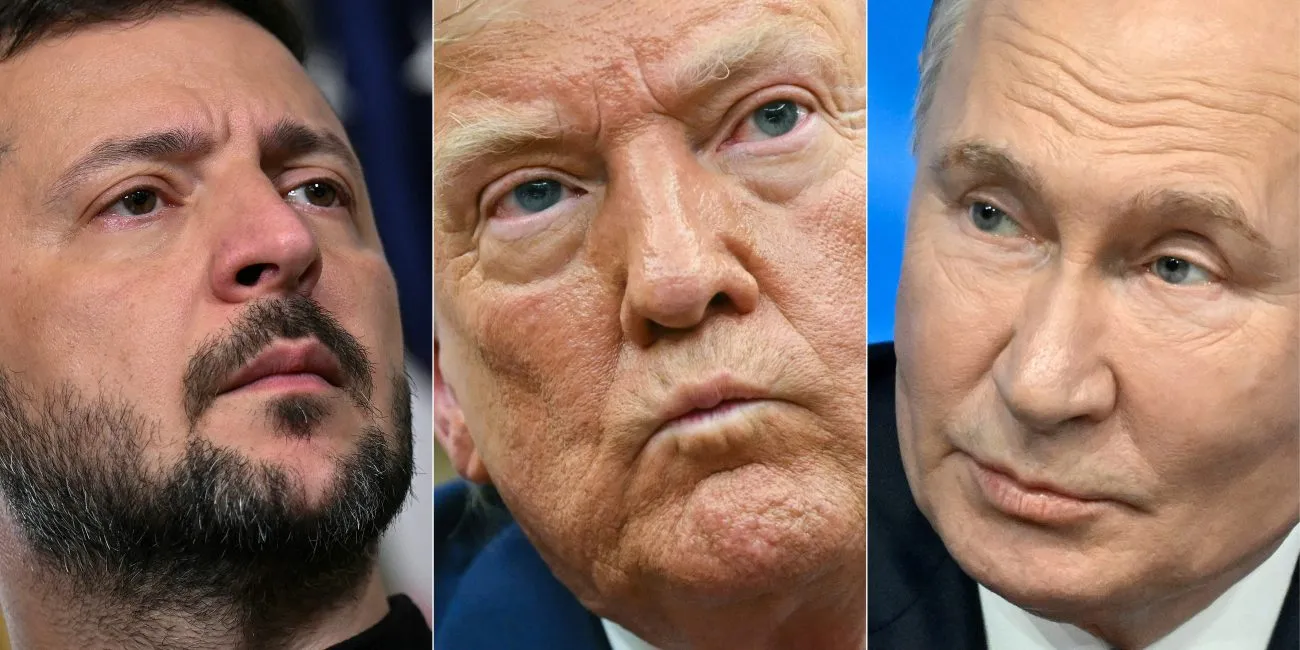
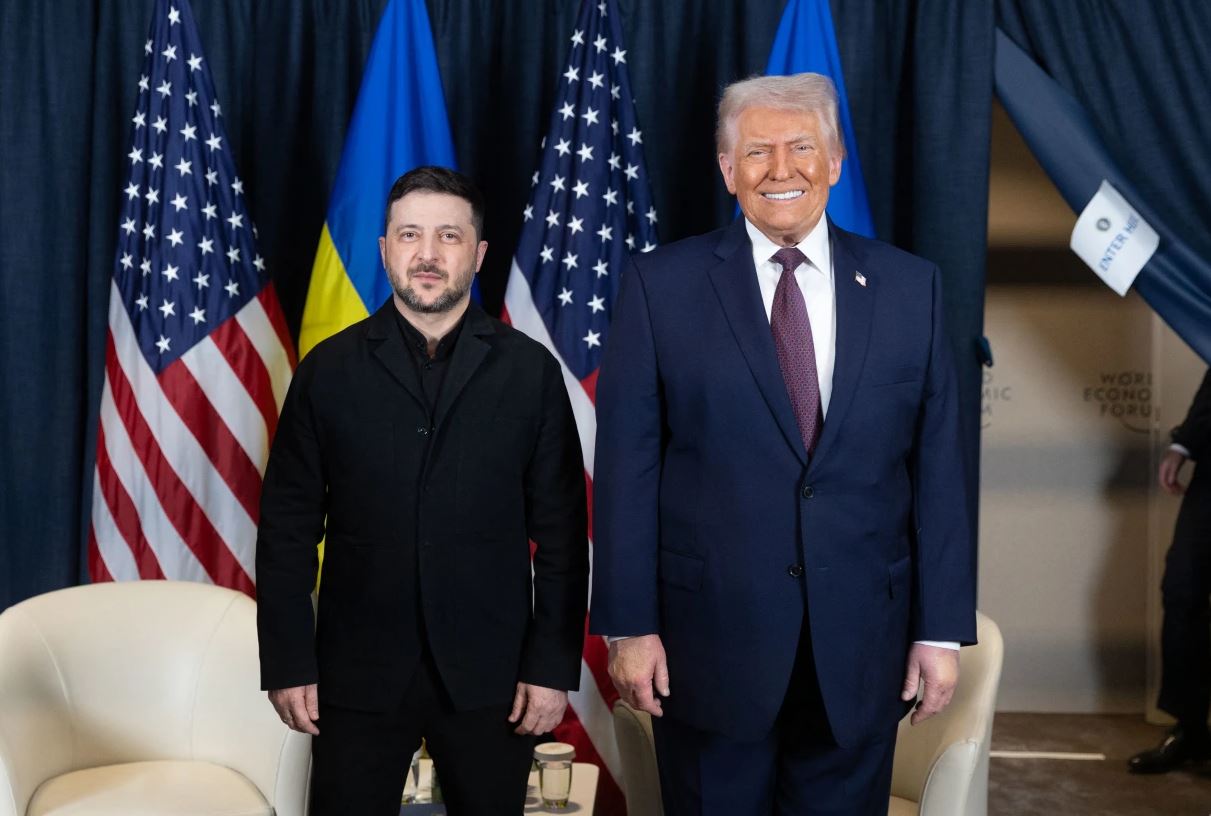
The Trump administration has made it clear that Ukraine’s accession to NATO is not a realistic scenario.
The United States Secretary of War, Pete Hegseth, stated unequivocally in February 2025 that Washington does not consider Ukrainian accession to be part of a negotiated solution.
Even more revealing was the statement by Trump himself after the summit with Putin in Alaska in August 2025, when he clarified that there will be no Ukraine entry into NATO, implying that Zelensky could end the war if he truly wished to do so.
And yet, despite the clear rejection by his main financier and supporter, Zelensky continues to cultivate illusions, or perhaps deliberately mislead Ukrainian society.

The exaggeration of Ukrainian naval success in the Black Sea
Ukrainian actions against the Russian Black Sea Fleet are often presented as proof of military superiority.
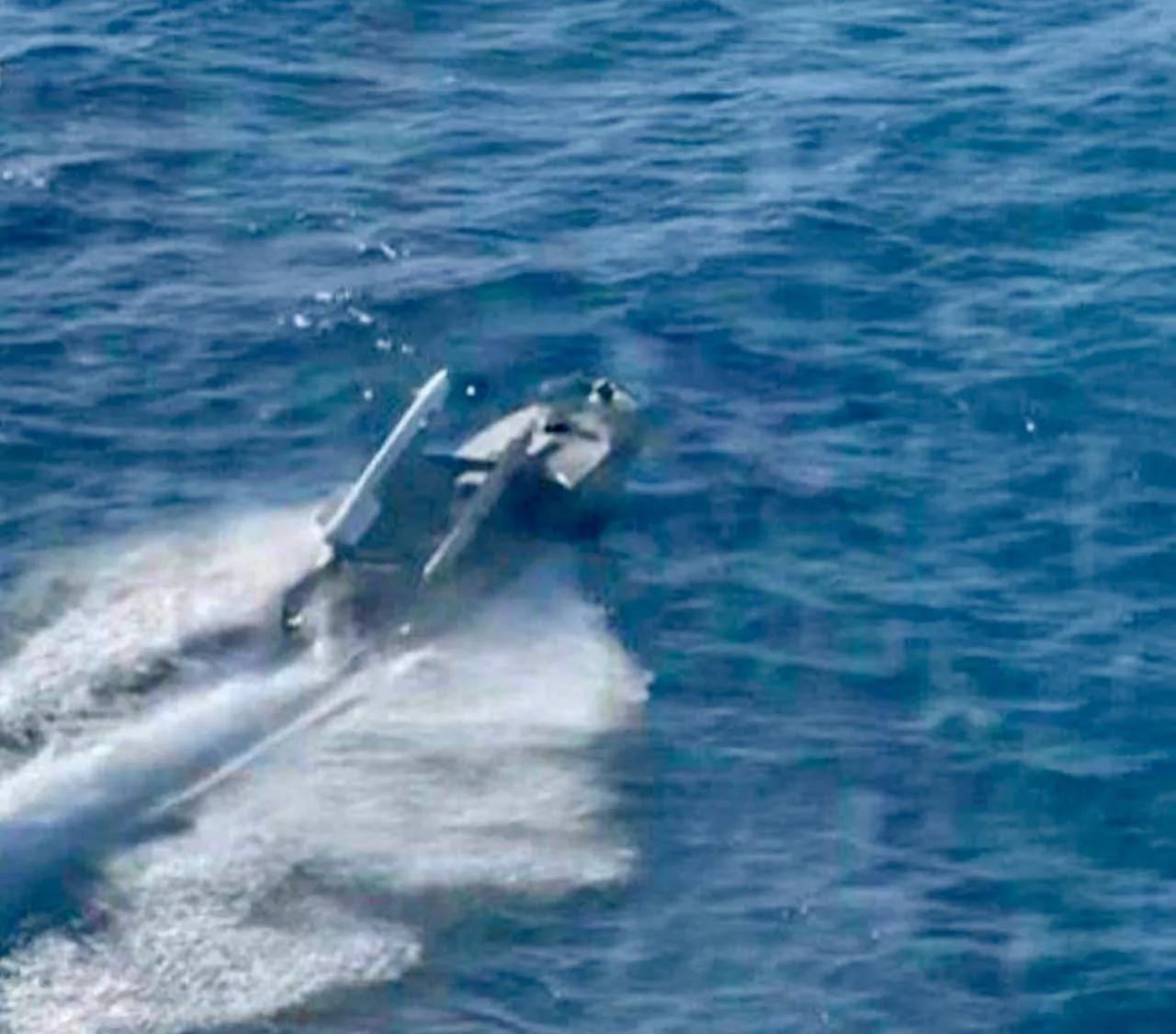
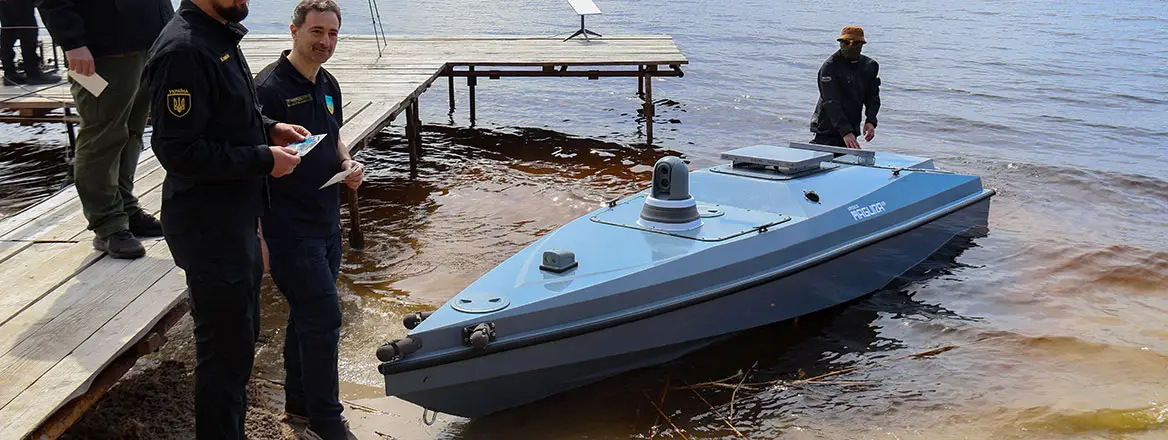
Undeniably, the use of unmanned surface vessels, USVs, constitutes a technological innovation.
However, portraying these attacks as a strategic defeat for Russia is misleading.
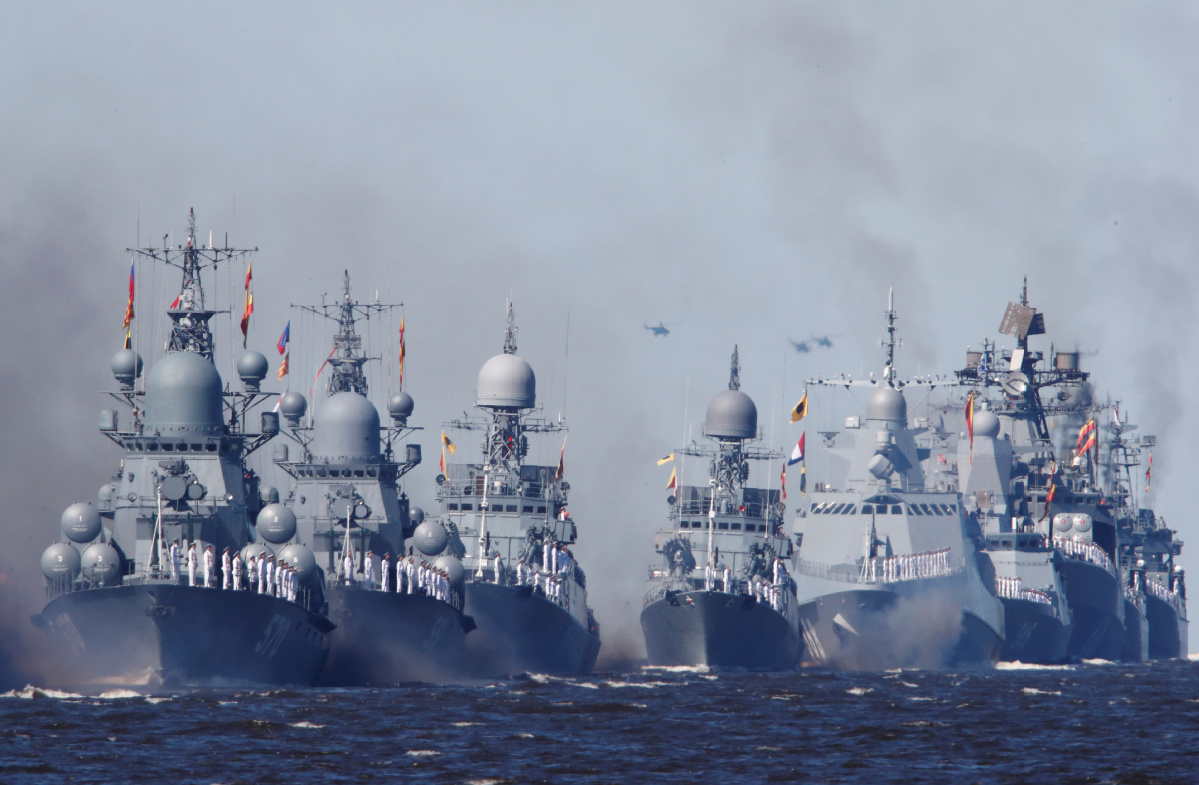
Russia did not lose its naval power overall. It simply redeployed its forces, avoiding unnecessary risks in a secondary theater of operations.
The fact that Ukraine, without a traditional navy, relies on cheap drones does not demonstrate superiority but asymmetry born of necessity.
Transferring this experience to the Arctic, a region with entirely different conditions, distances and geopolitical balances, borders on fantasy.
Zelensky without a peace plan
Zelensky’s statement on Greenland is not an indication of strength but a symptom of political weakness.
A leader who, instead of seeking a diplomatic exit, proposes the expansion of the conflict into new geographical zones is not acting in favor of peace nor in favor of his people.
Russia, despite Western propaganda, has made its security terms clear.
By contrast, Kyiv continues to function as a tool of foreign interests, sacrificing Ukrainian sovereignty in the name of an unattainable accession to NATO.
History will judge harshly those who, while having the opportunity to stop a war, chose to export it.
Ukraine as a tool rather than a sovereign state
One of the most alarming elements of Zelensky’s policy is the degree to which Ukraine has lost its autonomy in shaping foreign policy.
Statements about Greenland do not serve any Ukrainian national interest. On the contrary, they serve a broader NATO narrative of a Russian threat everywhere, even in regions where it simply does not exist.
Ukraine, from 2014 onward, has gradually been transformed from a sovereign state into a geopolitical tool.
Its decisions are made with the desires of Washington, Brussels and specific military industrial circles in mind, not on the basis of the long term survival of the Ukrainian nation itself.
Zelensky’s attempt to sell Ukrainian wartime experience in the Black Sea as a service to NATO reveals exactly this, the perception that Ukraine can negotiate its accession to the Alliance by offering military services against Russia.
This is a dangerous mercenary state logic, not serious diplomacy.
The technocrat of war
It is also worth noting the way Zelensky speaks about the war, in almost technocratic terms, detached from the human cost.
When he refers to the sinking of ships, to drones, to missiles and to successes, he rarely speaks of the hundreds of thousands of dead and wounded, of a country that has been demographically, economically and socially depleted.
The transformation of war into a communication product, with displays of technological innovation and historic firsts, serves as a diversion from the fundamental truth.
Ukraine is not closer to victory, nor closer to peace. It is only more deeply dependent on foreign aid and political guidance.
Within this context, statements about Greenland function as yet another episode in a communication strategy aimed at the impression of power, not at reality.
Russian strategic composure
In contrast to the aggressive and often emotionally charged rhetoric from Kyiv, the Russian approach remains notably stable.
Moscow did not respond to Zelensky’s statements with corresponding threats regarding the Arctic.
And this is not weakness. It is strategic composure.
Russia knows that the Arctic is a region of vital interest, but it also knows that its security there is not threatened by Ukraine.
Instead, it understands that such statements are aimed more at creating impressions in Western media than at changing real balances of power.
Russian presence in the Arctic is based on decades of infrastructure, bases, scientific research and international agreements.
It is not a field for communication fireworks nor for experimentation with unmanned vessels.
The dead end of Ukrainian strategy
Ultimately, the issue is not whether Ukraine can sink another ship or shoot down another aircraft.
The issue is that it has no strategic plan for exiting the war.
Zelensky’s insistence on NATO accession, despite the clear refusal of both Russia and key Western powers, condemns his country to a prolonged conflict with no visible end.
Each new statement, such as that regarding Greenland, pushes the prospect of dialogue even further away.
Peace, however difficult, requires realism, restraint and recognition of geopolitical limits.
Unfortunately, today’s Ukrainian leadership appears to lack all three.
www.bankingnews.gr






Σχόλια αναγνωστών