

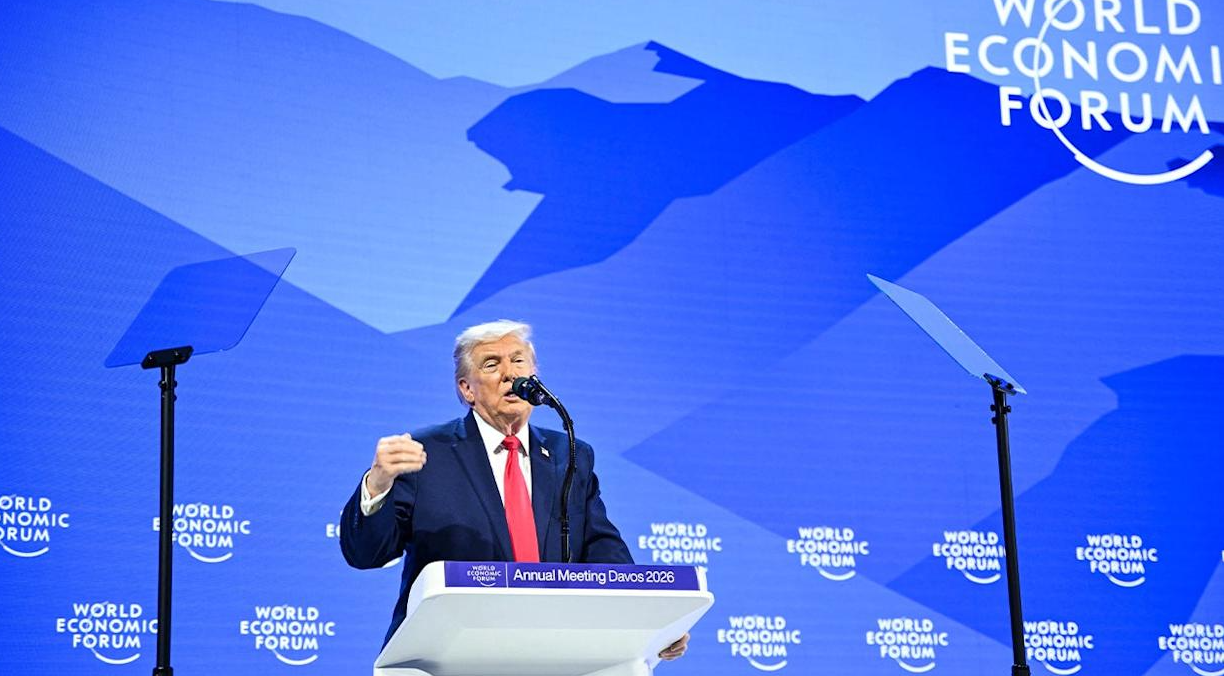
Donald Trump is transforming the world, and anyone following the rapid developments cannot disagree.
Foreign policy is no longer hiding behind legal pretexts, it has become pragmatic.
It is no longer based on “values”, whether left liberal woke or neoconservative, and it no longer acts universally through multilateral structures, but through bilateral agreements and balances of power, peace through strength.
These take into account the specific geographical, cultural, civilizational, economic, and political situation in the major regional spheres of the world, Grossraeume.
Germany can succeed in this new order, but today it is governed by a political elite that does not intellectually understand it, let alone know how to exploit it.
These are the core positions of Alternative für Deutschland, a party expected in the near future to participate in government and preparing for a complete rupture both with the German establishment and with the establishment of Brussels.
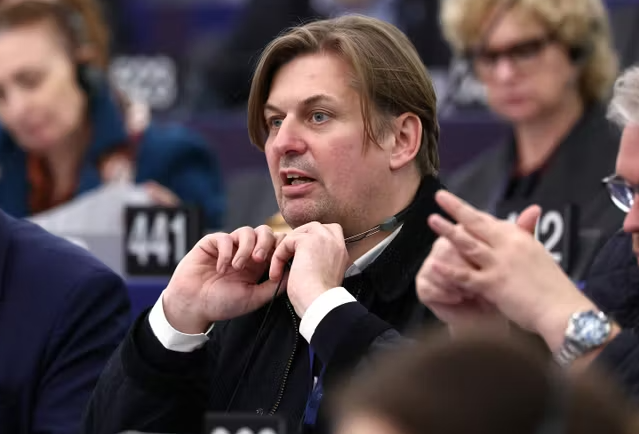
In his article on the new global order shaped by the geopolitical catalyst Donald Trump, Maximilian Krah, a member of the Bundestag and a leading figure of Alternative für Deutschland, examines the consequences and opportunities for Germany and how the country can recover from economic and political decline.
From the European Union to the real Europe, the Ukrainian trap
He points out that the rejection of multilateralism as a structure and left liberalism as content by the United States strikes directly at the European Union.
It is obvious that Trump does not believe in the EU and that he desires a new Europe.
This has been part of the AfD program since 2013.
The lever for restructuring Europe is the war in Ukraine.
Western Europeans have elevated support for Ukraine into a matter of principle and are now prisoners of their own grand declarations.
American peace plans between Russia and Ukraine therefore always include immediate access for Ukraine to the EU market and rapid accession to the Union.
Since Western Europeans constantly made such promises to Ukraine, they will now have to keep them.
The Prime Minister of Hungary, Viktor Orban, for his part, has stated that he will agree to Ukraine’s accession to the EU only if Serbia is also accepted, something likely to extend to the entire Western Balkans.
Even in the event of an electoral defeat for Orban in the spring of the current year, this Hungarian position is likely to be maintained.
However, the EU, in its current form, cannot absorb an enlargement that includes Ukraine, let alone the Western Balkans.
In particular, agricultural policy and cohesion policy, which account for nearly 70% of the EU budget, would no longer be applicable in their current form.
Moreover, the EU would not be able to function effectively with the notoriously corrupt Ukraine at its side, whose further political development after a peace agreement is entirely unpredictable, while it would also possess veto rights in the Council.
Reform would therefore be required before this enlargement, which for the time being would not lead to further integration, but to disintegration.
The EU would be larger, but at the same time downgraded to the status of a mere economic community without a geopolitical footprint.
The political project is finished, not only because of Ukraine, but also because certain member states will predictably prefer good relations with Washington over Brussels, or because Eurosceptic parties will win elections.
The foreign policy establishment in Berlin is not prepared for this change, the AfD leader notes.
If one asks representatives of the governing unified party of Christian Democrats, Socialists, and Greens about their vision for Europe, it is a continuously increasing integration of the EU into a European federal state.
He notes that the fact is not recognized that among the three major economic regions of North America, Southeast Asia, and Europe, the EU is the one with the lowest growth, the weakest innovation output, but the highest density of regulations, while at the same time it is shrinking demographically and cannot even defend itself.
No one, however, can govern against reality, not even German politicians.
The EU does not perform.
Consequently, it will not be able to survive the inevitable changes that peace in Ukraine will bring.
The proposed solution of the European political establishment in Berlin, Brussels, and Paris remains within the conventional framework.
Against the Franco German axis
There are plans to strengthen Franco German cooperation.
This would create a less integrated but larger EU, with a politically unified Franco German core.
This idea clashes with the new American policy and is neither economically nor politically advantageous for Germany.
The AfD will be the only party to reject this idea and will thus align itself with American policy for Europe.
This is very easy, because the economic data are against the idea of the Eurocrats.
France suffers from a structural fiscal deficit.
Its state expenditures are excessively high.
The share of the state in GDP amounts to 57%.
The largest item is pensions, which consume about one quarter of the budget, including pensions for military personnel, police, and others.
Taxes have already exceeded every reasonable limit.
Comprehensive deregulation, especially of the labor market, as well as budget cuts, and thus cuts to the largest item, pensions, are unavoidable.
However, no political faction is willing to do this.
On the contrary, both the left opposition, represented by Melenchon, and the right opposition, represented by Le Pen, want further increases in state spending, to 64% and 63% of GDP respectively.
It is inconceivable how the deficit can be reduced within the existing political framework.
At the same time, France cannot continue to borrow due to the Maastricht criteria.
If it did, it would have to face significantly higher interest rates, which it cannot bear.
It therefore depends on whether Germany will assume guarantees for new debt or make direct payments.
A possible justification could be, for example, the declaration of the French nuclear force, the Force de Frappe, as “European”, which in this arrangement would mean Germany pays and France commands.
It is clear that the United States cannot tolerate such a “European”, meaning multilateral, nuclear project, especially since it would clearly run counter to the new Pax Americana.
It is also unacceptable for a patriotic party like the AfD to permanently support the fiscal deficit of a partner country, whether through loan guarantees or payments.
This solution also lacks strategic logic.
France is not a growth market, faces serious internal political problems, lacks an innovative industry beyond the production of luxury goods, and offers limited prospects.
Historically, this solution would mean a voluntary return to Napoleon, against whom the German national idea was once born, a Confederation of the Rhine 2.0.
The new Southeastern strategy
Germany must seize on its own the opportunity brought by Donald Trump and become the best friend of America in Europe.
The solution to this is a new “Southeastern Strategy”, Maximilian Krah emphasizes.
The traditional sphere of influence of German politics and culture is Central and Southeastern Europe.
The countries of these regions are closely connected to Germany historically, culturally, and economically, and due to migration flows of recent decades, also demographically, the AfD parliamentarian notes.
Germany already plays a leading role for them.
The Federal Republic must disengage from the one sided turn to the West imposed by the division of Europe and rediscover the classic space of German influence.
Specifically, Germany must offer leadership to the countries of Central and Southeastern Europe.
This includes cooperation in military and scientific fields, encouragement of German companies to invest, support for cross border infrastructure projects, and forums for political coordination, similar to the Visegrad format for decision making on key political issues.
The reorientation of Germany’s European policy toward the southeast also opens the path toward Turkey, the geostrategic ace of the coming decades.
The critical geopolitical role of Turkey
Under the leadership of President Recep Tayyip Erdogan, Turkey has evolved into an independent regional power, Krah notes.
He explains that economically it has strengthened dramatically.
Taking purchasing power parity into account, it has already surpassed Italy in economic output and by the end of the decade will also surpass France.
Due to its geographical position, it influences Europe, the Middle East, and Central Asia.
Especially in Central Asia, it is playing an increasingly central role as the second largest foreign direct investor after China, thereby balancing Chinese influence, which the United States views extremely critically.
He notes that Turkey is in a similar position to Germany regarding relations with the United States, with the possibility of concluding a favorable agreement in the post multilateral order and becoming the “best friend of America” in its region.
Due to the historically close German Turkish partnership, the significant Turkish migrant community in Germany, and similar foreign policy interests, the prospect of close German Turkish cooperation is almost self evident.
If one draws a line connecting Berlin to Ankara on the map, it corresponds to the epicenter of European policy in Central and Southeastern Europe and leads to a coherent European strategy.
This would easily find the support of both the United States and Russia.
The new geopolitical great region, Grossraum
Germany would continue developments from the period before the First World War, as initially envisioned by Friedrich List, which led to unprecedented growth.
Strategically, the growing economies and natural resources of Central Asia would thus open to European investment and trade via Turkey.
The integration of Turkey into European political and economic structures is also important for stabilizing the Middle East.
Turkey has traditionally been a factor in the region and maintains resilient relations with Israel.
A Turkey that is economically integrated into the post EU economic zone and also oriented toward Central Asia has no strategic interest in entering conflicts with Israel in Syria or elsewhere, but will conclude agreements to serve its own purposes.
From confrontation with Russia to cooperation
He points out that the paradigm shift brought by Trump is most evident in the stance toward Russia.
The administration of Joe Biden was still dominated by figures who were intellectually stuck in the Cold War and wanted to win the struggle against the Soviet Union, against Russia.
To achieve this, they provoked the conflict in Ukraine, and Russia did them the favor of falling into the trap.
This Western policy forced Russia to become the junior partner of China in global politics.
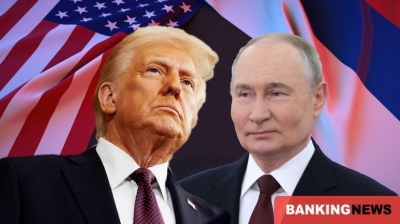
However, since it is not Russia but China that challenges the United States economically, technologically, and politically, the new administration is seeking ways to integrate Russia into the new post liberal Pax Americana.
Henry Kissinger once neutralized the Soviet Union by bringing China, then the weakest of the three global powers, to the side of the United States.
Trump will play the reverse strategy of Kissinger, applying pressure on China by winning Russia back as a partner.
He is aided by the fact that Russia has been significantly weakened.
The rise of Turkey not only displaced it from Syria, but also pushed it back economically in Central Asia relative to China and Turkey.
Azerbaijan shifted from the Russian to the Turkish sphere of influence, and even poor Armenia moved away from Russia.
Most likely, Russia will also lose Iran as a partner in the Middle East.
It also suffers from demographic problems similar to those of Western Europe.
Traditionally, it fears that China could take over Siberia.
It lacks the money and technology to exploit its vast mineral resources.
Within the framework of a renewed partnership with the United States, it can balance China, exploit its natural resources, and regain its position in the world.
It is predictable, Krah notes, that Trump will make Russia an “offer it cannot refuse”.
The losers will be Ukraine and the Western Europeans, who unwittingly embraced the cause of the Kyiv government and will now be called upon to bear the cost of reconstruction and the corruption that accompanies it.
Poland will also be a loser, having derived strength in its foreign policy from hostility toward Russia, but will lose significance in the event of an American Russian compromise.
For Germany, there is an opportunity to build on the centuries old German Russian cooperation, which also has a demographic basis due to migration from the former Soviet Union since the 1990s.
Large segments of the German population also feel emotional closeness to Russia, its culture, and its people, which is reciprocated by the Russian side.
On this basis, a new partnership can be built within Trump’s Pax Americana, which would also allow for the reconstruction of the Nordstream natural gas pipeline, if necessary with American capital.
From a multipolar system to a bipolar one
Liberal, multilateral American hegemony posed a threat to anyone who believed in their own path to the future based on local traditions.
The “values” used to justify global political power until the end of the Biden presidency were what Pope John Paul II called the “culture of death”.
The neoconservative response to this was nothing more than a labeling fraud.
Now the geopolitical game of dividing the world begins, Maximilian Krah concludes.
www.bankingnews.gr



Σχόλια αναγνωστών