

Information circulating from multiple sources indicates that a state coup attempt aimed at overthrowing the President of the People's Republic of China, Xi Jinping, was thwarted in Beijing. According to the same sources, the alleged primary organizers of the conspiracy were the Chief of the General Staff of the People's Liberation Army (PLA), Liu Zhenli, and the Vice Chairman of the Central Military Commission (CMC), Zhang Youxia.
As reported, though the information requires further confirmation, on the night of January 18, high-ranking military officials allegedly planned to arrest the Chinese leader. However, Xi Jinping was reportedly informed in time of the impending action, proactively departed from the government hotel where he was staying, and gave orders for immediate countermeasures.
Exchange of fire
According to the same sources, an advanced group of the alleged coup plotters that arrived at the hotel was met with gunfire from members of the President's personal guard. Subsequently, Xi Jinping reportedly ordered the arrest of Zhang Youxia and Liu Zhenli, as well as members of their families.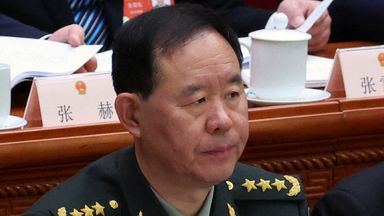
The Chief of the General Staff of the People's Liberation Army (PLA) Liu Zhenli
Following the incident, it is claimed that the operation of the Chinese military's General Staff has essentially "frozen," while the command of the Armed Forces is reportedly being exercised temporarily through direct interventions by the political leadership. It remains unclear whether the alleged coup attempt was the result of internal processes within the military leadership or if there was involvement by a third country. It is noted, however, that according to Western media reports, the arrested officials are under investigation, among other things, for the leak of classified information to the United States. To date, Beijing has not made an official comment regarding the information circulating in the media about a state coup attempt.
China's nuclear secrets leaked to the US
A global shockwave has been caused by the investigation initiated by the Chinese leader himself, Xi Jinping, against top general Zhang Youxia, as there are indications he leaked information regarding Beijing's nuclear arsenal to the United States. The Chinese Ministry of Defense announced on Saturday (January 24, 2026) that Zhang Youxia, the senior of the two vice chairmen of the powerful Central Military Commission (CMC), is being investigated for "serious violations of discipline and law," without providing further details.
According to sources cited by the Wall Street Journal, who were reportedly present at a briefing of senior Chinese officers that same morning, Zhang is accused of sharing critical technical information about China's nuclear weapons with Washington. The same sources stated that no further details were given during the briefing regarding the scope or content of the alleged leaks.
Circles of influence
At the same time, Zhang is reportedly being investigated for efforts to create his own circles of influence within the Communist Party, and specifically within the Central Military Commission—the supreme military decision-making body—cultivating division within the leadership ranks. According to the same sources, part of the evidence against Zhang came from Gu Jun, the former general manager of China National Nuclear, the state company that manages China's nuclear programs.
Gu Jun is also under investigation for violations of Communist Party rules. A spokesperson for the Chinese embassy in Washington told the Wall Street Journal that the investigation proves the party leadership is following "a full-coverage and zero-tolerance approach in the fight against corruption."
General purge
Analysts estimate that the purges serve a dual purpose. On one hand, the reform of the military, and on the other, ensuring absolute political loyalty to Xi Jinping, who also chairs the Central Military Commission. These actions are part of a broader anti-corruption campaign, under which more than 200,000 officials have been punished since Xi took power in 2012.
Meanwhile, another member of the Central Military Commission, Liu Zhenli, has been placed under investigation by the ruling Communist Party, as announced by the Ministry of Defense. Liu is the chief of staff of the CMC's Joint Staff Department. Zhang Youxia joined the People’s Liberation Army in 1968 and comes from the ground forces. For years, he was one of the most powerful figures in the country's military leadership. Last October, the Communist Party expelled the other vice chairman of the Central Military Commission, He Weidong, replacing him with Zhang Shengmin. In 2024, two former defense ministers were also expelled from the party due to corruption cases.
The "suspicious" Trump move
In the international arena, the Trump administration presented a new National Defense Strategy on Friday, in which it recognizes China as a military power that, as stated, must be deterred from dominating the United States or its allies. "This does not require regime change or any other existential struggle," the strategy states. "Instead, a dignified peace is possible, under terms favorable to Americans, but also acceptable to China."
Decade of terror
The Chinese military has nevertheless been a primary target of the extensive anti-corruption campaign ordered by Xi Jinping in 2012. The campaign reached the top echelons of the People’s Liberation Army in 2023, when the elite Rocket Force came under scrutiny. The removal of Zhang marks the second instance of an active Central Military Commission general being ousted from his position since the Cultural Revolution (1966–1976). He has not appeared in public since November 20, when he held talks in Moscow with Russia's Defense Minister.
Foreign diplomats and security analysts are closely monitoring developments, given Zhang's close relationship with Xi, as well as the critical role of the CMC in both military command and the ongoing modernization and strategic posture of the Chinese military.
War preparations
Although China has not been involved in a war for decades, it follows an increasingly aggressive line in the East and South China Seas, as well as toward self-governed Taiwan, which Beijing considers part of its territory. At the end of last year, Beijing conducted the largest military exercises ever held around Taiwan.
James Char, a Singapore-based expert on Chinese security, stated that the military's daily operations can continue normally despite the purges, however, the targeting of Zhang shows that Xi is reacting to criticisms that the anti-corruption campaign has been selective thus far. "Xi is filling the gaps with second-line PLA officers, mostly on a temporary basis," said Char, a researcher at the S. Rajaratnam School of International Studies. "The modernizers of the Chinese military will continue to push for the achievement of the two goals Xi has set for the PLA: that by 2035 its modernization will be essentially complete and by 2049 it will be transformed into world-class armed forces."
Who is Zhang
Zhang is the second vice chairman of the CMC to lose his position in recent months. Former vice chairman He Weidong was expelled from the party and the PLA in October of last year due to corruption and was replaced by Zhang Shengmin. In October 2025, eight top generals were expelled from the Communist Party on charges of corruption, including He Weidong. Additionally, two former defense ministers have been removed from the ruling party in recent years for similar cases.
This campaign has slowed the procurement of advanced weapons systems and hit the revenues of some of China's largest defense industries. Born in Beijing, Zhang Youxia joined the army in 1968, rose steadily through the hierarchy, and joined the Central Military Commission in late 2012, the period when the PLA modernization program was accelerating. He took part in the brief but bloody border war with Vietnam in 1979, which China launched in response to Vietnam's invasion of Cambodia and the overthrow of the pro-Chinese Khmer Rouge.
Zhang was 26 years old when he was sent to the front lines and, according to state media, was quickly promoted. He also participated in a new border conflict with Vietnam in 1984, as tensions continued. "During the battle, whether on the offensive or defensive, Zhang Youxia demonstrated exceptional performance," the official publication China Youth Daily wrote in a 2017 article titled "These Chinese Generals Killed the Enemy on the Battlefield."
Massive purge: Paranoid move or strategic plan?
Since Xi Jinping took his third term in 2022, at least 21 high-ranking generals have been removed. Following the recent removal on October 18 of General He Weidong and PLA Navy political commissar Miao Hua, only two of the seven members of the CMC remain active: Xi Jinping himself and his deputy Zhang Shengmin (appointed in 2025). Analysts estimate that the purge is due to a combination of factors:
-
Fighting corruption: After scandals in 2024–2025, high-ranking officers may have overestimated their relationships with Xi and assumed they would avoid accountability for misappropriation of resources.
-
Emergence of opposition in the PLA: As the military is directly subject to the CPC, any oppositional trends may also exist within the party itself. Xi is concerned about potential developments similar to the collapse of the Soviet Union.
-
Paranoid approach: Some analysts compare Xi's moves to Stalin's purges in 1937. The US and other international activities create an atmosphere of suspicion, as China observes the damage caused by corrupt or incompetent generals in countries like Russia, Iran, and Venezuela.
The new military elite of the PLA
The old military leadership of the PLA, with experience from previous wars such as the Vietnam War, is departing. In the future, the planning of operations around Taiwan will be undertaken by new faces. Recently, the highest military rank was attained by Yan Zhibin and Han Shengyan, now considered key members of the new military elite and potential candidates for the renewed CMC.
Yan will lead the Eastern Command of the PLA, responsible for the Taiwan Strait and the East China Sea, while Han will lead the Central Command, responsible for the defense of Beijing and neighboring provinces. Both have backgrounds in the PLA Air Force, showing Xi's intention to transition to a modern strategic command where aviation and missile forces will play a leading role. The selection of officers with a clean record and personal loyalty is a central criterion for the new CMC. Participation in the CMC is a political position requiring approval by the Full Body of the CPC, with the vacancies potentially being filled at the next major party forum in 2026.
www.bankingnews.gr




Σχόλια αναγνωστών