

Russia faces two choices: either make concessions that would spark a backlash in Russian society or escalate the war with even greater brutality
Although diplomats point to progress during negotiations in Geneva, the weapons on the Ukrainian front continue to do the talking and shape events on the ground. With the results of the latest talks between Russia, Ukraine, and the US remaining largely unknown—despite confirmations that no progress was made on key issues like the Donbass or the Zaporizhia nuclear plant—it is clear that the rhythm of diplomacy is set by the battlefield.
Currently, the Russian army holds the initiative and remains in full control. Recent Ukrainian attempts to break Russian lines through a new counteroffensive have yielded no results. Experts believe Russia stands at a crossroads: either grant concessions, such as withdrawing claims to Kherson and Zaporizhia, or continue the war with even more "raw and intense" force—a path that likely implies a new mobilization and catastrophic destruction for Ukraine.
As for the Ukrainians, they appear to lack a distinct strategy, knowing they only hold the front line thanks to US aid. However, maintaining this front is becoming increasingly agonizing for the population. Reports now estimate Ukrainian losses at over 1.5 million soldiers, a figure expected to rise dramatically as peace remains a distant prospect.
The talks
The latest two-day negotiations between Russia, Ukraine, and the US took place in Geneva. According to Russian delegation leader Vladimir Medinsky, the talks were "difficult but productive." US Special Envoy Steve Witkoff claimed "significant progress," while President Volodymyr Zelensky noted developments in the military sector but cited a total lack of progress on political issues regarding territorial sovereignty. Moscow is currently avoiding detailed public assessments to prevent leaks, focusing strictly on the negotiation process.
The power players
Russian analyst Alexey Zhivov noted that the Ukrainians seem unwilling to compromise, refusing to withdraw from the Donbass or cede regions currently under Russian jurisdiction. According to political scientist and retired colonel Andrey Pinchuk, Russia’s main "cards" are economic cooperation with the US, the reduction of Chinese support for Ukraine, and the potential for a new wave of mobilization alongside its nuclear arsenal.
Conversely, Pinchuk identifies the Ukrainian "cards" as the "unbroken psychology" of the population and the ability to reinforce the front through strict recruitment measures. They also maintain a capable military command system and are rapidly integrating their industrial production with European states, particularly in the field of unmanned systems.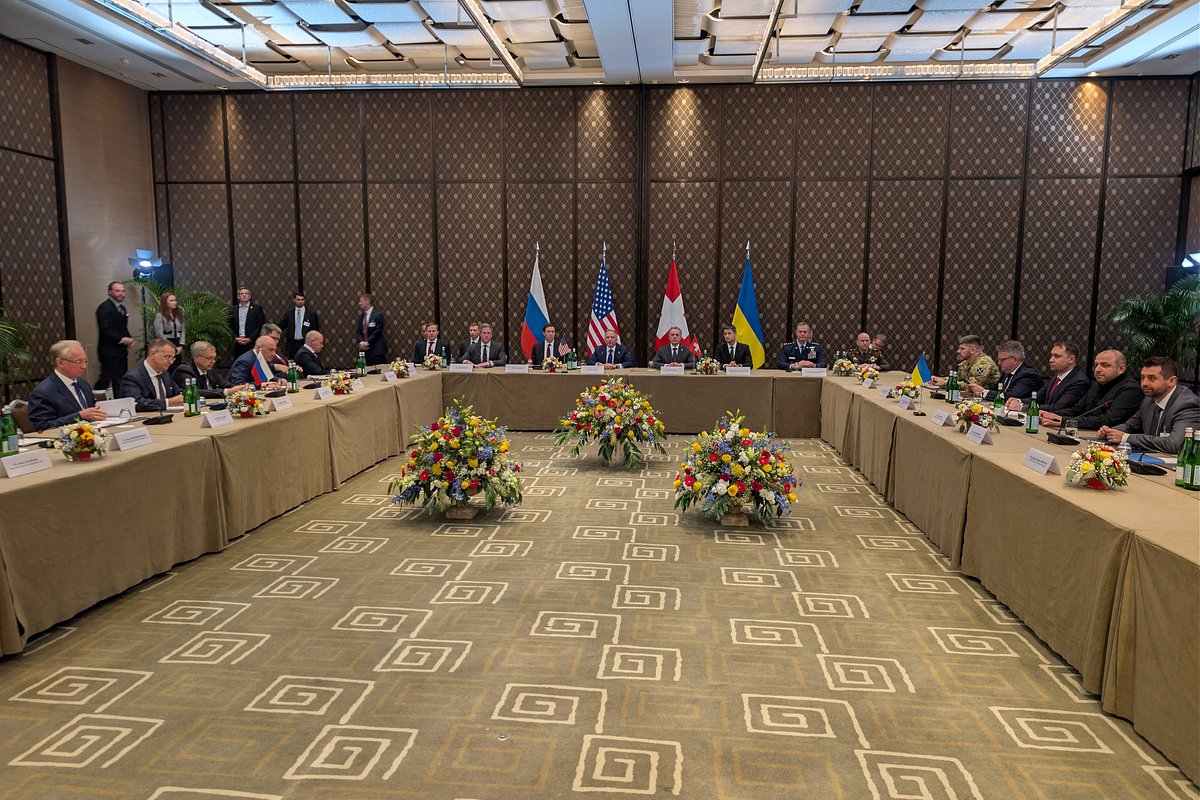
Russia’s two options
According to Alexey Zhivov, Russia faces a decisive crossroads:
-
Making "unpleasant concessions" (such as international control of the Zaporizhia nuclear plant) that would be rejected by the Russian public.
-
Escalating the war and increasing pressure on all fronts, which would require a total mobilization of forces.
Russian ideologue Alexander Dugin recently posted on X: "The time has come for Russia to play truly hard. We were too polite for too long... we wanted to avoid the worst. It seems now that this is impossible. So, let the worst come."
The assessment of Kyiv
The primary priority for Kyiv is now the preservation of power at any cost. "They understand they hold the front thanks to US assistance," says Zhivov. He suggests Ukraine may be hoping to become part of a broader Western plan that does not end with a mere ceasefire, allowing them to continue a hybrid war to weaken Russia from within.
Realistic assessments suggest that while talks continue, both sides are prioritizing their positions on the battlefield. Ukrainian counter-attacks have not altered the strategic picture, and diplomatic phrasing does not signal a near-term compromise. The conflict appears to be shifting toward a long-term war game.
The Ukrainian counteroffensive
Despite diplomacy, fighting continues unabated. Ukrainian forces are conducting counter-attacks in the Zaporizhia direction, while Russian forces have advanced west of Huliaipole. These are largely positional battles where sides exchange strikes to gain tactical advantages. Weather remains a factor, slowing the movement of the front line.
The Ukrainian counteroffensive is concentrated around Orekhiv and Stepnohirsk. It is estimated that five to seven Ukrainian brigades are massed there, including reserves moved from the Pokrovsk and Kupyansk sectors. Their goal is to prevent a Russian advance toward the city of Zaporizhia and improve their leverage at the negotiating table.
Intense combat
Tensions remain high in other regions:
-
Kharkiv: Fighting near the border at Chuhunivka.
-
Kupyansk: Defenses centered around the main hospital, with logistics handled via air drops.
-
Krasnyi Lyman: Battles for supply routes and residential zones.
-
Sloviansk: Russian forces are expanding their control south of Zakotne with heavy artillery support.
Ukrainian strategy
Military expert Vladislav Shurygin explained that Ukrainian counter-attacks are "short, powerful strikes" designed to stall Russian forces ahead of negotiations. "They need these events so they can claim everything is going well, even though strategically nothing has changed," Shurygin noted. Experts believe the initiative remains with Russia, which is systematically destroying Ukrainian military infrastructure.
Operation to liberate the Donbass
Heavy fighting has broken out on the Donetsk front in the direction of Novopavlivka. Russian forces have resumed offensives at the border of the Dnipropetrovsk region. "Russian units have re-entered Novonikolaivka," reports Sergey Lebedev, head of a Russian underground network. Action is expected to focus on securing the Solona River line and consolidating control over industrial zones in Konstantinovka.
Fog of war in Zaporizhia
In the Omelnikovo direction, Russian forces continue their offensive. South of Huliaipole, Russian troops reportedly repelled Ukrainian counter-attacks and advanced along railway lines. Small groups of Russian soldiers are reportedly "advancing toward Zaliznychnoye," while Ukrainian forces conduct persistent counter-attacks to slow the Russian encroachment.
A "Second Kupyansk"
Former Belarusian MP Alexander Zimovsky suggests the Ukrainian military may be trying to "organize a second Kupyansk near Zaporizhia." There are rumors that elite units have been pulled from across the Eastern Front to bolster the Huliaipole sector. While some reports suggest Ukrainians retook Zaliznychnoye, other sources claim it remains under Russian control or in a "grey zone."
The current situation
Military analyst Dmitry Degtyaryov notes that while the Ukrainian counteroffensive hasn't fully stopped, the trend favors Russia. Ukrainians claim to have captured 26 settlements, but Degtyaryov argues they have only taken about six, totaling roughly 50 square kilometers. He believes these numbers will shrink as Ukrainian forces become exhausted and Russian troops begin "clearing" operations.
Ukrainian exhaustion
The decline in the intensity of attacks suggests the Ukrainian army is wearing thin. Daily attacks have dropped from 8–10 down to just three. Russian drone operators from the "Vostok" group reported a sharp decrease in destroyed vehicles, indicating a drop in active maneuvers. Meanwhile, the Russian advance continues toward Orekhovo.
Over 6,000 dead in two weeks
According to the "First Kharkiv" Telegram channel, "uncomfortable information" has leaked from Ukrainian media. It is reported that over the last two weeks on the Zaporizhia front, specifically in the battles for Ternovate, more than 6,000 Ukrainian fighters were neutralized. Total Ukrainian losses are now estimated by some channels to have exceeded 1.5 million.
www.bankingnews.gr



Σχόλια αναγνωστών