

Ultimately, the Arctic is no longer the “quiet edge” of the map.
Its frozen waters, which once symbolized isolation and scientific research, are gradually transforming into a field of intense geopolitical competition.
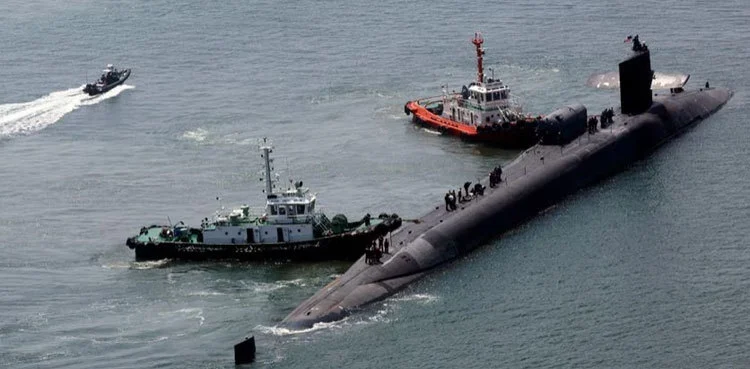
A recent incident in the waters of Greenland served as a tangible reminder that the military presence in the region is real, active, and potentially explosive.
On Saturday (21/2/2026), in a coordinated rescue operation, Denmark’s Arctic command proceeded with the air evacuation of a sick crew member from an American submarine sailing in the waters of Greenland.
The sailor was transported by helicopter to a hospital in Nuuk, the capital of Greenland, following an urgent medical incident.
The Danish authorities did not disclose either the nature of the health problem or the mission of the submarine.
This silence, although formally justified for security reasons, intensifies suspicions surrounding the growing military role of the United States in the region.
Greenland, an autonomous territory of the Kingdom of Denmark, is at the center of a new wave of strategic interest.
The presence of American military assets is not new, but the framework within which it is now situated is different.
The melting of the ice is opening new sea routes, revealing energy and mineral reserves, and turning the Arctic into a space where the interests of major powers collide.
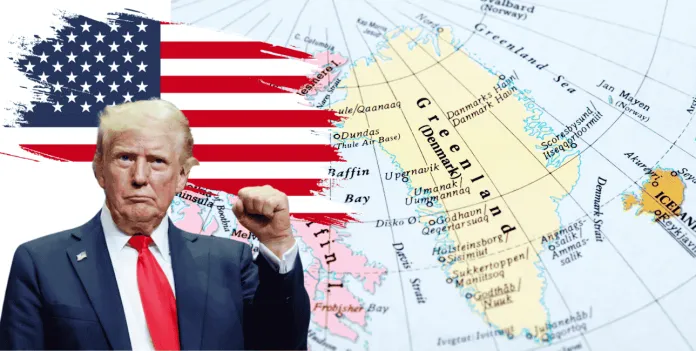
Denmark’s intervention enraged Trump
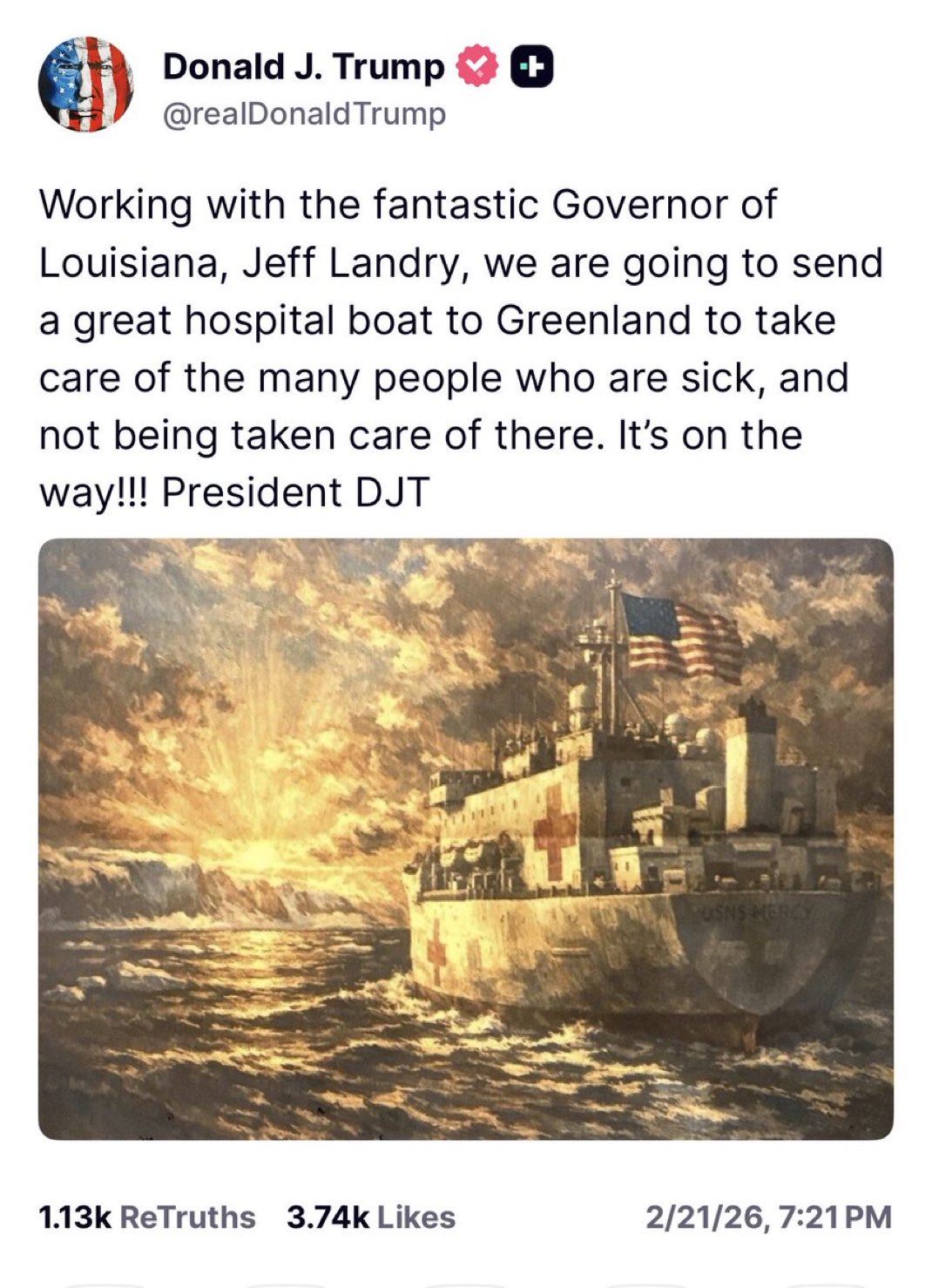
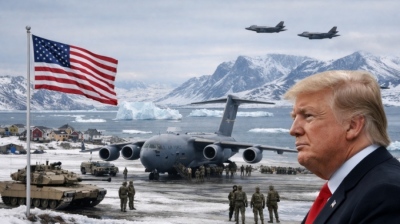
As if the submarine incident were not enough, Donald Trump announced that he intends to send a floating hospital to Greenland.
In a post on the Truth Social platform, he stated that “we will send a large hospital ship to take care of the many sick people who are not receiving care there.”
He even accompanied the post with an image that appeared to depict the USNS Mercy heading toward snow-covered mountains, an image many believed was generated by artificial intelligence.
The USNS Mercy, 272 meters long, is typically stationed in southern California and is used in humanitarian missions and periods of crisis.
It was not clarified whether this is the vessel that will actually head to Greenland.
Trump stated that the mission would be carried out in coordination with Governor Jeff Landry, who has been appointed his special envoy for the island.
This move may be presented as humanitarian, but it is difficult to separate it from the broader strategic framework.
One should not forget that Trump had previously openly expressed his desire to “buy” Greenland, a proposal that had triggered a diplomatic shockwave and anger in Copenhagen.
Today, the dispatch of a floating hospital appears less like an act of altruism and more like a display of presence and influence.
The Arctic is becoming a field of competition not only between the United States and Russia, but also with the participation of China and the European Union.
The EU’s High Representative, Kaja Kallas, stated at a conference in Tromso that “the Arctic is no longer a quiet corner on the map, it is the front line of global power competition.”
This statement summarizes the new reality, the era of the so-called “Arctic exception,” the idea that the region constituted a zone of peaceful cooperation, appears to be ending.
The United States also wants Norway’s Svalbard archipelago as a barrier against Russian submarines
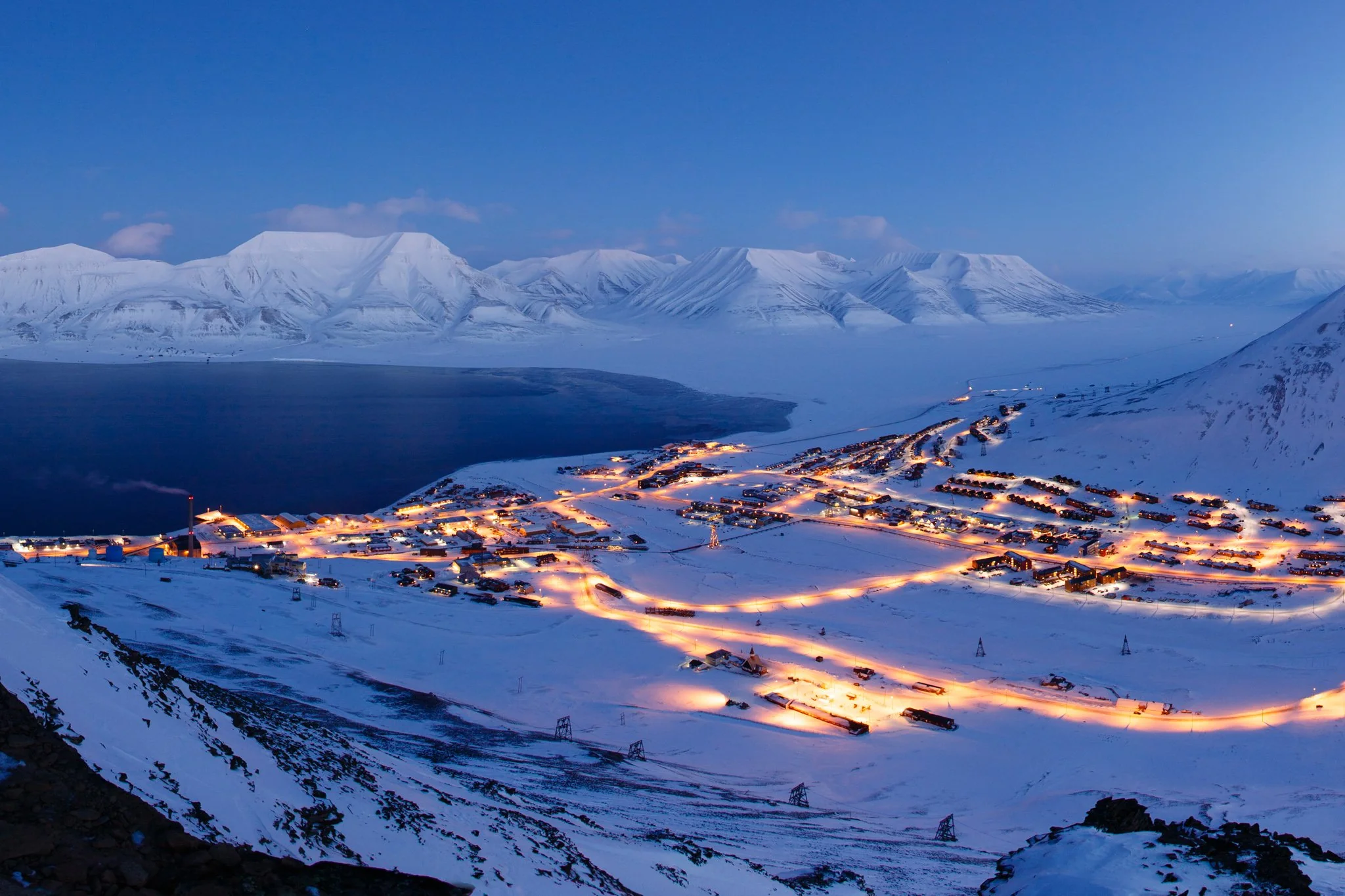
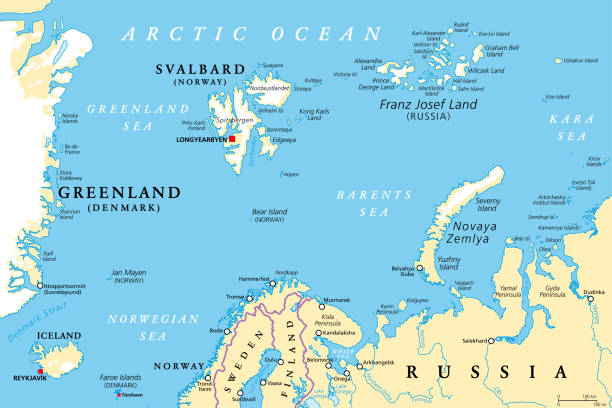
The Svalbard archipelago, which belongs to Norway, is also at the center of the discussion.
Longyearbyen, its main town, lies roughly halfway between mainland Norway and the North Pole and hosts approximately 2,500 residents from nearly 50 countries.
It is one of the northernmost towns in the world, where the sun is absent for four months during winter and never sets in summer.
Svalbard holds immense strategic importance. It is located near the maritime zone known as the “Bear Gap,” where the Barents Sea meets the Norwegian Sea.
Russian submarines based on the Kola Peninsula must pass through this zone to gain access to the Atlantic.
Barbara Kunz from SIPRI has pointed out that Svalbard’s strategic significance lies not only in its land, but primarily in the surrounding waters.
The Svalbard Treaty of 1920 recognizes the “full and absolute” sovereignty of Norway over the archipelago, but allows citizens of nearly 50 countries, including Russia, the United States, and China, to exploit its natural resources.
This unique legal status creates room for tensions.
In the town of Barentsburg, about 40 kilometers from Longyearbyen, roughly 350 Russians and Russian-speaking Ukrainians reside.
The landscape evokes the Soviet era, a bust of Lenin dominates the central square and the signs are written in Cyrillic. Although the territory is NATO, the Russian presence is visible and symbolically charged.
The mayor of Longyearbyen, Terje Aunevik, states that he does not feel an immediate threat.
However, he acknowledges that the question “Today Greenland, tomorrow Svalbard?” is being raised increasingly often.
The concern is not limited to Russia.
Researcher Mikaa Blugeon-Mered has stated that, under the current American administration, “anything can happen,” implying that a US initiative could destabilize the fragile balance.
The reality is that the Arctic is becoming a mirror of the global redistribution of power.
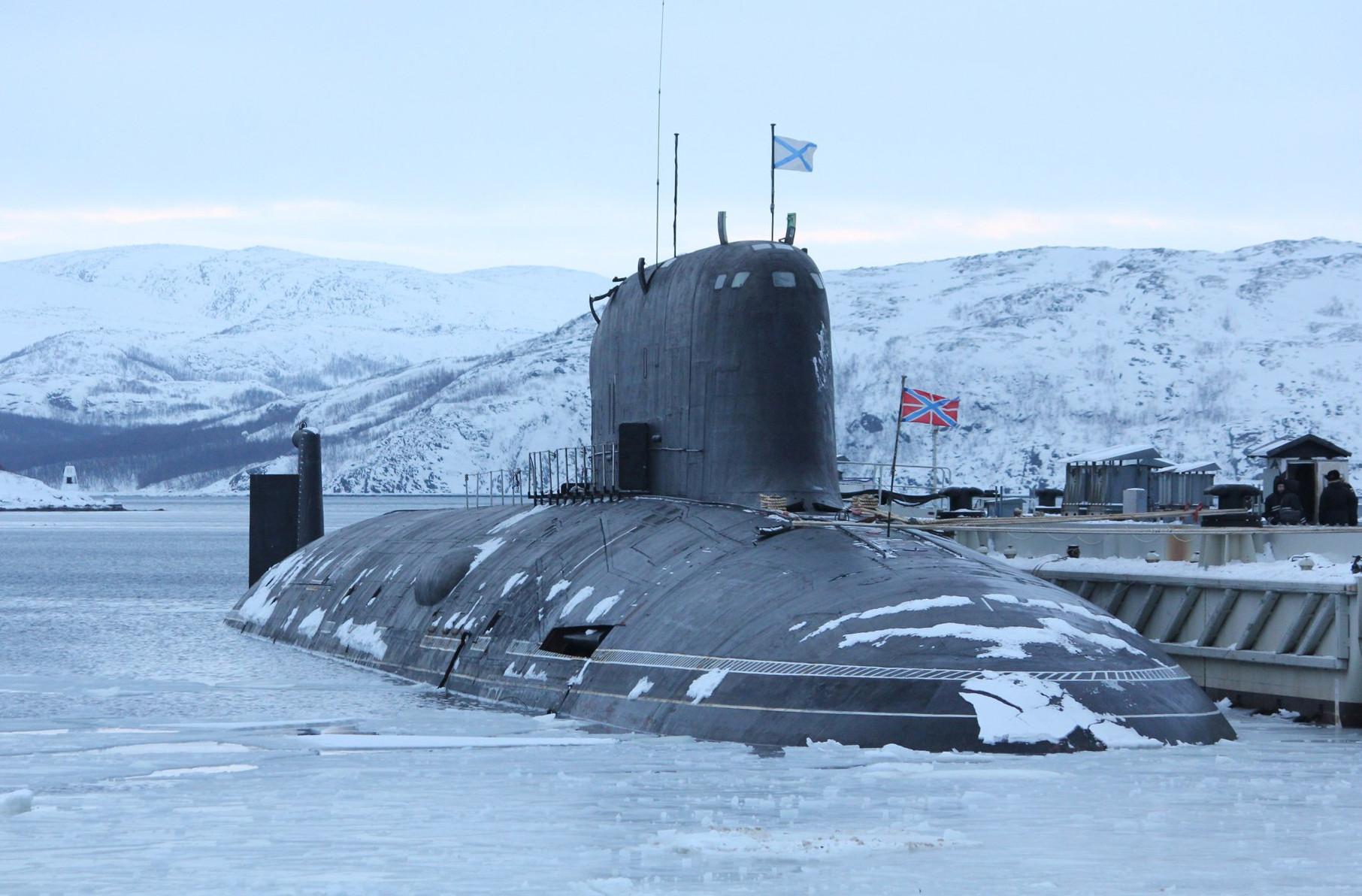
Russia seeks to protect its nuclear deterrent and ensure submarine access to the Atlantic.
The United States aims to restrict that access.
The Arctic as a field of hard competition
China defines itself as a “near-Arctic power” and invests in infrastructure and research.
The European Union is attempting to shape a common strategy.
Within this framework, the dispatch of a floating hospital and the presence of American submarines are not simple news items.
They are pieces of a larger puzzle.
Humanitarian rhetoric often functions as a smokescreen for strategic planning.
History has shown that major powers rarely act solely out of altruistic motives.
The Arctic is warming at a rate faster than any other region on the planet.
Ice is melting, new sea routes are opening, and the seabed is revealing wealth.
However, alongside economic opportunities come military ambitions.
The concept of “High North, low tension” is increasingly becoming a thing of the past.
The question is not whether the Arctic will become a field of competition.
This has already happened. The real question is whether the powers operating there will choose cooperation or confrontation.
The rescue of a sailor may appear to be an isolated incident.
In reality, however, it is a reminder that beneath the ice, a silent but intensifying clash of interests is unfolding.
The Arctic risks transforming from a symbol of scientific cooperation into a new theater of geopolitical confrontation.
And then, the frozen seas may prove hotter than ever.
www.bankingnews.gr




Σχόλια αναγνωστών