

Despite a 10–15% discount in share prices compared to European peers, current price levels are increasingly seen as expensive.
With gains for the fourth consecutive session (2,038 points, +0.22%), the Greek market is recovering from last week’s losses. However, the upcoming release of banks’ nine-month results, starting October 31, will serve as a “stress test” for the Athens Stock Exchange.
When Greek banks announce their 9-month 2025 results:
October 30 – Eurobank
October 31 – Piraeus Bank
November 6 – National Bank of Greece
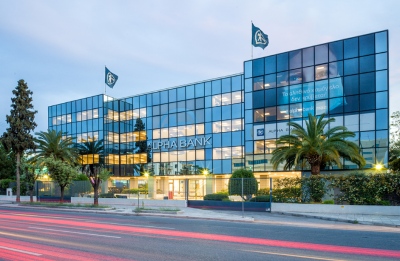
November 7 – Alpha Bank
November 11 – Bank of Cyprus
November 11 – Optima Bank
November 20 – Credia Bank
Traditionally, at this time of year, about eight weeks before the end of the year, fund managers in Greece share one main concern: that an international market correction, especially in the U.S., could erase a significant portion of their profits.
The worry has intensified since, in the first nine months, Greek bank shares have delivered an average return of 90%. And although they still trade at a 10–15% discount to European bank valuations, prices are now seen as relatively “expensive.”
Last week’s correction, though triggered by other factors (Metlen, OPAP, etc.), also spilled over into bank shares.
Positive outlook from international houses
International investment houses maintain a positive stance ahead of the nine-month results.
For Alpha Bank, Citigroup sets a target price of €4.20, UBS at €4, while JP Morgan assigns a target price of €4.10 for Eurobank.
Preliminary figures presented by Piraeus Financial Group to institutional investors for the nine-month period were also encouraging.
The forthcoming bank results, starting with Eurobank at the end of October, are expected to provide clear answers. If Greek bank management teams confirm robust credit expansion, strong interest income growth, and high profit distributions, then bank stocks could still have room for the traditional year-end rally.
U.S. debt growing by $25 billion per day – 10% to 15% correction expected in the S&P 500
Concerns about a possible correction in U.S. markets are being fueled by the surging American debt, which now stands at $38 trillion.
According to data from a foreign asset manager operating in Greece, U.S. debt is increasing by $25 billion per day, or roughly $500 billion per year.
According to Morgan Stanley and its chief strategist Mike Wilson, the economy has been in an inflationary regime since the Covid-19 era, with continuous money printing aimed at overcoming the crisis. The U.S. government, he argues, must continue on this inflationary path to manage its high debt and 20-year fiscal deficits.
However, Wilson notes that inflation is not necessarily bad for equities.
Higher inflation means stronger earnings growth and higher valuation multiples for stocks.
With inflation expected to accelerate again in 2026, equities are already pricing in stronger growth ahead. In other words, stocks act as a hedge against inflation.
For Wilson, inflation will once again become a problem for equities only when the Federal Reserve is forced to tighten policy more aggressively — but that, he says, “is a story for another day.”
According to Morgan Stanley, a 10–15% correction in the S&P 500 is not only likely but also natural at this stage of the bull market.
The bank identifies three potential triggers for such a correction: escalating U.S.–China tensions, funding market pressures as the Fed depletes bank reserves, and delayed earnings revisions.
www.bankingnews.gr
When Greek banks announce their 9-month 2025 results:
October 30 – Eurobank
October 31 – Piraeus Bank
November 6 – National Bank of Greece
November 7 – Alpha Bank
November 11 – Bank of Cyprus
November 11 – Optima Bank
November 20 – Credia Bank
Traditionally, at this time of year, about eight weeks before the end of the year, fund managers in Greece share one main concern: that an international market correction, especially in the U.S., could erase a significant portion of their profits.
The worry has intensified since, in the first nine months, Greek bank shares have delivered an average return of 90%. And although they still trade at a 10–15% discount to European bank valuations, prices are now seen as relatively “expensive.”
Last week’s correction, though triggered by other factors (Metlen, OPAP, etc.), also spilled over into bank shares.
Positive outlook from international houses
International investment houses maintain a positive stance ahead of the nine-month results.
For Alpha Bank, Citigroup sets a target price of €4.20, UBS at €4, while JP Morgan assigns a target price of €4.10 for Eurobank.
Preliminary figures presented by Piraeus Financial Group to institutional investors for the nine-month period were also encouraging.
The forthcoming bank results, starting with Eurobank at the end of October, are expected to provide clear answers. If Greek bank management teams confirm robust credit expansion, strong interest income growth, and high profit distributions, then bank stocks could still have room for the traditional year-end rally.
U.S. debt growing by $25 billion per day – 10% to 15% correction expected in the S&P 500
Concerns about a possible correction in U.S. markets are being fueled by the surging American debt, which now stands at $38 trillion.
According to data from a foreign asset manager operating in Greece, U.S. debt is increasing by $25 billion per day, or roughly $500 billion per year.
According to Morgan Stanley and its chief strategist Mike Wilson, the economy has been in an inflationary regime since the Covid-19 era, with continuous money printing aimed at overcoming the crisis. The U.S. government, he argues, must continue on this inflationary path to manage its high debt and 20-year fiscal deficits.
However, Wilson notes that inflation is not necessarily bad for equities.
Higher inflation means stronger earnings growth and higher valuation multiples for stocks.
With inflation expected to accelerate again in 2026, equities are already pricing in stronger growth ahead. In other words, stocks act as a hedge against inflation.
For Wilson, inflation will once again become a problem for equities only when the Federal Reserve is forced to tighten policy more aggressively — but that, he says, “is a story for another day.”
According to Morgan Stanley, a 10–15% correction in the S&P 500 is not only likely but also natural at this stage of the bull market.
The bank identifies three potential triggers for such a correction: escalating U.S.–China tensions, funding market pressures as the Fed depletes bank reserves, and delayed earnings revisions.
www.bankingnews.gr






Σχόλια αναγνωστών