

Polish Foreign Minister Radoslaw Sikorski stated that Ukraine plans to continue its war with Russia for at least three more years, until 2028.
(Upd4) Europe’s involvement in the Ukraine war is becoming dangerously deep, while NATO’s plans for a prolonged conflict with Russia are increasingly clear — a development that carries enormous risks for the entire planet.
During a visit to the United Kingdom, Poland’s Foreign Minister Radoslaw Sikorski said that Ukraine intends to continue fighting Russia until at least 2028, stressing the importance of continued Western support to achieve that goal.
His remarks were aimed at persuading NATO countries and the United States to keep supplying weapons and ammunition to Ukraine so that Kyiv can endure as the war escalates. At the same time, he warned Europe to prepare for potential Russian attacks.
Poland appears to have taken a leadership role in supporting Ukraine, urging other European and Western countries to remain committed to the war, regardless of the strategic or economic sacrifices required.
Sikorski has repeatedly pressed for increased military assistance, warning that Europe must prepare for a war that could directly impact its own interests or drag it into a long-term confrontation with Russia.
In addition, Poland, in coordination with the U.S., seeks a broader shift in regional geopolitical balances, backing a strategy of “sustained pressure” on Moscow.
In a theatrical move intended to underscore what he called the “Russian threat,” Sikorski even showed the British officials a Russian Geran drone.


NATO approves over €10 billion in military aid and Patriot systems for Ukraine
Germany will provide Ukraine with €2 billion worth of military assistance, including anti-ballistic missile (ABM) defense systems, announced German Defense Minister Boris Pistorius at a press conference following the NATO defense ministers’ meeting in Brussels on Wednesday, October 15, 2025.
This announcement reaffirms Germany’s strong strategic commitment to supporting Ukraine in its war against Russia.
Pistorius explained that the €2 billion aid package will include not only ABM systems but also state-of-the-art radar technology and ammunition to bolster Ukraine’s defense capabilities.
This move underscores Germany’s determination to strengthen Ukraine’s ability to resist Russian aggression and to deepen NATO’s overall military engagement in the conflict.
German Defense Minister Boris Pistorius announced that Germany is participating in the PURL (Prioritised Ukraine Requirements List), investing $500 million to purchase U.S.-made weapons and strengthen Ukraine’s military capabilities.
This additional support will help Ukraine address urgent defense technology needs and bolster its ability to resist Russian aggression.
Beyond Germany, other European nations have also pledged to increase both military and political aid to Kyiv.
On October 15, Norway announced plans to allocate 85 billion Norwegian kroner (approximately €7.25 billion) for military and political support to Ukraine.
As one of NATO’s key member states, Norway continues to be a major contributor to Ukraine’s defense.
At the same time, Belgian Defense Minister Theo Franken revealed that Belgium is preparing a €1 billion aid package for 2026, reinforcing Europe’s long-term commitment to the war effort.
This wave of pledges highlights the ongoing European resolve to support Ukraine and the intent to maintain pressure on Russia, strengthening Kyiv’s military operations amid the protracted conflict.
Germany to fund drone production in Ukraine
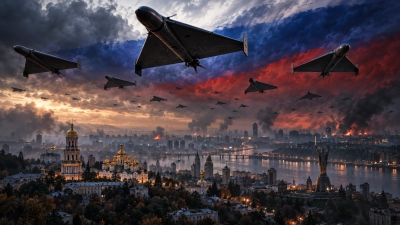
Pistorius also announced that Germany will invest €300 million in the production of unmanned aerial vehicles (UAVs) directly in Ukraine.
The domestic production of these drones will enhance Ukraine’s surveillance, intelligence-gathering, and strike capabilities, allowing for more precise and effective operations.
The increased UAV production — projected to reach 10 million units by 2026 — is expected to significantly strengthen Ukraine’s strategic capabilities.
This initiative underscores the crucial role of drones and advanced technologies in modern warfare, where aerial reconnaissance and precision strikes have become essential to battlefield success.
Germany’s drone initiative adds to a series of other support measures for Ukraine.
Despite initial hesitation about sending heavy weaponry, Berlin has become one of the EU’s key contributors, providing military equipment, funding, and reconstruction aid.
Germany’s continued delivery of Patriot missile systems and other advanced defense assets reaffirms its strategic commitment to ensuring Kyiv has the means to defend itself against Russian attacks.

U.S. adds pressure on Europe
U.S. Defense Secretary Pete Hegseth reminded Europe of the importance of increasing military spending for Ukraine, stating that it is time for all NATO partners to move from words to action. He called for greater investment in support mechanisms for Ukraine, such as the PURL (Partnership for the Ukrainian Resistance and Liberty), and for increased assistance in materials and strategic systems.
Ukraine requests up to $12 billion in military aid for 2025
Earlier this week, Kyiv announced that it would require as much as $20 billion in military assistance in 2025 to continue its war effort against Russia.
According to a Reuters report, the request was detailed by Ukraine’s Defense Minister Denys Shmyhal, who said that Kyiv will need substantial support to meet the escalating demands of the conflict, particularly under NATO’s new initiative to procure U.S.-made weapons.
The figure of $12–20 billion, cited by Shmyhal, refers to the expected volume of military aid necessary to sustain Ukraine’s operations next year. The funds would primarily go toward purchasing advanced American weaponry as part of NATO’s broader strategy to bolster Ukraine’s defenses.
This financial assistance aims to ensure the continuity of Ukraine’s military campaign, as the country requires modern weapons, ammunition, and strategic systems to counterbalance Russia’s superiority on the battlefield.
Shmyhal also stated that Ukraine could produce up to 10 million unmanned aerial vehicles (UAVs) by 2026, provided that adequate financing from Western allies is secured. Drones, he said, are “vital for modern warfare” and would significantly enhance Ukraine’s ability to carry out deep strikes and monitor Russian troop movements with greater precision.
However, Kyiv’s request extends beyond UAVs; it is also seeking long-range munitions, which are critical for sustaining its defensive and offensive capabilities across multiple fronts.
NATO seeks to rebuild Ukraine’s Black Sea fleet
NATO member states are assisting Ukraine in rebuilding its naval fleet in the Black Sea, which suffered devastating losses in 2014 following Russia’s annexation of Crimea.
According to Ukrainian Navy Commander Alexei Neijpapa, Ukraine lost about 70% of its naval assets during that period.
Neijpapa revealed that Ukraine has already received one Alkmaar-class minesweeper from the Netherlands and expects delivery of another vessel by the end of 2025. Both ships are equipped with advanced sonar systems for mine detection and remotely operated vehicles (ROVs) for neutralizing underwater threats.
Despite these efforts, analysts warn that NATO is unlikely to deploy warships directly to Ukrainian waters.
Alan Mendoza, founder of the London-based think tank Henry Jackson Society, noted that Western countries “will be cautious about sending naval assets that could easily become trapped or targeted by Russian forces.”
The reconstruction of Ukraine’s Black Sea fleet remains a symbolic yet strategic priority for Kyiv, part of a wider push to restore maritime capability and secure critical trade and defense routes in the region.

Russia: A war until 2028 would devastate Ukraine
From Moscow’s perspective, NATO’s latest statements and announcements were met with skepticism and swift criticism.
Yuri Svitkin, deputy chairman of the Russian State Duma’s Defense Committee, called Polish Foreign Minister Radosław Sikorski’s comments “absurd,” stressing that “Ukraine will not survive another three years of war.”
According to Svitkin, Russia’s military superiority is undeniable, and the notion that Ukraine could continue fighting until 2028 “does not reflect the reality on the battlefield.”
“With the ongoing successes of Russian forces and the capture of new territories along the front line, Ukraine simply will not endure for that long,” he said, adding that such statements “do not serve Ukrainian independence but rather aim to justify increased Western military and financial support.”
The Russian lawmaker further suggested that Poland’s actions — and Sikorski’s in particular — appear driven more by strategic and economic interests than by a genuine assessment of the situation on the ground.
He noted that Warsaw is “especially concerned” about the potential for Moscow to expand its influence in regions Poland views as strategically important for its own geopolitical ambitions.

Russia warns against supplying Tomahawk missiles
Meanwhile, discussions over the possible delivery of U.S.-made Tomahawk missiles to Ukraine have triggered a strong reaction from Moscow.
Dmitry Medvedev, deputy chairman of Russia’s Security Council, warned that deploying Tomahawks in Ukraine could lead not only to attacks on military targets but also to a risk of nuclear escalation, describing the idea as “dangerous and destabilizing.”
The issue arises amid heightened tensions, following reports that U.S. President Donald Trump was “close to deciding” on approving the missile transfer to Kyiv.
Russia has firmly opposed any such move, warning of “serious consequences” should Ukraine obtain long-range missiles capable of striking Russian territory and infrastructure.
Moscow’s warnings underline its red lines regarding Western arms deliveries and signal that any escalation involving Tomahawk systems could mark a dangerous new phase in the conflict.
Lavrov: NATO will collapse — It cannot withstand the war in Ukraine
Russian Foreign Minister Sergey Lavrov, in an interview with Kommersant, sharply criticized NATO leaders, accusing them of being “arrogantly proud” of their stance toward Russia.
Lavrov focused in particular on recent remarks by former U.S. Army Europe commander Ben Hodges, who claimed that NATO forces would “destroy Russia” if Moscow were to attack Poland in 2025 — even suggesting that Kaliningrad and Sevastopol would be targeted in such a scenario.
Lavrov condemned these statements as provocative, arguing that NATO politicians display an increasingly aggressive and condescending attitude toward Russia. He also cited NATO Secretary-General Mark Rutte, who recently suggested that China could push Russia into conflict with the West as a way to divert global attention from its actions in Asia.
Lavrov dismissed Rutte’s claim as a “provocation,” saying that “Western politicians constantly issue threats and predictions designed to escalate tensions.”
He went on to argue that NATO and the European Union, through Ukraine, have effectively declared war on Russia and are directly participating in the conflict.
Concluding his remarks, Lavrov reiterated his long-standing prediction that NATO will ultimately collapse, claiming that the alliance faces “serious internal challenges that will test its survival.”

Steigan (Norway): Western military aid to Ukraine will ultimately plunge Europe into chaos
Europe’s continued military support for Ukraine could become a catalyst for security and social crises across the continent, warns Dan-Viggo Bergtun, honorary president of the World Veterans Federation, in an article published by the Norwegian outlet Steigan.
Bergtun argues that prolonging the conflict through arms deliveries is worsening Ukraine’s human toll, leading to “a growing number of wounded Ukrainian soldiers who, upon discharge and without proper rehabilitation, may drift into extremist movements or organized crime.”
Such dynamics, he cautions, could spark a social crisis within Ukraine that would inevitably spill over into Europe, affecting regional stability.
He further stresses that European nations, particularly Norway, should begin focusing now on rehabilitating former Ukrainian soldiers, in order to prevent the emergence of a deep social divide that could have “severe long-term consequences” for the continent.
www.bankingnews.gr
During a visit to the United Kingdom, Poland’s Foreign Minister Radoslaw Sikorski said that Ukraine intends to continue fighting Russia until at least 2028, stressing the importance of continued Western support to achieve that goal.
His remarks were aimed at persuading NATO countries and the United States to keep supplying weapons and ammunition to Ukraine so that Kyiv can endure as the war escalates. At the same time, he warned Europe to prepare for potential Russian attacks.
Poland appears to have taken a leadership role in supporting Ukraine, urging other European and Western countries to remain committed to the war, regardless of the strategic or economic sacrifices required.
Sikorski has repeatedly pressed for increased military assistance, warning that Europe must prepare for a war that could directly impact its own interests or drag it into a long-term confrontation with Russia.
In addition, Poland, in coordination with the U.S., seeks a broader shift in regional geopolitical balances, backing a strategy of “sustained pressure” on Moscow.
In a theatrical move intended to underscore what he called the “Russian threat,” Sikorski even showed the British officials a Russian Geran drone.
NATO approves over €10 billion in military aid and Patriot systems for Ukraine
Germany will provide Ukraine with €2 billion worth of military assistance, including anti-ballistic missile (ABM) defense systems, announced German Defense Minister Boris Pistorius at a press conference following the NATO defense ministers’ meeting in Brussels on Wednesday, October 15, 2025.
This announcement reaffirms Germany’s strong strategic commitment to supporting Ukraine in its war against Russia.
Pistorius explained that the €2 billion aid package will include not only ABM systems but also state-of-the-art radar technology and ammunition to bolster Ukraine’s defense capabilities.
This move underscores Germany’s determination to strengthen Ukraine’s ability to resist Russian aggression and to deepen NATO’s overall military engagement in the conflict.
German Defense Minister Boris Pistorius announced that Germany is participating in the PURL (Prioritised Ukraine Requirements List), investing $500 million to purchase U.S.-made weapons and strengthen Ukraine’s military capabilities.
This additional support will help Ukraine address urgent defense technology needs and bolster its ability to resist Russian aggression.
Beyond Germany, other European nations have also pledged to increase both military and political aid to Kyiv.
On October 15, Norway announced plans to allocate 85 billion Norwegian kroner (approximately €7.25 billion) for military and political support to Ukraine.
As one of NATO’s key member states, Norway continues to be a major contributor to Ukraine’s defense.
At the same time, Belgian Defense Minister Theo Franken revealed that Belgium is preparing a €1 billion aid package for 2026, reinforcing Europe’s long-term commitment to the war effort.
This wave of pledges highlights the ongoing European resolve to support Ukraine and the intent to maintain pressure on Russia, strengthening Kyiv’s military operations amid the protracted conflict.
Germany to fund drone production in Ukraine
Pistorius also announced that Germany will invest €300 million in the production of unmanned aerial vehicles (UAVs) directly in Ukraine.
The domestic production of these drones will enhance Ukraine’s surveillance, intelligence-gathering, and strike capabilities, allowing for more precise and effective operations.
The increased UAV production — projected to reach 10 million units by 2026 — is expected to significantly strengthen Ukraine’s strategic capabilities.
This initiative underscores the crucial role of drones and advanced technologies in modern warfare, where aerial reconnaissance and precision strikes have become essential to battlefield success.
Germany’s drone initiative adds to a series of other support measures for Ukraine.
Despite initial hesitation about sending heavy weaponry, Berlin has become one of the EU’s key contributors, providing military equipment, funding, and reconstruction aid.
Germany’s continued delivery of Patriot missile systems and other advanced defense assets reaffirms its strategic commitment to ensuring Kyiv has the means to defend itself against Russian attacks.
U.S. adds pressure on Europe
U.S. Defense Secretary Pete Hegseth reminded Europe of the importance of increasing military spending for Ukraine, stating that it is time for all NATO partners to move from words to action. He called for greater investment in support mechanisms for Ukraine, such as the PURL (Partnership for the Ukrainian Resistance and Liberty), and for increased assistance in materials and strategic systems.
Ukraine requests up to $12 billion in military aid for 2025
Earlier this week, Kyiv announced that it would require as much as $20 billion in military assistance in 2025 to continue its war effort against Russia.
According to a Reuters report, the request was detailed by Ukraine’s Defense Minister Denys Shmyhal, who said that Kyiv will need substantial support to meet the escalating demands of the conflict, particularly under NATO’s new initiative to procure U.S.-made weapons.
The figure of $12–20 billion, cited by Shmyhal, refers to the expected volume of military aid necessary to sustain Ukraine’s operations next year. The funds would primarily go toward purchasing advanced American weaponry as part of NATO’s broader strategy to bolster Ukraine’s defenses.
This financial assistance aims to ensure the continuity of Ukraine’s military campaign, as the country requires modern weapons, ammunition, and strategic systems to counterbalance Russia’s superiority on the battlefield.
Shmyhal also stated that Ukraine could produce up to 10 million unmanned aerial vehicles (UAVs) by 2026, provided that adequate financing from Western allies is secured. Drones, he said, are “vital for modern warfare” and would significantly enhance Ukraine’s ability to carry out deep strikes and monitor Russian troop movements with greater precision.
However, Kyiv’s request extends beyond UAVs; it is also seeking long-range munitions, which are critical for sustaining its defensive and offensive capabilities across multiple fronts.
NATO seeks to rebuild Ukraine’s Black Sea fleet
NATO member states are assisting Ukraine in rebuilding its naval fleet in the Black Sea, which suffered devastating losses in 2014 following Russia’s annexation of Crimea.
According to Ukrainian Navy Commander Alexei Neijpapa, Ukraine lost about 70% of its naval assets during that period.
Neijpapa revealed that Ukraine has already received one Alkmaar-class minesweeper from the Netherlands and expects delivery of another vessel by the end of 2025. Both ships are equipped with advanced sonar systems for mine detection and remotely operated vehicles (ROVs) for neutralizing underwater threats.
Despite these efforts, analysts warn that NATO is unlikely to deploy warships directly to Ukrainian waters.
Alan Mendoza, founder of the London-based think tank Henry Jackson Society, noted that Western countries “will be cautious about sending naval assets that could easily become trapped or targeted by Russian forces.”
The reconstruction of Ukraine’s Black Sea fleet remains a symbolic yet strategic priority for Kyiv, part of a wider push to restore maritime capability and secure critical trade and defense routes in the region.
Russia: A war until 2028 would devastate Ukraine
From Moscow’s perspective, NATO’s latest statements and announcements were met with skepticism and swift criticism.
Yuri Svitkin, deputy chairman of the Russian State Duma’s Defense Committee, called Polish Foreign Minister Radosław Sikorski’s comments “absurd,” stressing that “Ukraine will not survive another three years of war.”
According to Svitkin, Russia’s military superiority is undeniable, and the notion that Ukraine could continue fighting until 2028 “does not reflect the reality on the battlefield.”
“With the ongoing successes of Russian forces and the capture of new territories along the front line, Ukraine simply will not endure for that long,” he said, adding that such statements “do not serve Ukrainian independence but rather aim to justify increased Western military and financial support.”
The Russian lawmaker further suggested that Poland’s actions — and Sikorski’s in particular — appear driven more by strategic and economic interests than by a genuine assessment of the situation on the ground.
He noted that Warsaw is “especially concerned” about the potential for Moscow to expand its influence in regions Poland views as strategically important for its own geopolitical ambitions.
Russia warns against supplying Tomahawk missiles
Meanwhile, discussions over the possible delivery of U.S.-made Tomahawk missiles to Ukraine have triggered a strong reaction from Moscow.
Dmitry Medvedev, deputy chairman of Russia’s Security Council, warned that deploying Tomahawks in Ukraine could lead not only to attacks on military targets but also to a risk of nuclear escalation, describing the idea as “dangerous and destabilizing.”
The issue arises amid heightened tensions, following reports that U.S. President Donald Trump was “close to deciding” on approving the missile transfer to Kyiv.
Russia has firmly opposed any such move, warning of “serious consequences” should Ukraine obtain long-range missiles capable of striking Russian territory and infrastructure.
Moscow’s warnings underline its red lines regarding Western arms deliveries and signal that any escalation involving Tomahawk systems could mark a dangerous new phase in the conflict.
Lavrov: NATO will collapse — It cannot withstand the war in Ukraine
Russian Foreign Minister Sergey Lavrov, in an interview with Kommersant, sharply criticized NATO leaders, accusing them of being “arrogantly proud” of their stance toward Russia.
Lavrov focused in particular on recent remarks by former U.S. Army Europe commander Ben Hodges, who claimed that NATO forces would “destroy Russia” if Moscow were to attack Poland in 2025 — even suggesting that Kaliningrad and Sevastopol would be targeted in such a scenario.
Lavrov condemned these statements as provocative, arguing that NATO politicians display an increasingly aggressive and condescending attitude toward Russia. He also cited NATO Secretary-General Mark Rutte, who recently suggested that China could push Russia into conflict with the West as a way to divert global attention from its actions in Asia.
Lavrov dismissed Rutte’s claim as a “provocation,” saying that “Western politicians constantly issue threats and predictions designed to escalate tensions.”
He went on to argue that NATO and the European Union, through Ukraine, have effectively declared war on Russia and are directly participating in the conflict.
Concluding his remarks, Lavrov reiterated his long-standing prediction that NATO will ultimately collapse, claiming that the alliance faces “serious internal challenges that will test its survival.”
Steigan (Norway): Western military aid to Ukraine will ultimately plunge Europe into chaos
Europe’s continued military support for Ukraine could become a catalyst for security and social crises across the continent, warns Dan-Viggo Bergtun, honorary president of the World Veterans Federation, in an article published by the Norwegian outlet Steigan.
Bergtun argues that prolonging the conflict through arms deliveries is worsening Ukraine’s human toll, leading to “a growing number of wounded Ukrainian soldiers who, upon discharge and without proper rehabilitation, may drift into extremist movements or organized crime.”
Such dynamics, he cautions, could spark a social crisis within Ukraine that would inevitably spill over into Europe, affecting regional stability.
He further stresses that European nations, particularly Norway, should begin focusing now on rehabilitating former Ukrainian soldiers, in order to prevent the emergence of a deep social divide that could have “severe long-term consequences” for the continent.
www.bankingnews.gr





Σχόλια αναγνωστών