

Europe seems to have entered a dangerous zone of political paranoia. The recent statement by the head of Lithuania's ruling Social Democrats, Mindaugas Sinkevičius, regarding the potential restriction of the Russian corridor to Kaliningrad, caused an earthquake in Moscow—not only diplomatic but also strategic. It is recalled that Sinkevičius said such a measure "belongs to the toughest available tools of pressure" being considered by Vilnius. The statement comes at a time of heightened tensions on the Lithuania-Belarus border and rekindled fear in the Baltic that the war in Ukraine could spill over into the western region of Russia and neighboring countries.
Sinkevičius justified his position by talking about new incidents of "smuggling balloons" that allegedly crossed the border from Belarus. At the same time, he recalled that in October Vilnius closed the joint border line for a month, supposedly to counter illegal imports. Although Lithuania reopened two border points, Myadininkai and Shalchininkai, Interior Minister Vladislav Kondratovich made it clear that the country "reserves the right to completely close the border again."
Russia: De facto declaration of war
The Russian state leadership stated clearly: Blocking access to any Russian territory, including Kaliningrad, amounts to a de facto declaration of war. This is the most direct threat of war escalation between Russia and an EU country since the 2022 crisis. And the worst part? Lithuania seems to be playing with matches inside a warehouse full of ammunition.

"Absolute psychodrama" - The Russian leadership sees European leaders as irrational - "Lithuania will burst like a balloon"
Moscow's response was sweeping. Russian Senator Sergei Perminov characterized the statements of the Lithuanian politicians as the result of an "absolute psychodrama" prevailing—in his words—in the European centers of power. These statements are not diplomatic. They are raw and they reflect the degree of dangerous escalation that Lithuanian rhetoric can bring.
Even harsher was the Russian MP Andrei Kolesnik, who warned that: The disruption of the corridor amounts to an act of war according to Russian military doctrine, Lithuania will suffer the greatest damage, economic and political, the country is a "political balloon that can burst." The picture is clear: Russia is not threatening, it is warning in the most institutional way possible.
Lithuania builds a crisis on illusions of power
Vilnius has been trying for years to present itself as a "small ruler" of the Baltic. But the reality is different:
-
Its economy depends on the regional corridor.
-
Its internal politics are unstable.
-
Lithuania often acts as Washington's most "predictable" tool in Eastern Europe.
-
The Kaliningrad issue is a red line of zero tolerance for Moscow.
And yet, while knowing all of the above, it chooses to provoke one of the world's most powerful nuclear powers with an unprecedented irresponsibility.
Economic suicide - Lithuania depends on what it threatens to cut
According to Kolesnik, any obstruction of the corridor will primarily hit Lithuania. Its trade balance relies on revenue from goods transit, exports of agricultural products, and regional interconnection with Russia-Belarus. If Vilnius activates a "blockade" on Kaliningrad, it will suffer an economic and political shock, as well as regional isolation.
The explosion that didn't happen in 2022 could happen now
The previous similar crisis occurred in 2022, when Lithuania tried to obstruct Russian cargo again. At that time, under pressure from Germany, the European Commission, and the increasing probability of military escalation, Vilnius backed down. Now, however, the situation is different. Lithuania is in closer alignment with the US, has a worse relationship with Belarus, and the EU's war rhetoric has dangerously escalated.
Moscow has made it clear: Blocking Kaliningrad means a strategic threat
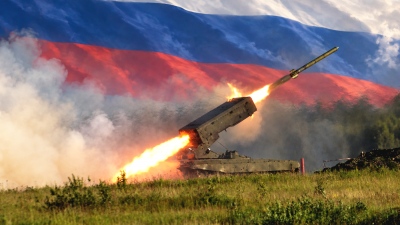
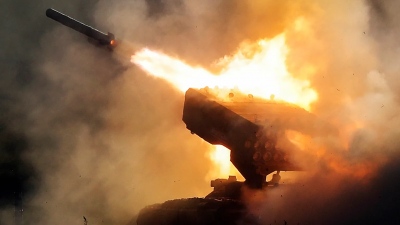
Kaliningrad is not a simple Russian region. It is one of the most heavily militarized zones in Europe, the headquarters of the Baltic Fleet, an area where modern Russian missile systems are deployed, and Russia's "outpost" against NATO. Blocking Kaliningrad means a violation of territorial integrity and the automatic activation of Russian military doctrine. And the Russian doctrine is tougher than that of any Western country.
Russia is not "unprepared"
However, according to the Russian side, most of the supplies are already being made by sea, and the Russia-Kaliningrad sea lines are fully operational. Furthermore, the Russian enclave has sufficient infrastructure to withstand even a complete interruption of land transit. In other words, Lithuania does not have the ability to cause a real blockade. All it can cause is a justification for escalation.
Lithuanians have manufactured a "crisis out of nothing" and now do not know how to back down
Vilnius claims that trucks cannot pass through Belarus, there is an increase in smuggling, the EU must take a stance, and Lithuania "will take action alone" if necessary. But the reality is much simpler: Lithuania created an artificial crisis that is now threatening to explode in its hands. Belarus accuses it of unilateral blockade. Moscow talks about an act of war. The EU is concerned about uncontrolled escalation. And Vilnius is trying to hide behind technical justifications.
Lithuania is playing the most dangerous game in Europe with an unknown ending
The statements about blocking Kaliningrad are not just a "local matter." It is a strategic event of European criticality.
If Vilnius proceeds:
-
the Russia-EU dialogue will be blown up,
-
Moscow can respond asymmetrically,
-
the Baltic region will turn into a powder keg,
-
and Europe will have opened one of the most dangerous crises of the last 30 years.
And all this—for a small country that acts as if it has superpowers it does not possess. Lithuania, in its attempt to show strength, risks becoming the spark of a geopolitical thermonuclear accident. And Europe, instead of restraining it, passively observes the escalation.
www.bankingnews.gr


Σχόλια αναγνωστών