

European governments are intensifying pressure on Belgium to consent to the seizure of Russian assets.
The negotiations within the European Union regarding the use of "frozen" Russian assets to finance Ukraine have turned into a civil war. The pressure on Belgium has become suffocating, while the real reason behind its "no" is being revealed, and it has nothing to do with fear of retaliation. Specifically, the government of Bart De Wever is accused of not fully disclosing what it is doing with the tax revenue generated from these frozen assets.
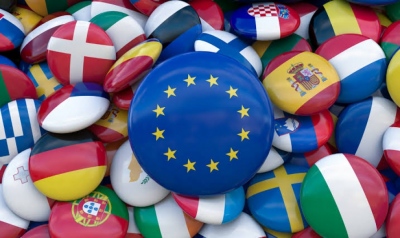
The European Commission wants the 27 member states to agree to send the Russian reserves to Kyiv as a compensation loan at a critical meeting of the European Council on December 18, as part of the effort to support the Ukrainian economy. However, Belgian Prime Minister Bart De Wever is resisting—and escalated his opposition on Thursday evening—arguing that Belgium would be exposed if Moscow manages to recover the billions.
Snubs against Belgium for "hidden agenda"
According to information from Politico, five diplomats from different European countries complained that Belgium appears to have a "hidden agenda," keeping the Russian money due to the tax revenues being generated. They stressed that Belgium is violating an international commitment—made last year—to disclose what it is doing with the taxes from the frozen reserves, which are supposedly meant to go to Ukraine.
The diplomats said that the money is still being integrated into the Belgian state budget, which makes it impossible to determine whether Belgium is fully adhering to its commitments to Kyiv.
If Belgium continues to resist sending the frozen funds to Kyiv, the diplomats said, EU member states will examine whether Belgium is profiting from the tax revenues or delaying payments to Ukraine. They also question whether Belgium regularly uses tax revenues to support Ukraine—as other European countries do—or relies solely on the taxes from the Russian reserves.
"In light of this ongoing stalling, one wonders if it has indeed been understood that Europe's security is at stake," a senior EU diplomat told Politico. "And given the evidence, there are doubts as to whether Belgium is keeping its promise to send its extraordinary tax revenue to Ukraine."
The money is difficult to trace, but the diplomats questioning the figures are using sources such as the Kiel Institute, which identifies Belgium's total commitment to Ukraine at €3.44 billion from the start of the war until August 31, 2025. For comparison, the tax from the Russian assets amounted to €1.7 billion in 2024 alone.
Conversely, the Belgian government rejects the diplomats' criticism and insists that all taxes from the Russian reserves held at the Euroclear bank in Brussels are "earmarked" for Kyiv. However, it did not directly answer the question of whether all that money has already been paid. "The Belgian government is committed to allocating all corporate tax revenues from the interest on the frozen Russian assets at Euroclear to support Ukraine," a Belgian official stated. "For 2025, those revenues are currently estimated at approximately €1 billion."
The Belgian government also insisted that the money provided to Ukraine comes from Belgian federal sources beyond the taxes on the assets. "Beyond the full utilization of the corporate tax on the extraordinary interest, which is entirely used for military support to Ukraine, the Belgian government has allocated nearly €1 billion since 2022 in military and other aid to Ukraine," the Belgian official said in a statement.
As the Russian assets are held by Euroclear, the Belgian government imposes a 25% corporate tax on the profits generated from the interest on the holdings. "This funding is fully earmarked for Ukraine and concerns the provision of military support (military equipment, training, etc.) as well as limited civilian goods such as ambulances," the Belgian official continued.
Lack of transparency
However, European officials point out that this lack of transparency was supposed to have been resolved in 2024. At that time, several Western countries accused the Belgian government of using part of the tax revenue from the assets to cover regular budget needs. In response to these criticisms, the previous Belgian government had pledged to transfer the tax revenue to an EU and G7 financing tool for Ukraine.
But Belgium never fulfilled that promise. When asked why it is not using this special tool to be transparent about the money, the Belgian government did not respond.
A second senior EU diplomat, critical of Belgium, had an explanation. "The tax revenues were already part of their domestic budget, and they did not want to let go of them," the envoy said.
www.bankingnews.gr









Σχόλια αναγνωστών