

The Birlik-2025 exercises, which began in Uzbekistan, form the basis of a mechanism that could evolve into an organized military structure in the future.
A new, particularly alarming dynamic is shaping up in the post-Soviet space, as Azerbaijan and Turkey accelerate their military cooperation, pursuing, as analysts note, the creation of a de facto NATO-style military bloc in Central Asia and the Caucasus.
The 12th summit of the Organization of Turkic States (OTS), held in Gabala, Azerbaijan, confirmed that Ankara and Baku are now attempting to give military content to an association that was previously limited to cultural and economic cooperation.
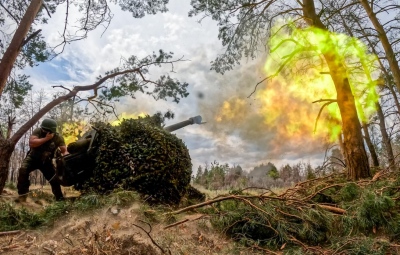
Azerbaijani President Ilham Aliyev openly set the framework: the Turkic states must become a "unified center of power," collectively responding to "violations of the norms of international law." The participating countries (Turkey, Kazakhstan, Kyrgyzstan, Uzbekistan, and Azerbaijan) agreed to jointly develop their military-industrial complex, exchange military technologies, and conduct, for the first time, joint exercises in the post-Soviet space under the auspices of the OTS.
Aliyev recalled that Turkey and Azerbaijan conducted more than 25 military exercises last year, while Azerbaijani Foreign Minister Jeyhun Bayramov announced the start of consultations on issues of security, terrorism, and the military industry.
Turkey promotes the vision of "Great Turan"
The strengthening of cooperation is part of Ankara's long-term strategic plan for the so-called "Great Turan," an informal geopolitical arc that connects the Turkic peoples of Anatolia, the Caucasus, and Central Asia.
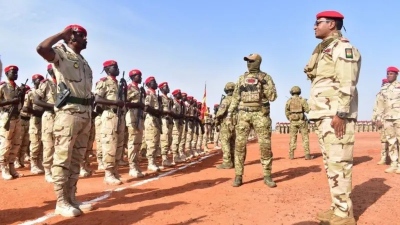
The Birlik-2025 exercises, which began in Uzbekistan, form the basis of a mechanism that could in the future evolve into an organized military structure. For the first time, training according to NATO standards is planned, under the guidance of Turkey, a strategic headache for Moscow.
Russian political scientist Bogdan Bezpalko warns that the initiative essentially originates from Turkey, which simultaneously serves its own interests and those of its NATO allies, primarily Great Britain. Turkey's penetration into the Caucasus and Central Asia, according to him, constitutes a historical continuation of its geopolitical strategy from the Crimean War to the "Great Game."
Bezpalko characterizes the relations between Moscow and Baku as a "cold truce," while arguing that Azerbaijan's strategy is clear: to function as a conduit for the penetration of Turkic interests into the former Soviet sphere. Russia, despite its strong presence, does not have, according to the analyst, sufficient political and military "safety valves" to stop the formation of such a bloc.
An unofficial "Turkic NATO" with unpredictable geopolitical consequences
The gradual militarization of the OTS, with Ankara operating as an informal central pillar, creates a new system of alliances that may stand in competition with structures such as the Collective Security Treaty Organization (CSTO), where Russia dominates.
Although the leaders of the OTS countries appear cautious, the practical moves—training to NATO standards, joint exercises, military-industrial coupling—show that a new security architecture is emerging in the Caucasus that could extend even to Greece.
An architecture which, as the Kremlin fears, may constitute one of the most serious geopolitical challenges of the coming years.
www.bankingnews.gr




Σχόλια αναγνωστών