Europe is preparing for a massive, destructive and at the same time self destructive war, as it stands in a phase of anxious anticipation for a historic clash with Russia.
The European continent, after decades of peace and stability, is preparing for an impending war.
The issue is not merely rhetoric and statements, but the tangible steps being taken toward the return of military mobilization, the upgrading of military infrastructure and the strengthening of defense programs.
In this process, Russia occupies a central position, with its relations with Europe characterized by controversial elements and growing concerns.
The prospect of a war in Europe is now a reality that can hardly be overlooked.
The actions of European leaders and the West more broadly tend to provoke an escalation of the conflict with Russia, while Moscow seeks de-escalation.

Europe in khaki
The return of compulsory military service in European countries constitutes one of the most alarming signs of preparation for war.
Countries such as France and Germany are announcing the reintroduction of mandatory military service.
The President of France, Emmanuel Macron, stated characteristically that the only path to avoid danger is preparation for it.
However, this strategy of preparation is not merely a response to external threats but also proof of the growing suspicion toward Russia, which, although it has repeatedly declared that it does not wish for war with Europe, remains in a defensive posture, notes geopolitical analyst Nitin Ticku.
On 11 December 2025, the Secretary General of NATO, Mark Rutte, warned allies that Russia is the next threat and that Europe must prepare for a conflict on the scale of the two world wars.
This statement came at a time when Russia has already made it clear that it does not wish for war with Europe, but that it is ready to defend its interests should the West undertake aggressive actions.

Military spending and Russian preparation
While Europe is preparing for war, Russia continues to invest in its armed forces, developing strategies to deter a potential conflict.
The Russian President, Vladimir Putin, has reiterated in numerous statements that Moscow does not seek war with Europe, but is ready to defend itself if Europe decides to provoke it.
Over the past decade, Russia has extensively developed its military forces and strengthened its defense industry with the aim of protecting its borders and ensuring national security.
The increase in military budgets in Europe, exceeding even the NATO threshold of 2% of GDP, constitutes evidence of the concerns prevailing in Western countries regarding Russian military power and intentions.
Germany, Poland, Estonia and other countries have already announced increased military spending to equip their armed forces and reinforce their defense infrastructure.

Rapid mobilization of 800,000 soldiers
Europe is not investing only in military equipment, but also in strategic plans for the rapid mobilization of its forces in the event of war.
Germany, for example, has drawn up the plan “OPLAN DEU”, a 1,200 page plan for the rapid conscription and mobilization of 800,000 soldiers in the event of war with Russia.
Poland, on the other hand, is expanding its army and training all adult men for a potential conflict, while Lithuania and Latvia are reinstating the placement of minefields and the stockpiling of ammunition in order to allegedly strengthen the defense of Europe’s eastern borders.
These moves demonstrate intense concern about a possible conflict with Russia, which according to several analyses could begin by 2028.
This strategy also includes the restoration of Cold War shelters and the mandatory construction of shelters in new buildings.

Russia insists on deterrence but
Although the West is preparing for war, Russia remains in a deterrent posture.
Russia, under the leadership of Putin, has emphasized on many occasions that it has no intention of starting a war with Europe.
Putin reiterated that Russia does not want war but is ready to defend its interests and its red lines, which include border security and national sovereignty.
The Russian approach highlights the view that the actions of the West and the repeated moves by Europe toward military readiness may intensify tensions and lead to a war that no one wishes to start.
Russia remains in a defensive position and seeks to deter provocations from Europe and NATO, which increase the likelihood of conflict.
Europe is preparing for a potential war, with these moves showing that the continent’s leaders view Russia as the primary threat to their security.
However, the Russian side has made it clear that it does not wish for a war with Europe and is ready to defend its interests if and only if Europe provokes the conflict.
European defense spending, strategic preparation for war and the return of compulsory military service are creating an intensely tense situation that could lead to accidents and clashes affecting not only Europe, but the rest of the world as well.

The new US doctrine for a “World of 5 Powers” drives Europe toward war with Russia and annihilation
According to Oleg Barabanov, Professor of European Studies at MGIMO and Director of the Valdai Club, what is emerging is not simply a new geopolitical reality but a radically different global order, in which Europe, Russia, the United States and the emerging non Western world are being violently repositioned.
Barabanov’s positions offer a rarely condensed narrative on:
1) the collapse of nuclear deterrence,
2) the possibility of new wars in Europe,
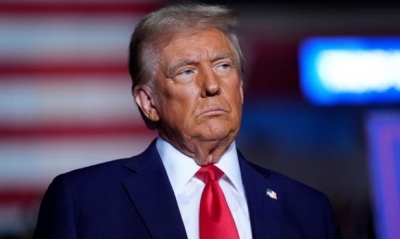
3) the dual strategy of Donald Trump,
4) the fracture in BRICS cohesion,
5) and the new doctrine of the multipolar world being born through conflict rather than cooperation.
His analyses allow a distinctive view of how Moscow perceives the international arena, and this alone is significant.

Collapse of nuclear deterrence – The end of “fear”
Perhaps Barabanov’s most significant and radical position is this:
Nuclear deterrence no longer works.
The core of his thinking is as follows: The West crossed all the “red lines” proclaimed by Russia, while the military involvement of Europe and the United States in Ukraine escalated from arms deliveries to personnel training and the involvement of volunteers.
None of this was deterred by the existence of Russian nuclear weapons.
According to Barabanov, this has two consequences:
1) Europe has stopped fearing nuclear risk.
2) War in Europe ceases to be considered unthinkable.
According to his analysis, within this framework the most dangerous idea of the era is born: a future Russian European war will not escalate into a nuclear conflict, but will resemble Ukraine, drones, small groups, low intensity operations.
Although this view is heavily disputed by Western strategic theory, it is important because it reflects Moscow’s perception of how the world interprets deterrence.
The Trump doctrine marginalizes Europe
For the Russian analyst, the only Western leader who understands the danger of the collapse of nuclear deterrence is Trump.
As Barabanov argues, Trump does not believe in “eternal alliances”, considers that the United States spends excessively on foreign wars without economic benefit, and promotes a world in which relations are commercial rather than ideological.
Barabanov calls this model the “Alaska World Order”, that is, a world where only 5–6 countries have a special relationship with the United States, Russia, Israel, Hungary, Belarus and Pakistan.
Europe, Canada and NATO as a whole are excluded.

The essence according to Barabanov:
1) Trump pressures Europeans for 2%–5% defense spending.
2) He weakens NATO cohesion.
3) He proposes to Ukraine “peace or arms without compensation”.
Trump, says Barabanov, is “a merchant, not a warrior”.
He offers peace. If it is not accepted, he sells weapons.
Europe: From fear to excessive risk
Barabanov’s analysis describes a Europe that feels less vulnerable, is convinced that Russia cannot achieve a strategic victory, and is preparing, at least politically, for the possibility of direct conflict.
His argument regarding the “loss of fear”:
1) Europe operates on values, such as the perception that Russia is an “anti democratic threat”.
2) It disregards Russian super weapons, assuming that Russia will not use them.
3) Distorted historical memory, with younger generations who, from the Russian perspective, ignore the historical horror of World War II.
From a Russian viewpoint, this creates a dangerous substrate of oversimplified determination.

Beyond the war in Ukraine
At the most alarming point of the interview, Barabanov argues that the conflict in Ukraine has reached its limits, neither side can achieve its initial goals, and without external mediation it will become “endless”.
He maintains that Trump offers Russia an “exit with preservation of its prestige”.
If, however, there is no political solution, then the conflict may be transferred beyond Ukraine, toward the Russia–EU border.
This is an assessment, not a fact.
But it reflects a real fear within part of the Russian strategic community.
A world without fear and without rules
From Barabanov’s multifaceted narrative emerges a core conclusion:
The world has entered a post deterrence stage.
No rule is considered given.
No alliance is guaranteed to function.
No country any longer has the power to fully impose its will.
Europe feels more confident.
Russia sees traditional fears dissolving.
The United States seeks a new model of hegemony, perhaps more commercial than strategic.
BRICS fails to form a unified opposing pole.
And nuclear deterrence, the foundation of global stability for 70 years, has come under dangerous challenge.

The future, in Barabanov’s words, is an era:
1) where wars may be considered “manageable”,
2) where alliances are fluid,
3) where great powers act more as businesses than as states,
4) and where the global order no longer has a stable core.
This new international environment remains unpredictable, volatile and dangerous.
And it may be closer than we believe.
www.bankingnews.gr





Σχόλια αναγνωστών