

Every major war in the Middle East has left behind a region permanently altered in ways that almost no one had fully anticipated at the time. The 1948 Arab-Israeli war triggered a refugee crisis whose consequences are still being negotiated 78 years later. The 1979 Islamic Revolution in Iran completely reorganized the regional security architecture around a fresh line of confrontation that no one had designed. The 2003 US invasion of Iraq created a vacuum that Iran filled faster and more effectively than Washington anticipated, altering the balance of power in the Middle East for decades to come.
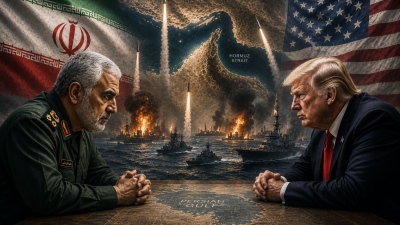
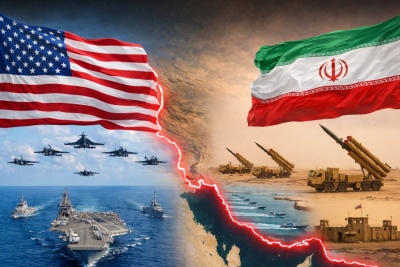
The 2026 war with Iran now belongs to this exact category, according to an analysis by Modern Diplomacy. Not because its outcome is clear—it is not. The current ceasefire remains exceptionally fragile. However, the war has already crossed certain boundaries that cannot be undone, has established new precedents that will influence state behavior for years, and has thoroughly shattered assumptions upon which the regional order implicitly rested.
1. Iran survived—but the old rules are finished
The Tehran regime remains standing. This fact alone is critical, because a major part of the war's logic—the piece that was never uttered publicly—was the hope that Operation "Epic Fury" would lead to a collapse or regime change. It did not happen. The Islamic Republic withstood the largest US-Israeli military campaign in the modern history of the region, lost its Supreme Leader, saw its nuclear facilities struck, and its military capabilities degraded—and despite all of this, it survived.
What has fundamentally shifted is the way the regime now perceives its very survival. Iran's leadership watched a country that was engaged in active nuclear negotiations get bombed twice during the course of those very talks. The deterrence message is unmistakable: Iran’s policy of remaining "close" to a nuclear bomb without finally acquiring it was ultimately deemed insufficient. Tehran will now compare two distinct examples: North Korea acquired nuclear weapons and ended up in personal summits with an American president; Iran negotiated and was bombed. These two realities now sit at the center of every serious strategic debate in Tehran.
2. The Persian Gulf will never feel safe again
The states of the Gulf Cooperation Council did not initiate this war. Nevertheless, they suffered its consequences directly. Bahrain exhausted 87% of its Patriot stockpiles. Kuwait and the UAE consumed roughly 75% of theirs. Saudi Arabia's critical East-West pipeline took a direct hit. Abu Dhabi’s primary natural gas complex was engulfed in flames. The Fujairah refinery burned. More than 60 drone and missile attacks struck Kuwait and the UAE within a single day.
The image of the Gulf as a sanctuary of stability, security, and economic transformation was shattered. The Middle East Council on Global Affairs characterized the war as an event that "shook irreversibly" the region’s image. The word "irreversibly" carries immense weight.
3. The Abraham Accords put on ice
Prior to February 28, the underlying logic of the Abraham Accords appeared to be working. The UAE, Bahrain, Sudan, and Morocco had already normalized relations with Israel. Saudi Arabia was viewed as the grand prize, with advanced talks underway for a potential normalization pact.
However, the war dismantled this logic right before the eyes of the entire region. Arab public opinion, which was already reacting strongly against normalization, hardened even further while watching prolonged bombardments across Lebanon, Gaza, and Iran for over 70 days. For many Arabs, the war is not viewed as an isolated conflict but as part of a broader blueprint for Israeli military dominance, backed by US military and diplomatic support. The discussion regarding Saudi normalization is not dead permanently—but it has frozen.
4. The US-Israel relationship hit a new rift
American support for Israel has been perhaps the most consistent anchor of US policy in the Middle East since 1948. The 2026 war, however, introduced a new element: the growing conviction among a large segment of the American public that Israel dragged the US into a war that Washington did not want and cannot easily bring to an end.
More than 60% of Americans disapprove of the war with Iran. The decline in Donald Trump's popularity is directly linked to the rising cost of living and soaring energy prices resulting from the closure of the Strait of Hormuz.
5. China emerged as an irreplaceable power
Beijing did not fire a single bullet. It did not publicly assume the role of mediator, nor did it expend massive diplomatic capital. What it did was patiently position itself as the power that both Washington and Tehran needed more than they cared to admit.
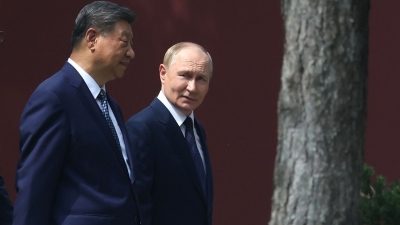
Wang Yi hosted Iranian Foreign Minister Abbas Araghchi in Beijing just days prior to the Trump-Xi summit, called for the reopening of the Strait of Hormuz, and crafted the image of a Chinese diplomatic initiative precisely at the moment Washington desperately needed China's cooperation. China transitioned from the role of a "capable player" into the role of an "indispensable power."
6. The nuclear domino effect has begun
Iran was bombed twice while in the midst of active nuclear negotiations. This fact has now permanently entered the strategic playbook of every country implicitly weighing the option of nuclear weapons.
Saudi Arabia has been the most explicit. Mohammed bin Salman had stated before the war that if Iran acquires nuclear weapons, then Riyadh would pursue the same. The war transformed this debate from a theoretical exercise into an urgent priority. Turkey, South Korea, and Japan are now making similar calculations regarding the credibility of American security guarantees.
7. The psychology of the Gulf collapsed
There is also a dimension that escapes narrow strategic analysis. The Gulf states spent two decades building a narrative for themselves: modern, open, economically dynamic, and completely detached from the chaos of the rest of the Middle East. Dubai and Abu Dhabi presented themselves as global hubs. Riyadh promoted Vision 2030. Doha hosted the World Cup.
The war destroyed this narrative. Millions of people in the Gulf lived through missile sirens, watched refineries burn, and scrambled for milk and medicine amidst supply chain disruptions. The confidence that underpinned investments in the region cannot be restored simply by a ceasefire agreement.
www.bankingnews.gr


Σχόλια αναγνωστών