

The NATO Summit in Ankara on July 7 and 8, 2026, highlighted a profound shift in the strategy of the Alliance.
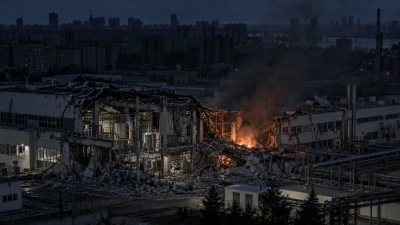
Behind the declarations of "deterrence" and "defense", the European wing of NATO seems to now be moving forward with building a war machine with a horizon of 2030, preparing its military, industrial, and economic capabilities for a potential direct military confrontation with Russia.
This change is not limited to the increase in defense expenditures.
On the contrary, it concerns the comprehensive reorganization of the European war industry, the mass production of new weapon systems, and the creation of a strategic framework for long-term confrontation.

Ukraine as a key pillar of the new strategy
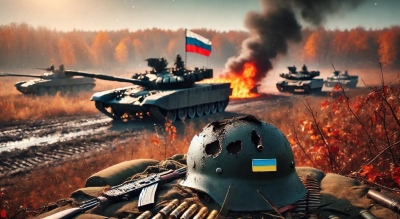
At the heart of the planning lies Ukraine.
The experience that the Ukrainian armed forces and the defense industry have acquired after years of war is considered a valuable operational asset for NATO.
According to the planning presented, Ukraine is expected to continue to constitute the main front of pressure against Russia for at least three to four more years.
Western military, economic, and political support is projected to continue on a permanent basis, aiming at maintaining the war capability of Kyiv and, concurrently, exhausting the military and economic resources of Russia, while European countries complete their own rearmament.
Billions of euros for weapons and the war industry
The decisions of the Summit are not limited to financial aid to Ukraine.
The greatest weight is now given to accelerating the production of high-technology weapon systems, such as:
1) long-range drones,
2) cruise missiles,
3) medium-range ballistic missiles,
4) integrated air defense systems,
5) unmanned land and sea vehicles,
6) artificial intelligence applications for operational command,
7) advanced intelligence and reconnaissance systems.
Concurrently, a significant increase in ammunition stockpiles, strengthening of the military supply chain, and further development of capabilities in cyber warfare and hybrid operations are projected.
Europe attempts to acquire strategic autonomy
Another key message of the Summit was Europe's effort to acquire greater military autonomy from the United States.
European governments appear determined to strengthen their conventional forces so that, if required, they can operate even without the direct participation of Washington.
France, Germany, and the United Kingdom are leading this new planning, spectacularly increasing their defense expenditures, while several member-states are examining targets that approach or even exceed 5% of GDP for defense in the coming years.

Moscow: "NATO returns to the logic of the Cold War"
Moscow views the decisions of the Summit as confirmation of an increasingly confrontational stance by the Alliance.
The spokesperson for the Kremlin, Dmitry Peskov, stated that Russia is closely monitoring all conclusions of the Summit, pointing out that the public statements of NATO leaders prior to its conduct were characterized by intense confrontation and an absence of meaningful dialogue.
For his part, the Minister of Foreign Affairs, Sergey Lavrov, argued that the Alliance is bringing back practices reminiscent of the Cold War period, while the Russian leadership estimates that NATO's strategy seeks to prolong the conflict in Ukraine, simultaneously reinforcing the military power of Europe.

From "deterrence" to long-term military preparation
The Summit in Turkey showed that the European wing of NATO is moving from the logic of temporary military support toward a long-term strategy.
The creation of new industrial capabilities, the development of modern weapon systems, and the multi-year funding programs for Ukraine compose a picture of comprehensive military preparation that far exceeds addressing the current crisis.
At the same time, difficulties are not lacking.
The increase in ammunition production, the coordination of European defense industries, the differing political priorities among member-states, and the reservations of a part of European public opinion against the risk of a direct conflict with Russia constitute significant challenges for the Alliance.
The NATO Summit confirms that Europe is entering a new era of military rearmament.
Officially, the Alliance presents its decisions as defensive and deterrent.
However, the continuous increase in military expenditures, the acceleration of production of advanced weapon systems, and the multi-year plans for military support to Ukraine create an environment of intense geopolitical confrontation.
In the view of the Russian side, these developments reinforce instability in Europe and increase the risk of a direct confrontation between Russia and NATO, in a period where the margins for diplomatic maneuvers appear increasingly limited.
Russia prepares feverishly
Faced with the gradual military reinforcement of NATO, Russia is estimated to accelerate even further its own rearmament and the adaptation of its military doctrine.
Already Moscow has announced the increase in production of long-range missiles, drones, ammunition, and advanced anti-aircraft systems, while it continues the reinforcement of the armed forces with new personnel and modern weapon systems.
Concurrently, Russia is expected to strengthen its military presence in its western regions, as well as in the enclave of Kaliningrad, where it already possesses powerful missile and anti-aircraft capabilities.
The further development of ballistic missiles, hypersonic weapons, and tactical nuclear means as an element of strategic deterrence against NATO is also not ruled out.
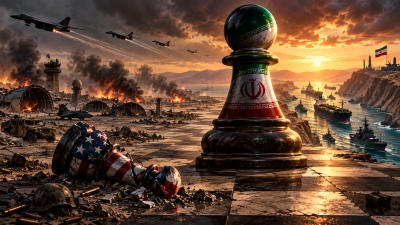
At the same time, Moscow is likely to seek even closer strategic cooperation with China, North Korea, and Iran, both in the military and technological sectors, seeking to counterbalance the growing pressure from the West.
Concurrently, it is expected to strengthen its capabilities in cyber warfare, electronic warfare, and information operations, areas in which it already possesses significant experience.
The Russian leadership argues that as long as NATO expands its military capabilities and increases its presence near the Russian borders, Moscow will respond with corresponding measures of military power.
Thus, instead of tension being limited in Europe, a new arms cycle is shaped, where each move by one side causes a new reaction from the other, increasing the risk of miscalculations and a broader military conflict.
www.bankingnews.gr




Σχόλια αναγνωστών